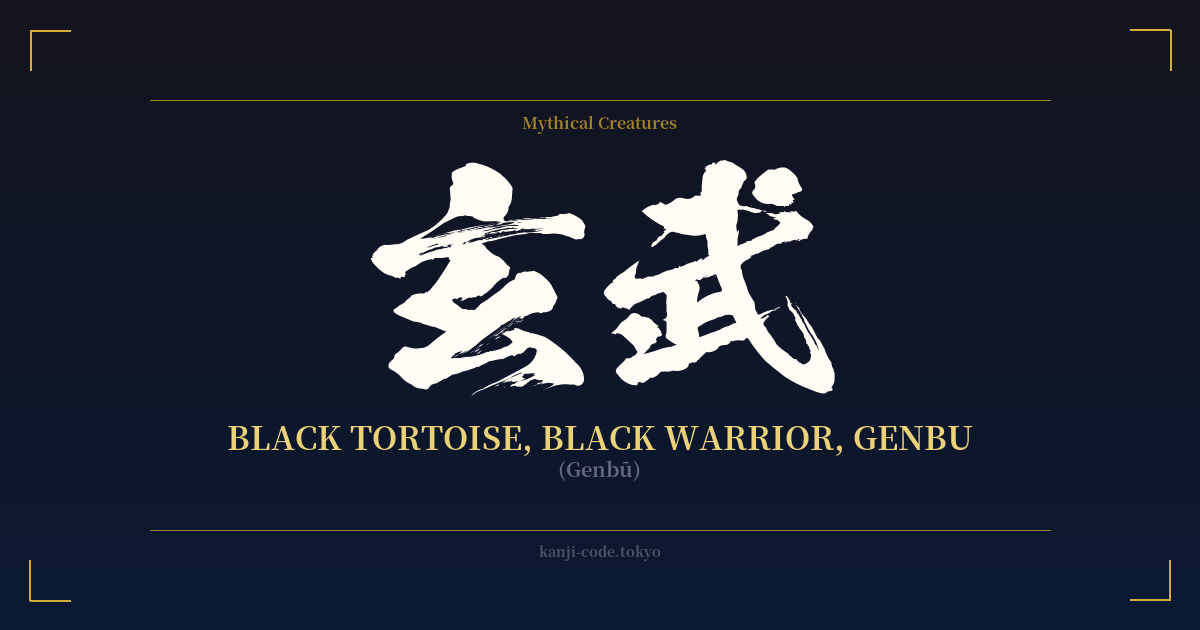
✍️ 玄武 (Genbū) — Cultural Context
玄武 (Genbū) is a name that echoes through centuries of East Asian mythology, representing one of the most powerful celestial guardians. Known as the Black Tortoise or Black Warrior of the North, Genbū is one of the Four Symbols (四神, Shishin), divine beasts who preside over the cardinal directions.
Originating from ancient Chinese astronomy, these symbols were integrated into Japanese culture, particularly through Taoism and Onmyōdō (the Way of Yin and Yang). Each beast corresponds to a direction, a season, an element, and a color. Genbū watches over the North, embodying the stillness and introspection of winter, the profound depth of the element of water, and the color black.
Visually, Genbū is not merely a tortoise. It is most often depicted as a large tortoise entwined with a snake. This powerful combination is rich with symbolism. The tortoise represents longevity, stability, wisdom, and the earth itself. Its shell is seen as a model of the cosmos—a domed top for the heavens and a flat bottom for the earth. The snake, in contrast, symbolizes flexibility, renewal (through the shedding of its skin), and divine wisdom. Together, they represent the perfect union of opposites, a harmony of heaven and earth, stability and change.
This protective power made Genbū a popular guardian figure. In Japan, images of the Four Symbols were used to protect cities and tombs. The ancient Kitora Tomb in Asuka, for instance, features a stunning celestial map on its ceiling and murals of the Shishin on its walls, with Genbū dutifully guarding the northern wall. Heian-kyō (modern-day Kyoto) was also designed with this spiritual geography in mind, with temples and shrines placed strategically to align with the guardians.
The name itself can be translated as either "Black Tortoise" or "Black Warrior." The character 玄 (Gen) means 'black' but also 'mysterious' or 'profound,' alluding to the dark, unknowable nature of the cosmos and the deep northern sky. The character 武 (Bu) means 'warrior' or 'military,' highlighting Genbū's role as a formidable protector. This duality captures its essence perfectly: a being of immense defensive power and profound, quiet wisdom.
In modern times, Genbū's legacy continues to thrive in popular culture. From appearing as a powerful summon in video games like the Final Fantasy series to being the namesake of characters in anime and manga such as Yu Yu Hakusho and Fushigi Yugi, the Black Tortoise remains a symbol of enduring strength, wisdom, and protection.
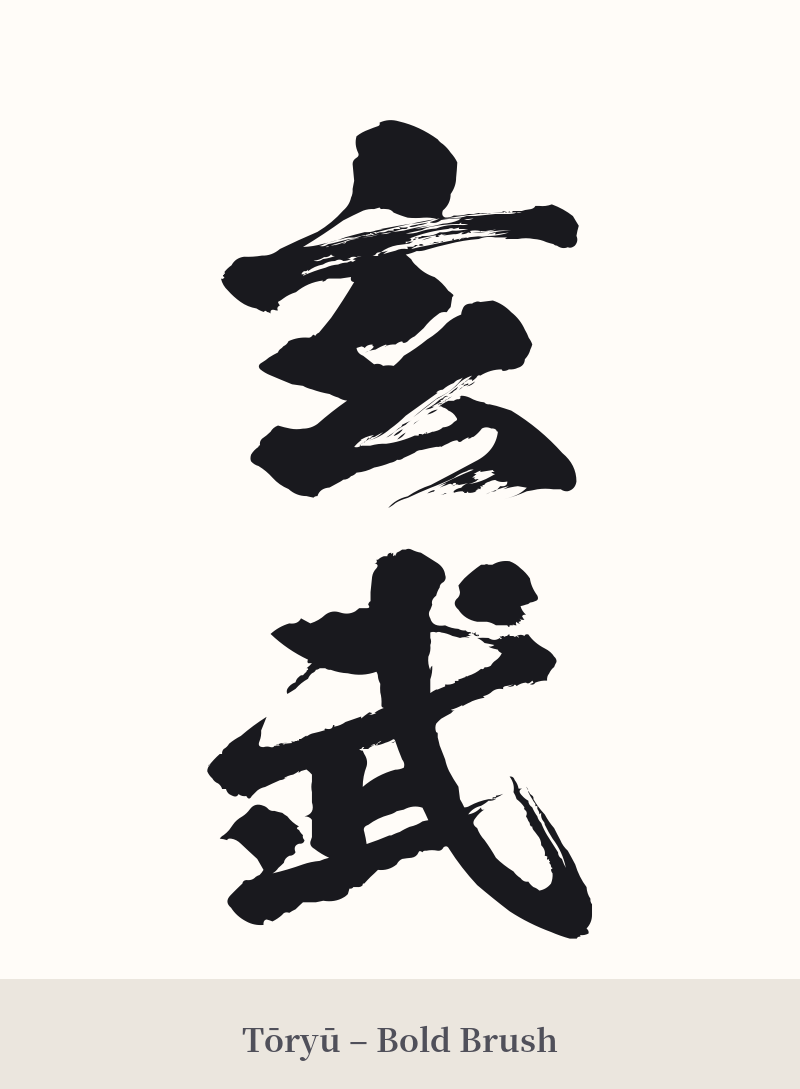
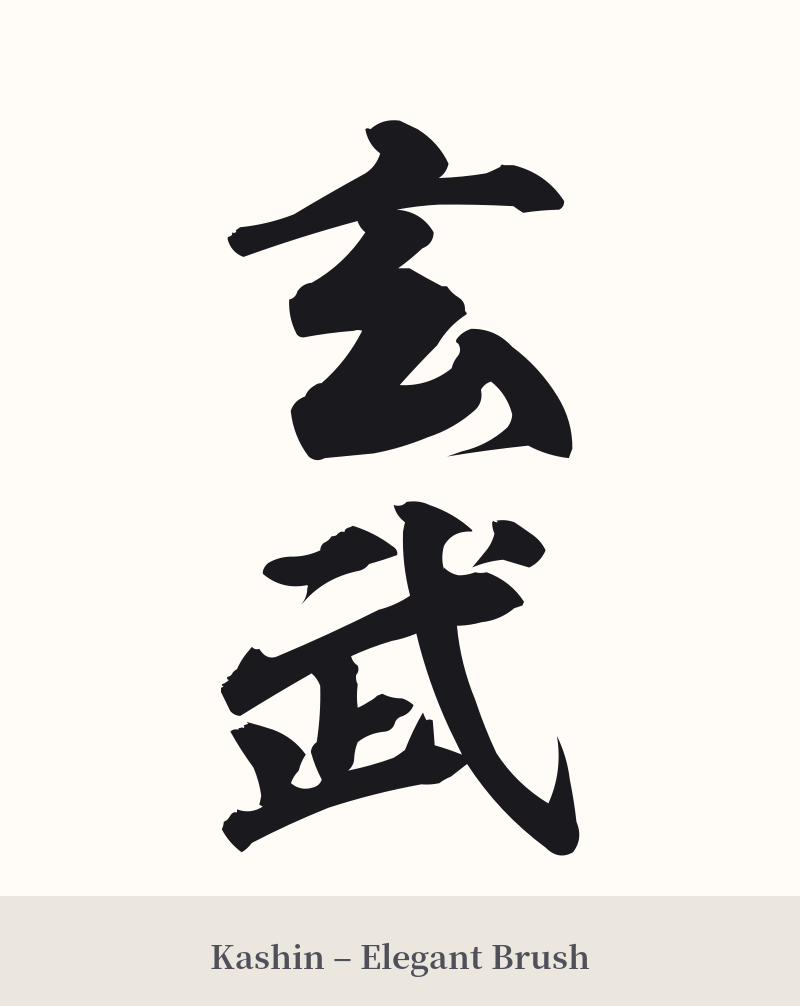
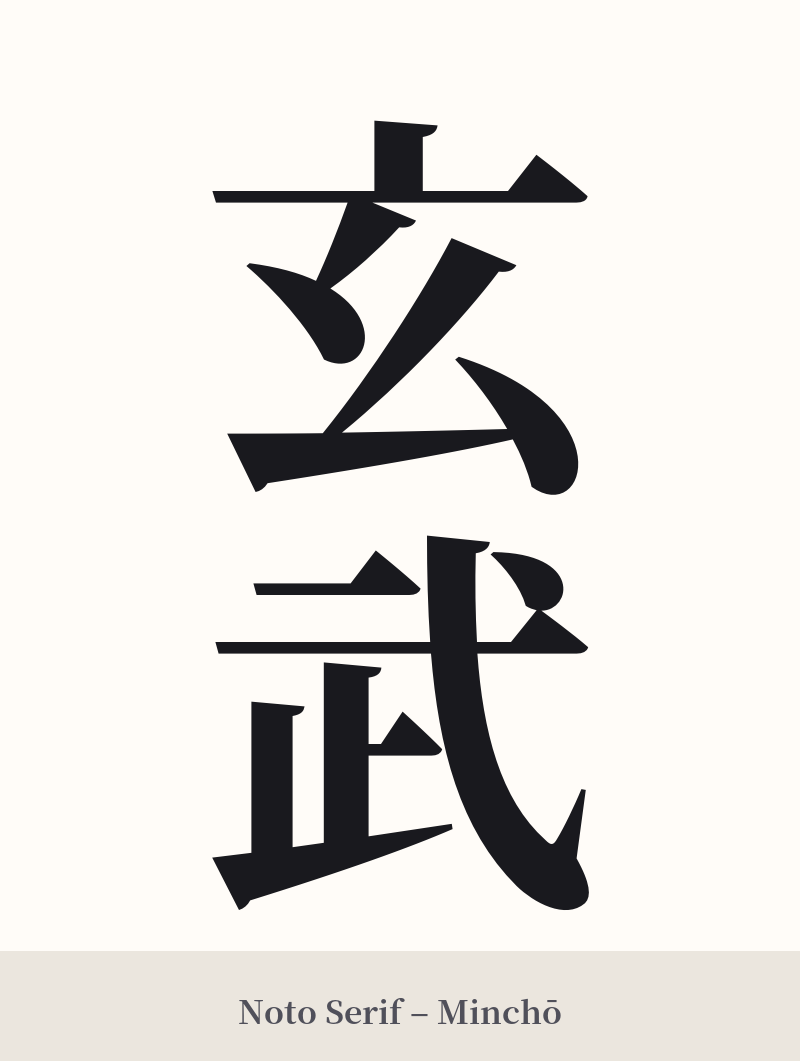
🖌️ Font Styles for 玄武
The same kanji can look dramatically different depending on the calligraphy style. Choose a font that matches the mood you want for your tattoo or design.
🎨 Tattoo Suitability
📐 Tattoo Design Guide
A tattoo of 玄武 (Genbū) carries a sense of ancient power and stability. Its design should reflect this stoic and protective nature.
– Placement: The upper back is an ideal location, mirroring Genbū's position as the guardian of the North and creating a powerful protective emblem. Other strong placements include the shoulder, chest, or calf, where the design has a solid foundation.
– Font Style: A bold, angular script like Kaisho (block script) emphasizes the 'warrior' aspect and the stability of the tortoise. For a more mystical feel that plays on the 'profound' and 'water' elements, a flowing semi-cursive (Gyosho) or cursive (Sosho) style can be very effective.
– Visual Tips: Consider incorporating imagery of a tortoise and snake with the kanji. Using black ink is traditional and honors its name, but adding deep blues or dark greens can subtly hint at its association with water and the northern sky. The kanji can be oriented vertically or horizontally, though a vertical alignment often feels more classic and powerful.
Comments