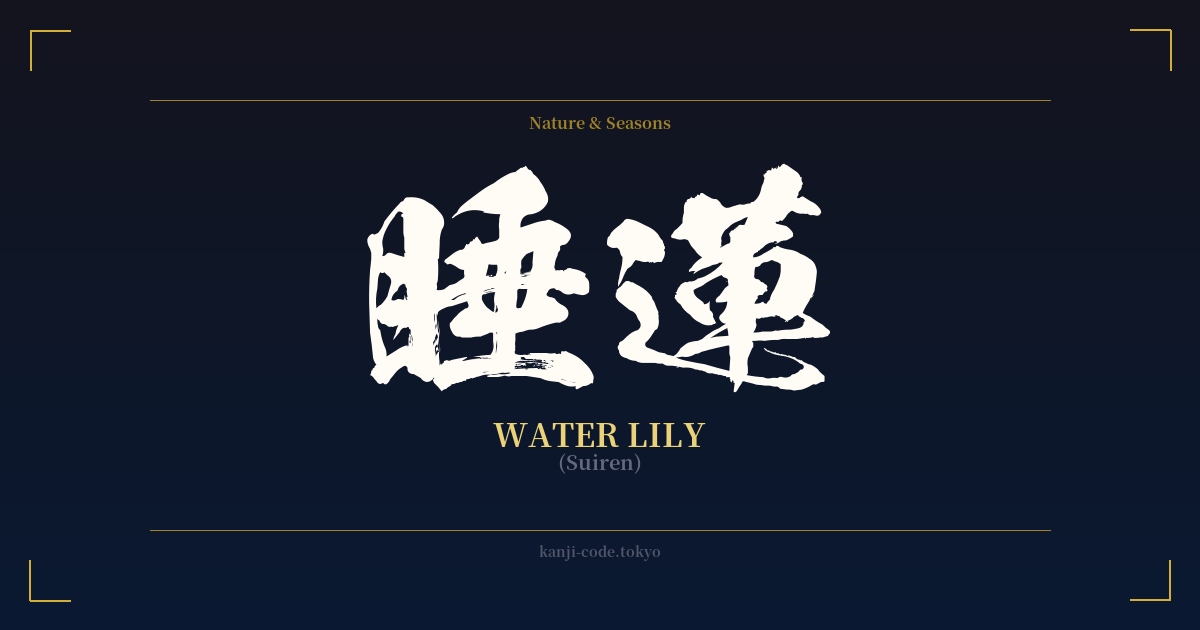
✍️ 睡蓮 (Suiren) — Cultural Context
The Japanese word for water lily, 睡蓮 (Suiren), is a beautiful example of poetry embedded within language. It evokes a sense of serene beauty, capturing the essence of a flower that rests gently on the surface of still water.
The word is composed of two kanji: 睡 (sui), meaning 'sleep' or 'drowsy', and 蓮 (ren), meaning 'lotus'. Together, they form the name 'sleeping lotus'. This poetic name is derived from the water lily's natural behavior—its blossoms often close in the evening or on cloudy days, appearing to 'sleep' on the water's surface before awakening with the morning sun.
In Japanese culture, the water lily is a powerful symbol of purity, innocence, and tranquility. Its ability to produce pristine, beautiful flowers from the mud and murky water of a pond is a deeply resonant metaphor. This mirrors the Buddhist concept of achieving enlightenment and spiritual purity amidst the struggles and impurities of worldly life. The calm ponds where water lilies thrive are often seen as places of meditation and quiet contemplation.
It is impossible to discuss the water lily without mentioning its close cousin, the lotus (蓮, hasu). While botanically distinct—the lotus typically rises high above the water on a stalk, while the water lily floats on the surface—they are often intertwined in art and symbolism. Both represent purity, rebirth, and divine beauty. The water lily, however, carries a softer, more tranquil and introspective nuance compared to the more overtly majestic and divine symbolism of the lotus.
This imagery has inspired Japanese artists and poets for centuries. From classic garden design, where ponds are meticulously crafted to showcase the seasonal beauty of Suiren, to literature where the flower symbolizes a fleeting, perfect moment of beauty. The influence even extends globally; the famous French Impressionist painter Claude Monet was heavily inspired by Japanese ukiyo-e woodblock prints, which led to his iconic series of water lily paintings, creating a beautiful circle of artistic inspiration between East and West.
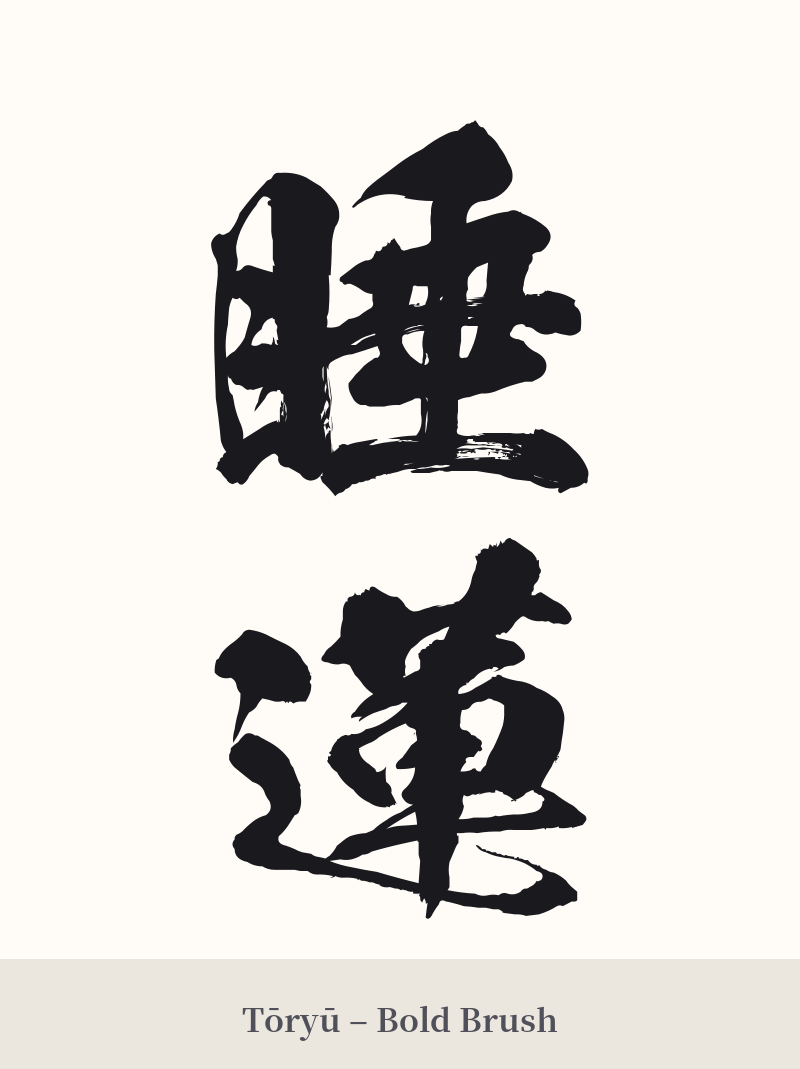
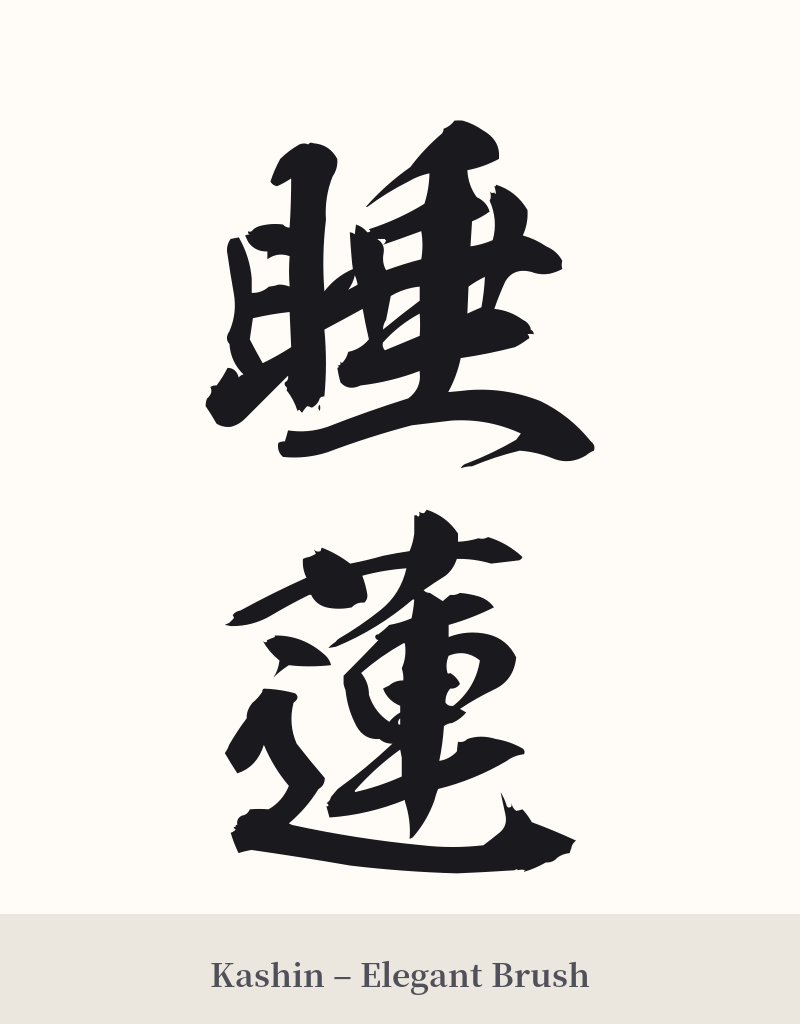
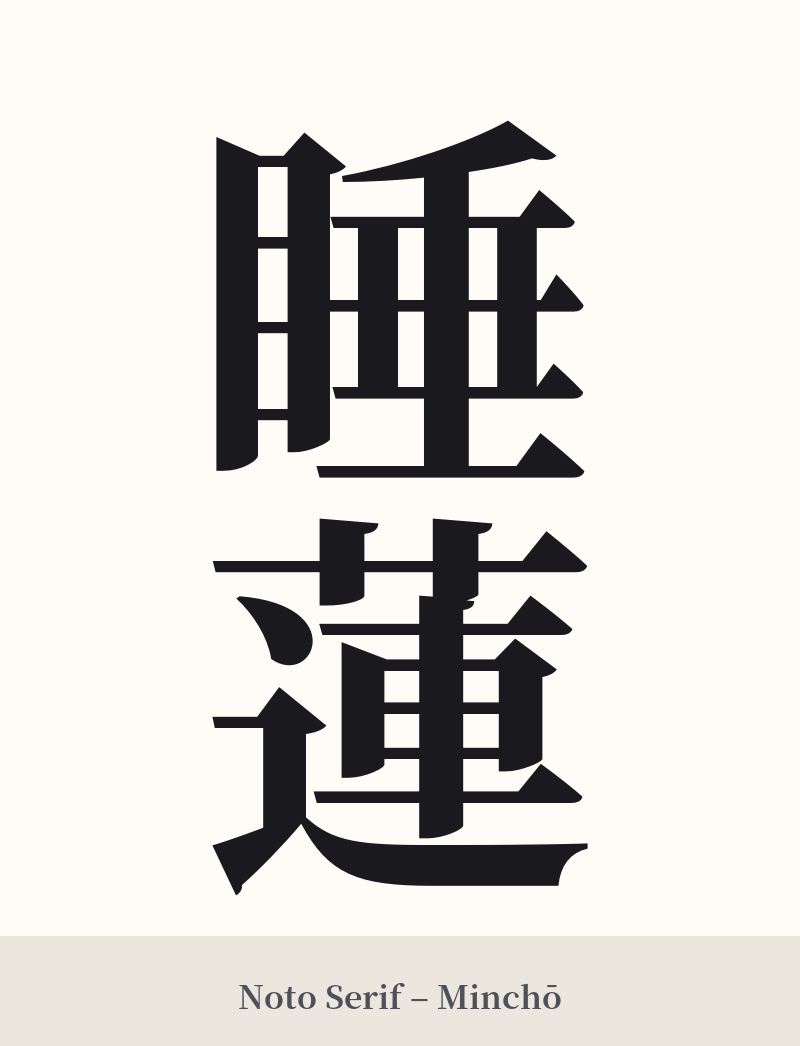
🖌️ Font Styles for 睡蓮
The same kanji can look dramatically different depending on the calligraphy style. Choose a font that matches the mood you want for your tattoo or design.
🎨 Tattoo Suitability
📐 Tattoo Design Guide
The elegant and natural feel of 睡蓮 (Suiren) lends itself well to graceful tattoo designs.
– Placement: A vertical orientation is highly recommended, as it mimics the natural form of a plant. This makes it ideal for the forearm, calf, spine, or alongside the ribcage. A horizontal placement can also work well across the collarbone or upper back.
– Style: Flowing, semi-cursive calligraphy styles (Gyosho) or even more abstract cursive styles (Sosho) are perfect for capturing the organic, gentle essence of the water lily. A crisp, classic Mincho font can provide a more formal and refined look.
– Visuals: Consider pairing the kanji with imagery of the flower itself. A design that integrates the characters with a subtle drawing of a water lily pad or a blossom can be very effective. Adding elements like water ripples, a koi fish, or a dragonfly can further enhance the theme of tranquility and nature.
Comments