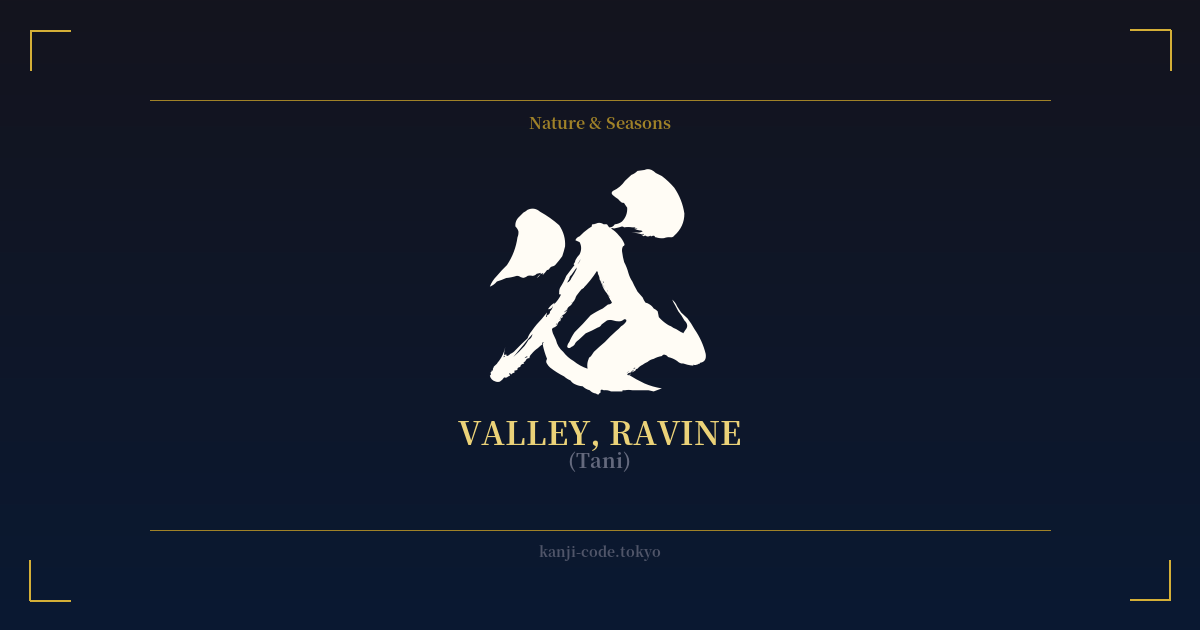
✍️ 谷 (Tani) — Cultural Context
The kanji 谷 (tani) is a beautiful and fundamental character in the Japanese language, representing a 'valley' or 'ravine.' Its form is a direct reflection of its meaning, a pictograph that originally depicted a mountain pass or an opening with a stream flowing through it. The top portion suggests a covered or enclosed space, while the strokes inside evoke the mouth (口) or the flow of water, perfectly capturing the essence of a low-lying area nestled between mountains.
In a country where over 70% of the land is mountainous, valleys are not just geographical features; they are the cradles of Japanese civilization. Historically, these fertile, protected areas were where communities settled, rice paddies were cultivated, and life flourished, shielded from the harshness of the elements. The Kiso Valley (木曽谷), for example, is famous for the Nakasendō trail, an ancient route connecting Kyoto and Edo (modern-day Tokyo) that wound its way through scenic mountain towns.
Beyond its literal meaning, 谷 carries significant symbolic weight. It can represent a state of humility or being in a low point in one's life. The term 谷底 (tanizoko), meaning 'bottom of the valley,' is a common metaphor for hitting rock bottom. However, this is not always negative. In Zen philosophy, the valley can be a place of quiet contemplation and potential, the necessary low from which one can begin to ascend. It is the receptive, yin counterpart to the aspiring, yang energy of the mountain (山).
This duality gives 谷 a profound, poetic nuance. It is a symbol of shelter, safety, and the nurturing aspects of nature. Valleys are often seen as hidden, mysterious places, where one might find a secluded temple, a hot spring, or a moment of peace. This connects to the Japanese aesthetic concept of 幽玄 (yūgen), which refers to a subtle, profound, and mysterious beauty that is felt rather than seen, often associated with misty landscapes and the quiet depths of nature. The character appears frequently in art, poetry, and place names, weaving itself into the very fabric of the Japanese landscape and cultural imagination.
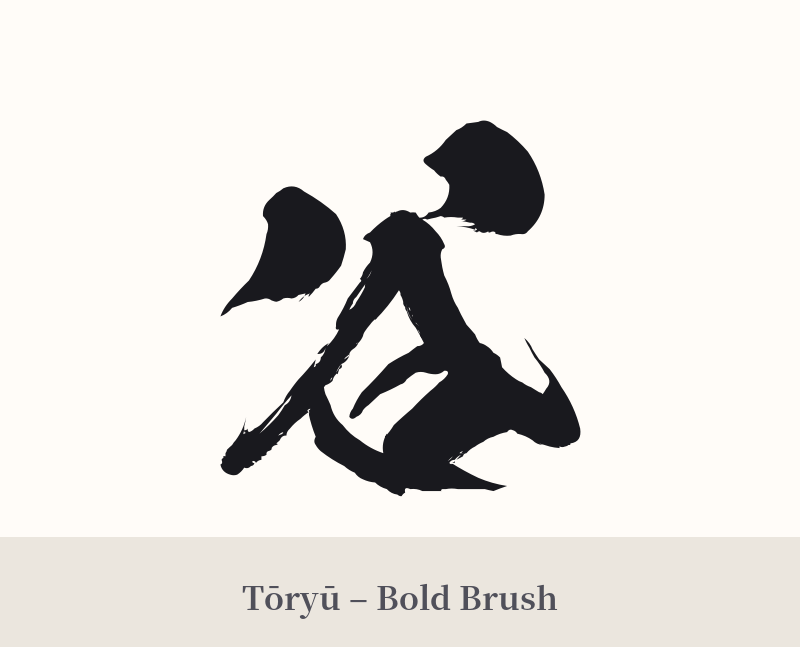
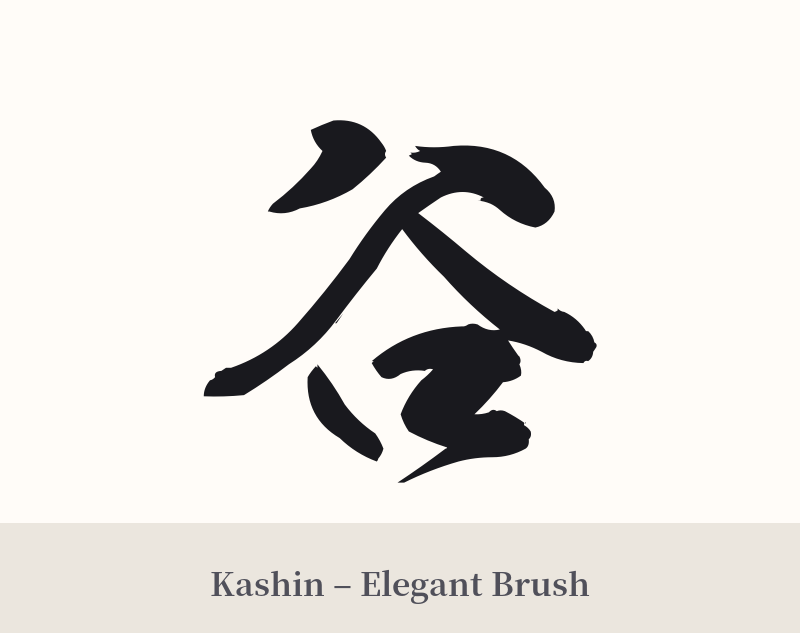
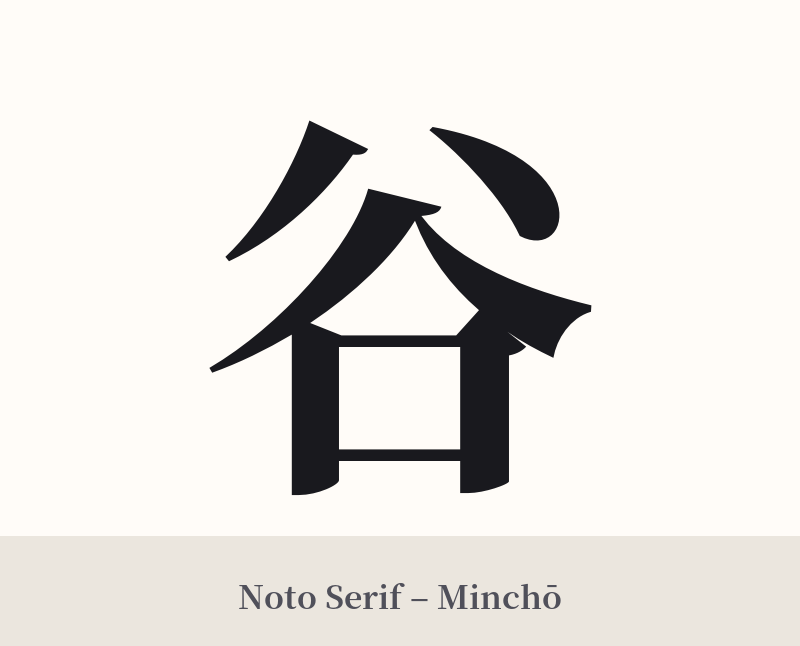
🖌️ Font Styles for 谷
The same kanji can look dramatically different depending on the calligraphy style. Choose a font that matches the mood you want for your tattoo or design.
🎨 Tattoo Suitability
📐 Tattoo Design Guide
The kanji 谷 (tani) is versatile and aesthetically pleasing, lending itself to various tattoo designs.
– Placement: Its simple, contained shape works well in small, discreet locations like the wrist, ankle, or behind the ear. For a more prominent piece, it looks excellent on the forearm or calf, where its lines can be appreciated.
– Font Style: A bold, blocky Mincho or Kaisho style emphasizes the character's architectural structure, giving it a grounded, stable feel. Conversely, a flowing, semi-cursive Gyosho or Sosho style can evoke the movement of wind or water through the valley, adding a sense of organic grace.
– Visual Tips: Consider integrating 谷 into a larger nature-themed piece. It can be placed between two 山 (mountain) kanji to create a literal landscape. You could also have a small 川 (river) character or a stylized water element flowing from its base. The negative space within the character is important; a skilled artist can use this to create a sense of depth and openness.
Comments