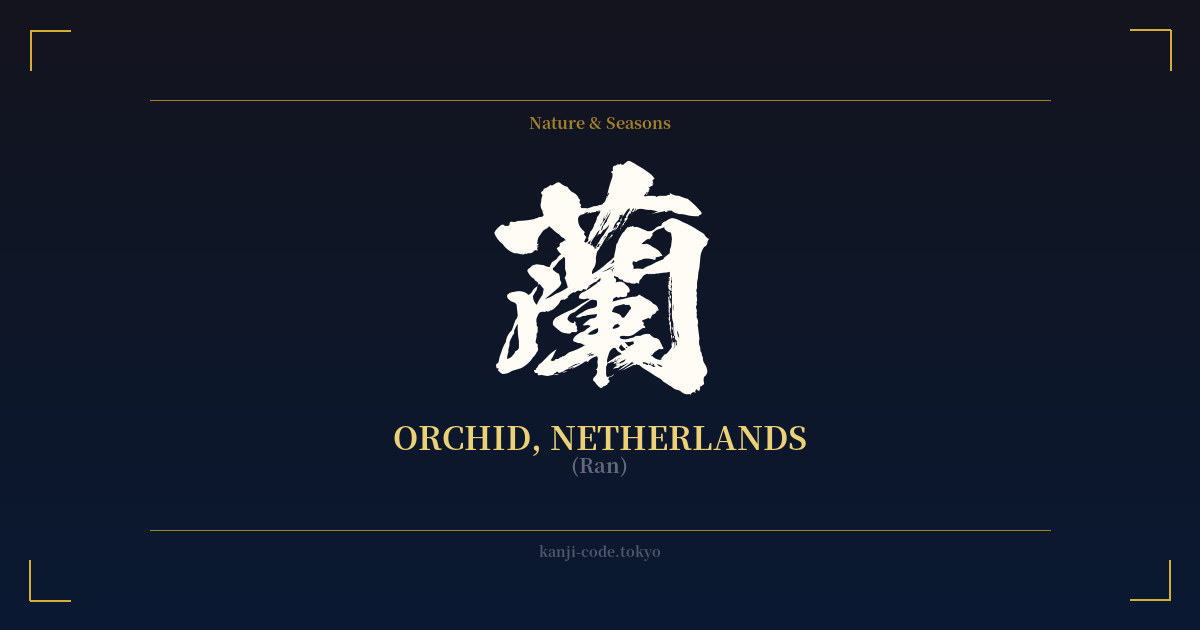
✍️ 蘭 (Ran) — Cultural Context
The kanji 蘭 (Ran) is a character rich with layers of beauty, refinement, and even cross-cultural history. Its primary and most cherished meaning is the orchid, a flower deeply admired throughout East Asia for its delicate beauty and graceful form.
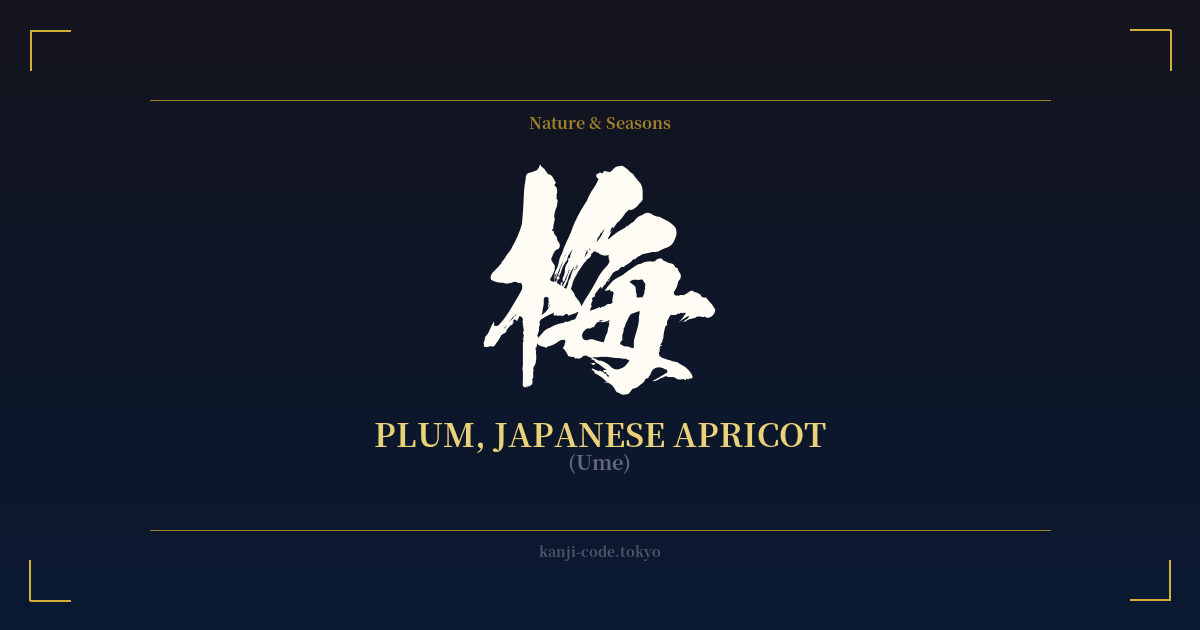
In the cultural traditions of Japan, China, and Korea, the orchid is more than just a plant; it is a profound symbol. It is one of the “Four Gentlemen” (四君子, Shikunshi), a collective term for four plants—plum blossom, orchid, bamboo, and chrysanthemum—that represent the four seasons and embody the virtues of an ideal scholar or gentleman. The orchid, representing spring, symbolizes elegance, humility, integrity, and nobility. Its fragrance is considered subtle and refined, never overpowering, mirroring the character of a person who possesses inner strength without arrogance.
The character’s structure offers clues to its meaning. The radical at the top, 艹 (kusakanmuri), signifies that it is a type of plant or grass. The component below, 闌, provides the phonetic sound “ran” and originally meant a gate or barrier, perhaps poetically suggesting a flower that grows in a secluded, protected, or noble place, away from the ordinary.
Beyond its botanical significance, 蘭 holds a fascinating historical meaning: the Netherlands. This usage is an abbreviation, a form of ateji where kanji are used for their phonetic value. During Japan’s period of isolation (Sakoku), the Dutch were the only Westerners permitted to trade, confined to the island of Dejima in Nagasaki. The Japanese name for Holland was 阿蘭陀 or 和蘭 (Oranda), derived from the Portuguese “Holanda.” Over time, the first character, 蘭, became the standard shorthand for the country. This led to terms like 蘭学 (Rangaku), or “Dutch Learning,” which was the dedicated study of Western science, medicine, and technology that flowed into Japan through Dutch books and traders. This connection links the character not just to natural beauty, but to a pivotal era of intellectual exchange between Japan and the West.
Today, 蘭 is commonly found in art, poetry, and is also a popular and beautiful female given name in Japan, evoking the same qualities of elegance and grace as the flower it represents.
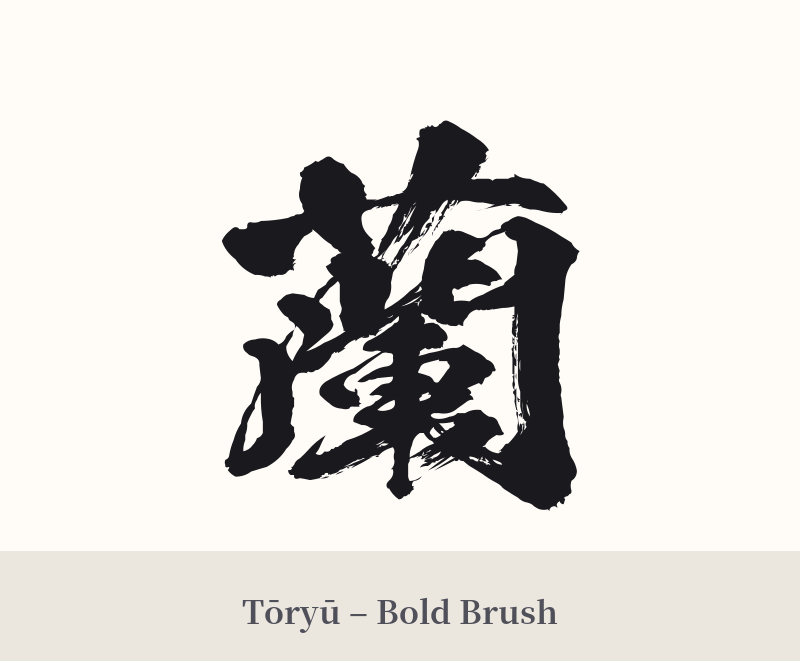
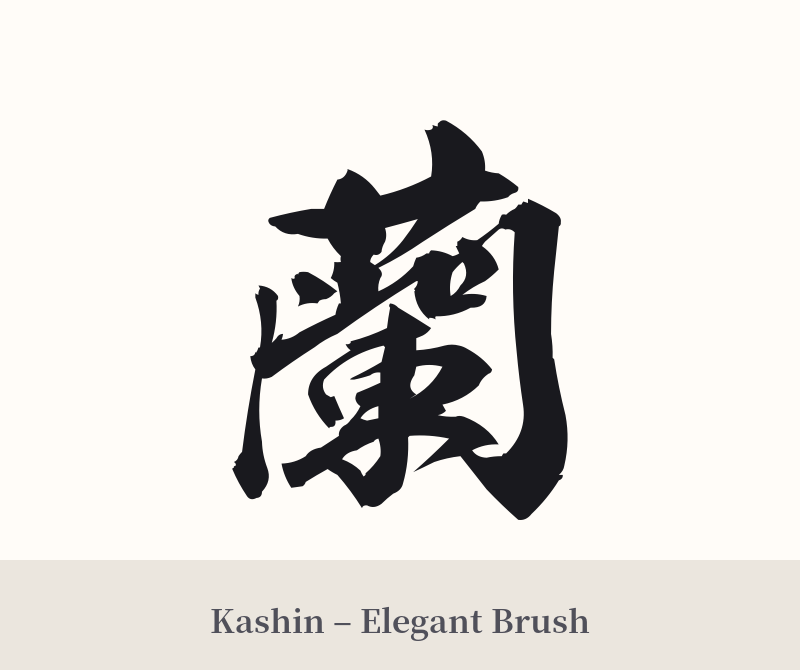
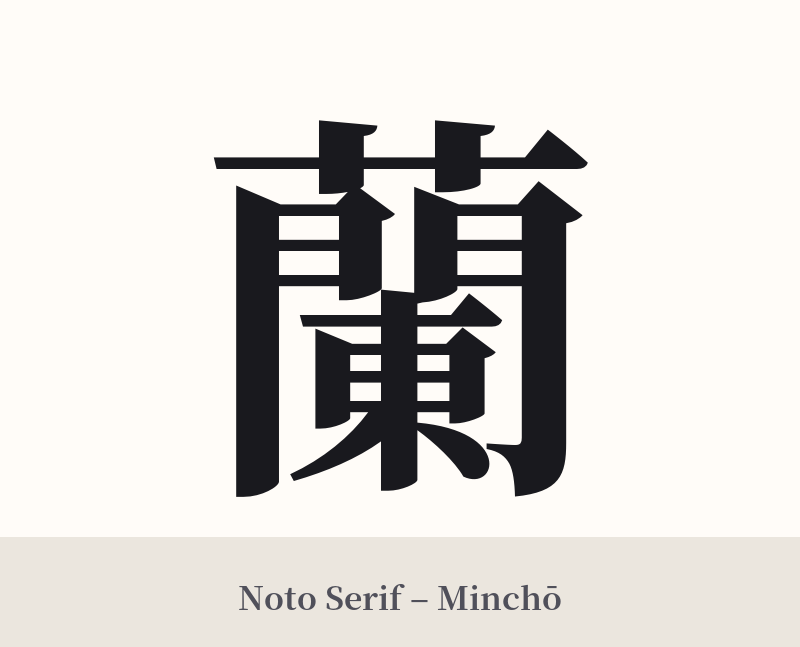
🖌️ Font Styles for 蘭
The same kanji can look dramatically different depending on the calligraphy style. Choose a font that matches the mood you want for your tattoo or design.
🎨 Tattoo Suitability
📐 Tattoo Design Guide
The kanji 蘭 is a visually intricate character, making it a stunning choice for a tattoo when executed well. Its complexity lends itself to artistic interpretations.
– Placement: Choose a flat, spacious area to allow the details to shine. The forearm, calf, back, or shoulder blade are excellent choices. Avoid placing it on very small areas like the finger or behind the ear, as the strokes may blur over time.
– Style: A semi-cursive (gyōsho) or full-cursive (sōsho) calligraphy style can beautifully capture the elegant, flowing nature of the orchid. For a more modern or impactful look, a bold Mincho or gothic font can emphasize its structure. A traditional brushstroke style (shodō) is a classic choice that highlights its artistic heritage.
– Visual Pairing: While 蘭 is strong enough to stand alone, it can be beautifully paired with an illustration of an orchid flower. This combination removes any ambiguity in meaning and creates a cohesive, nature-themed piece. You could also incorporate it into a larger design featuring the other “Four Gentlemen” (plum, bamboo, chrysanthemum) for a piece rich in symbolism.
Comments