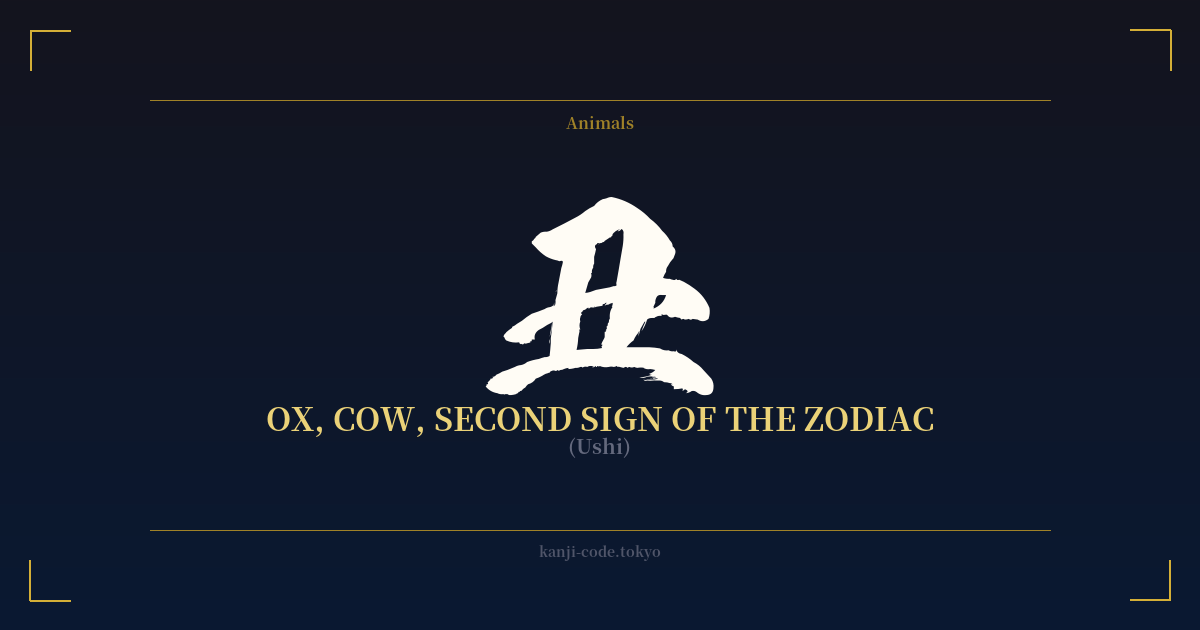
✍️ 丑 (Ushi) — Cultural Context
The kanji 丑 (ushi) represents the Ox, the second animal in the twelve-year cycle of the East Asian zodiac, known in Japan as the Jūnishi (十二支). While it translates to 'ox' or 'cow', its meaning is far more specific and symbolic than the simple depiction of the animal.
At its core, 丑 symbolizes diligence, patience, and unwavering strength. The ox is a creature of immense power, not known for its speed but for its steady, methodical, and reliable progress. In Japanese culture, individuals born in the Year of the Ox are often believed to embody these traits: they are seen as hardworking, dependable, and persistent, capable of enduring hardship to achieve their goals. They are the bedrock, the quiet force that moves things forward without needing fanfare.
The story of the zodiac's origin perfectly illustrates the Ox's character. In the great race held by the Jade Emperor, the kind and powerful Ox agreed to carry the small Rat across a river. Nearing the finish line, the clever Rat leaped from the Ox's back to claim first place, leaving the dependable Ox to finish second. This tale highlights both the Ox's strength and its trusting, somewhat naive, nature.
Beyond the zodiac cycle, 丑 has deep roots in the traditional Japanese system of time and direction. The 'Hour of the Ox' (丑の刻, Ushi no koku) corresponds to the period between 1 AM and 3 AM. This specific time has a more sinister association in folklore. It is famously the hour for supernatural occurrences and the setting for the 'Ushi no Koku Mairi' (丑の刻参り), a chilling ritual where a person, consumed by jealousy and hatred, attempts to lay a curse upon their rival by nailing a straw doll to a sacred tree at a Shinto shrine.
It is crucial to distinguish 丑 from its more common counterpart, 牛. Both can be read as 'ushi', but they are not interchangeable. 牛 refers to the physical animal—the cow in the field, the bull in the ring. 丑, on the other hand, is an abstract, symbolic character tied to the zodiac, time, and direction. It represents the concept and spirit of the Ox within this ancient cosmological system. Choosing 丑 is choosing to align with this deeper, cyclical symbolism rather than just the image of an animal.
🖌️ Font Styles for 丑
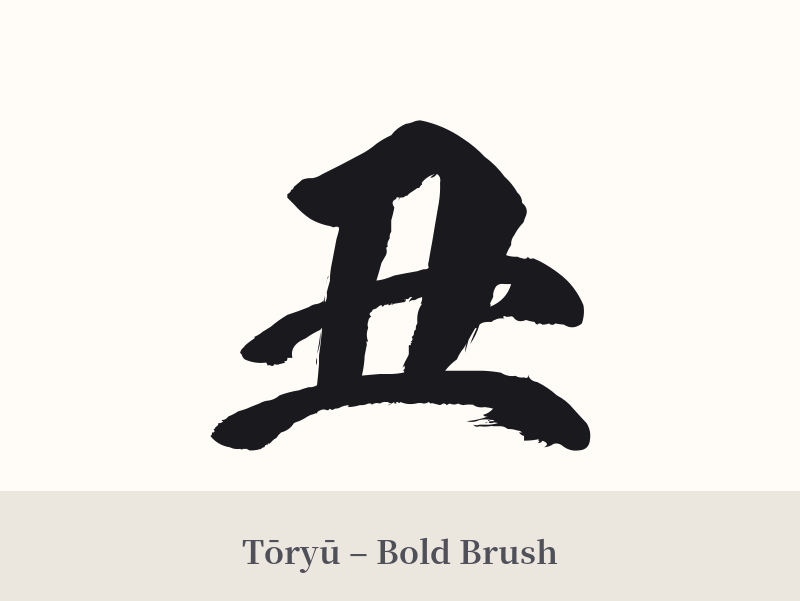
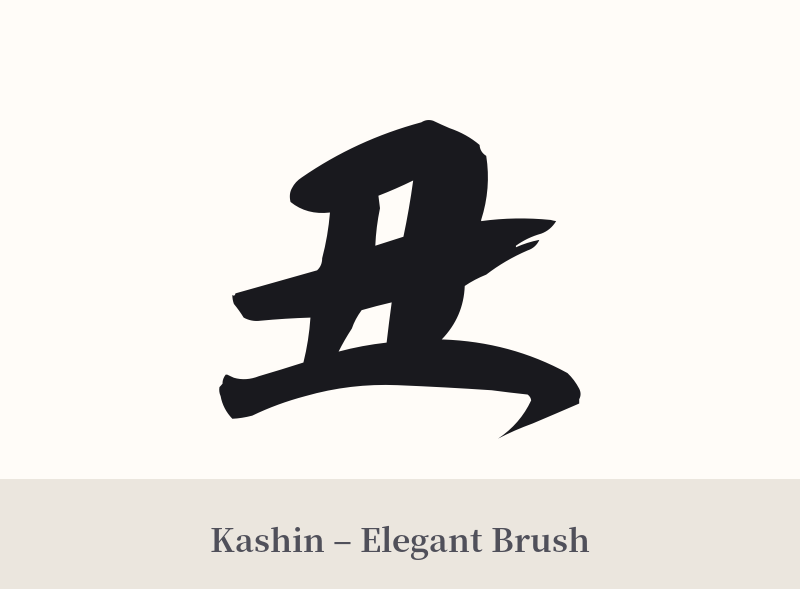
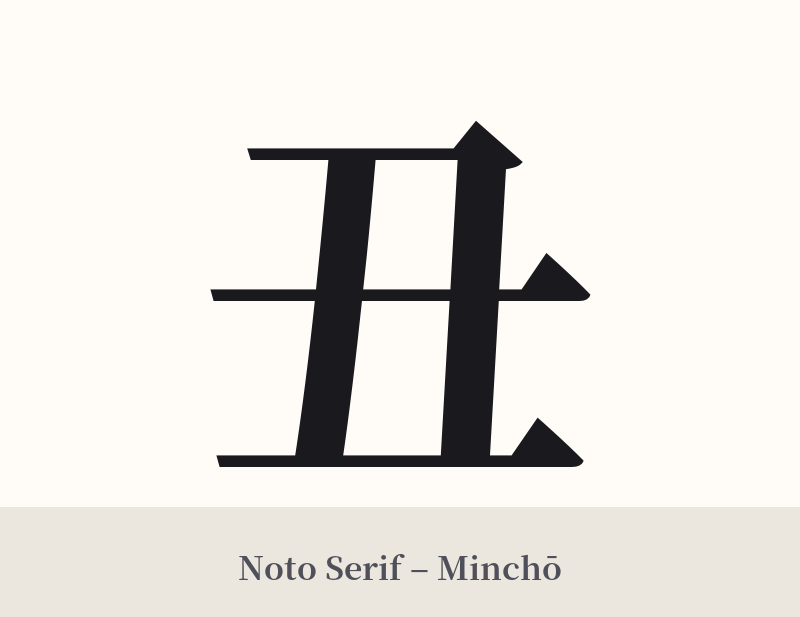
The same kanji can look dramatically different depending on the calligraphy style. Choose a font that matches the mood you want for your tattoo or design.
🎨 Tattoo Suitability
📐 Tattoo Design Guide
The simple, four-stroke structure of 丑 offers a minimalist aesthetic that works well in various tattoo designs.
– Placement: Its simplicity makes it ideal for smaller, subtle placements like the wrist, behind the ear, on the ankle, or as a finger tattoo. For a more prominent piece, it can serve as a central element in a larger composition, perhaps integrated with a full illustration of an ox or other zodiac animals.
– Font Style: A traditional Kaisho (block script) style will emphasize its inherent stability and strength. For a more ancient and mystical feel, a Tensho (seal script) font can be very effective, connecting it to its deep historical roots. A flowing Sosho (cursive script) offers a dynamic contrast to the kanji's steadfast meaning.
– Visual Tips: Consider pairing 丑 with the kanji for your birth year or incorporating it into a circular design representing the full zodiac wheel. Because it's visually simple, it benefits from being rendered with bold, confident lines to give it presence.
Comments