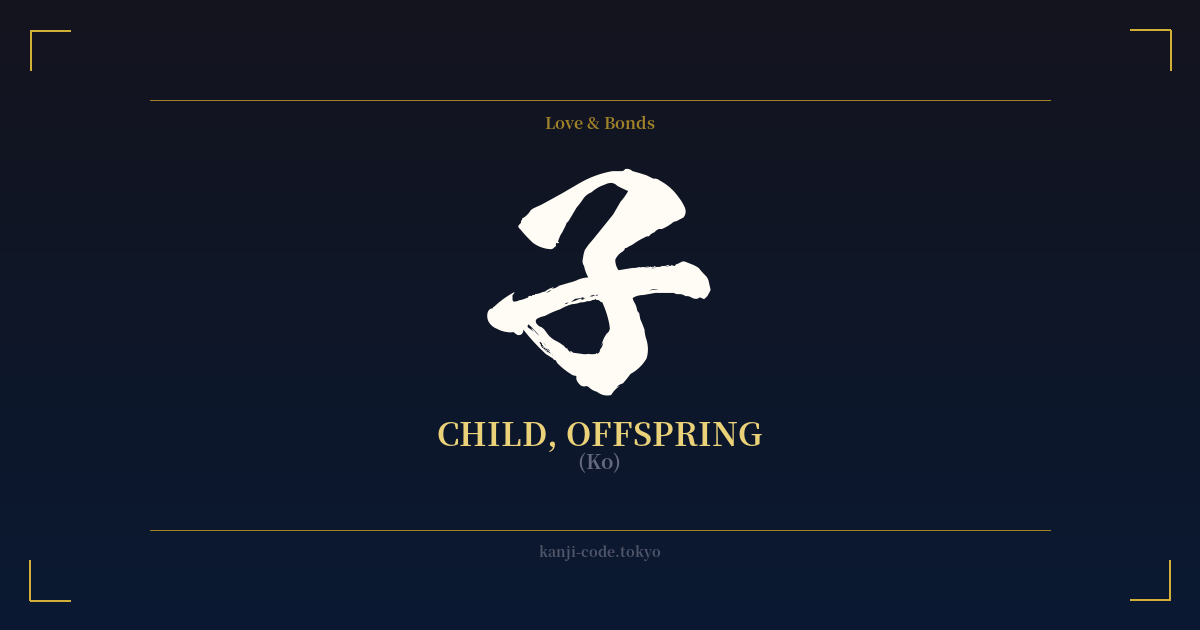
✍️ 子 (Ko) — Cultural Context
The kanji 子 (ko) is one of the most fundamental and evocative characters in the Japanese language. Its origins are pictographic, stemming from an ancient drawing of a swaddled infant with outstretched arms, a universal image of new life and vulnerability. This simple, three-stroke character encapsulates the core concept of 'child,' 'offspring,' and by extension, 'seed' or 'new beginning.'
In daily life, 子 is most commonly encountered within the word 子供 (kodomo), the general term for 'child' or 'children.' However, its significance extends far beyond this simple definition. It forms the basis for words distinguishing gender, such as 男の子 (otoko no ko – boy) and 女の子 (onna no ko – girl), highlighting its role as a foundational element of identity.
Historically and culturally, 子 is deeply tied to the concepts of family, lineage, and legacy. It represents the continuation of a family line, a central value in traditional Japanese and East Asian culture. The parent-child relationship, or 親子 (oyako), is a cornerstone of social structure, and this single character sits at the heart of that bond.
One of its most famous uses is as a suffix in female given names. Names like Hanako (花子, 'flower child'), Aiko (愛子, 'love child'), and Michiko (美智子, 'beautiful wisdom child') were incredibly popular throughout the 20th century. While this naming convention has become less common in recent years, it remains a powerful cultural signifier, often evoking a sense of classic, traditional Japanese femininity.
Interestingly, 子 also carries a meaning of respect and mastery. In ancient China, it was used as an honorific suffix for great thinkers and philosophers. Confucius, for example, is known as 孔子 (Kōshi) in Japanese, and Lao Tzu is 老子 (Rōshi). In this context, 'shi' (the alternate reading of 子) elevates the person to the status of 'Master.'
Furthermore, 子 is the first of the twelve Earthly Branches in the Chinese zodiac, representing the Rat. In this role, it is associated with traits like cleverness, resourcefulness, and the beginning of a new cycle. This adds another layer of meaning, connecting the character not just to human life but to the cyclical nature of time itself.
🖌️ Font Styles for 子
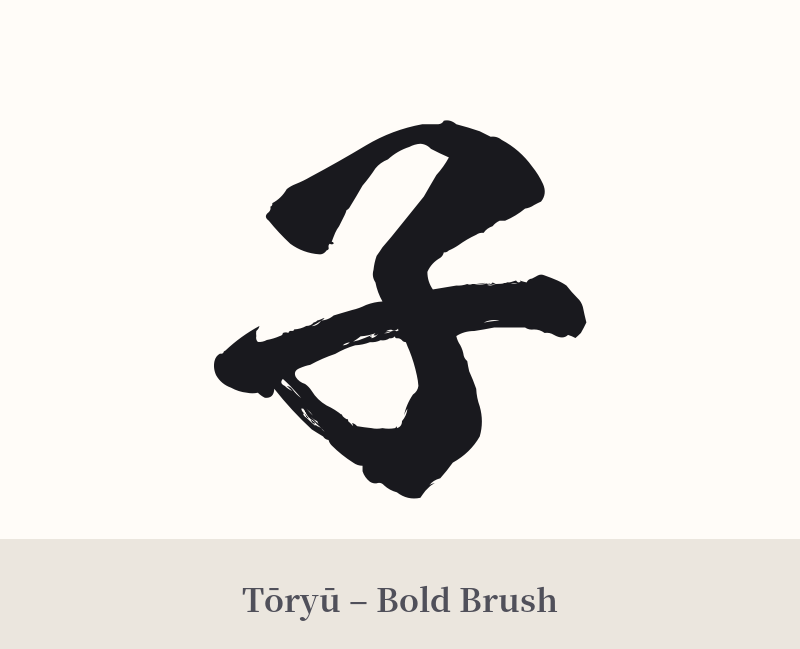
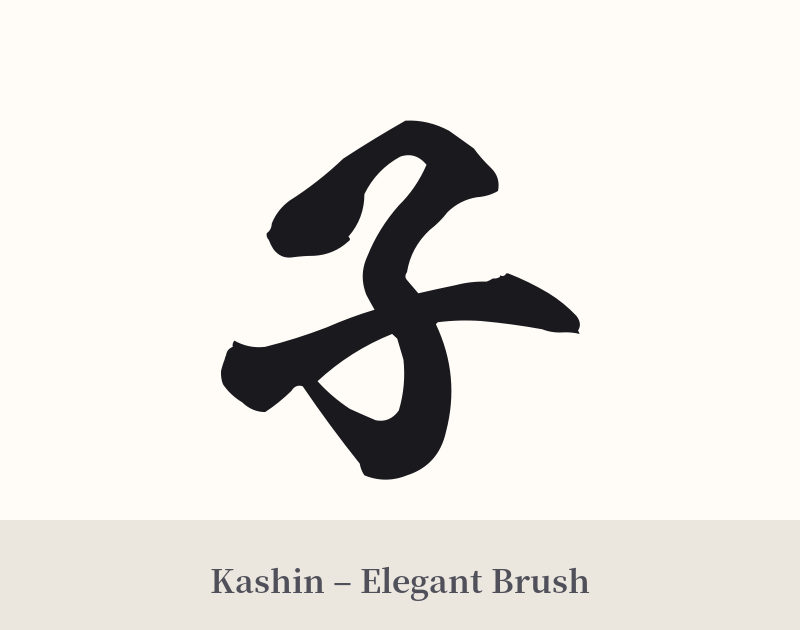
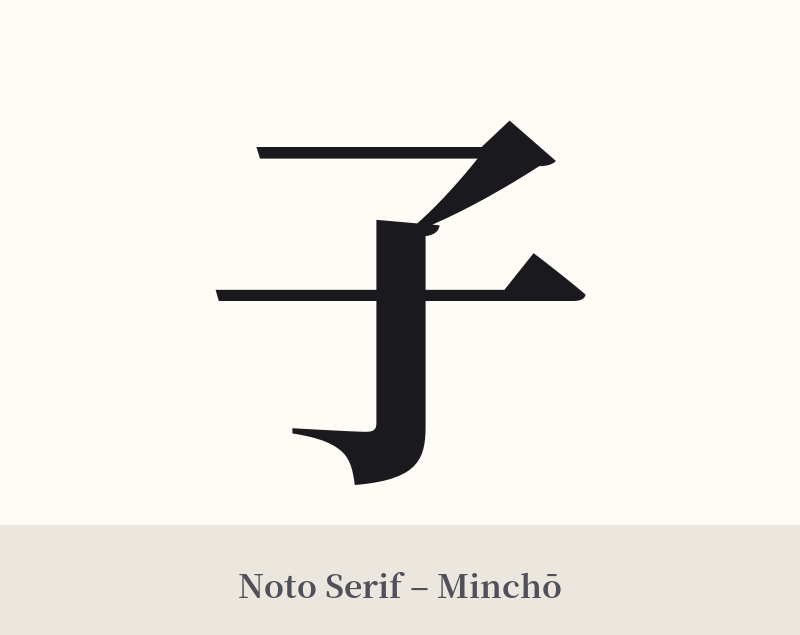
The same kanji can look dramatically different depending on the calligraphy style. Choose a font that matches the mood you want for your tattoo or design.
🎨 Tattoo Suitability
📐 Tattoo Design Guide
Due to its simplicity and potential for ambiguity, tattooing the single character 子 is generally not recommended. However, if you are committed to this kanji for personal reasons, here are some design considerations to give it more weight and context:
– Combine It: The best approach is to pair 子 with another kanji to form a meaningful compound word. For example, combining it with 愛 (ai – love) creates 愛子 (Aiko), meaning 'beloved child.' This is a common and beautiful name.
– Integrate into a Larger Image: Instead of having it stand alone, incorporate 子 into a larger visual piece. It could be placed within an Enso circle, woven into the branches of a cherry blossom tree, or subtly included in a portrait of a loved one.
– Placement: If tattooed alone, choose a small, discreet location. The inner wrist, ankle, or behind the ear can work for such a simple character, making it feel more like a personal mark than a large statement piece.
– Font Style: The font choice is critical. A delicate, flowing script (gyosho) can emphasize its gentle, innocent quality. Conversely, a bold, stable block script (kaisho) can give the simple character more presence and stability.
Comments