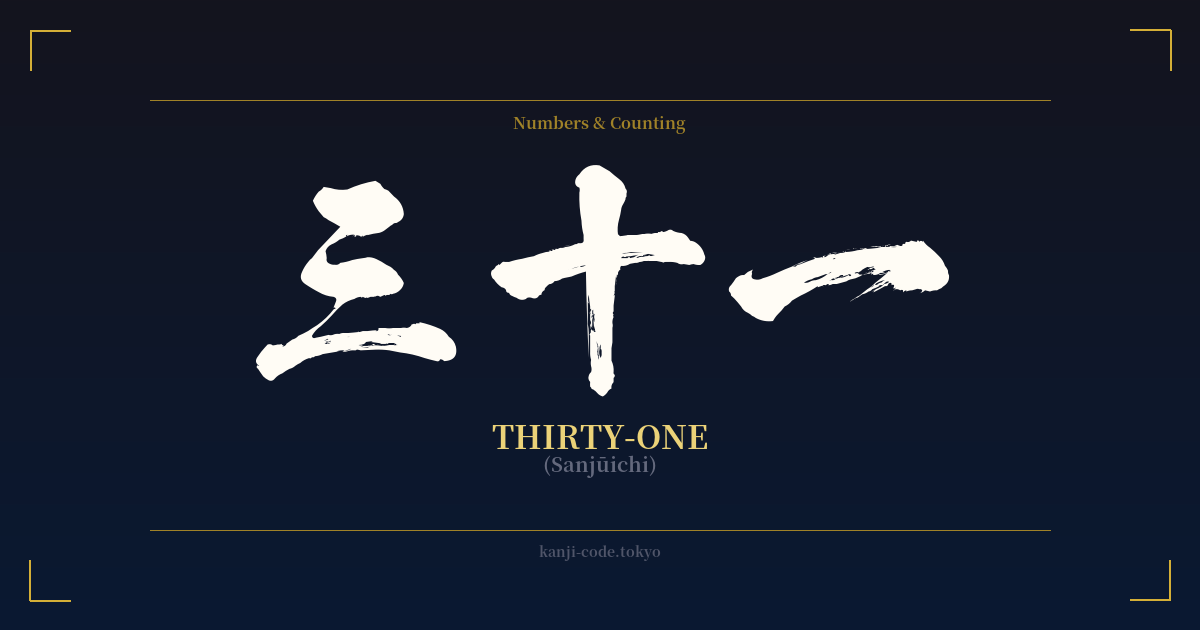
✍️ 三十一 (Sanjūichi) — Cultural Context
The Japanese word for thirty-one, 三十一 (Sanjūichi), is a perfect example of the logical and additive nature of the kanji numeral system. It is constructed quite literally: 三 (san) means 'three', 十 (jū) means 'ten', and 一 (ichi) means 'one'. The structure can be read as 'three tens and a one,' showcasing a straightforward mathematical logic that is elegant in its simplicity.
While Arabic numerals (1, 2, 3) are ubiquitous in modern Japan for everyday tasks, kanji numerals hold a special place in culture and tradition. You will find them on formal documents, certificates, and in legal contexts to prevent forgery, as the characters are more complex than simple digits. They are also integral to traditional arts, such as in the scoring of martial arts (dan ranks) or in the formal naming of historical eras.
Perhaps one of the most significant cultural associations with the number thirty-one is in the world of poetry. The classic Japanese poetic form known as a tanka (短歌, 'short poem') or waka (和歌, 'Japanese poem') consists of 31 syllables. This structure is arranged in a 5-7-5-7-7 pattern, creating a concise yet emotionally resonant verse. For centuries, this form has been the vehicle for expressing everything from the beauty of nature to the depths of love and loss. Thus, the number 31 is intrinsically linked to a rich literary heritage.
In spiritual or numerological terms, thirty-one does not carry the same heavy weight as numbers like four (associated with death) or seven (often considered lucky). It is not one of the primary yakudoshi (厄年), or 'unlucky years,' for men or women. Its significance, therefore, is more likely to be personal than universally symbolic. It could represent a cherished birthday, a significant anniversary, or a personal milestone. This makes a tattoo of 三十一 a deeply individual statement, its meaning known primarily to the one who wears it.
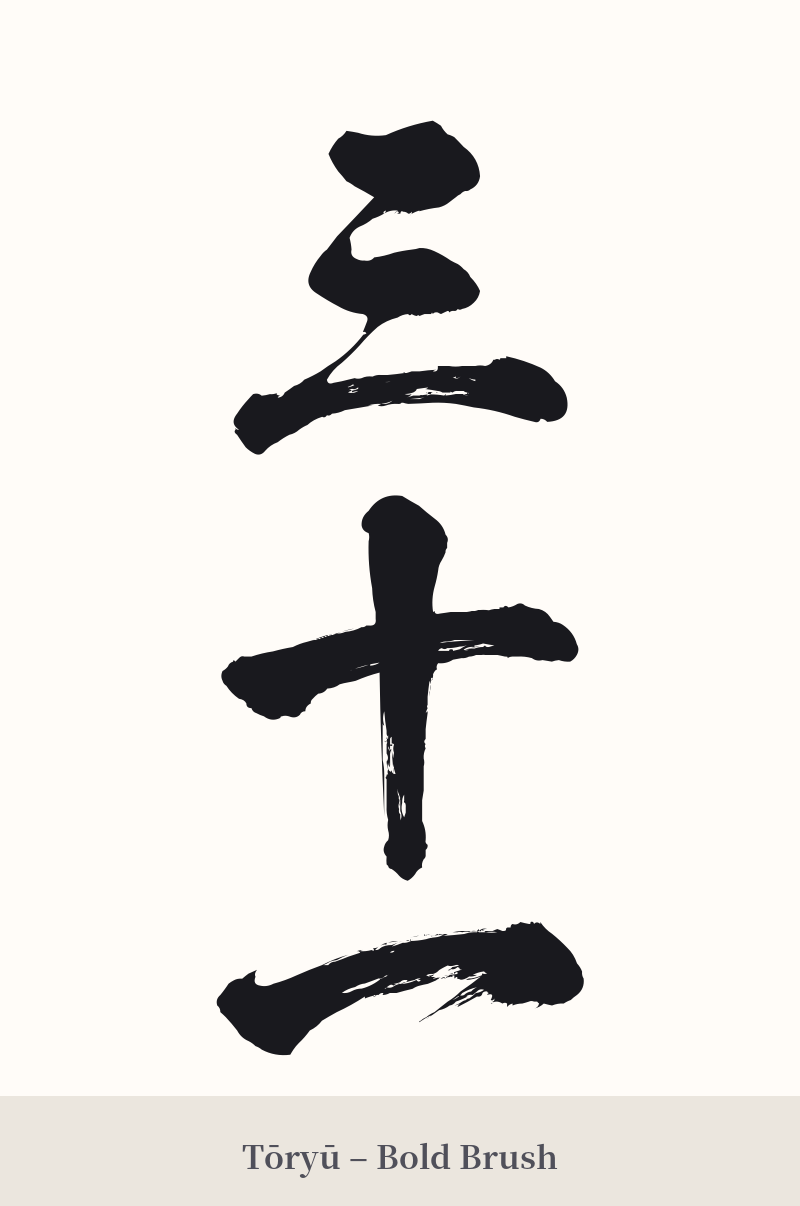
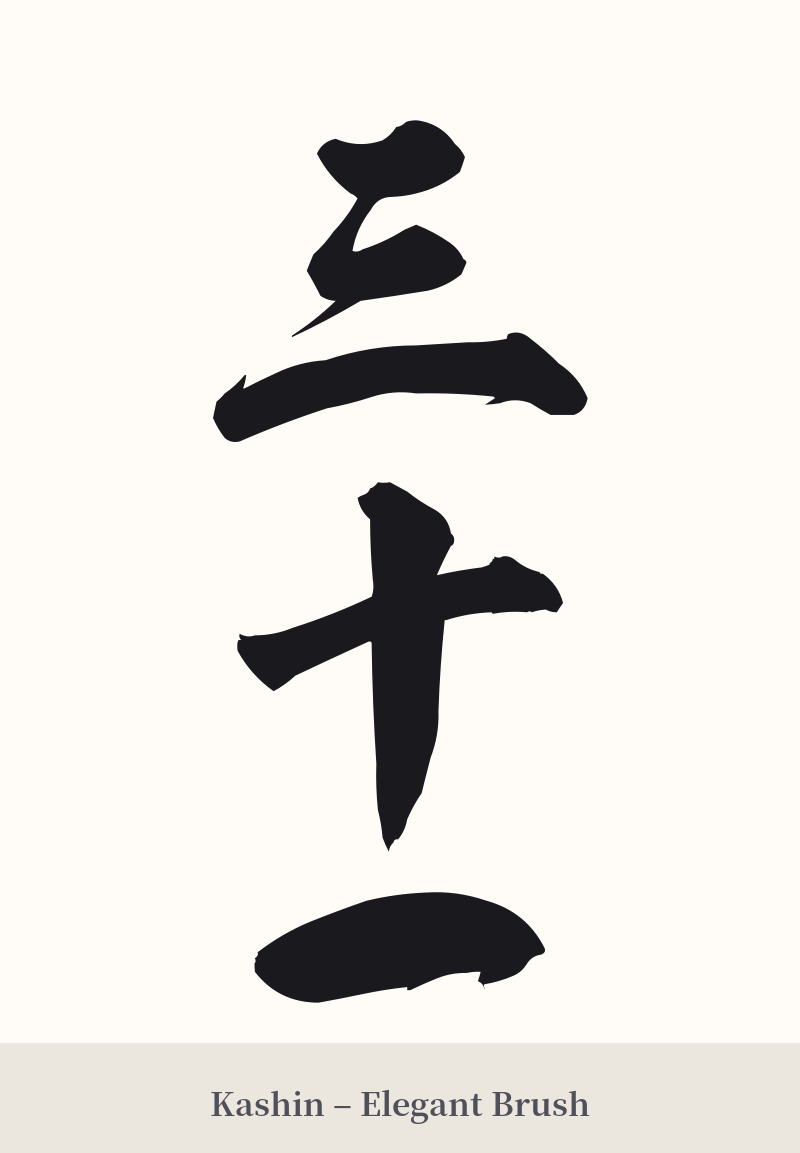
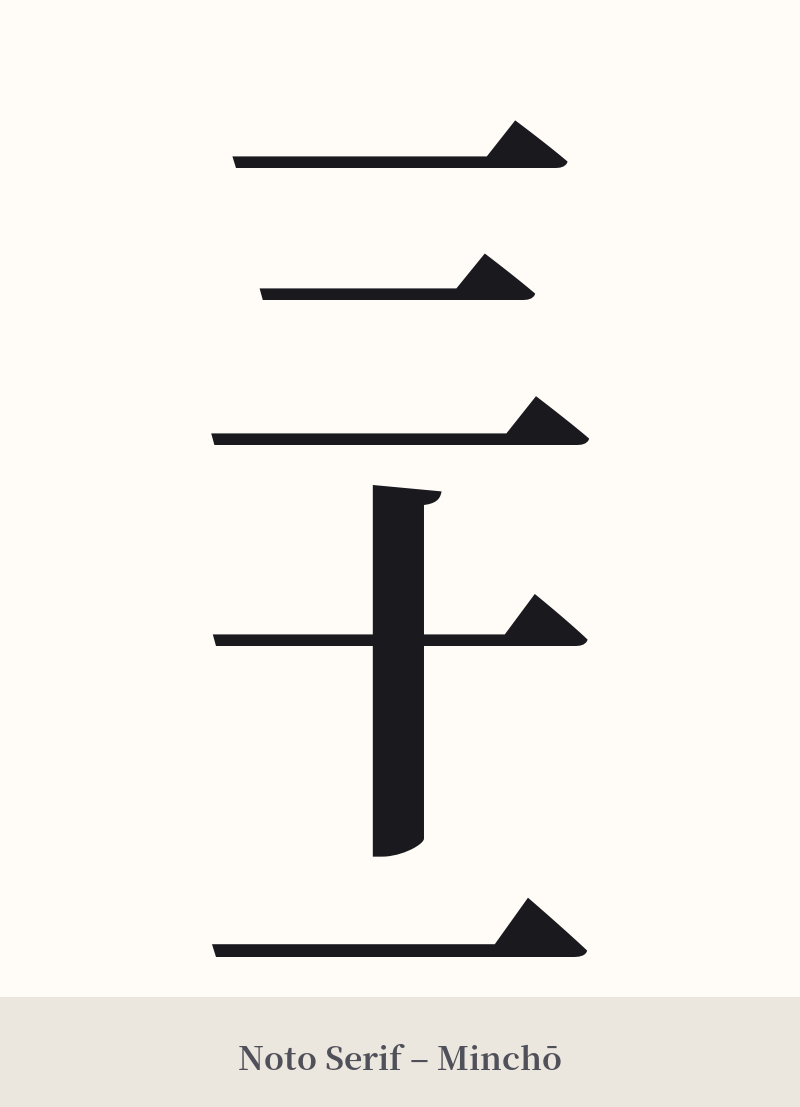
🖌️ Font Styles for 三十一
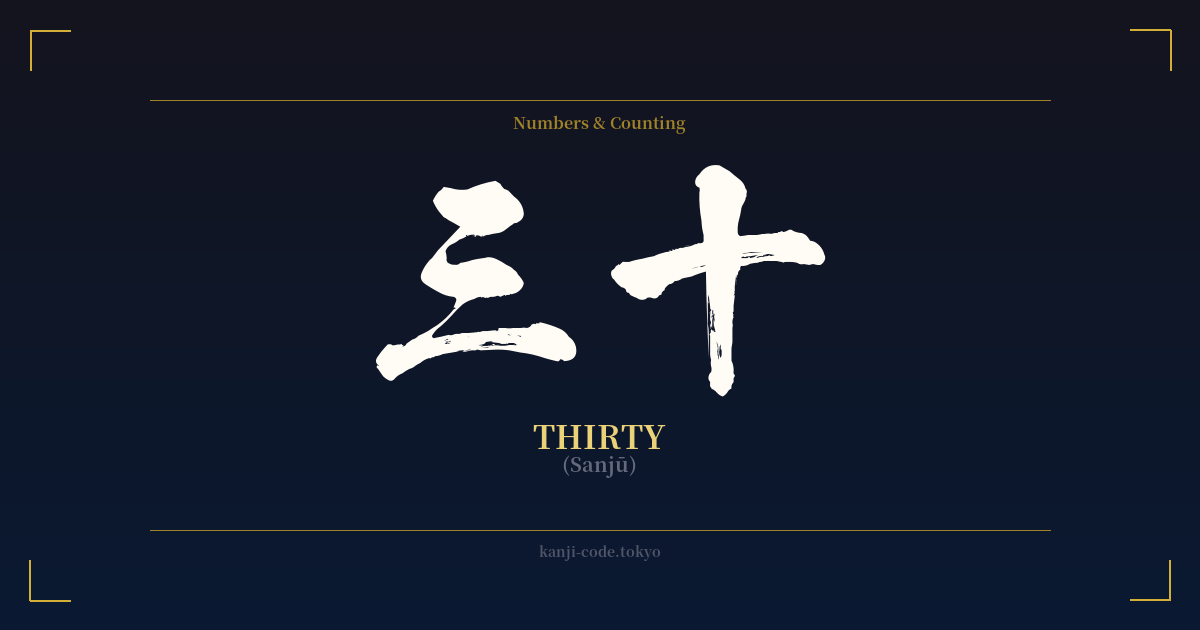
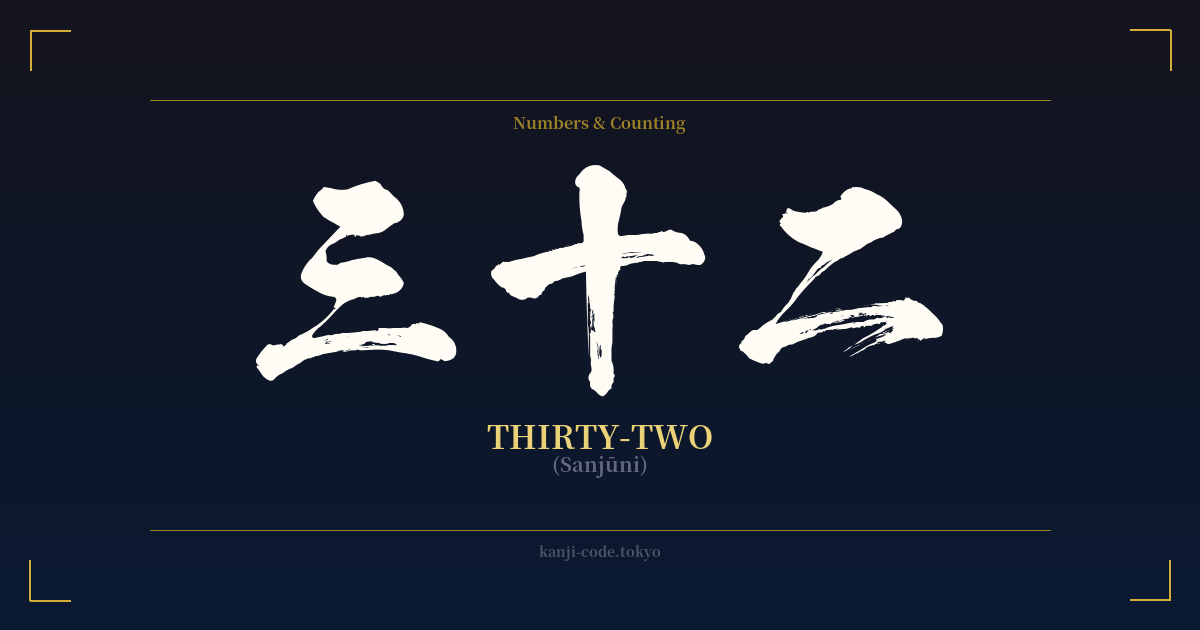
The same kanji can look dramatically different depending on the calligraphy style. Choose a font that matches the mood you want for your tattoo or design.
🎨 Tattoo Suitability
📐 Tattoo Design Guide
Given the simplicity of the characters in 三十一, the choice of font and placement is crucial to creating an impactful design.
– Font Style: Avoid standard, blocky computer fonts, which can make the tattoo look like a generic label. Opt for a dynamic calligraphy style like gyosho (semi-cursive) or sosho (cursive) to give the simple lines a sense of movement and artistry. A skilled tattoo artist can make these basic characters feel alive.
– Placement: Because the characters are not visually complex, 三十一 works well in smaller, more intimate placements. Consider the wrist, the ankle, along the collarbone, or vertically down the spine. A large-scale version on a bicep or back might look sparse unless it's part of a larger composition.
– Composition: Consider writing the kanji vertically (三十一) for a more traditional look. You could also integrate it into a larger piece that explains its significance. For example, if it represents a birthday, you could have the kanji written on a scroll surrounded by 31 cherry blossoms or the birth flower of that month.
Comments