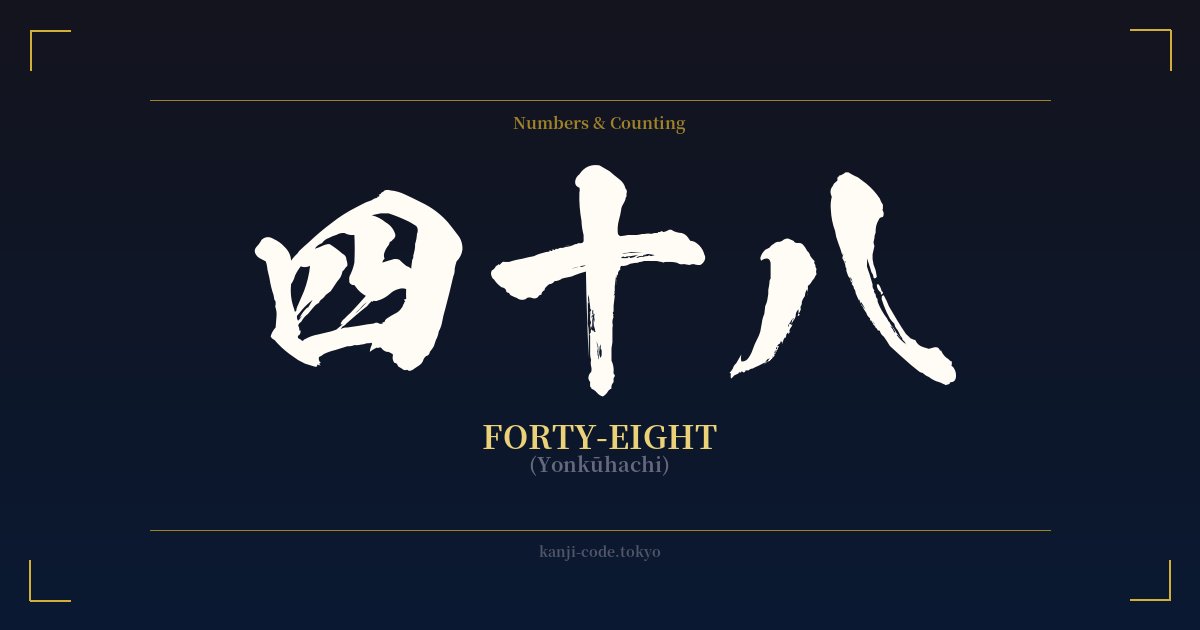
✍️ 四十八 (Yonkūhachi) — Cultural Context
On the surface, 四十八 (yonjūhachi) is simply the number forty-eight. It is constructed logically: 四 (yon) means four, 十 (jū) means ten, and 八 (hachi) means eight. In Japanese counting, 'forty' is expressed as 'four tens' (四 十), so the full number literally reads "four-ten-eight."
However, this seemingly straightforward number is packed with a surprising amount of cultural significance, spanning from the hyper-modern to the ancient and sacred.
In contemporary Japan, the number 48 is almost inseparable from one thing: the massive J-pop idol group AKB48. Founded in 2005 by producer Yasushi Akimoto, the group's name comes from Akihabara (Akiba), the Tokyo district famous for its electronics and otaku culture, where their dedicated theater is located. The '48' was originally meant to signify the number of members, though the group's roster has since grown and fluctuated into a complex system of teams and sister groups across Japan and Asia. For an entire generation, 四十八 is synonymous with catchy pop songs, elaborate stage performances, and the concept of 'idols you can meet.'
Moving from pop culture to natural beauty, the number also evokes the famous 赤目四十八滝 (Akame Shijūhachi Taki), or the 48 Falls of Akame in Mie Prefecture. This stunning series of waterfalls along a single valley is a designated national scenic spot. The name is more poetic than literal; 'shijūhachi' in this context is an old expression meaning 'many' or 'a great number of.' The area is steeped in legend, believed to be a training ground for the Iga-ryū ninja clan. Here, the number forty-eight doesn't represent a precise count but rather an abundance of natural power and mystique.
Delving deeper into history and spirituality, we find the 四十八願 (shijūhachi-gan), the Forty-Eight Vows of Amida Buddha. In Pure Land Buddhism, these vows were made by the Bodhisattva Dharmākara on his path to becoming Amida Buddha. These vows outline the conditions of his pure land, Sukhāvatī, and form the foundational promise that any being who sincerely calls upon his name will be reborn in this paradise. This makes the number 48 a cornerstone of one of the most widely practiced forms of Buddhism in East Asia, representing boundless compassion and the promise of salvation.
Thus, 四十八 is a fascinating example of how a simple number can be a cultural vessel, carrying meanings that range from a modern entertainment phenomenon to a sacred spiritual promise and the poetic description of a ninja's training ground.
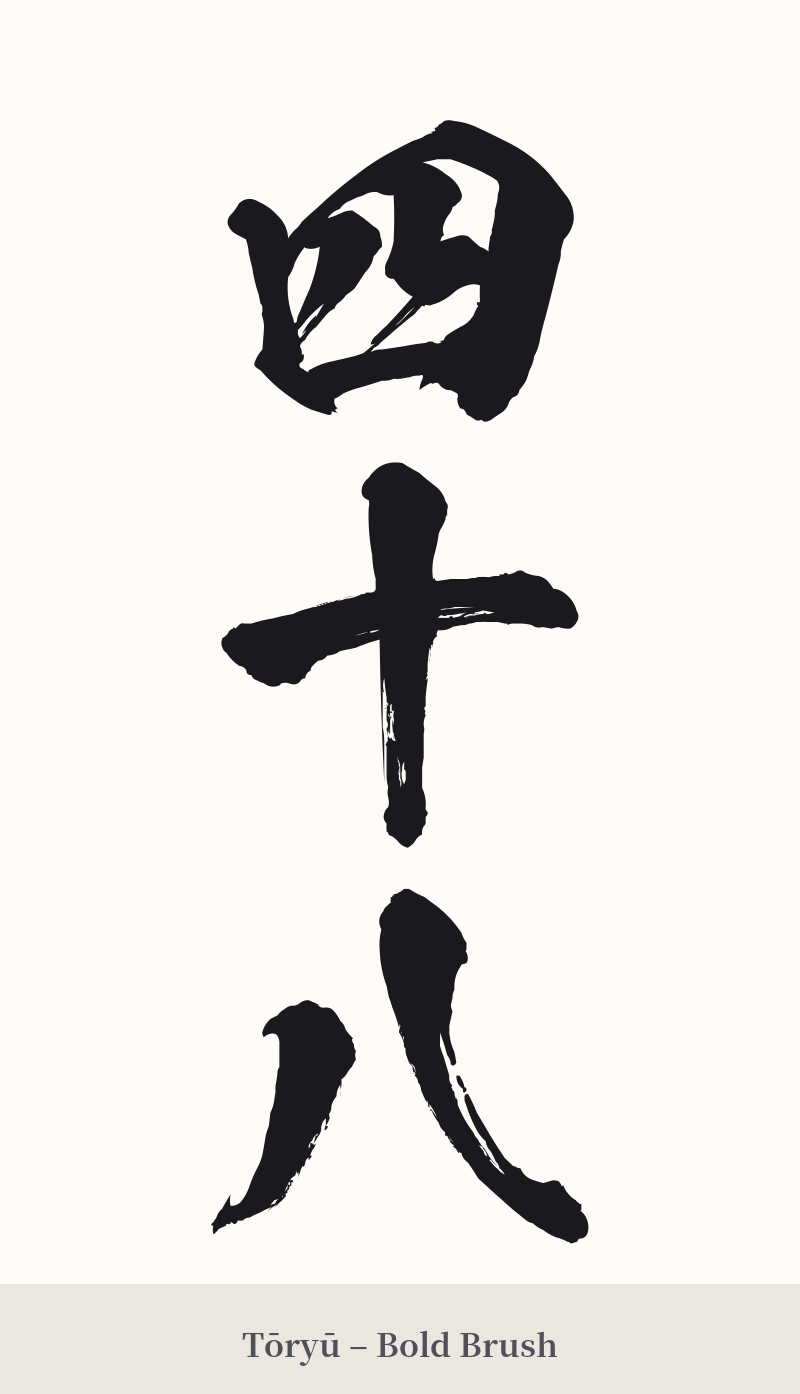
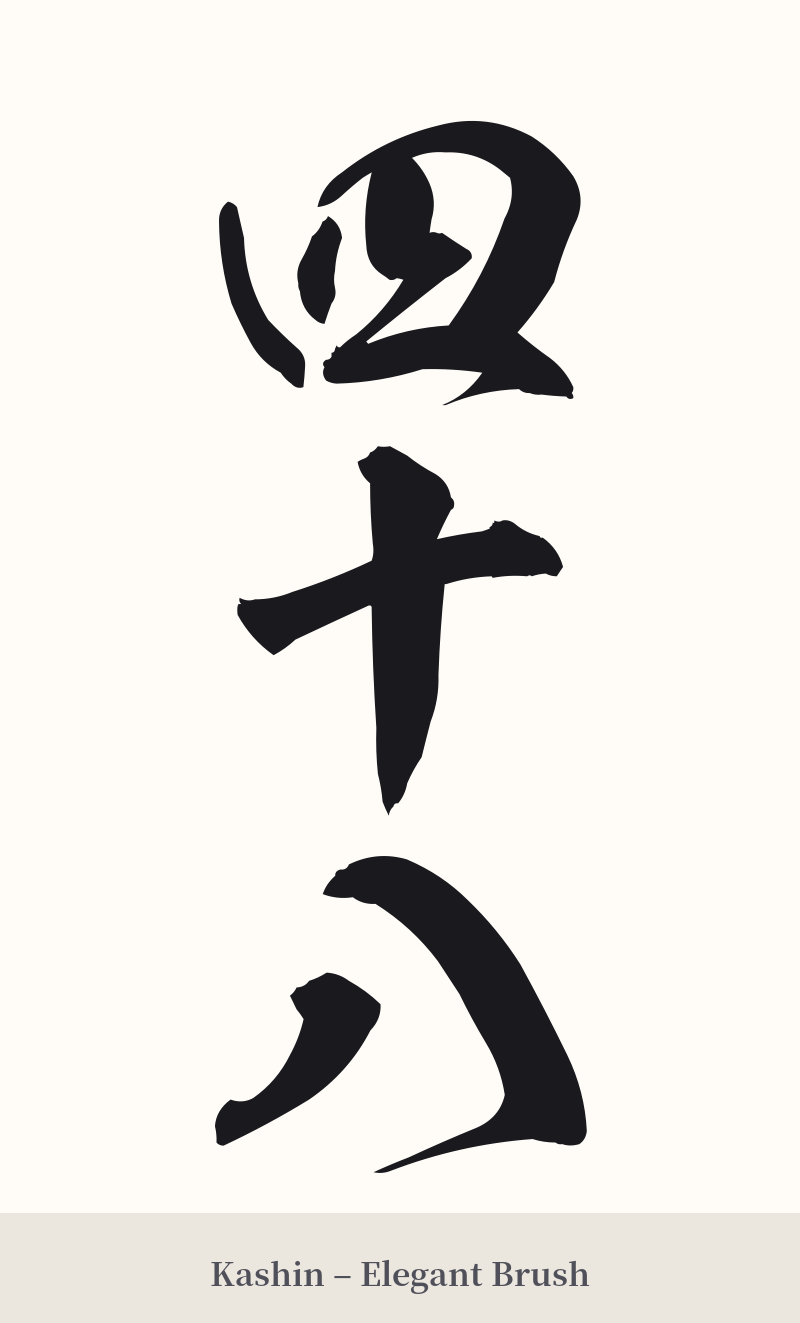
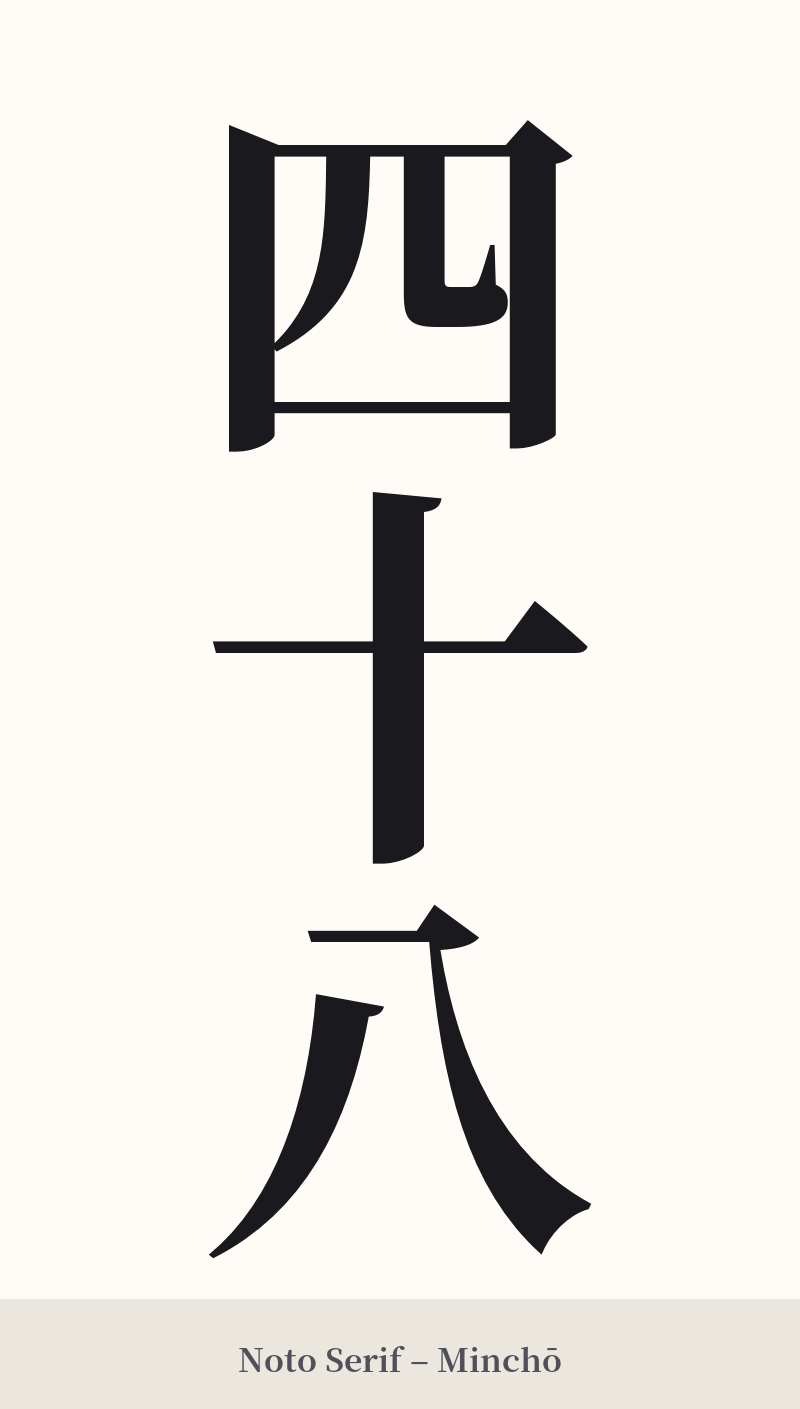
🖌️ Font Styles for 四十八
The same kanji can look dramatically different depending on the calligraphy style. Choose a font that matches the mood you want for your tattoo or design.
🎨 Tattoo Suitability
📐 Tattoo Design Guide
The three-character structure of 四十八 lends itself well to vertical placement, which is the traditional way of writing in Japanese. This looks excellent along the forearm, the calf, or running parallel to the spine.
A horizontal arrangement can also work, particularly across the chest, upper back, or below the collarbone.
– Font Style: For a modern, pop-culture-inspired look (referencing AKB48), a bold, clean, and blocky font like a Gothic (sans-serif) or a sharp Mincho (serif) style works well. For a more traditional or natural feel that evokes the Akame Falls or Buddhist vows, consider a flowing, semi-cursive (gyōsho) or cursive (sōsho) calligraphy style.
– Visual Additions: Because the characters themselves are simple, you might consider adding a contextual element. For a design referencing the Akame Falls, incorporating water splashes, mist, or maple leaves would be beautiful. For a Buddhist theme, a subtle lotus flower or enso circle could frame the kanji.
Comments