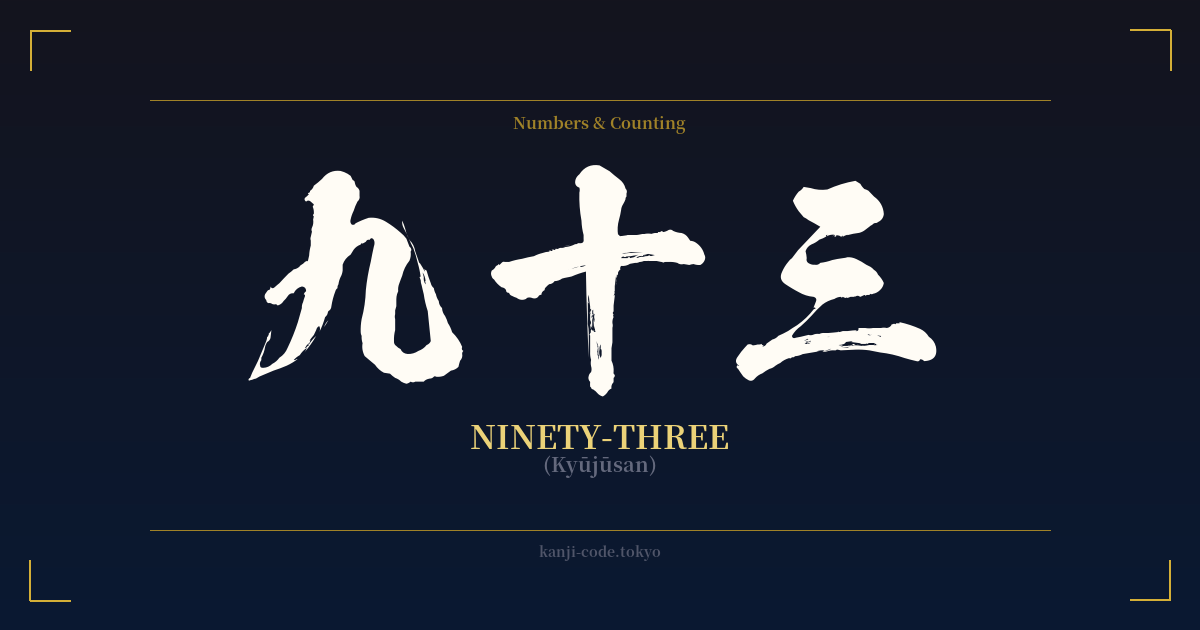
✍️ 九十三 (Kyūjūsan) — Cultural Context
The Japanese kanji for ninety-three, 九十三 (Kyūjūsan), is a perfect example of the logical and systematic nature of the Sino-Japanese numbering system. Unlike English, which has unique words like 'twenty' or 'thirty', Japanese builds numbers in a straightforward, mathematical way. 九十三 is constructed as 九 (kyū, nine) + 十 (jū, ten) + 三 (san, three), literally translating to 'nine-tens-three'. This makes reading large numbers in kanji surprisingly intuitive once you know the basic characters from one to ten, plus the characters for hundred (百), thousand (千), and so on.
Historically, kanji numbers were essential for all forms of record-keeping, from official government documents and financial ledgers to marking dates and ages. While Arabic numerals (0-9) are now dominant in everyday modern life for things like price tags and phone numbers, kanji numbers retain a significant cultural and formal role. You will still see them used in traditional contexts, such as on formal invitations, in historical texts, on certificates of merit, and in vertical writing, which is common in novels and newspapers. Using kanji for numbers can lend a sense of formality, tradition, or artistic flair.
In terms of specific symbolism, the number ninety-three itself does not hold a widespread, significant cultural meaning in Japan. Its importance is almost always personal—perhaps a birth year (1993), a significant age, or a jersey number. While some numbers have strong cultural associations (like seven being lucky or four being unlucky), ninety-three is neutral. There is a form of Japanese wordplay called goroawase, where numbers can be read as phonetic sounds to create words. For 93, one could derive 'kumi' (組, group/team) or 'kusa' (草, grass), but these are not common or profound associations.
The individual characters carry their own stories. 九 (nine) is sometimes avoided because its reading 'ku' is a homophone for 苦 (ku, suffering). This is why you might not see a hospital room '9'. However, this superstition is minor and typically doesn't apply when it's part of a larger number like ninety-three. The character 十 (ten) represents completeness, and 三 (three) is generally considered a lucky and stable number in East Asian cultures. When combined, they simply function as mathematical components, creating the value of ninety-three without any deeper, combined esoteric meaning.
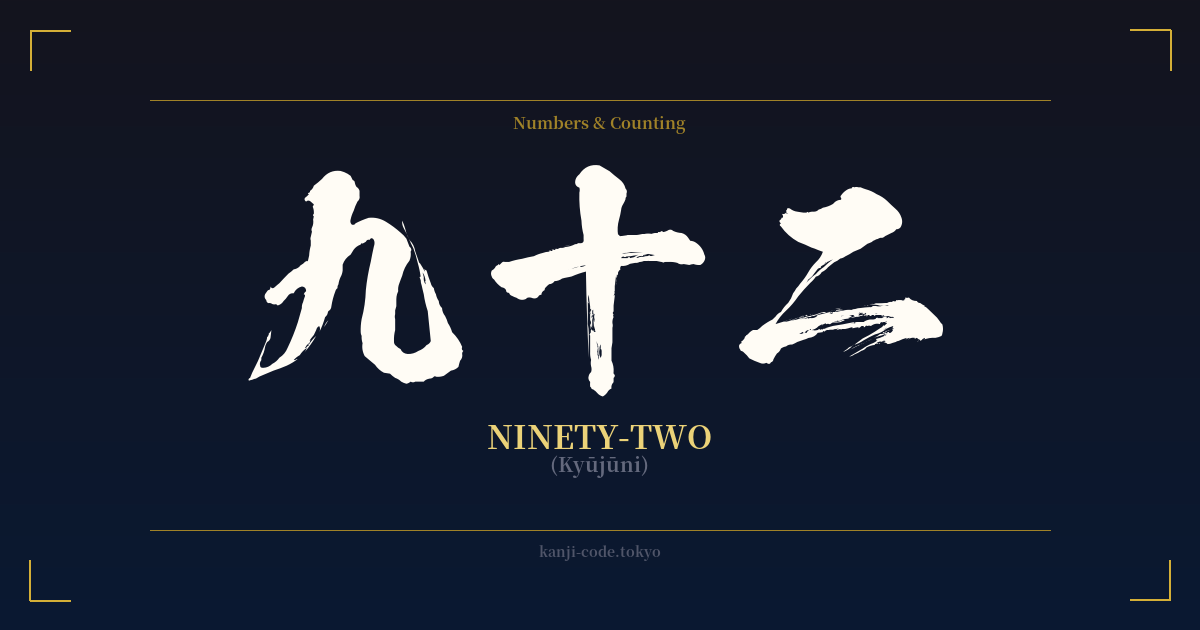
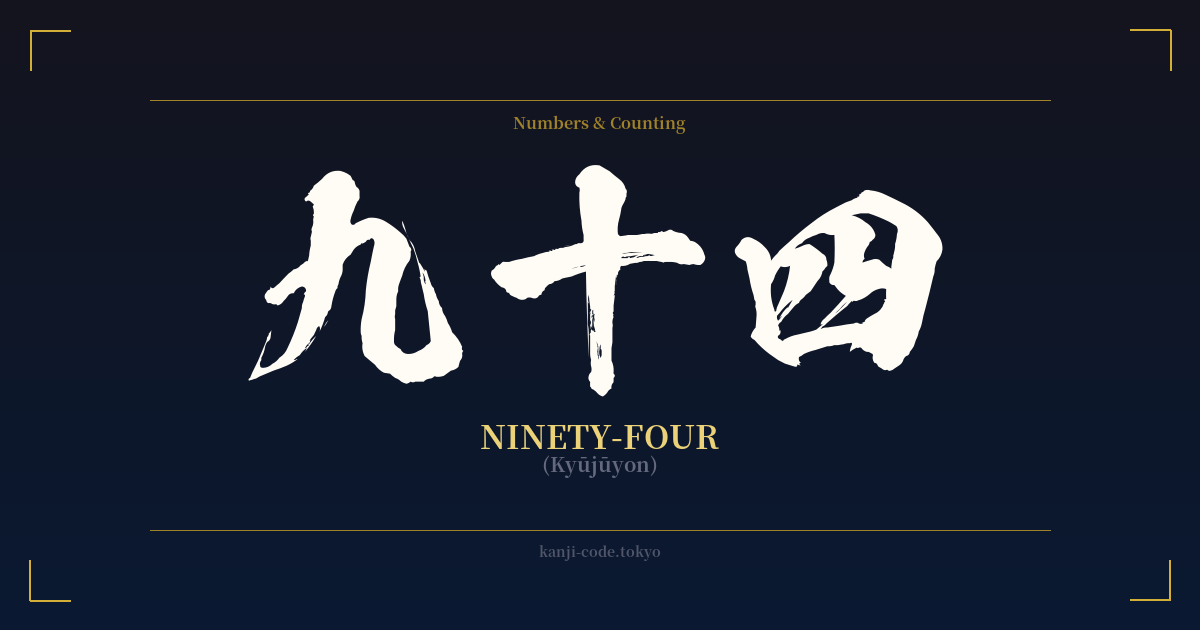
🖌️ Font Styles for 九十三
The same kanji can look dramatically different depending on the calligraphy style. Choose a font that matches the mood you want for your tattoo or design.
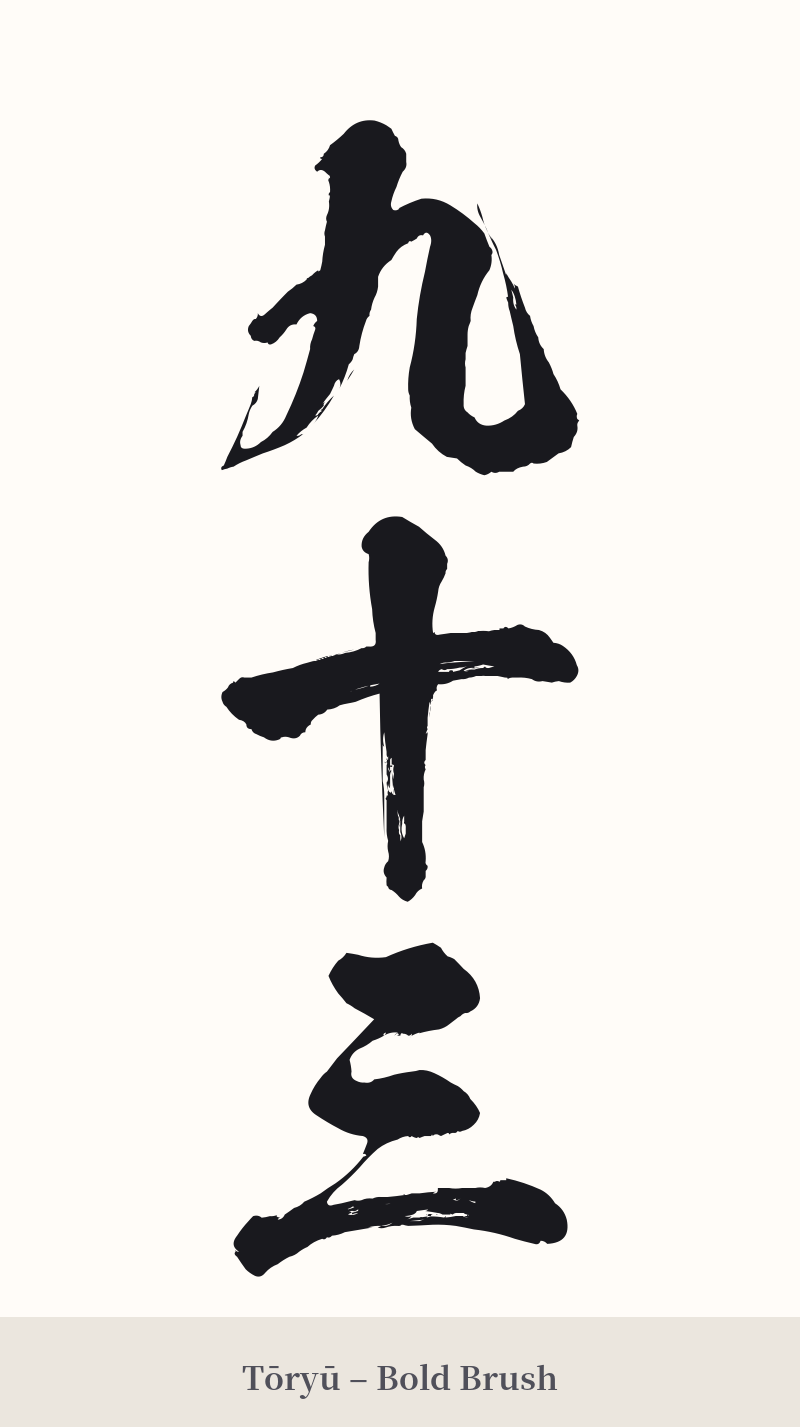
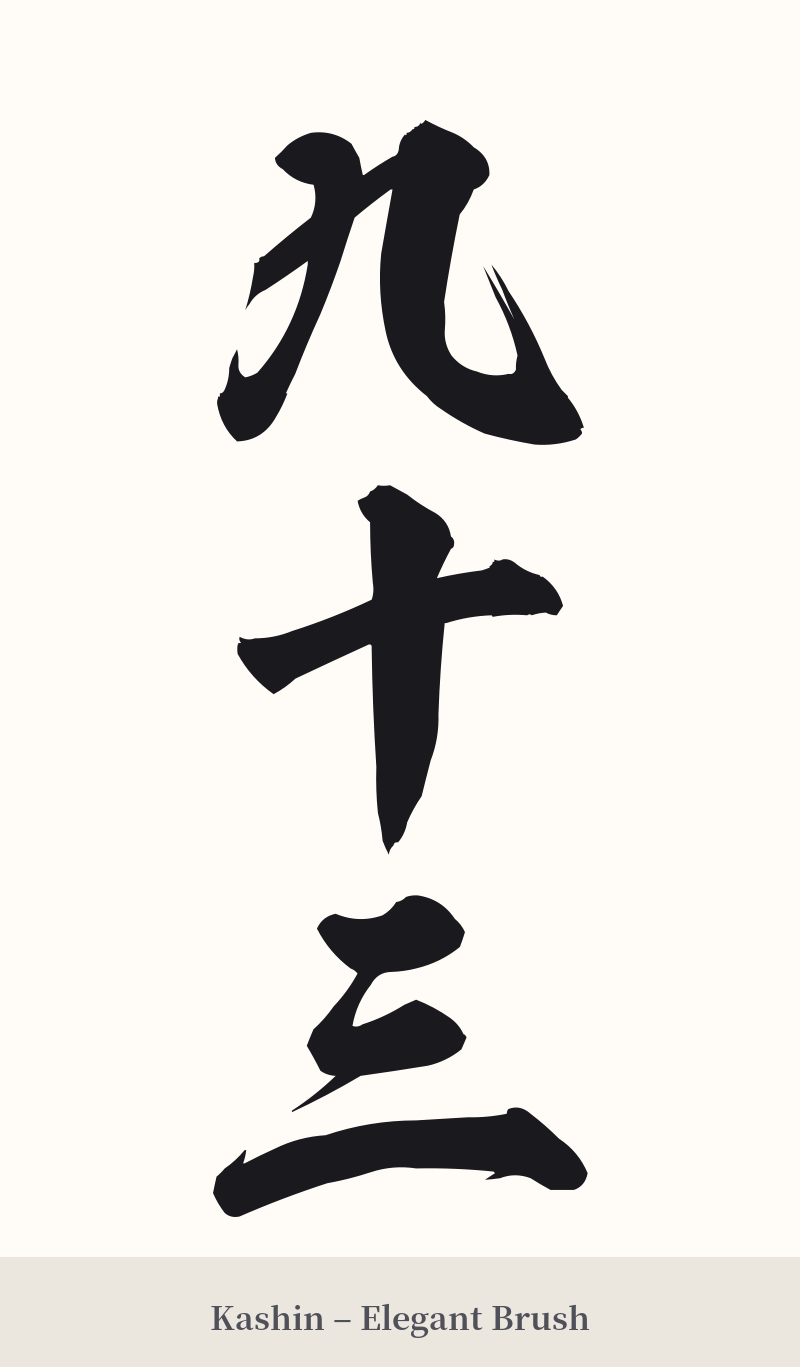
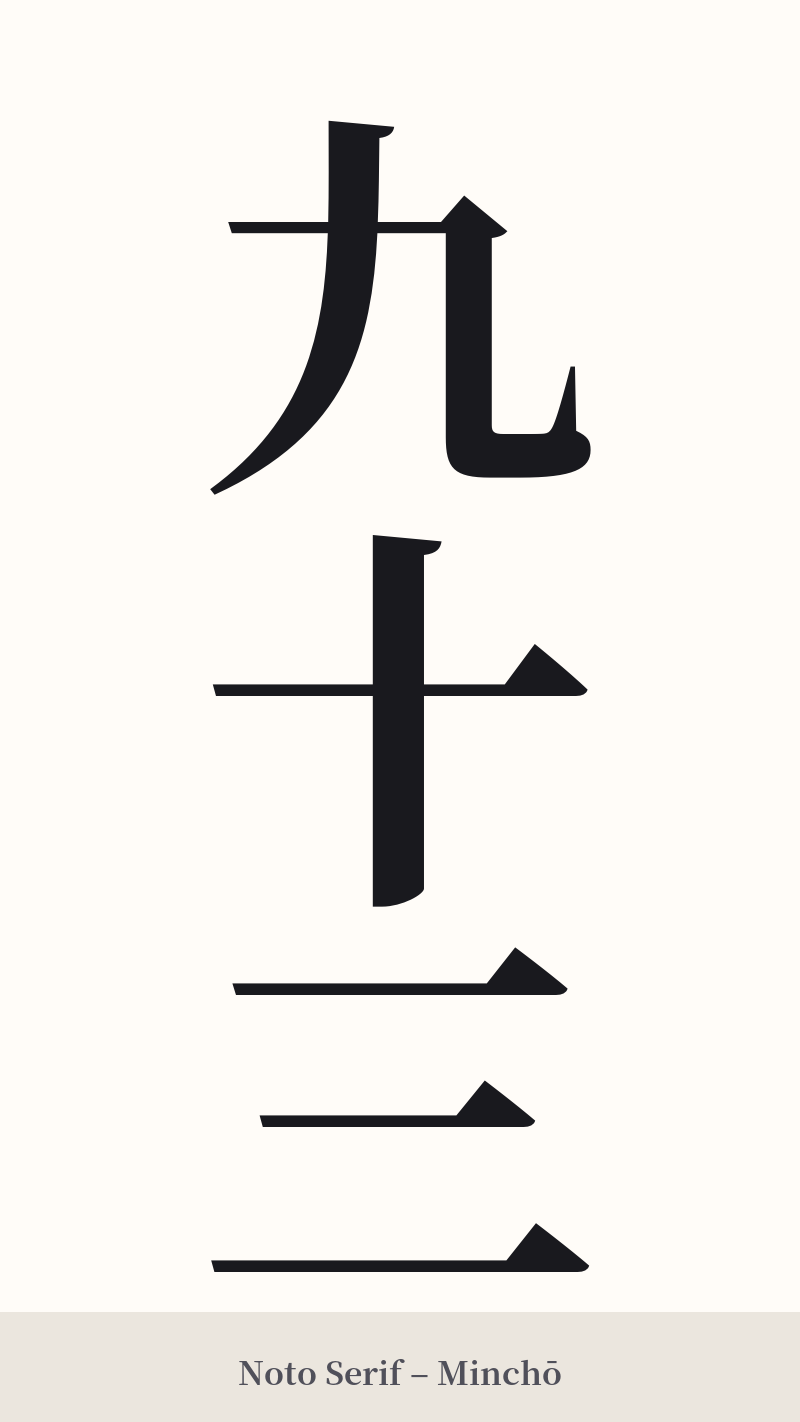
🎨 Tattoo Suitability
📐 Tattoo Design Guide
For a tattoo of 九十三, the design choices are crucial for elevating it from a simple number to a piece of art.
– Orientation: A vertical alignment is highly recommended. This is the traditional way of writing in Japanese and creates a more elegant and visually interesting flow, especially along the spine, forearm, or calf.
– Font Style: The characters themselves are very simple. To add personality, consider a dynamic calligraphy style. A semi-cursive 'Gyosho' style can add flow and movement, while a full cursive 'Sosho' style can transform the simple strokes into an abstract, artistic expression. A bold, angular 'Kaisho' (block) script will give it a more formal and solid appearance.
– Integration: Because the meaning is so specific, consider incorporating other elements that explain its significance to you. If it represents a birth year, you could weave the kanji into the stem of a birth flower. If it's a lucky number, you could place it within a larger design that symbolizes fortune or protection.
Comments