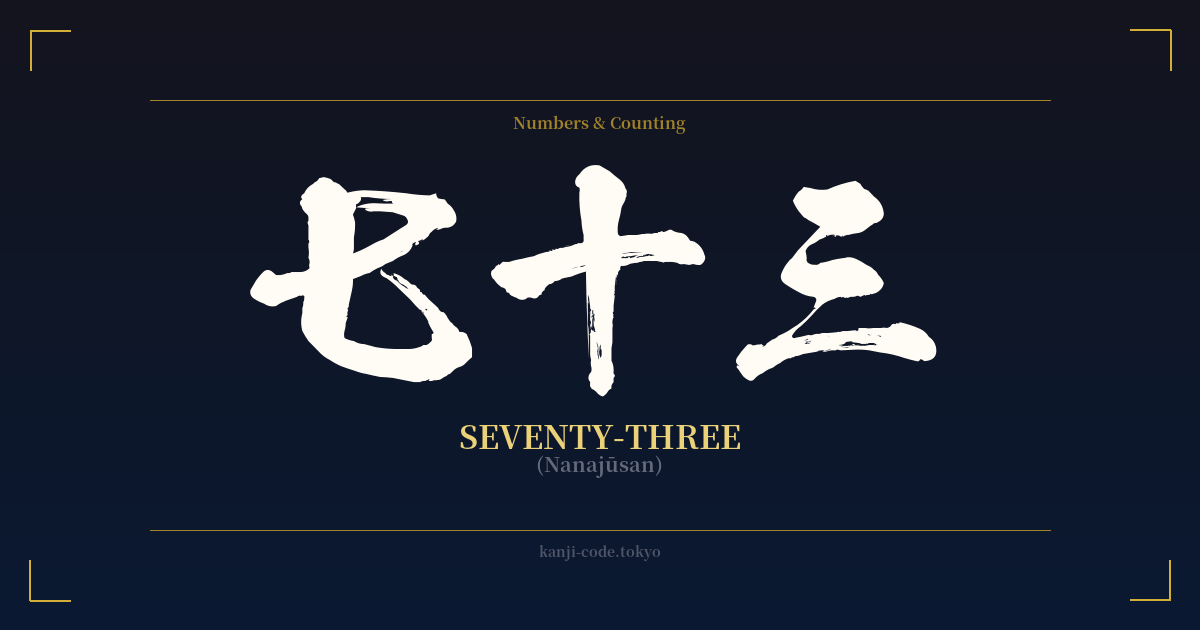
✍️ 七十三 (Nanajūsan) — Cultural Context
The Japanese word for seventy-three, 七十三 (Nanajūsan), offers a perfect window into the logical and elegant structure of the Japanese counting system. Unlike the more abstract number words in English, Japanese numbers are built like mathematical equations. 七十三 is constructed as 七 (nana, seven) + 十 (jū, ten) + 三 (san, three), literally translating to 'seven tens and three'. This modular system makes learning large numbers in Japanese surprisingly intuitive.
While the number seventy-three itself does not hold a specific, widely recognized cultural significance in Japan, its component parts—seven and three—are both considered highly auspicious. The number seven, or 七 (nana), is deeply embedded in Japanese folklore and tradition. It appears in the celebrated 七福神 (Shichifukujin), the Seven Lucky Gods, as well as the classic Akira Kurosawa film, 'Seven Samurai' (七人の侍). Its presence evokes notions of luck, completeness, and spiritual power.
Similarly, the number three, 三 (san), is also a lucky number. It reflects stability and balance, as seen in the proverb 'three time's the charm' which has parallels in Japan. It features in foundational cultural concepts like the Three Sacred Treasures of Japan (三種の神器) – the sword, the mirror, and the jewel. The combination of these two lucky digits within seventy-three gives the number a subtle, positive undertone, even if it's not explicitly celebrated.
When writing numbers, Japanese uses both Arabic numerals (73) and kanji (七十三). Kanji are often preferred in formal documents, traditional art like calligraphy (書道, shodō), and for vertical text, where they maintain a strong aesthetic integrity. The choice to use kanji for a number often lends it a sense of permanence, tradition, and artistic gravity that simple digits lack. Therefore, seeing 七十三 written out implies a more formal or stylistic context than its numerical counterpart.
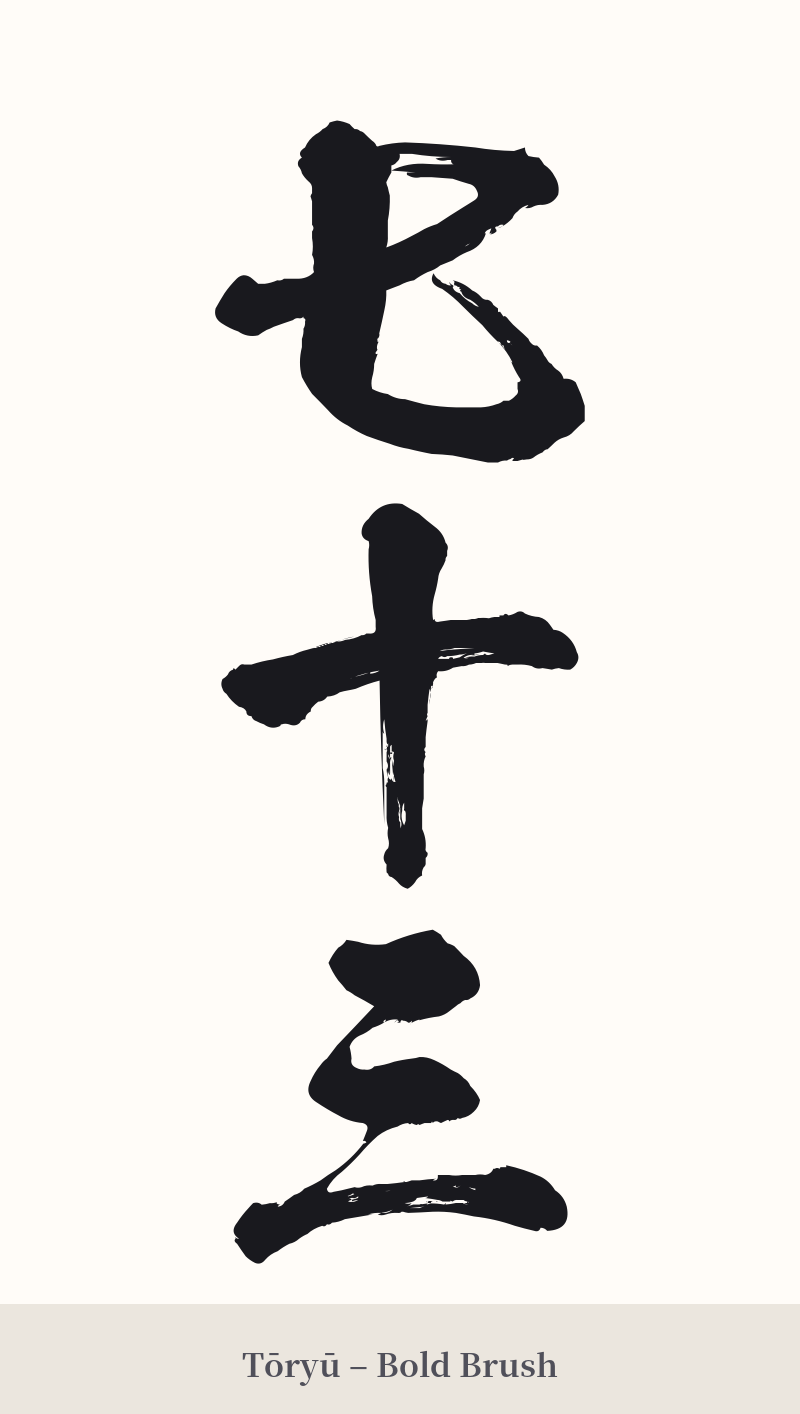
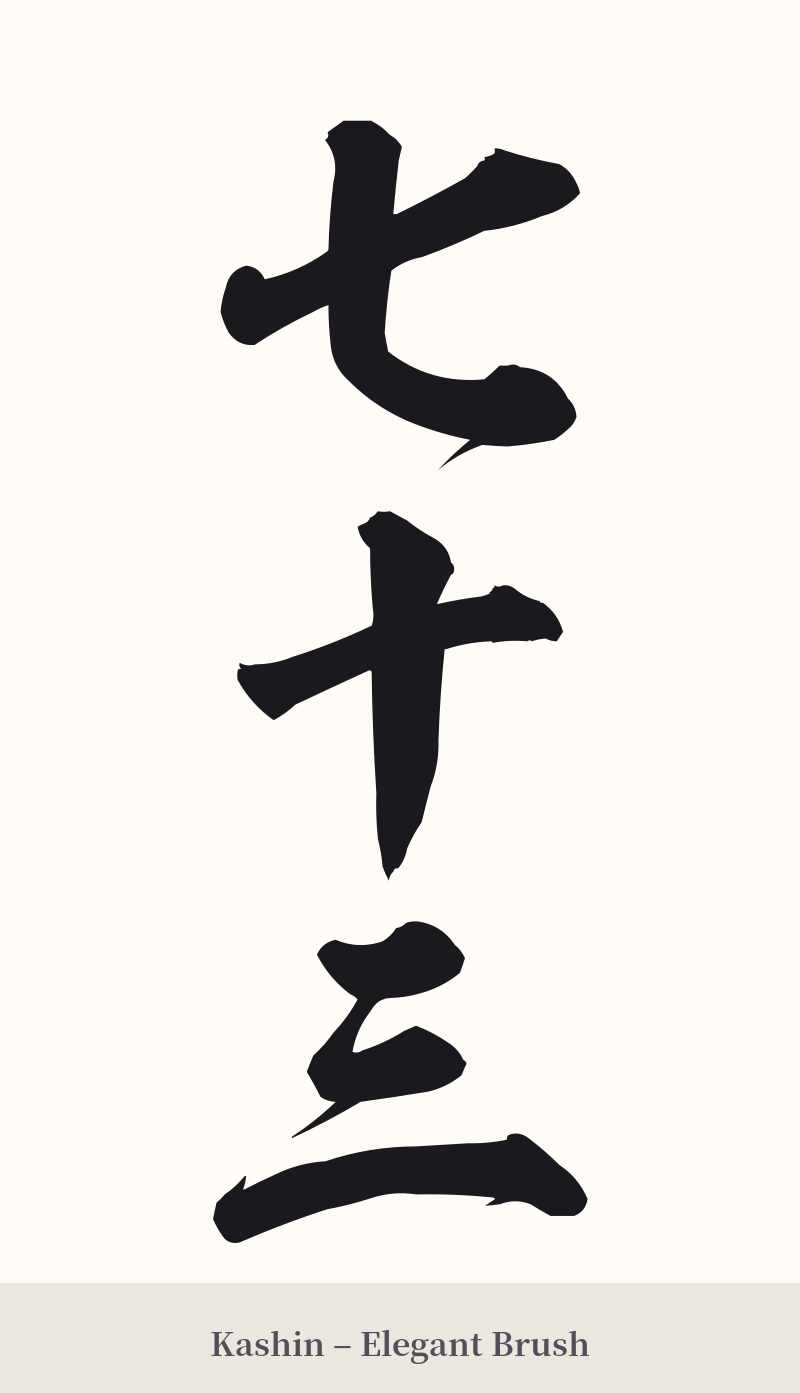
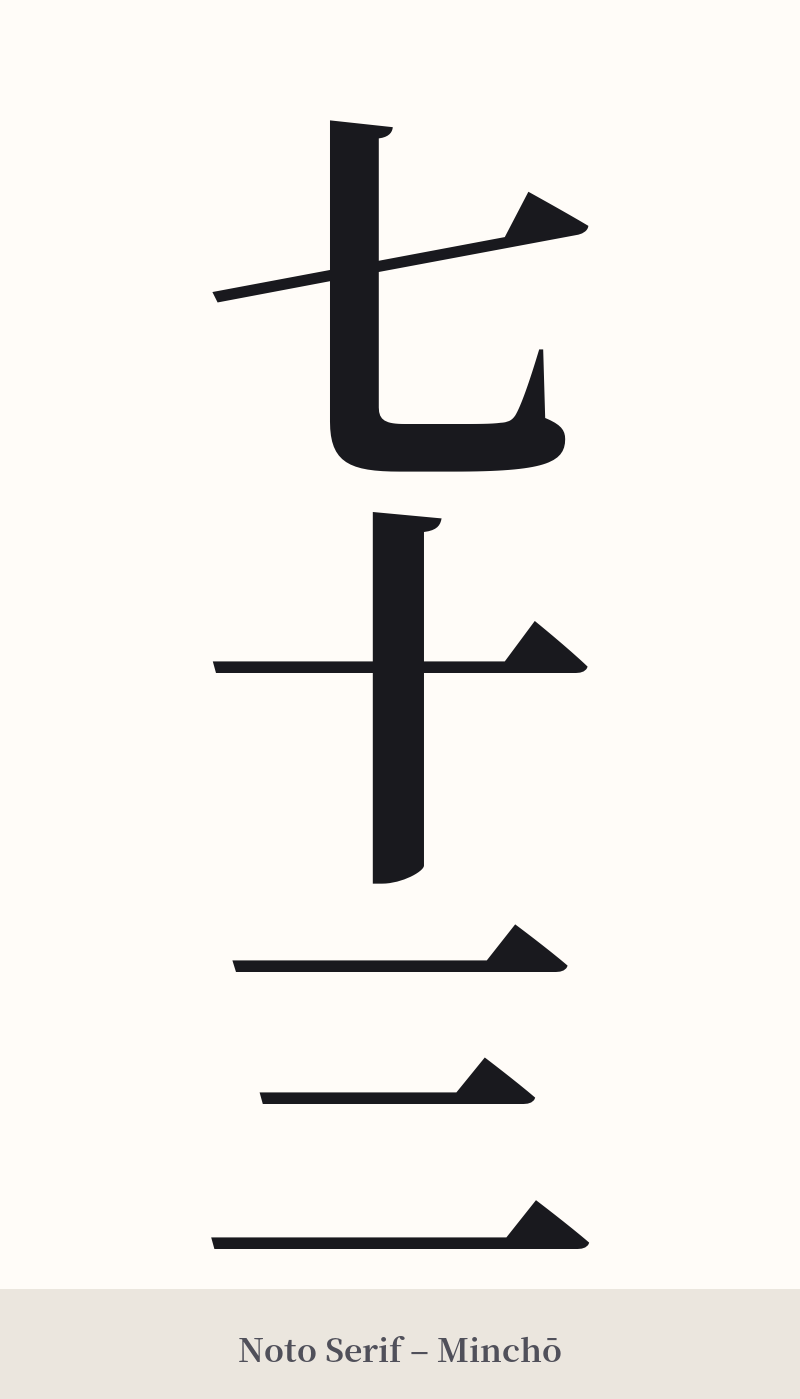
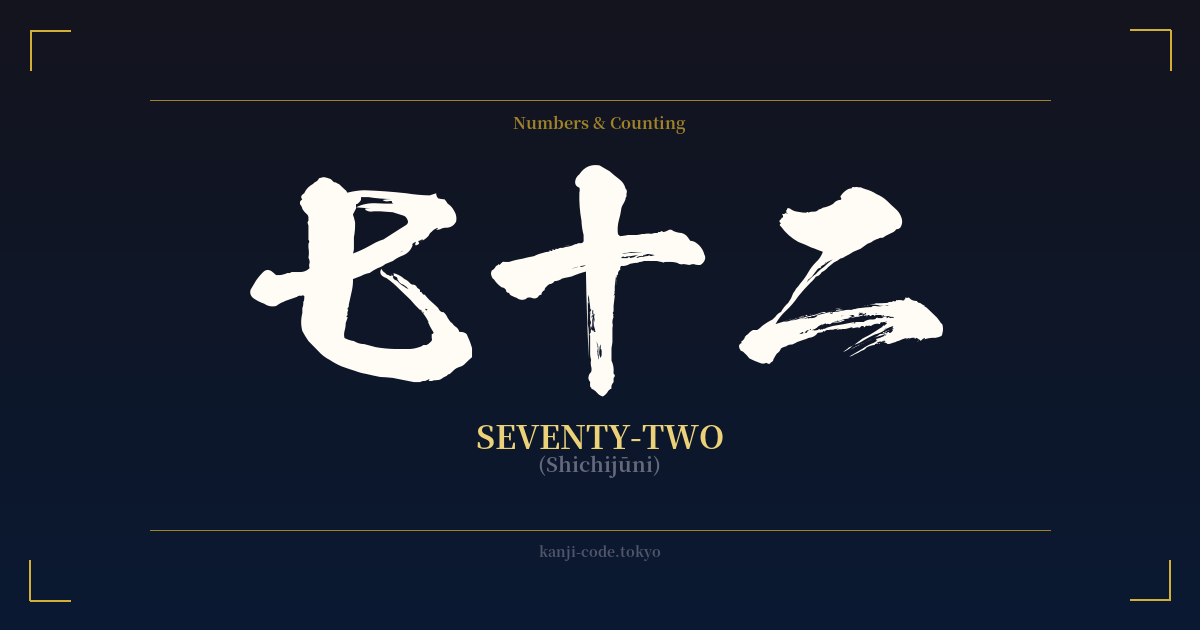
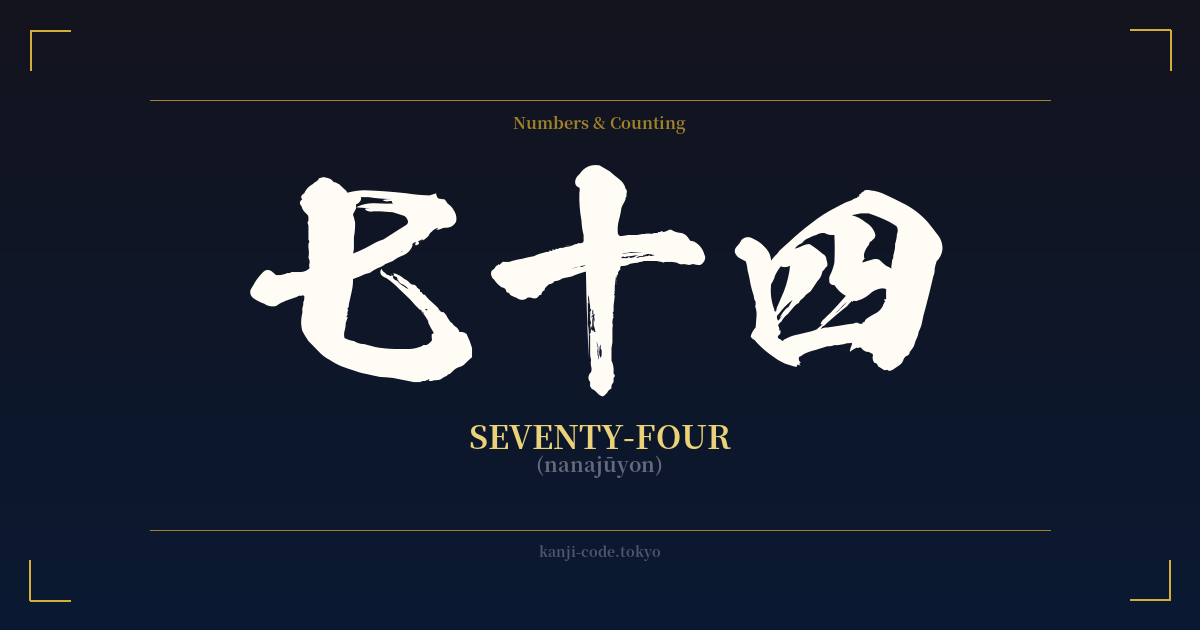
🖌️ Font Styles for 七十三
The same kanji can look dramatically different depending on the calligraphy style. Choose a font that matches the mood you want for your tattoo or design.
🎨 Tattoo Suitability
📐 Tattoo Design Guide
For a tattoo of 七十三, the composition of the three characters offers a few distinct design paths. The most traditional and visually appealing arrangement is a vertical column, which aligns with the natural flow of Japanese calligraphy. This placement works exceptionally well along the spine, forearm, or calf.
A horizontal arrangement is also possible and is better suited for areas like the chest, back of the neck, or across the wrist.
When considering font styles, you have several options: – Kaishotai (楷書体): This is a standard block script. It provides excellent clarity and a timeless, formal look. It's a safe and strong choice, ensuring the characters are instantly recognizable. – Gyōsho (行書体): A semi-cursive script that introduces more flow and artistry. This style can connect the characters in a subtle, elegant way, making the design feel more personal and unique. – Sōsho (草書体): A full cursive script that is highly artistic but can be difficult to read for the untrained eye. This is best for those who prioritize the abstract visual form over legibility.
Because the meaning is personal, consider incorporating a small, related visual element. For example, if '73' represents a birth year, you could add the corresponding zodiac animal or a birth flower to give the design more context and depth.
Comments