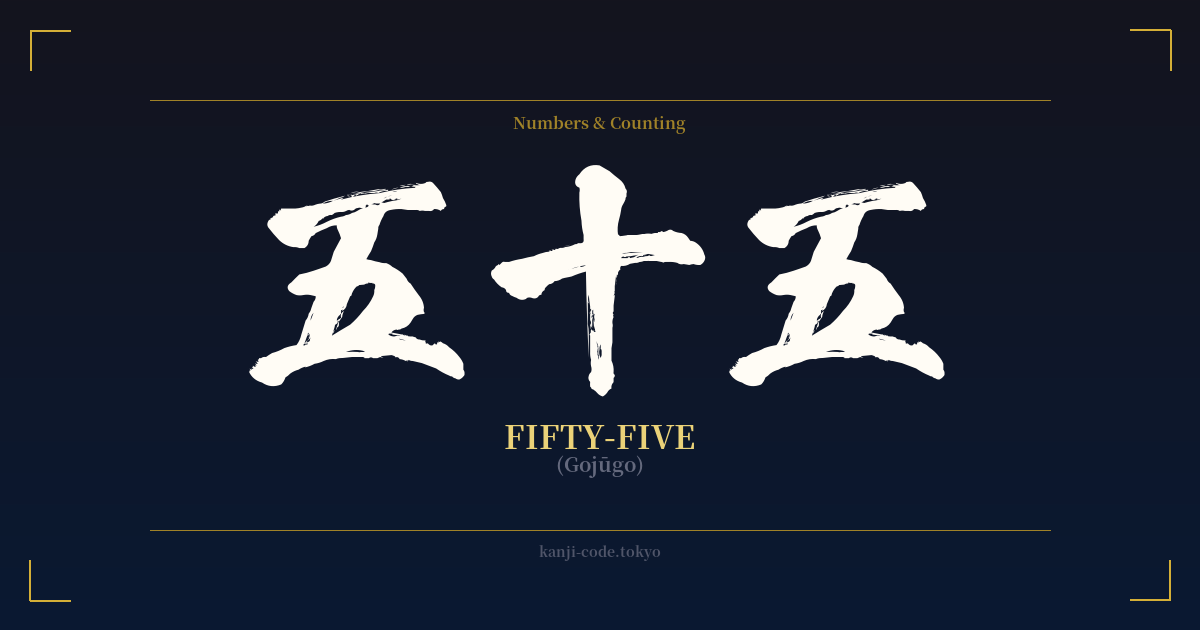
✍️ 五十五 (Gojūgo) — Cultural Context
The Japanese word for fifty-five, 五十五 (Gojūgo), is a perfect example of the elegant logic embedded within the Japanese numerical system. Rather than having a unique word, it is constructed literally as 'five-ten-five'. The structure is 五 (go, five) multiplied by 十 (jū, ten) to make fifty, followed by another 五 (go, five) added on. This transparent, additive system is a hallmark of how numbers are conceptualized in East Asian languages.
The individual characters themselves are fundamental. The kanji 五 (go), meaning 'five', is a simple four-stroke character. Some etymological theories suggest it represents the intersection of the five elements (gogyō) or the meeting of heaven and earth with yin and yang. It is a number deeply woven into Japanese culture, appearing in concepts like the Five Great Elements (Godai) of earth, water, fire, wind, and void, and the Five Sacred Zen Mountains of Kyoto (Gozan).
The character 十 (jū), meaning 'ten', is a simple cross. It represents completeness, a full cycle, and is one of the first kanji learned by children. Its simplicity belies its importance as the foundation of the decimal system.
While the number 55 itself doesn't carry a heavy weight of ancient symbolism, it has found its place in modern Japanese culture. Perhaps its most famous association is with the legendary baseball player Hideki Matsui. His jersey number was 55, and his powerful hitting earned him the nickname 'Godzilla.' For baseball fans, the number instantly evokes images of his prowess with the Yomiuri Giants and the New York Yankees.
Furthermore, the pronunciation 'go' for five creates a playful pun. The number 5 is often used in wordplay because it sounds like the English word 'go'. Therefore, a sequence of fives can be seen as energetic and forward-moving, like 'Go! Go!'. While this is more common with 555, the spirit can extend to 55. In everyday life, 五十五 is used just as it is in English—to denote age, a price, a house number, or a milestone. It is a number of practicality, a marker of time and quantity, built from some of the most basic and ancient building blocks of the Japanese written language.
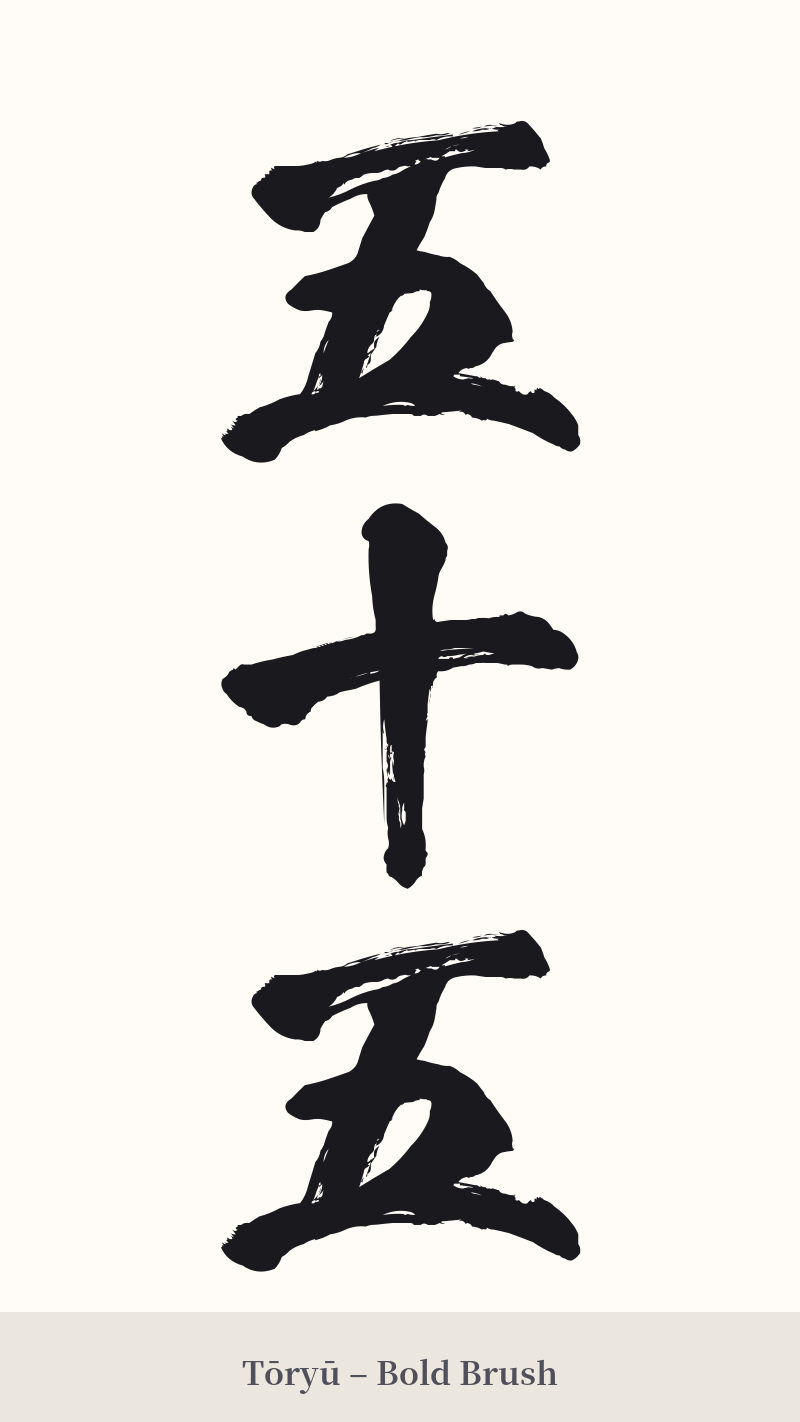
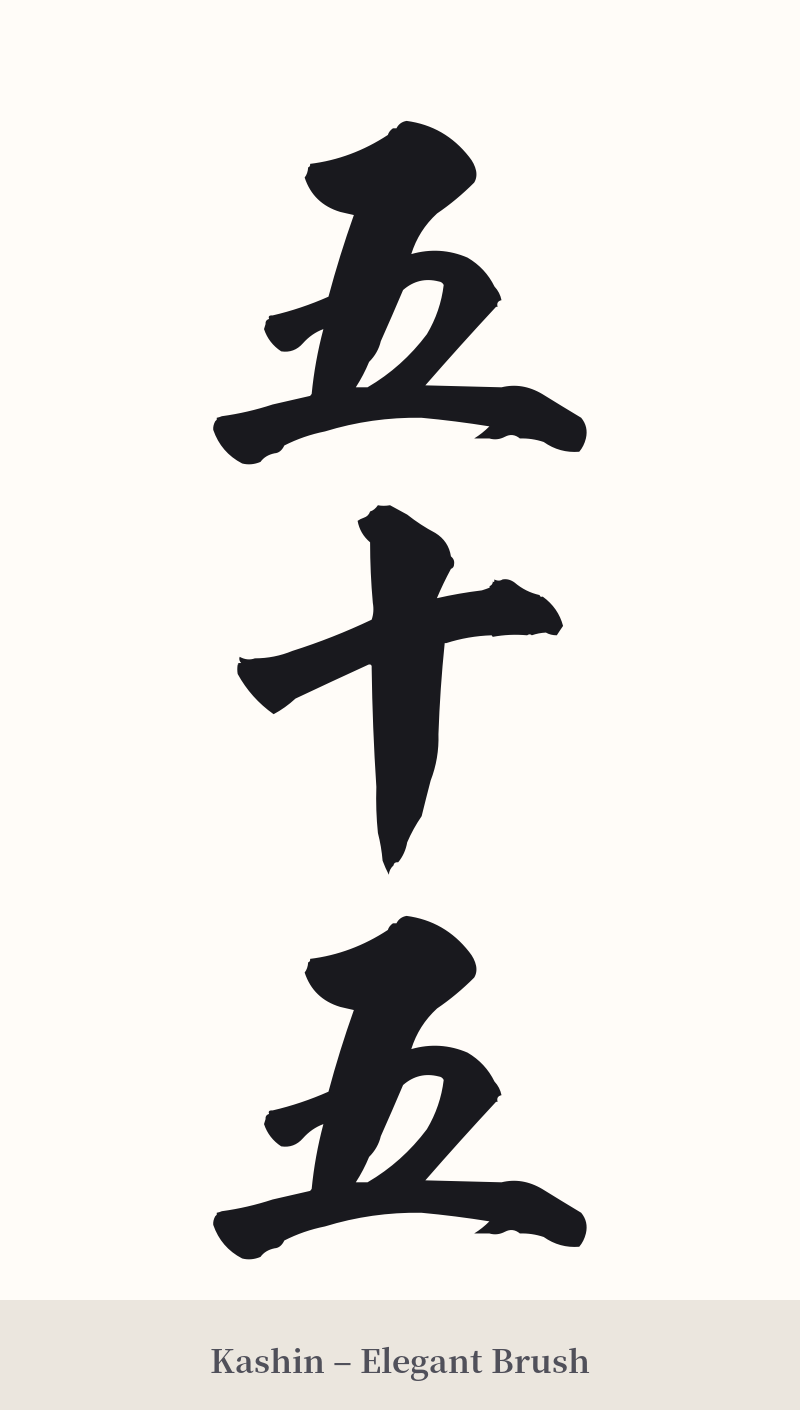
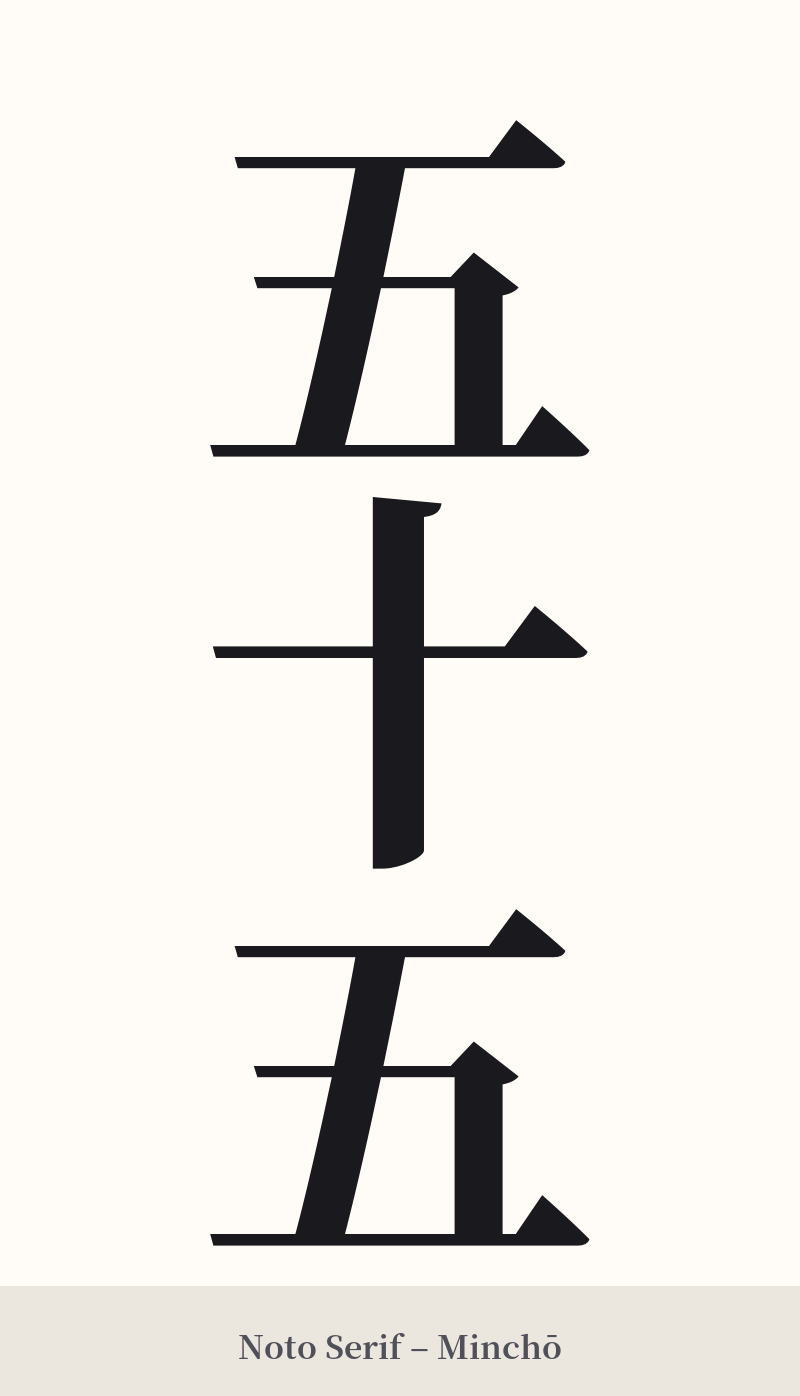
🖌️ Font Styles for 五十五
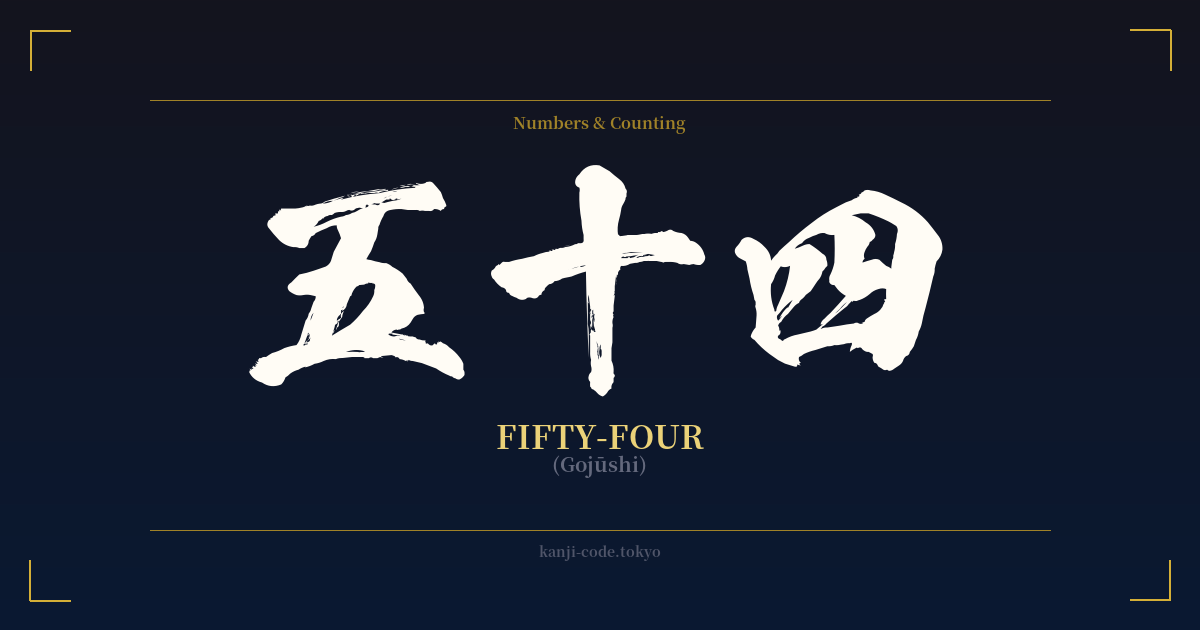
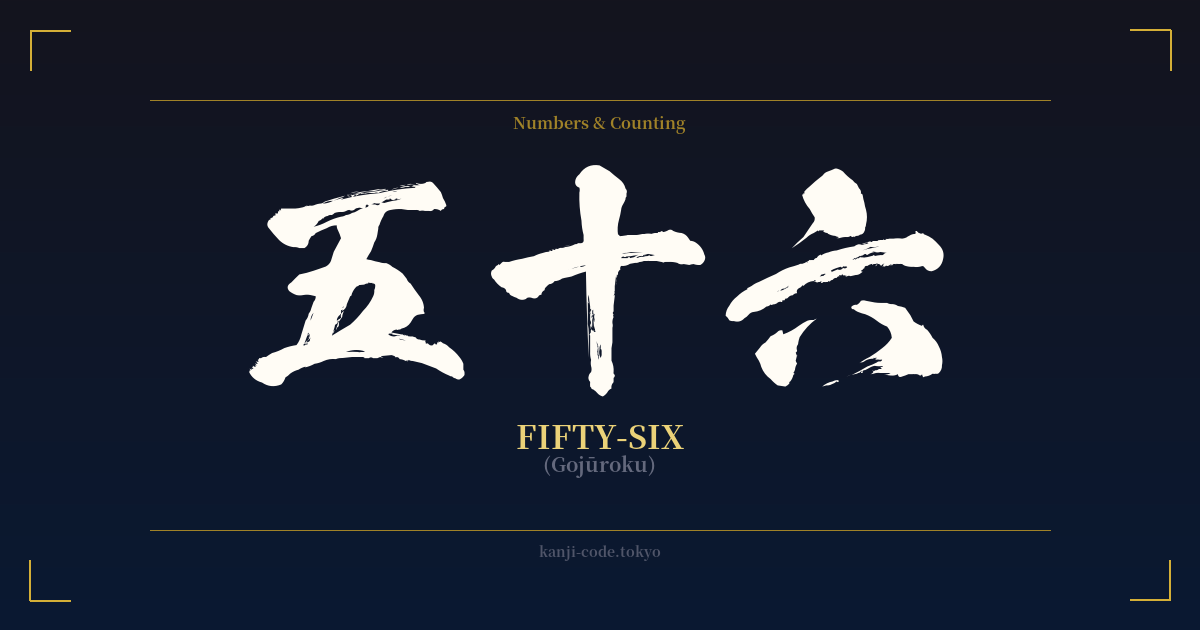
The same kanji can look dramatically different depending on the calligraphy style. Choose a font that matches the mood you want for your tattoo or design.
🎨 Tattoo Suitability
📐 Tattoo Design Guide
For a tattoo of 五十五, the design choices can help imbue it with personal style, even though the characters are simple. Consider the following guidance:
– Placement: A vertical orientation, written top-to-bottom (五, then 十, then 五), is the most traditional and aesthetically pleasing arrangement. This looks excellent along the forearm, spine, or ribs. For a more subtle design, a small horizontal arrangement on the wrist or ankle also works well.
– Font Style: The simplicity of the characters makes them a great canvas for calligraphy. A bold, blocky 'Kaisho' style will feel strong and stable. A semi-cursive 'Gyōsho' style can add a touch of fluid elegance and personality.
– Visual Tips: Because the meaning is personal, consider integrating the kanji into a larger piece that tells the story. For example, if it represents a birth year, it could be woven into a design with a cherry blossom branch (representing the passage of time) or an animal from the zodiac.
Comments