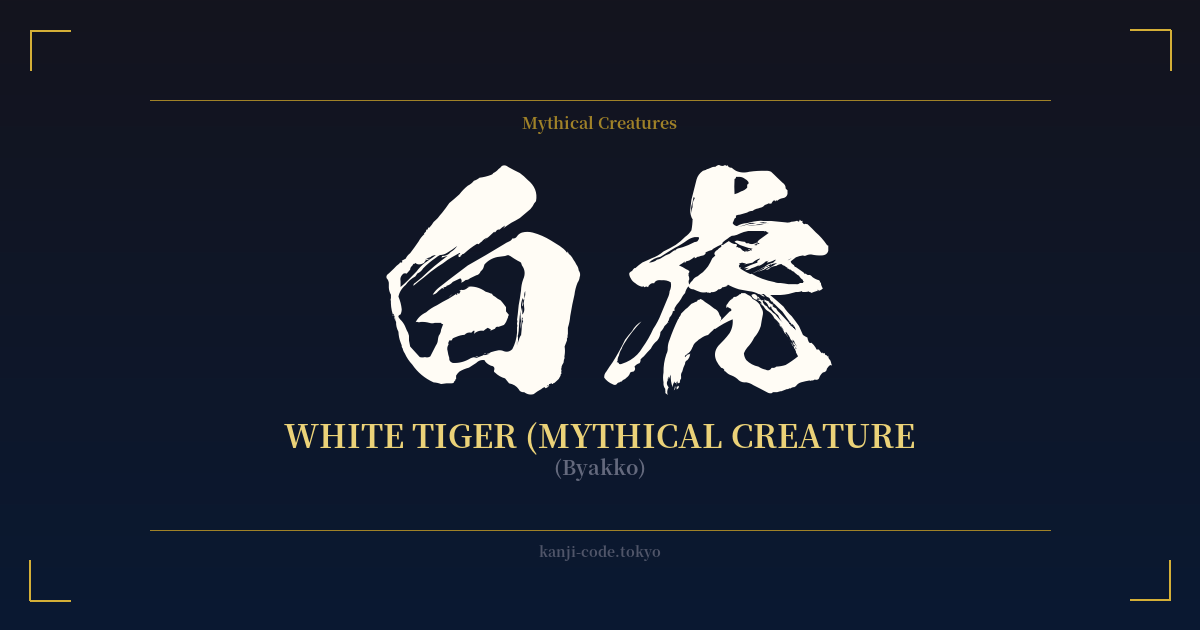
✍️ 白虎 (Byakko) — Cultural Context
白虎 (Byakko), the White Tiger, is a figure of immense power and celestial importance in East Asian mythology. It is not merely an animal but one of the Four Symbols, or Shishin (四神), the divine guardians of the four cardinal directions. These mythical beasts originate from ancient Chinese constellations and cosmology, deeply integrated with Taoist principles and Onmyōdō (Japanese esoteric cosmology).
Byakko is the Guardian of the West. In the intricate system of the Five Elements (五行, Gogyō), it represents Metal, the season of Autumn, and the color white. Its domain is one of strength, martial prowess, and righteousness. The tiger itself is a symbol of courage and ferocity, but as Byakko, this power is tempered with a divine purpose: to protect and to uphold justice. It is said that the White Tiger only appears when a ruler governs with absolute virtue or if peace reigns throughout the world.
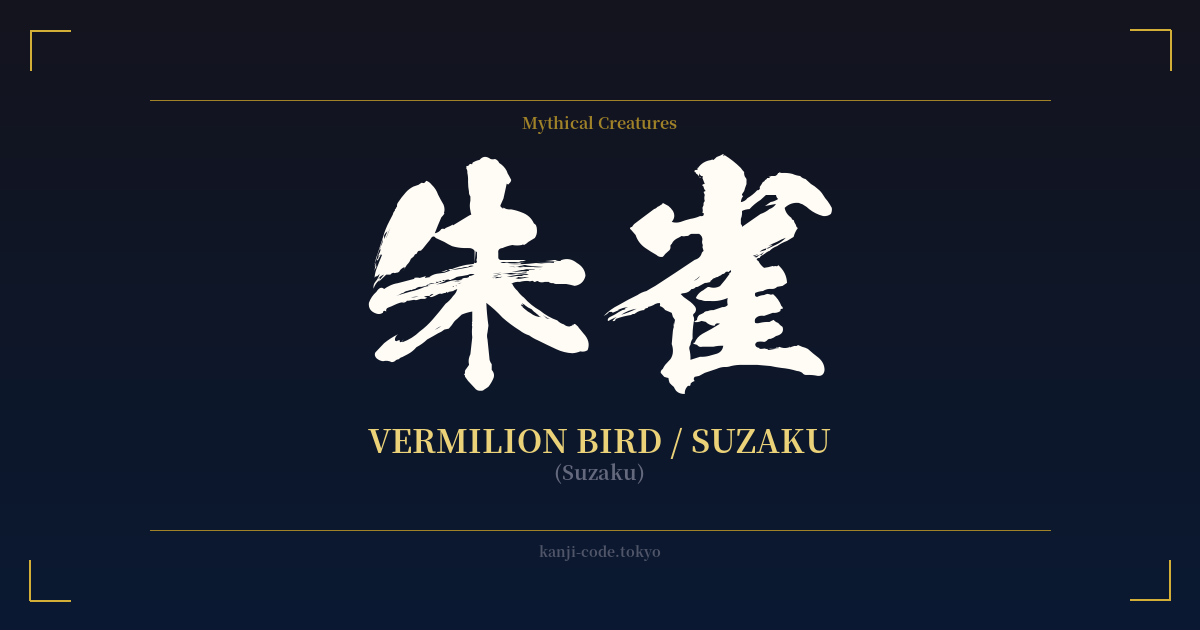
Its counterparts are Seiryū, the Azure Dragon of the East (representing Wood and Spring); Suzaku, the Vermilion Bird of the South (representing Fire and Summer); and Genbu, the Black Tortoise of the North (representing Water and Winter). Together, these four beings create a cosmic balance, protecting the world from evil and maintaining universal order. This belief system traveled from China to Japan, where it became a cornerstone of spiritual and architectural design. For example, the ancient capital cities of Heian-kyō (modern Kyoto) and Fujiwara-kyō were laid out with gates and districts corresponding to these four guardians.
Evidence of Byakko's importance in Japan can be seen in ancient tomb murals, such as those found in the Kitora and Takamatsuzuka Tombs in Nara Prefecture. These 7th-century paintings depict the Shishin on the walls, positioned to protect the soul of the deceased in the afterlife. Byakko is typically shown as a majestic, powerful tiger, often with a regal and otherworldly aura.
In modern times, Byakko's legacy endures, particularly in popular culture. From manga and anime series like Fushigi Yûgi and Yu Yu Hakusho to video games and films, the White Tiger is consistently portrayed as a symbol of immense strength, nobility, and protective power. Choosing the kanji for Byakko is to invoke this rich history of a celestial guardian, a king of beasts imbued with cosmic significance.
🖌️ Font Styles for 白虎
The same kanji can look dramatically different depending on the calligraphy style. Choose a font that matches the mood you want for your tattoo or design.
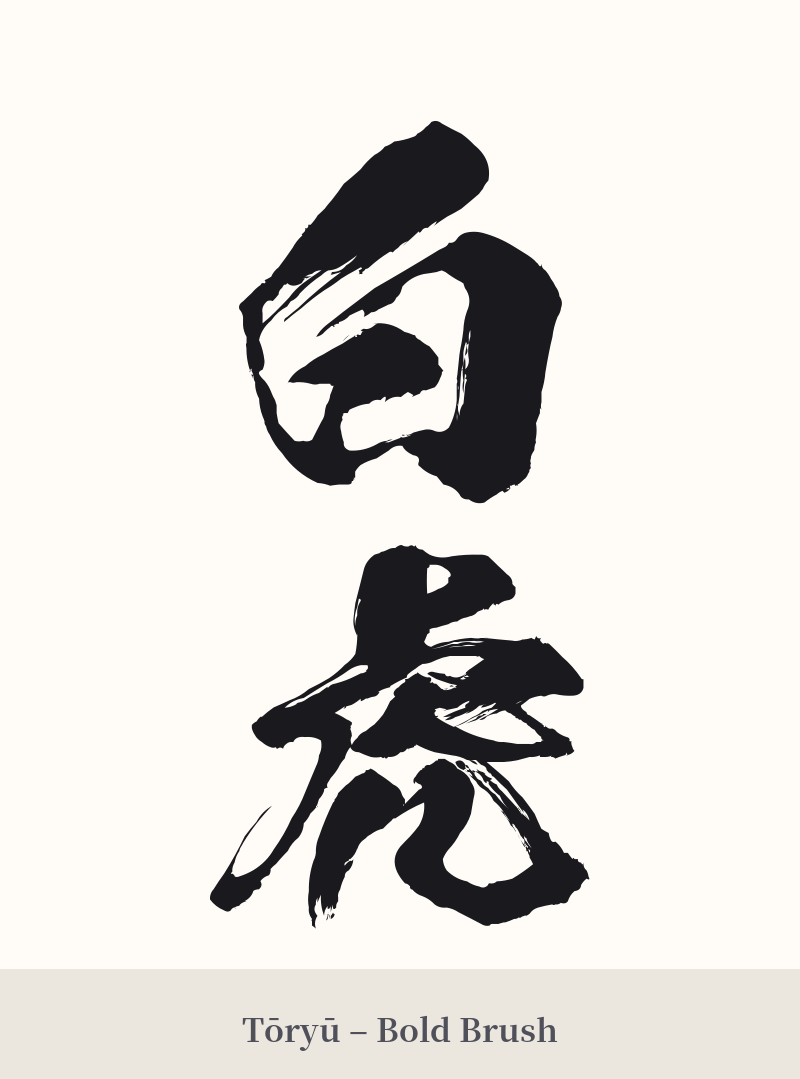
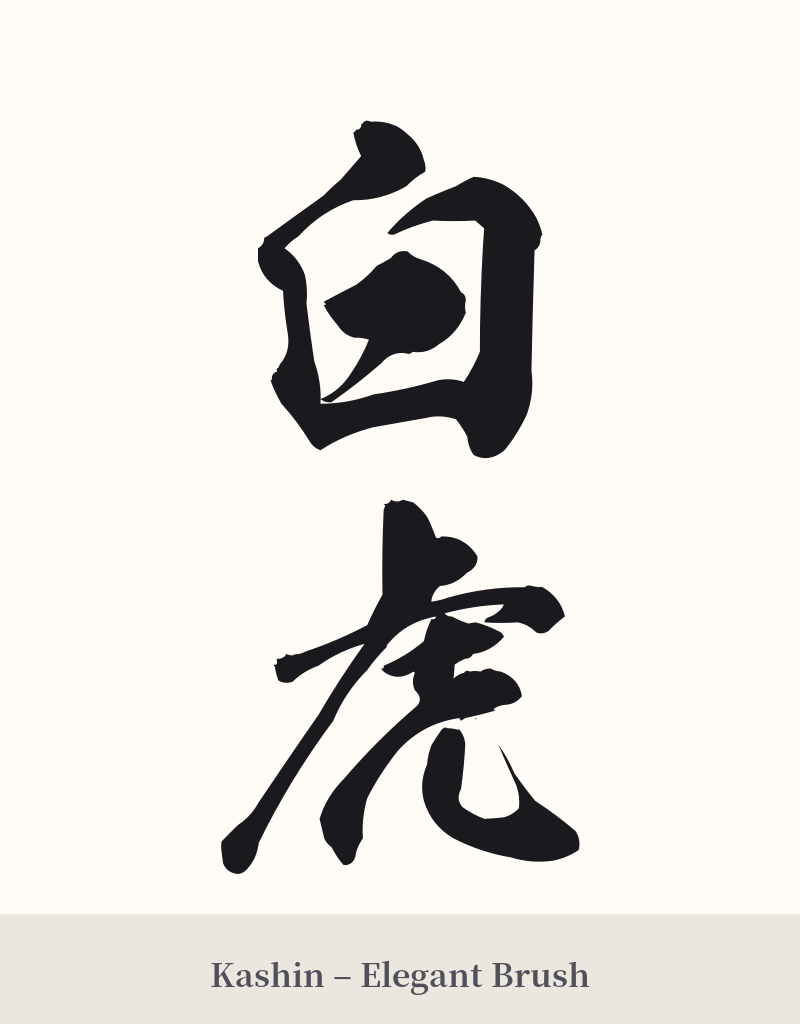
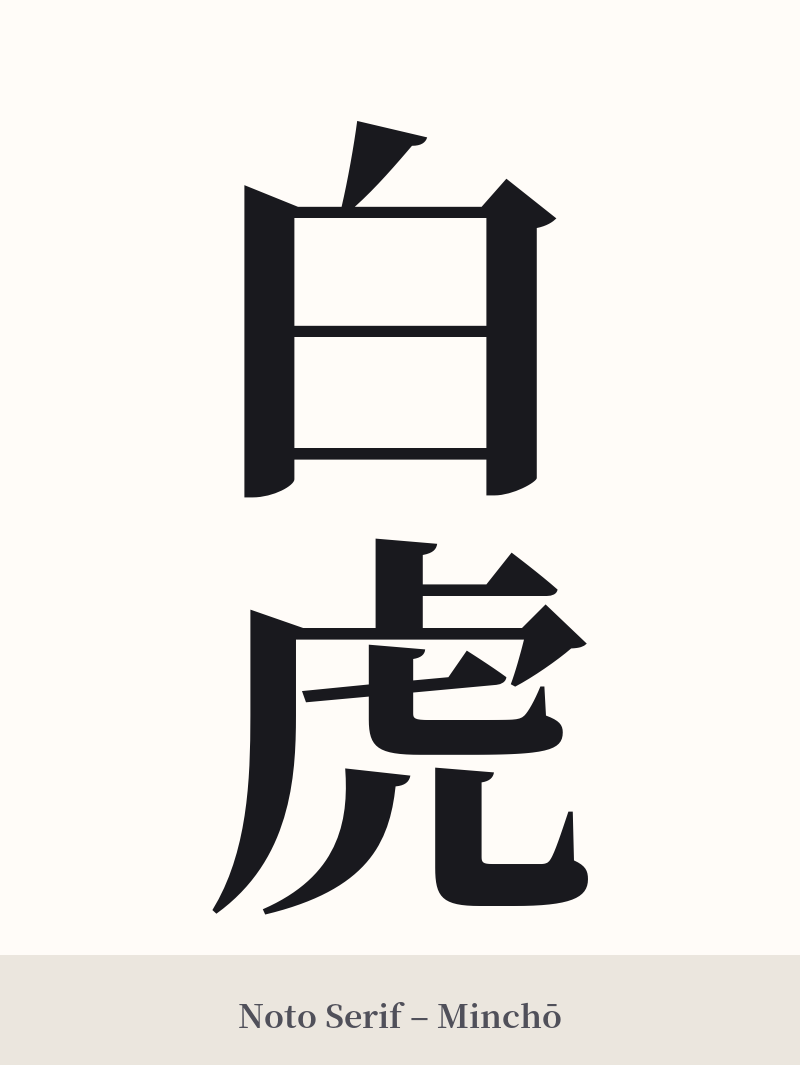
🎨 Tattoo Suitability
📐 Tattoo Design Guide
A tattoo of 白虎 (Byakko) should convey power and majesty. Here are some design considerations:
– Placement: This is a strong design that works well in prominent locations. For a vertical orientation, the spine, forearm, or calf are excellent choices. For a horizontal layout, the chest, upper back, or across the shoulders allows the characters to feel grounded and powerful.
– Style: A bold, semi-cursive brush script (gyōsho) can capture the tiger's fluid motion and raw energy. For a more formal, solid look that emphasizes its guardian nature, a crisp kaisho (block) font is ideal. Avoid overly thin or delicate fonts that might undermine the inherent strength of the word.
– Visual Elements: Consider pairing the kanji with imagery. A classic combination is the kanji alongside an illustration of a white tiger. You could also incorporate symbolic elements like autumn maple leaves (representing its season), or metallic/silver accents in the design (representing its element, Metal). Placing the kanji within a circle or as part of a larger compass design with the other Shishin can create a powerful piece about cosmic balance.
Comments