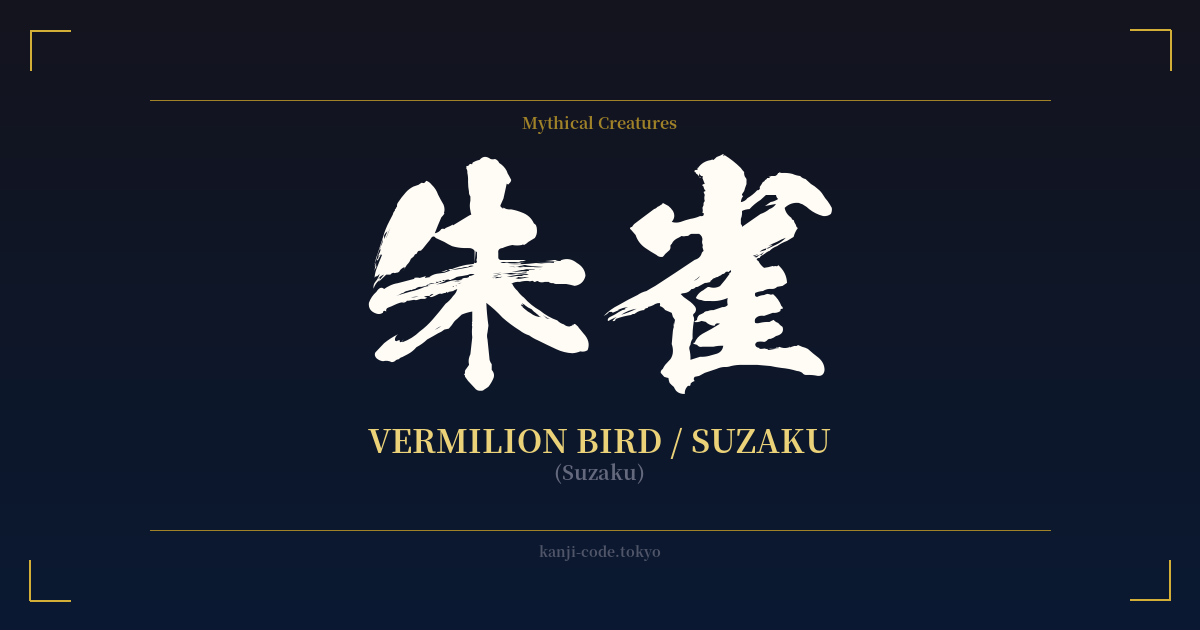
✍️ 朱雀 (Suzaku) — Cultural Context
朱雀 (Suzaku) is the Japanese name for the Vermilion Bird, one of the most magnificent and powerful creatures in East Asian mythology. It is one of the Four Symbols, or Shishin (四神), the celestial guardians of the four cardinal directions. Suzaku reigns over the South, embodying the peak of summer and the element of Fire.
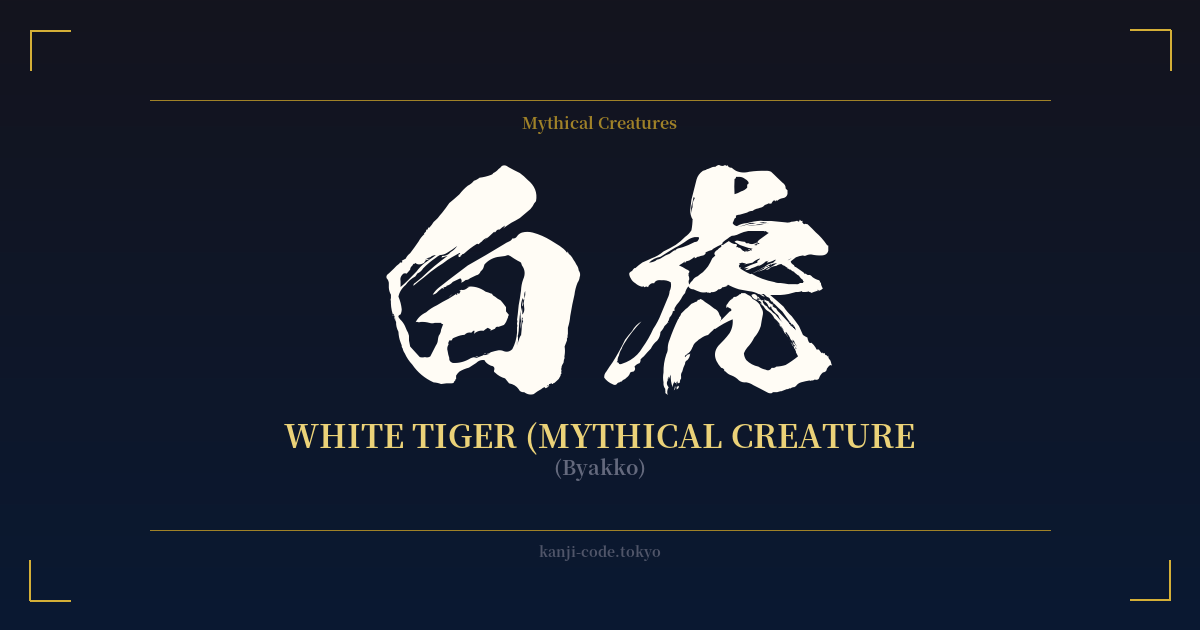
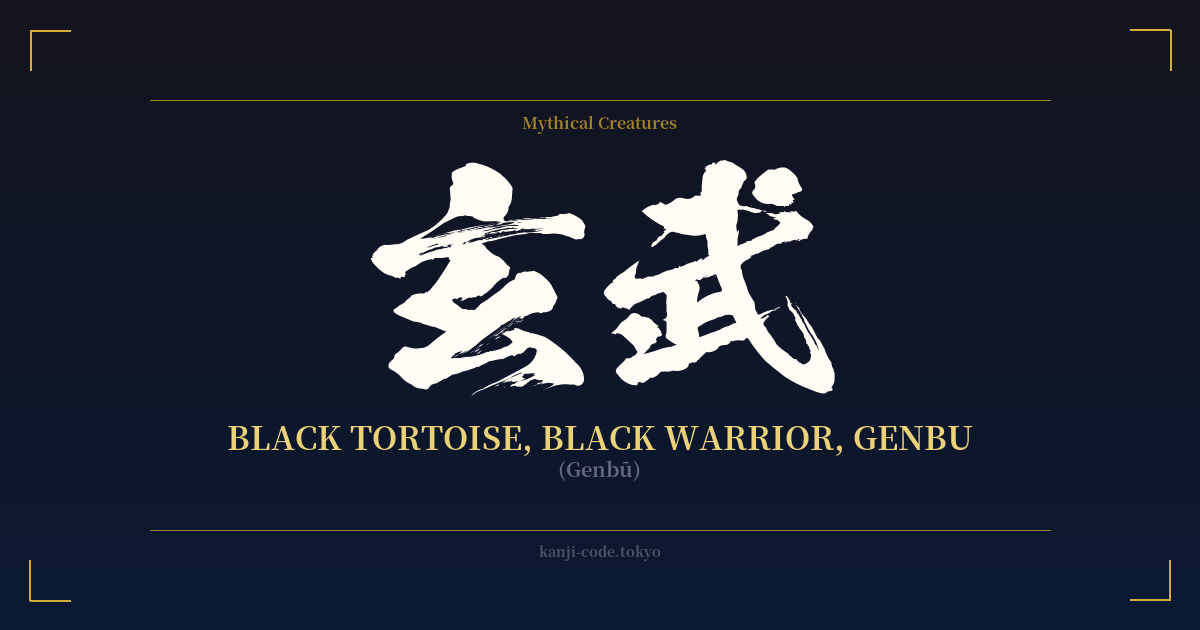
Its origins trace back to ancient Chinese cosmology, deeply intertwined with Taoist philosophy and the Wu Xing (Five Elements) system. These four guardians were identified with constellations in the night sky. Alongside Suzaku are Seiryū, the Azure Dragon of the East; Byakko, the White Tiger of the West; and Genbu, the Black Tortoise of the North. Together, they maintain cosmic balance and order.
When these concepts arrived in Japan, they were integrated into the esoteric practice of Onmyōdō. The influence of the Four Symbols became deeply embedded in the culture, particularly in architecture and city planning. The ancient capitals of Fujiwara-kyō, Heijō-kyō (Nara), and later Heian-kyō (Kyoto) were designed with this celestial geography in mind. The main southern gate of the imperial palace was often named the Suzakumon (朱雀門), or "Vermilion Bird Gate," serving as the grand, formal entrance to the sacred imperial grounds.
Visually, Suzaku is depicted as a majestic, phoenix-like bird, often engulfed in brilliant red and orange flames. Its appearance is considered an incredibly auspicious omen, said to herald an era of peace and prosperity under a wise and virtuous ruler. It represents beauty, grace, and good fortune. Its fiery nature also connects it to passion, vitality, and rebirth.
It's important to distinguish Suzaku from the Hō-ō (鳳凰), the Japanese phoenix. While they share a similar avian form and auspicious nature, their roles differ. Suzaku is a celestial deity, a guardian of a specific direction and cosmic principle. The Hō-ō, in contrast, is the emperor of birds, a symbol of the imperial household, and a messenger of peace and harmony on Earth. Suzaku is a warrior-guardian of the cosmos; Hō-ō is a benevolent ruler of the terrestrial world.
Today, Suzaku's image continues to burn brightly in the popular imagination. It is a recurring motif in anime, manga, and video games, often portrayed as a powerful summon, a guardian spirit, or a symbol of incredible strength. This modern presence ensures that the legend of the Vermilion Bird of the South continues to captivate new generations, linking ancient cosmology with contemporary Japanese culture.
🖌️ Font Styles for 朱雀
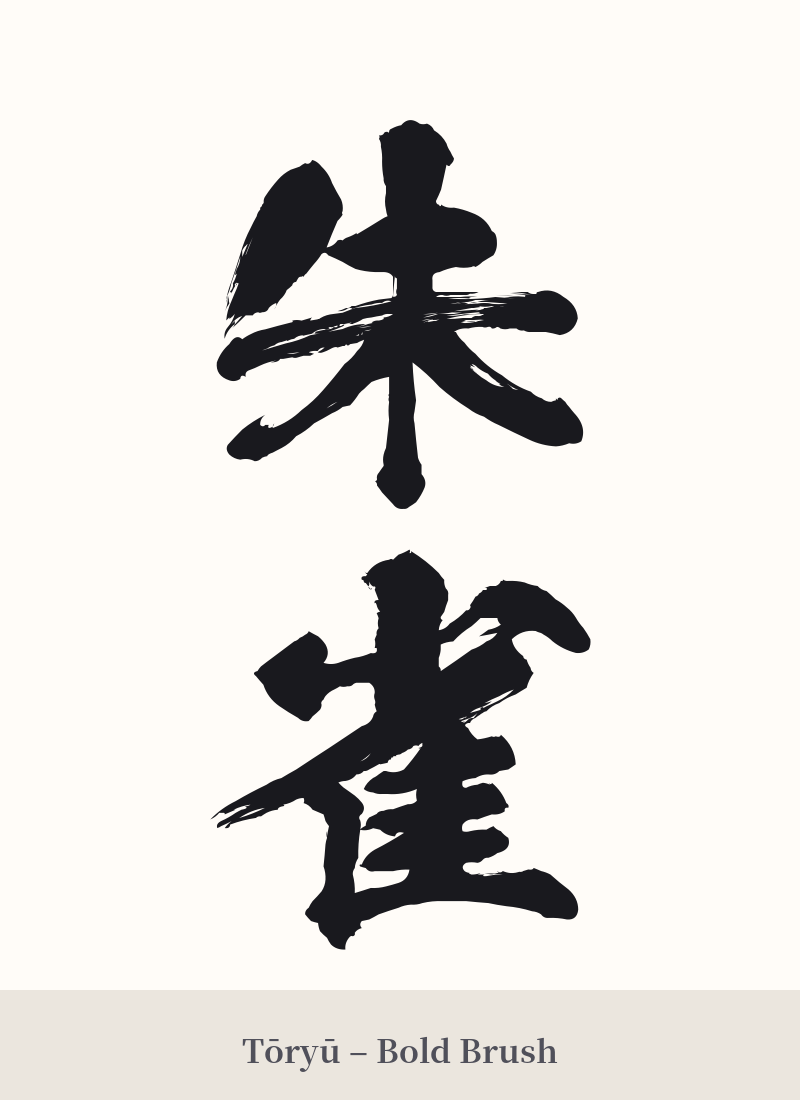
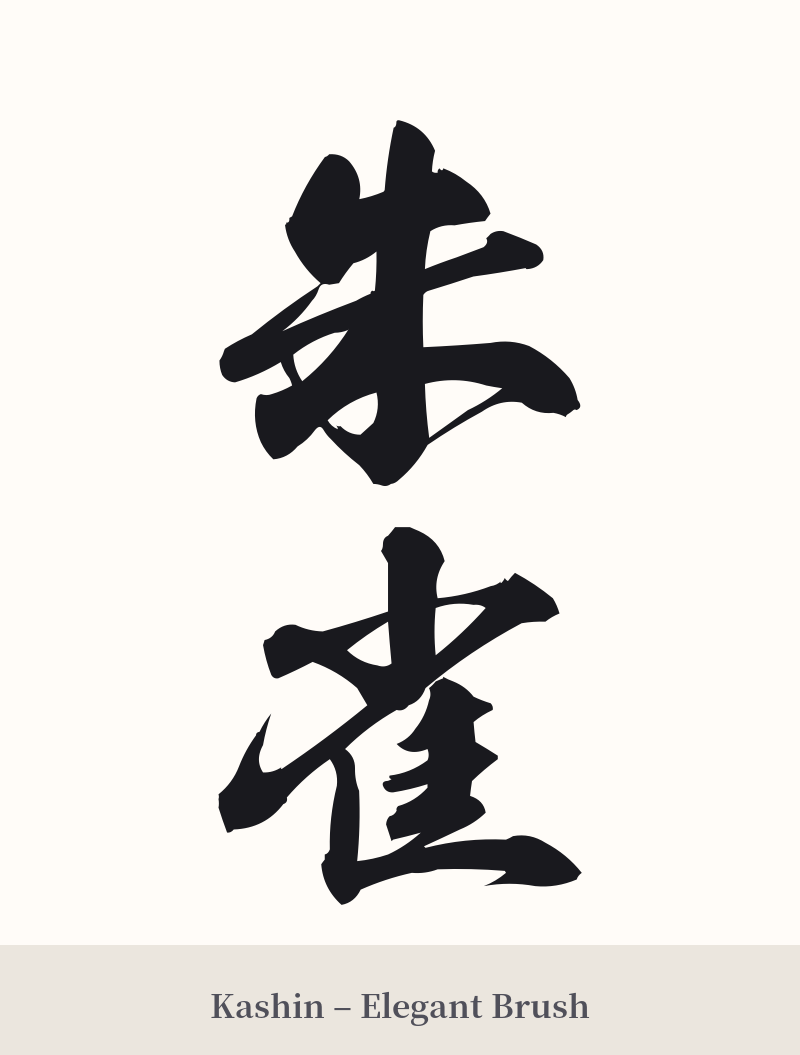
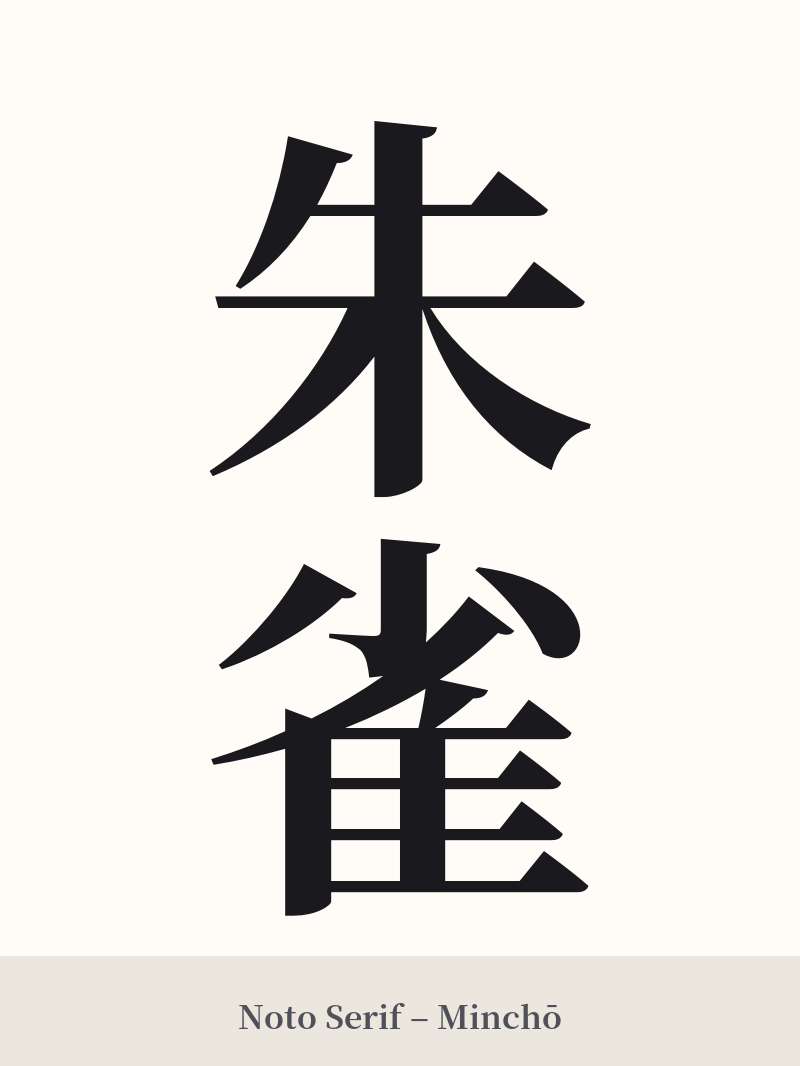
The same kanji can look dramatically different depending on the calligraphy style. Choose a font that matches the mood you want for your tattoo or design.
🎨 Tattoo Suitability
📐 Tattoo Design Guide
A tattoo of 朱雀 carries a powerful mythological weight, and the design should reflect its fiery elegance. It's a fantastic choice that offers many creative possibilities.
– Placement: For a large, impactful piece, the back or chest provides a broad canvas to pair the kanji with an artistic rendering of the bird itself. For a more focused kanji-only design, a vertical script on the forearm, bicep, or calf looks striking.
– Style: A dynamic, semi-cursive or brushstroke (shodō) style enhances the feeling of movement and fire associated with Suzaku. The sharp, elegant lines of the Mincho style also work well, giving it a more formal, refined look.
– Visual Elements: Consider incorporating red or orange ink, either as a highlight within the black kanji strokes or as a background splash, to emphasize its connection to fire and the color vermilion. Pairing the kanji with imagery of flames, summer flowers, or celestial patterns can further enrich the design's meaning.
Comments