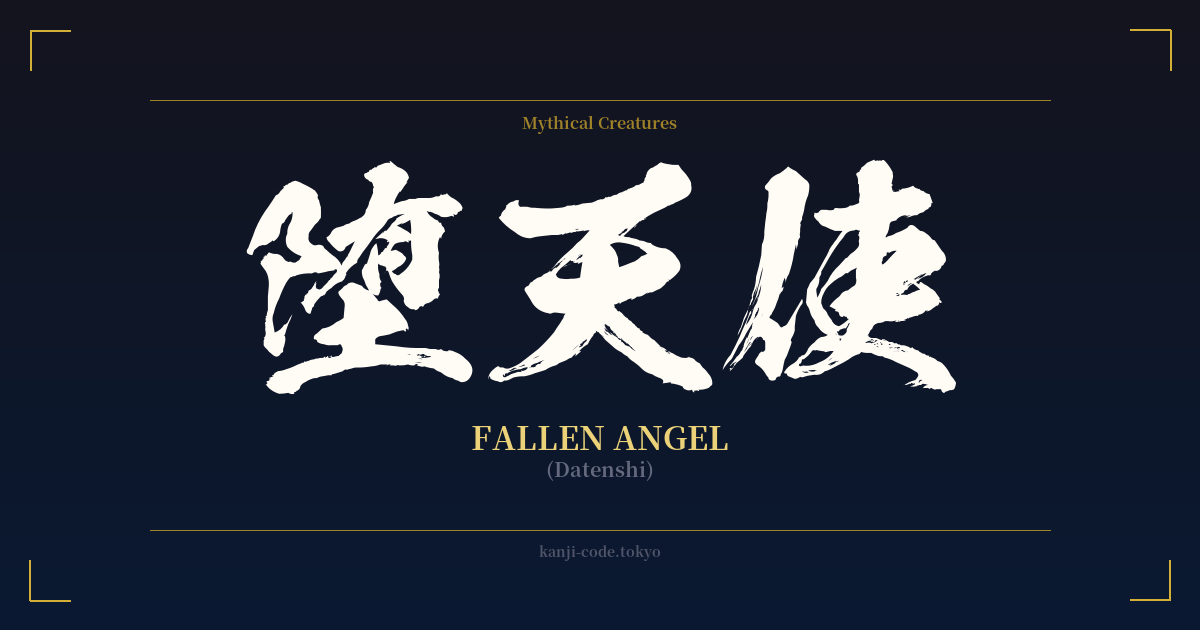
✍️ 堕天使 (Datenshi) — Cultural Context
The Japanese word 堕天使 (Datenshi) is a direct and powerful translation of "Fallen Angel." Unlike words rooted deep in Japan's native Shinto or Buddhist traditions, Datenshi is an imported concept, adopted to give a name to figures from Abrahamic religions, most famously Lucifer.
This term entered the Japanese lexicon as the country opened to the West during and after the Meiji Restoration in the late 19th century. The influx of Western literature, art, and religious texts introduced the dramatic narrative of celestial beings who defied God and were cast out of heaven. The Japanese language, rich in its ability to combine characters to express complex ideas, formed a perfect equivalent: 堕 (da – to fall, degenerate), 天 (ten – heaven), and 使 (shi – messenger), creating "fallen heavenly messenger."
While its origins are Western, the modern understanding of Datenshi in Japan is heavily shaped by pop culture. In anime, manga, and video games, the fallen angel is a pervasive and popular archetype. Figures like Sephiroth from Final Fantasy VII embody the aesthetic: beautiful, powerful, tragic, and charismatic. They are often portrayed not as purely evil, but as complex anti-heroes or sympathetic villains driven by a profound sense of loss, betrayal, or a conflicting ideology.
This pop culture interpretation softens the purely damnable connotations found in strict religious contexts. In Japan, the fallen angel is frequently an aesthetic choice, symbolizing a break from conformity, a melancholic beauty, or a powerful, self-determined individuality. The focus is less on eternal damnation and more on the romantic tragedy of the fall itself. It represents the ultimate rebel, one who was once divine but chose or was forced into a different path.
Therefore, the word carries a fascinating duality. It simultaneously evokes the sacred (天 – heaven) and the profane (堕 – fallen). This inherent conflict makes it a compelling symbol for art and personal expression, capturing a story of pride, loss, and the haunting beauty found in imperfection.
🖌️ Font Styles for 堕天使
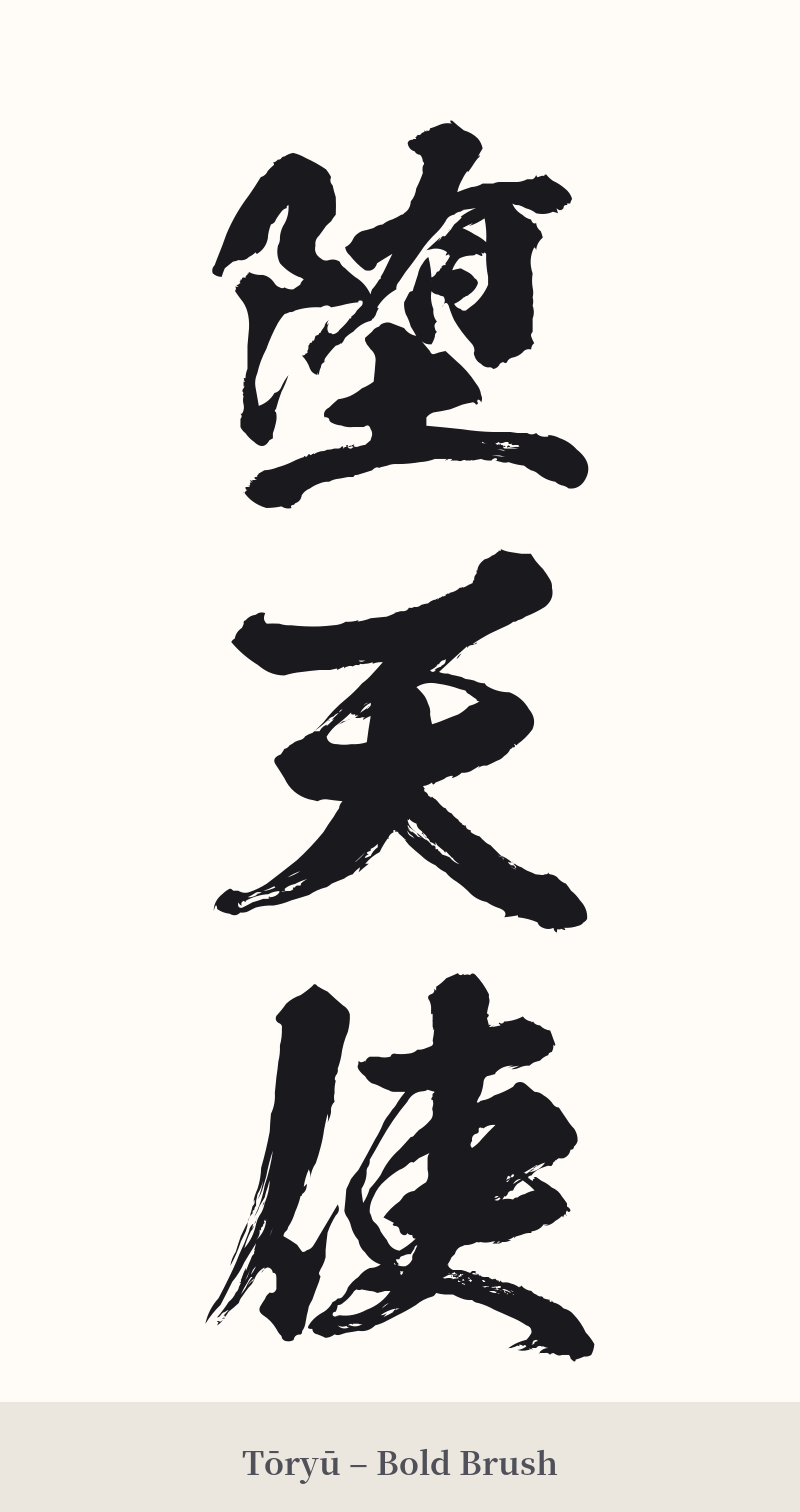
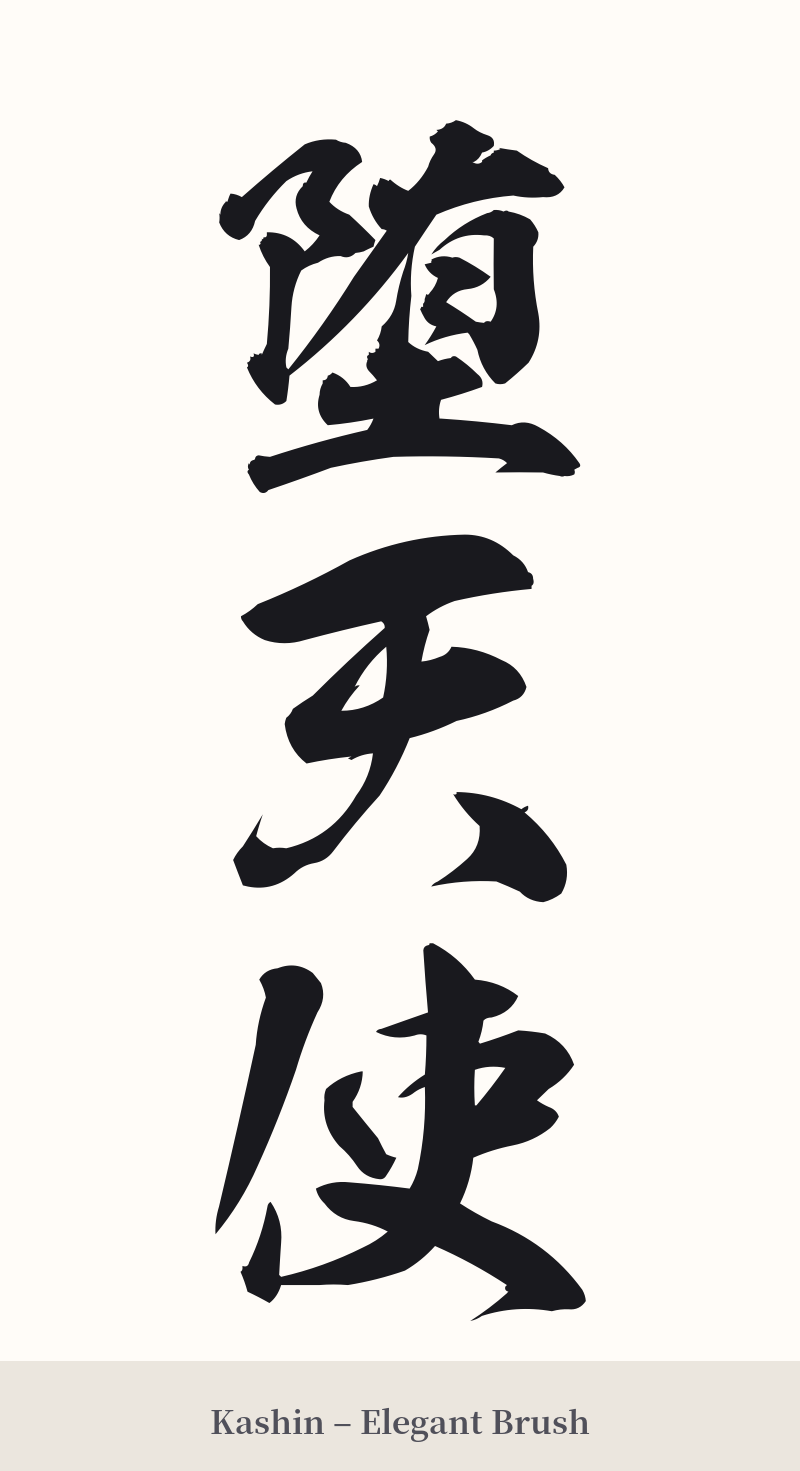
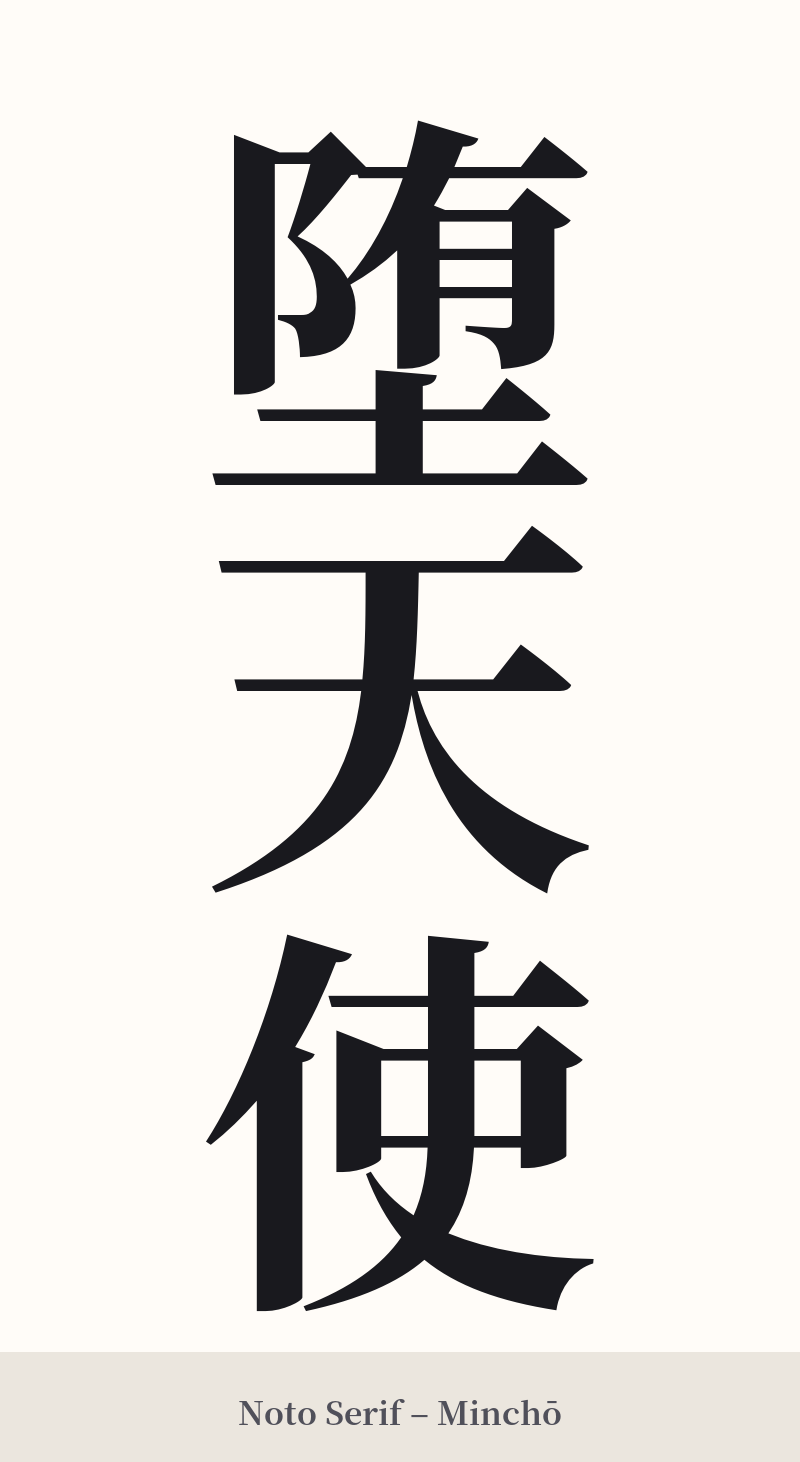
The same kanji can look dramatically different depending on the calligraphy style. Choose a font that matches the mood you want for your tattoo or design.
🎨 Tattoo Suitability
📐 Tattoo Design Guide
The three characters of 堕天使 offer excellent flexibility for a tattoo design. Its vertical composition is particularly powerful, visually representing the concept of 'falling.'
– Placement: A vertical alignment along the spine, forearm, or calf accentuates the 'descent' implied by the word. For a horizontal design, the chest, upper back, or across the collarbone provides a strong and stable canvas.
– Font Style: The choice of font can dramatically alter the mood. A dynamic, semi-cursive calligraphy style (Gyōsho) can capture the chaotic energy and rebellion of the fall. Conversely, a crisp and elegant Mincho style can emphasize the tragic, melancholic beauty of the angel's former divinity.
– Visual Embellishments: While the kanji is powerful on its own, it can be paired with imagery to enhance the narrative. Consider adding a single black feather, a pair of broken or tattered wings, or a cracked halo nearby. These elements can frame the kanji or be integrated into the background to tell a more complete story.
Comments