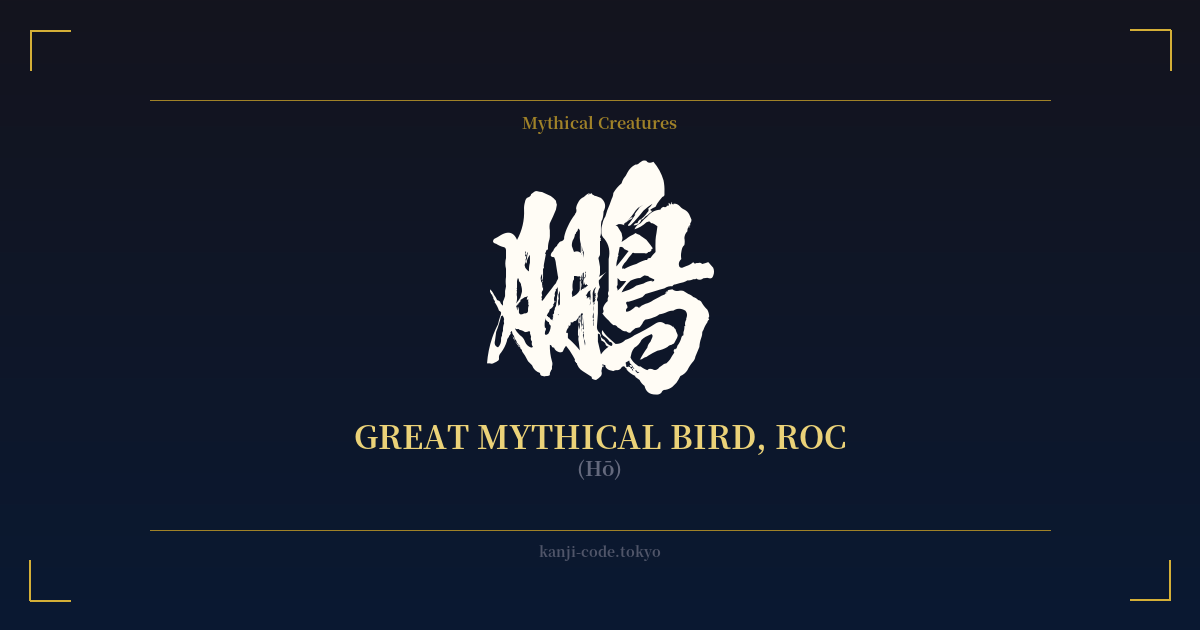
✍️ 鵬 (Hō) — Cultural Context
The kanji 鵬 (Hō) represents one of the most breathtaking creatures in East Asian mythology: a colossal, divine bird of unimaginable size. Its story is not one of simple flight, but of a journey that transcends the very concepts of scale and possibility.
The origin of the Hō, or Peng as it's known in Chinese, comes from the ancient Daoist text, the Zhuangzi. The book opens with a description of a giant fish named Kun (鯤) in the Northern Darkness, an ocean at the edge of the world. This fish is thousands of miles long, a scale that defies human comprehension.
But the Kun's story doesn't end in the sea. It undergoes a magnificent transformation, changing into the great bird, Hō. When the Hō unfurls its wings, they are like clouds that stretch across the entire sky. It does not simply fly; it waits for a great cosmic wind, a typhoon that will carry it 90,000 miles into the southern sky, to a celestial lake known as the Southern Oblivion.
This epic journey is the core of the Hō's symbolism. It represents breaking free from earthly limitations and mundane perspectives. The small birds in the story mock the Hō, unable to comprehend its journey because their own world is limited to hopping from branch to branch. The Hō, therefore, embodies boundless potential, ambition, and the freedom that comes from a higher perspective.
In Japan, this kanji retains its powerful, larger-than-life connotations. While not used in everyday language, it carries significant weight. It is most famously associated with the world of sumo wrestling, a sport of giants. The legendary Yokozuna (grand champion) Taihō Kōki, one of the greatest wrestlers of all time, used this character in his ring name (大鵬), which translates to 'Great Peng.' The name was a perfect fit, symbolizing his immense strength, grand presence, and unparalleled achievements in the ring.
Unlike the Western Phoenix, which symbolizes rebirth from ashes, or the Japanese Hō-ō (鳳凰), which represents good fortune and imperial grace, the Hō is a symbol of raw, untamed scale and potential. It is a reminder that there are horizons beyond our own, and that true greatness requires a vision that others may not understand.
🖌️ Font Styles for 鵬
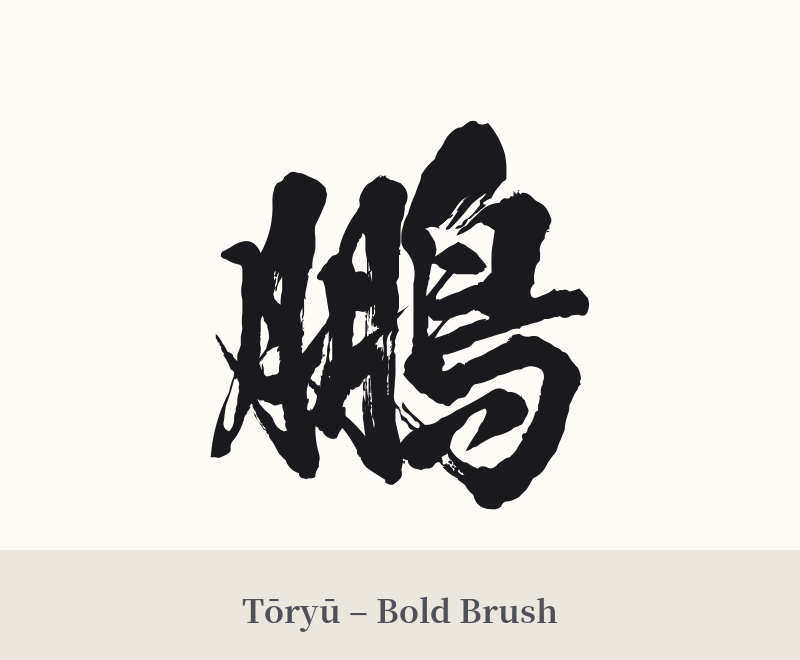
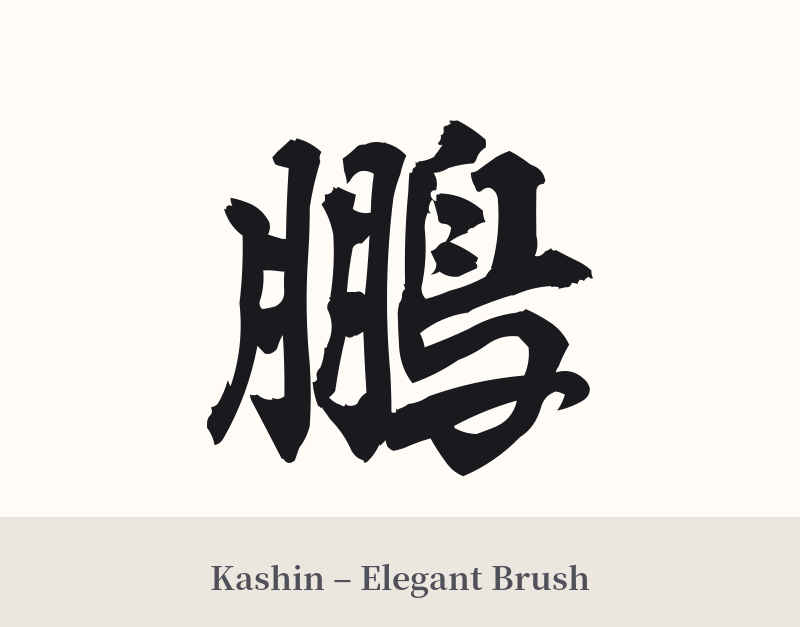
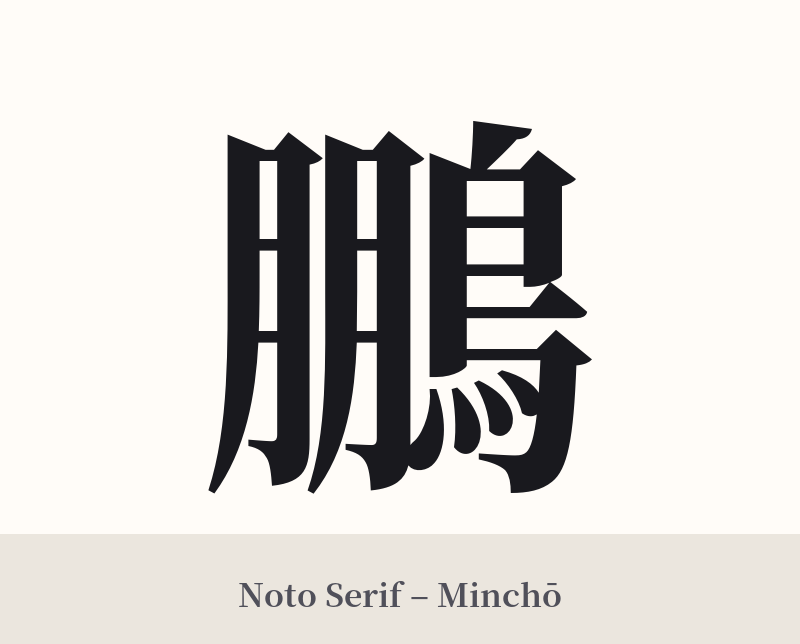
The same kanji can look dramatically different depending on the calligraphy style. Choose a font that matches the mood you want for your tattoo or design.
🎨 Tattoo Suitability
📐 Tattoo Design Guide
The kanji 鵬 is a powerful and visually dense character, making it well-suited for a statement tattoo. Its complexity demands careful consideration of placement and style to ensure its details are preserved.
– Placement: Because of its intricacy, this kanji needs space. Large, flat areas like the back, chest, or thigh are ideal. A vertical design along the spine or calf can create a dramatic, soaring effect, mirroring the bird's journey.
– Style: A bold, semi-cursive calligraphy style (gyōsho) can capture the dynamic energy and movement of the mythical bird. For a more solid and powerful feel, a traditional block script (kaisho) will emphasize the character's structure and grandeur. Avoid thin, delicate lines that might fade or blur over time.
– Visual Elements: While the kanji is powerful enough to stand alone, you could incorporate elements from its origin story. Subtle wisps of clouds, wind currents, or stylized ocean waves at the base can add narrative depth and context without overpowering the character itself.
Comments