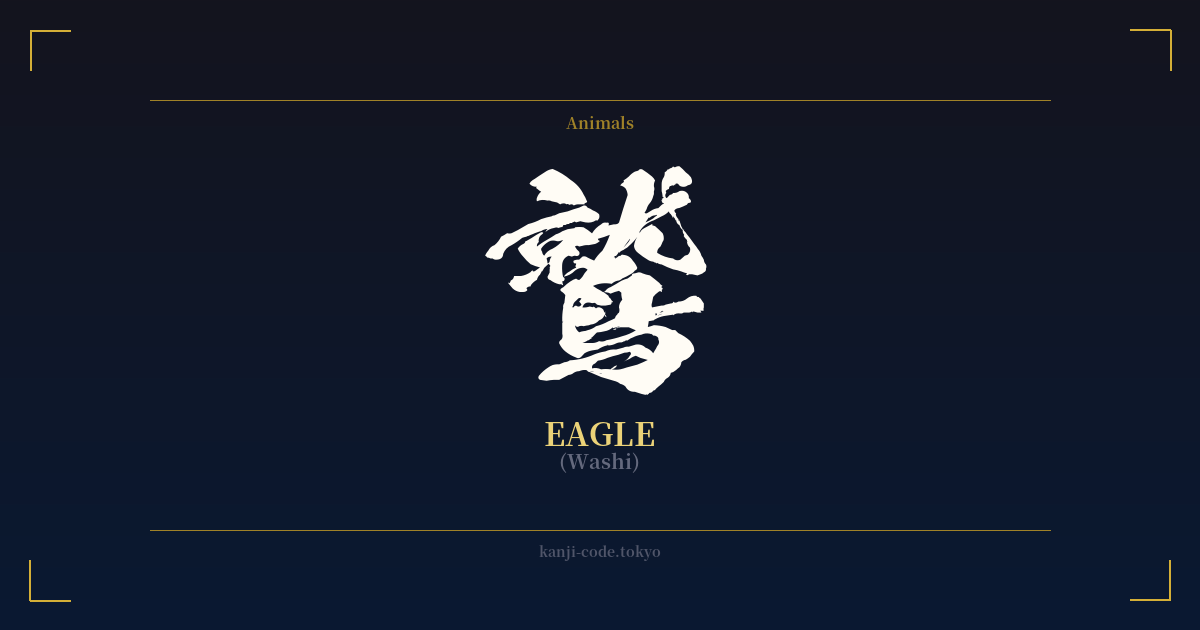
✍️ 鷲 (Washi) — Cultural Context
The kanji 鷲 (washi) represents the eagle, a bird that commands respect and awe across the globe. In Japan, this is no different. The eagle is a potent symbol of power, authority, nobility, and keen-sighted vision. Its image has been woven into the nation's cultural and martial history for centuries.
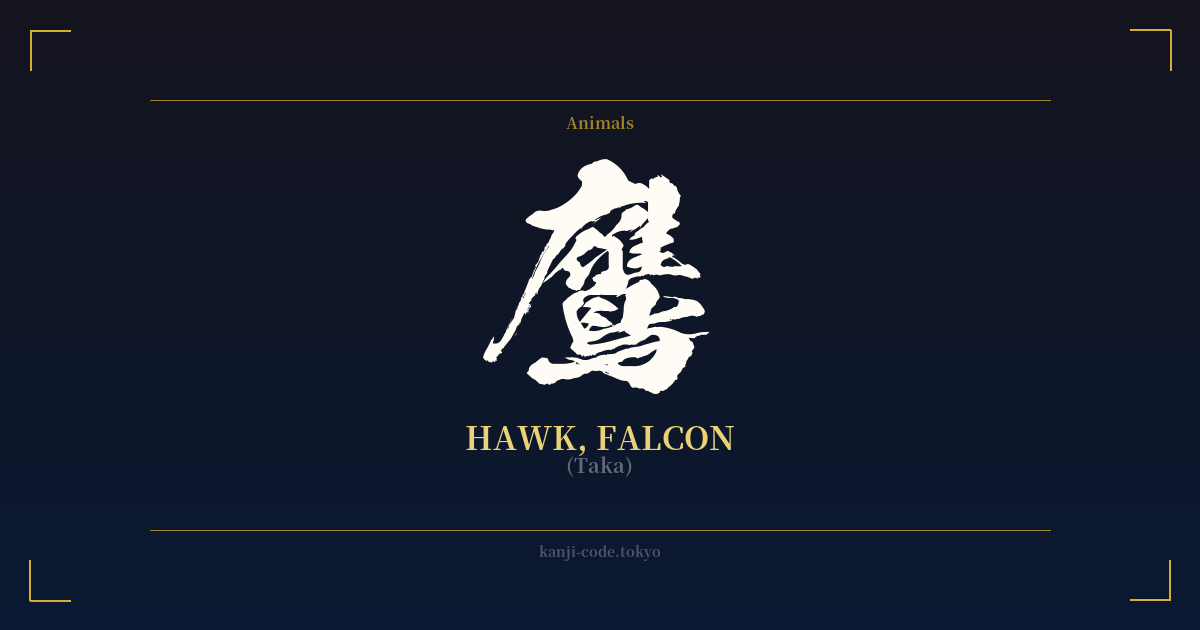
Historically, the eagle, along with the hawk (鷹, taka), was deeply admired by the samurai class. These birds of prey, with their hunting prowess, sharp focus, and dominion over the skies, were seen as ideals of the warrior spirit. A skilled warrior, like an eagle, needed to be patient, strategic, and capable of striking with decisive force. This admiration is evident in the use of eagle and hawk motifs on armor, helmets, and most notably, family crests (kamon).
While often grouped with hawks, the 鷲 specifically refers to the larger birds of prey. Japan is home to magnificent species like the Steller's Sea Eagle (オオワシ, Ōwashi) and the Mountain Hawk-Eagle (クマタカ, Kumataka), which have inspired artists and poets. The Golden Eagle (イヌワシ, Inuwashi), in particular, is a symbol of untamed nature and strength, often found in the rugged mountains of Japan.
The character 鷲 itself is a pictograph, a complex combination of radicals meant to evoke the image of the bird. The top part, 𦥯, is a variant of a bird radical, while the bottom part, 就, provides the phonetic reading and contributes a sense of 'approaching' or 'arriving,' perhaps hinting at the eagle's powerful descent upon its prey.
In modern Japan, the eagle's symbolism endures. It is a popular name for companies, products, and sports teams wanting to project an image of strength, quality, and market leadership. The Tohoku Rakuten Golden Eagles, a professional baseball team, is a prominent example. For many, 鷲 remains a powerful emblem of ambition, freedom, and the ability to rise above challenges with a clear perspective.
🖌️ Font Styles for 鷲
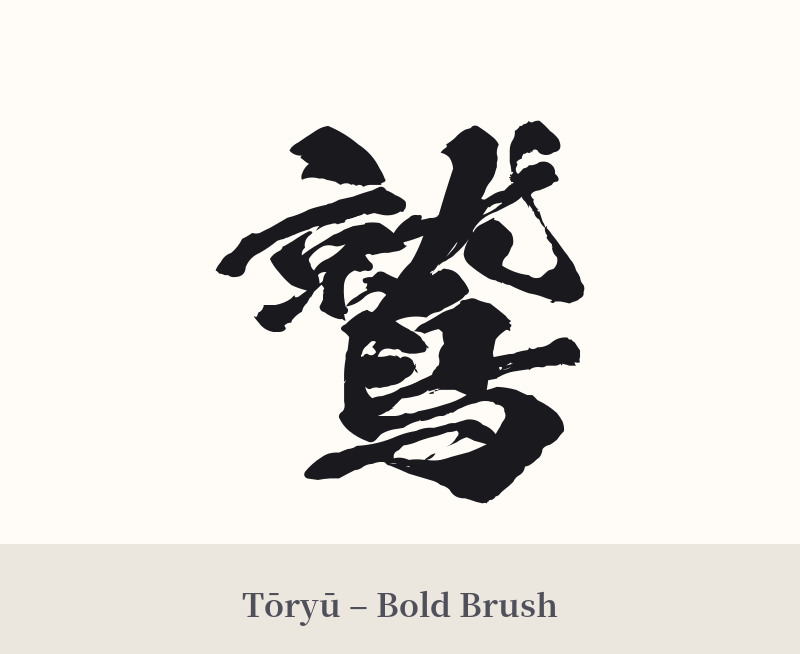
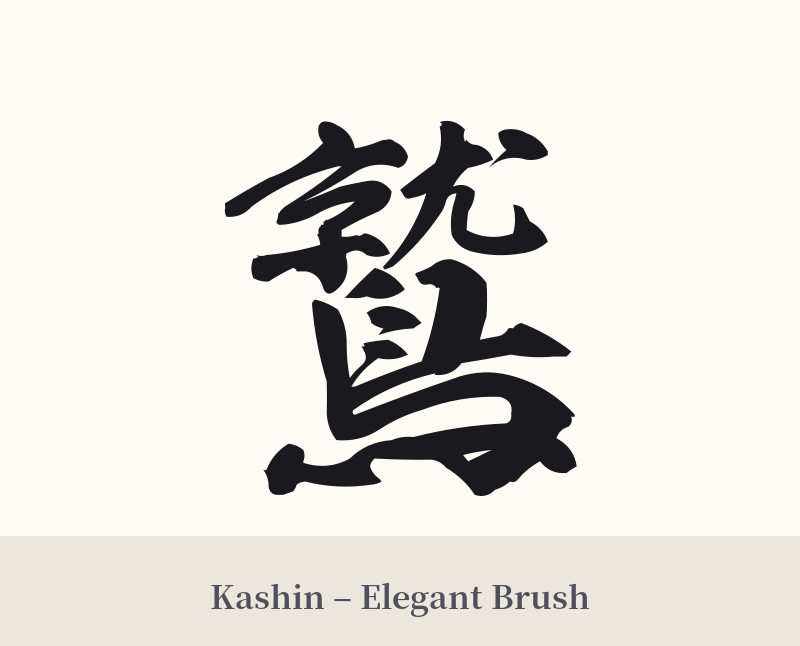
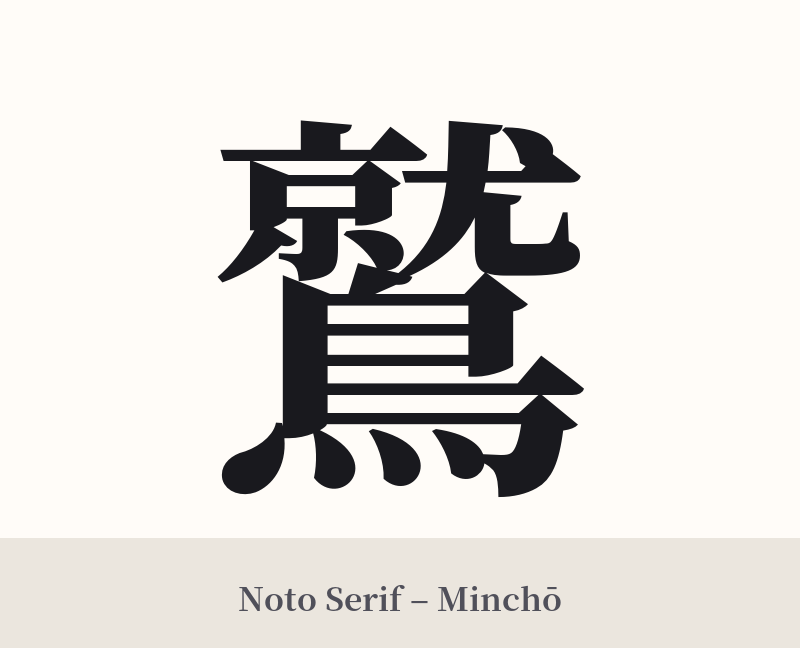
The same kanji can look dramatically different depending on the calligraphy style. Choose a font that matches the mood you want for your tattoo or design.
🎨 Tattoo Suitability
📐 Tattoo Design Guide
A tattoo of 鷲 (washi) is a statement of power and majesty. Due to its complexity, the design requires careful consideration.
– Placement: This kanji needs space to be legible. Excellent placements include the center of the back, the chest, the thigh, or the upper arm/shoulder. Avoid small areas like the wrist or ankle where the details will be lost.
– Style: A bold, dynamic brushstroke style (shodō) works exceptionally well, emphasizing the eagle's wild and powerful nature. The thick and thin lines of calligraphy can give the character life and movement. A clean, strong Mincho or Gothic font can also work for a more modern, sharp look, but ensure the lines are thick enough to age well.
– Visual Complements: While 鷲 stands powerfully on its own, it can be paired with imagery that enhances its meaning. Consider a backdrop of rugged mountains, a solitary pine tree (symbolizing longevity and endurance), or swirling clouds to represent its domain in the sky.
Comments