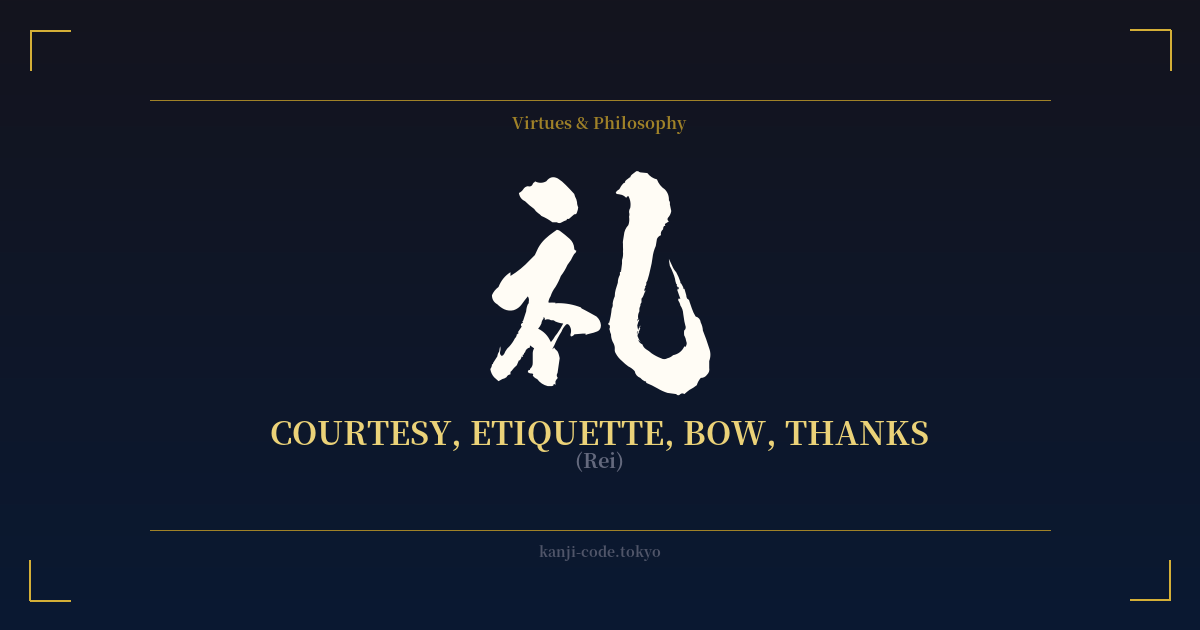
✍️ 礼 (Rei) — Cultural Context
The single character 礼 (Rei) is one of the most essential concepts in understanding the fabric of Japanese society. While often translated as 'courtesy,' 'etiquette,' or 'bow,' its meaning is far deeper, representing a complete system of respect, gratitude, and proper conduct that governs social interactions.
At its core, Rei is a cornerstone of Confucian philosophy, where it stands as one of the Five Constant Virtues (五常, Gojō). In this context, it signifies the rituals, ceremonies, and social norms that create harmony and order within a community. The very structure of the kanji hints at this ancient origin: the left radical (示) depicts an altar, symbolizing rituals and offerings to the divine, while the right side is a phonetic component. Together, they evoke an image of a person making a ceremonial offering, an act of reverence and respect.
In modern Japan, Rei is visible everywhere. It is the foundation of the intricate system of honorific language known as Keigo (敬語), which dictates how one speaks to superiors, colleagues, and juniors. It is the unspoken principle behind the ubiquitous act of bowing (お辞儀, ojigi), where the depth and duration of the bow communicate nuanced levels of respect, apology, or gratitude. Gift-giving, with its meticulous attention to wrapping and presentation, is another physical manifestation of Rei.
Perhaps nowhere is the spirit of Rei more explicit than in the world of Japanese martial arts (武道, Budō). The famous maxim, "礼に始まり、礼に終わる" (Rei ni hajimari, Rei ni owaru), translates to "Begin with Rei, end with Rei." This means every practice session, every match, starts and ends with a bow. This act is not mere formality; it is a reminder to respect the opponent, the teachers, the training space (dōjō), and the art itself. It cultivates an attitude of humility and gratitude, emphasizing that the goal of martial arts is not to harm, but to perfect one's character.
Ultimately, 礼 is not just about following external rules. It is an internal state of mind—a conscious expression of respect for the presence and dignity of others. It is the understanding that one's actions have an impact on those around them and the commitment to making that impact a positive and harmonious one. Choosing 礼 is to embrace a philosophy of mindful interaction and sincere respect.
🖌️ Font Styles for 礼
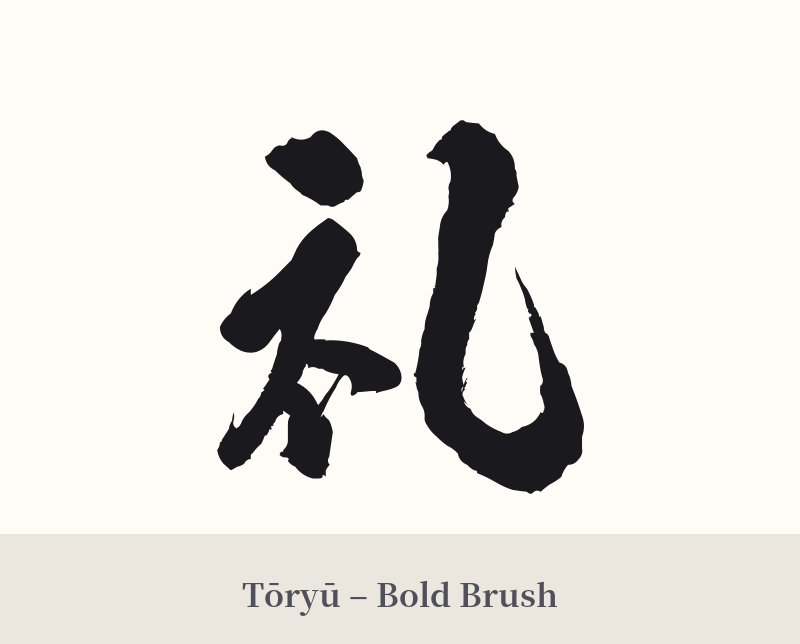
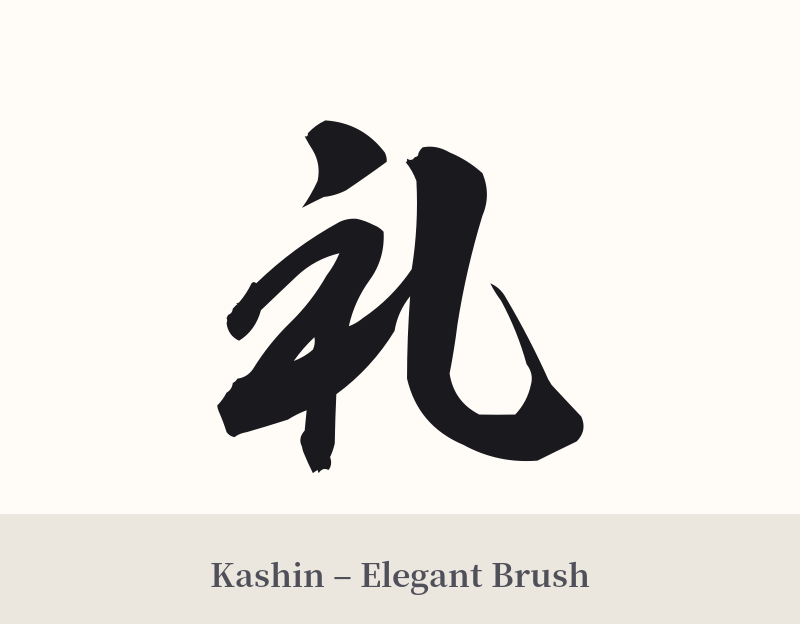
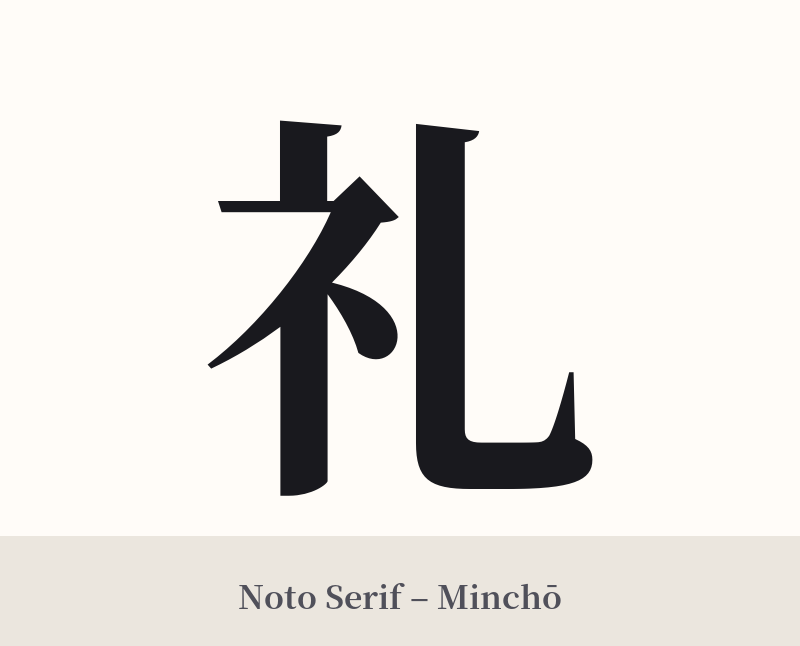
The same kanji can look dramatically different depending on the calligraphy style. Choose a font that matches the mood you want for your tattoo or design.
🎨 Tattoo Suitability
📐 Tattoo Design Guide
The simplicity and balance of 礼 (Rei) make it a versatile choice for a tattoo, suitable for various styles and placements.
– Placement: For a subtle yet meaningful statement, consider the inner wrist, forearm, or behind the ear. For a more prominent display, especially for those involved in martial arts, the back of the neck, calf, or shoulder blade are excellent choices. It can also be integrated into a larger piece, such as a sleeve with other Japanese motifs.
– Font Styles: The character's feel can be dramatically altered by the calligraphy style. A crisp Kaisho (block) script emphasizes formality and discipline. A flowing Gyōsho (semi-cursive) style can lend a more personal and elegant feel. For a highly artistic and abstract look, a Sōsho (cursive) design is a powerful option, though it may be less legible to the untrained eye.
– Visual Tips: While 礼 stands powerfully on its own, it can be paired with other symbols to add context. Consider placing it within an 'ensō' (Zen circle) to represent enlightenment and completeness. For martial artists, placing it near a depiction of a dōjō, a favorite weapon, or even within a design of a bowing figure can deepen its meaning.
Comments