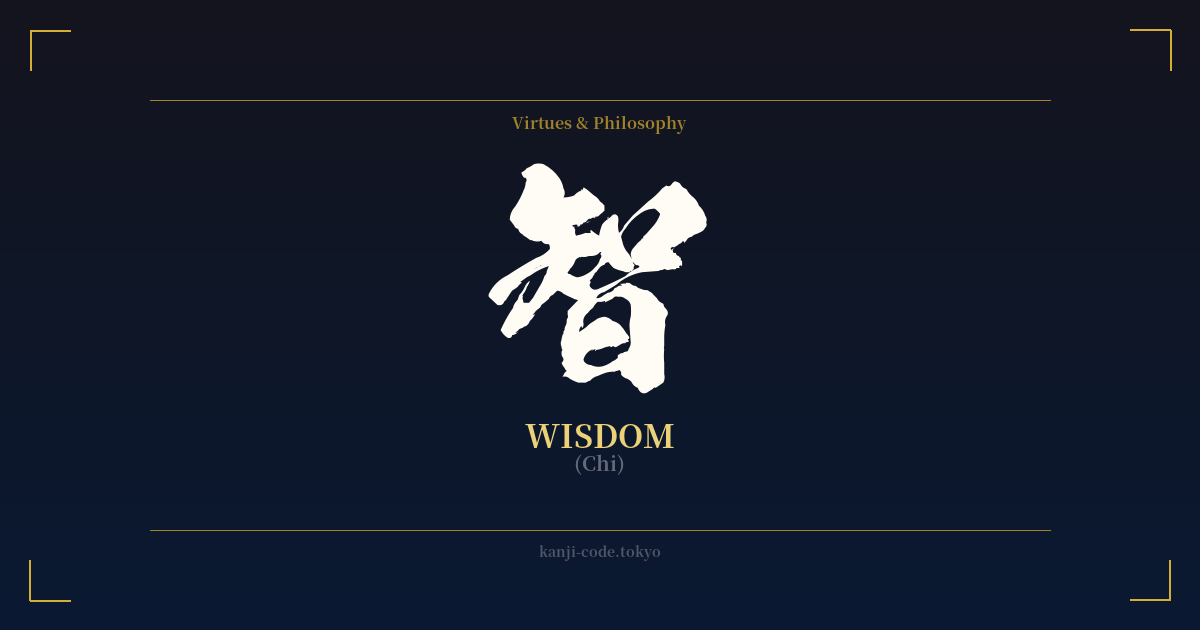
✍️ 智 (Chi) — Cultural Context
The kanji 智 (chi) embodies a concept that sits at the very heart of Eastern philosophy: wisdom. It’s a character not just of the mind, but of the spirit, representing a level of understanding that transcends mere knowledge.
Etymologically, the character offers a beautiful visual metaphor. It is composed of two main parts. The top portion is 知 (shiru), which means “to know.” This part itself is made of 矢 (ya), an arrow, and 口 (kuchi), the mouth, suggesting knowledge that is sharp, direct, and can be articulated. Below this is 日 (hi), the symbol for the sun. Together, 智 paints a picture of “knowledge that is as clear as the sun”—an enlightened, unambiguous, and profound understanding.
This idea of enlightened understanding is central to its role in Buddhism. 智 is one of the Five Wisdoms (五智, Gochi) in Esoteric Buddhism, representing the crystallized wisdom of the Buddha. Each of the Five Wisdom Kings (五大明王, Godai Myōō), fearsome deities who protect Buddhism, embodies one of these wisdoms. For example, Fudō Myōō, the Immovable Wisdom King, represents the unshakeable wisdom that converts anger into salvation.
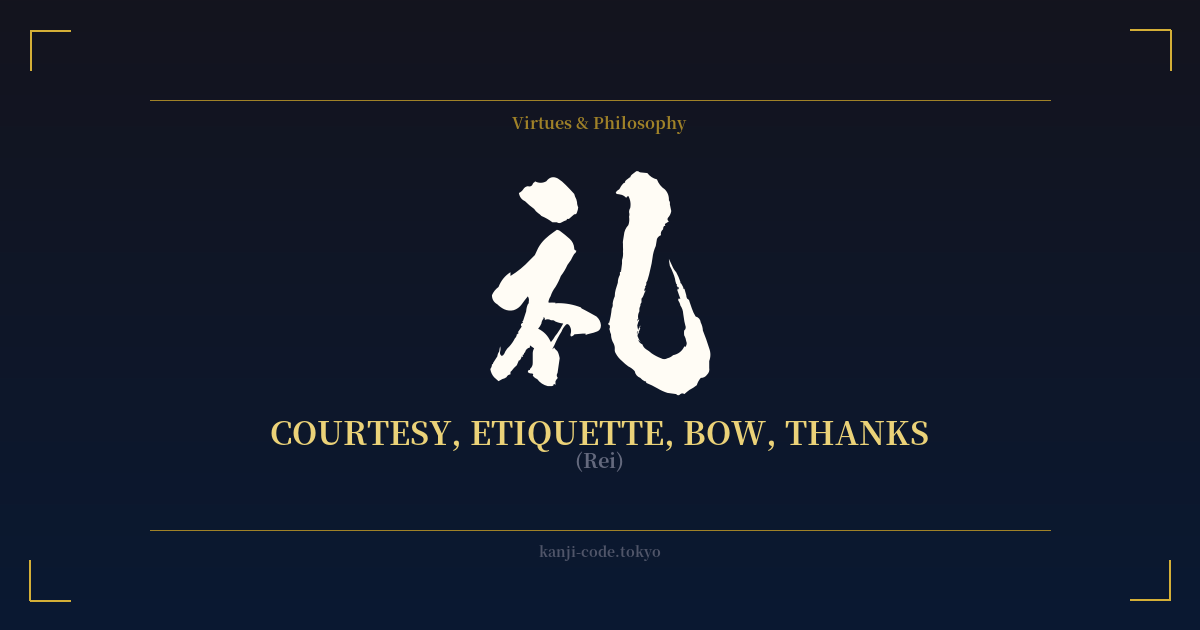
Beyond Buddhism, 智 is also a cornerstone of Confucian ethics. It is one of the Five Constant Virtues (五常, Gojō) alongside benevolence (仁), righteousness (義), propriety (礼), and integrity (信). In this context, wisdom is not just an intellectual pursuit but a moral imperative, essential for making just and humane decisions as a leader, a family member, and an individual.
In modern Japanese, 智 is a component in many words related to intellect and sagacity. The most common is 智慧 (chie), a compound that pairs it with 慧 (e), another character for intelligence, to mean “wisdom” or “sagacity” in a very complete sense. It is distinct from 知識 (chishiki), which means “knowledge” and refers more to accumulated facts and information. 智 is about the ability to apply that knowledge with insight, experience, and moral clarity.
For anyone considering this kanji, it represents a commitment to a lifelong journey of learning, reflection, and the pursuit of deeper meaning.
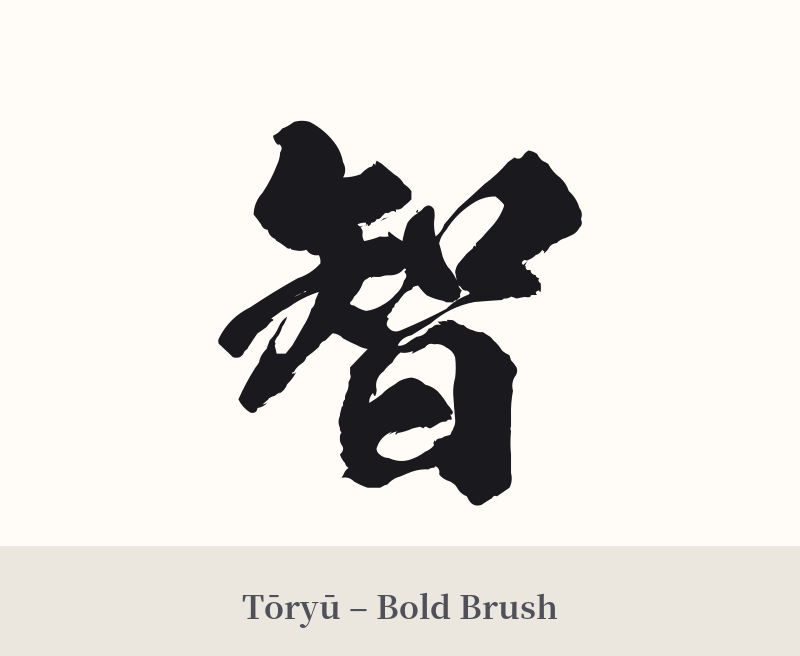
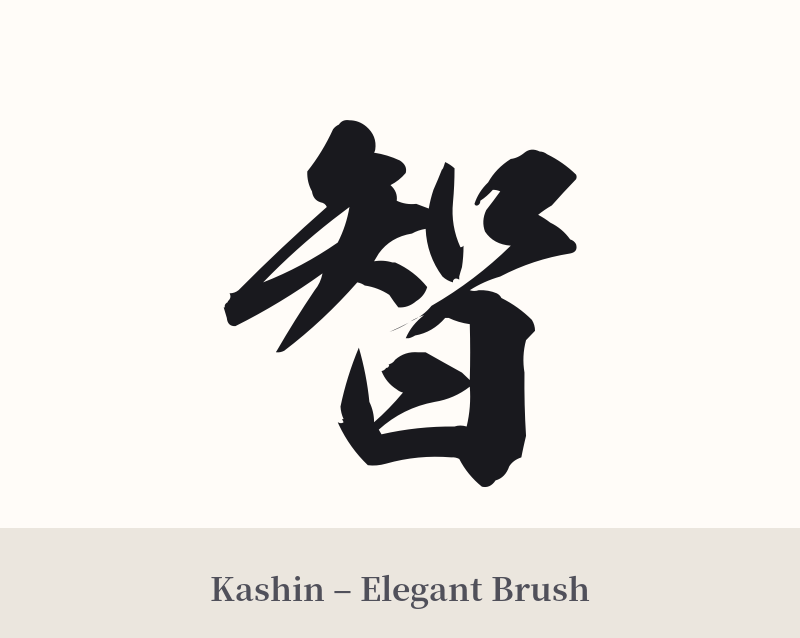
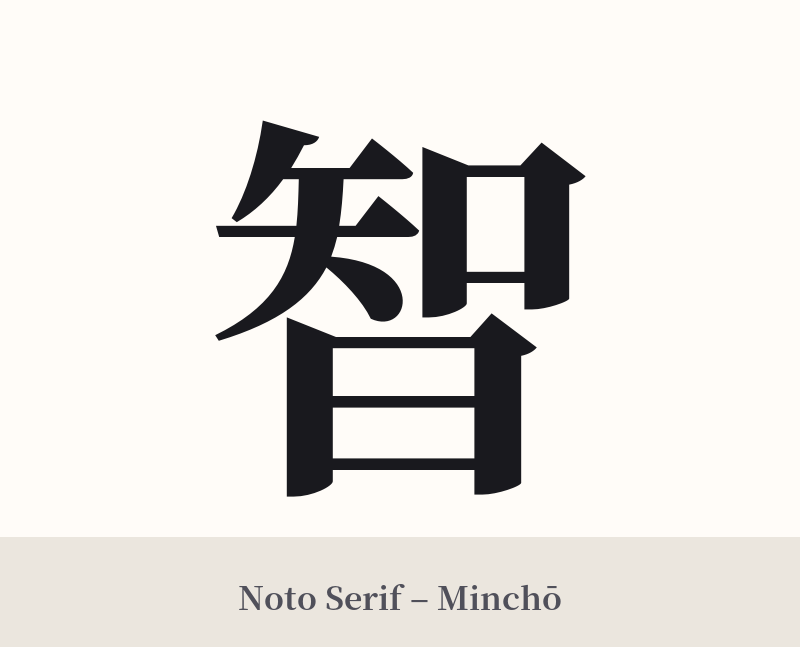
🖌️ Font Styles for 智
The same kanji can look dramatically different depending on the calligraphy style. Choose a font that matches the mood you want for your tattoo or design.
🎨 Tattoo Suitability
📐 Tattoo Design Guide
The kanji 智 is a strong, balanced character that works well in a variety of tattoo designs.
– Placement: As a single, vertically-oriented character, it is well-suited for placements like the forearm, the back of the neck, along the spine, or on the ribs. Its balanced structure also allows it to work as a standalone piece on the chest or shoulder blade.
– Font Styles: A traditional Kaisho (block script) style will emphasize its classical and virtuous nature, offering clarity and gravitas. For a more artistic and fluid feel, a Gyosho (semi-cursive) or Sosho (cursive) brushstroke style can capture the dynamic process of achieving wisdom. The choice of a heavy, bold brushstroke can convey strength, while a finer line can suggest precision and intellect.
– Visual Complements: Consider pairing 智 with other symbolic imagery. An ensō (Zen circle) can frame the kanji, representing enlightenment and the universe. A lotus flower, which grows from mud to blossom in purity, is a powerful Buddhist symbol of wisdom. An owl, a cross-cultural symbol of sagacity, could also be a compelling companion element.
Comments