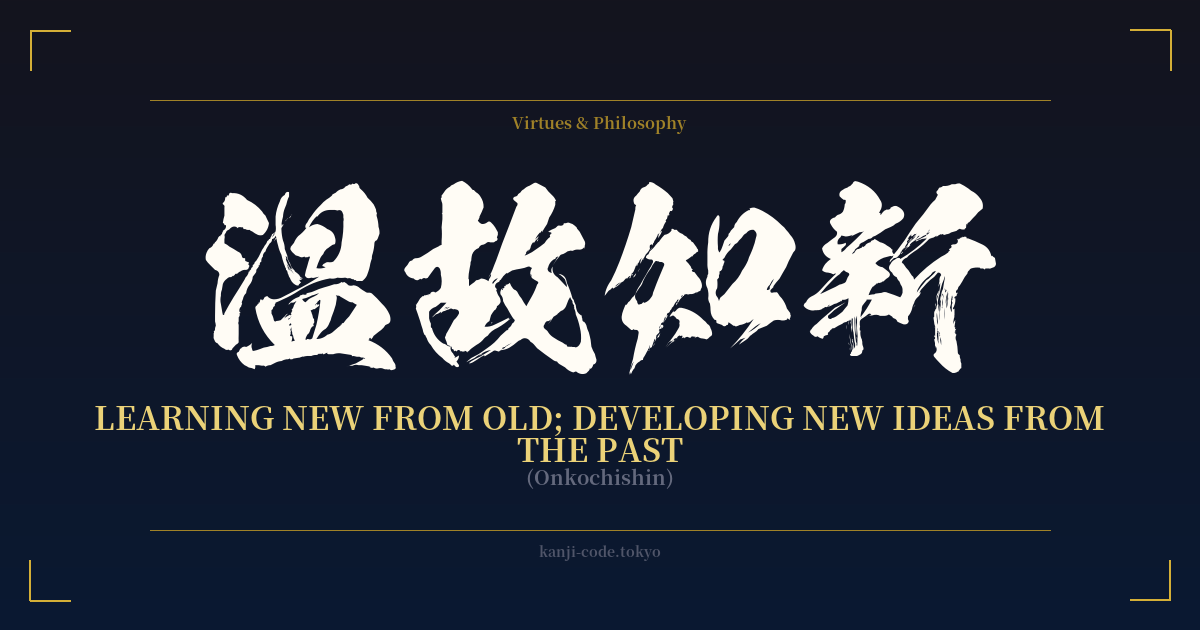
✍️ 温故知新 (Onkochishin) — Cultural Context
温故知新 (Onkochishin) is a timeless piece of wisdom that forms a cornerstone of East Asian philosophy. It's a four-character idiom, or yojijukugo, that translates to "learning new things from the old" or "developing new ideas based on study of the past."
The phrase originates from the Analects of Confucius, a collection of sayings from the ancient Chinese sage. The original line states, "He who by reviewing the old can gain knowledge of the new is fit to be a teacher." This concept was absorbed into Japanese culture, where it has become a guiding principle in everything from martial arts and traditional crafts to modern business and innovation.
At its heart, Onkochishin is not about being stuck in the past. It is the opposite of blind nostalgia. It champions the idea of actively engaging with history, tradition, and established knowledge as a foundation for creating something fresh and relevant. It is a dynamic process of reflection and creation.
In the world of Japanese martial arts, a practitioner studies ancient kata (forms) not just to preserve them, but to understand the underlying principles of movement, timing, and strategy. This deep understanding allows them to adapt and apply these principles in new, unpredictable situations. This is Onkochishin in action.
Similarly, in arts like calligraphy (shodō) or the tea ceremony (sadō), masters spend decades studying the works and techniques of their predecessors. This profound respect for and knowledge of tradition is what gives them the license and ability to innovate, adding their own unique voice to a lineage stretching back centuries.
Even in Japan's famously futuristic technology and business sectors, the spirit of Onkochishin is present. Companies often look to their own history and core principles to guide future innovation, ensuring that progress is built on a stable and meaningful foundation. It embodies a perfect balance between respect for heritage and the drive for progress, making it a powerful philosophy for personal growth and creativity.
🖌️ Font Styles for 温故知新
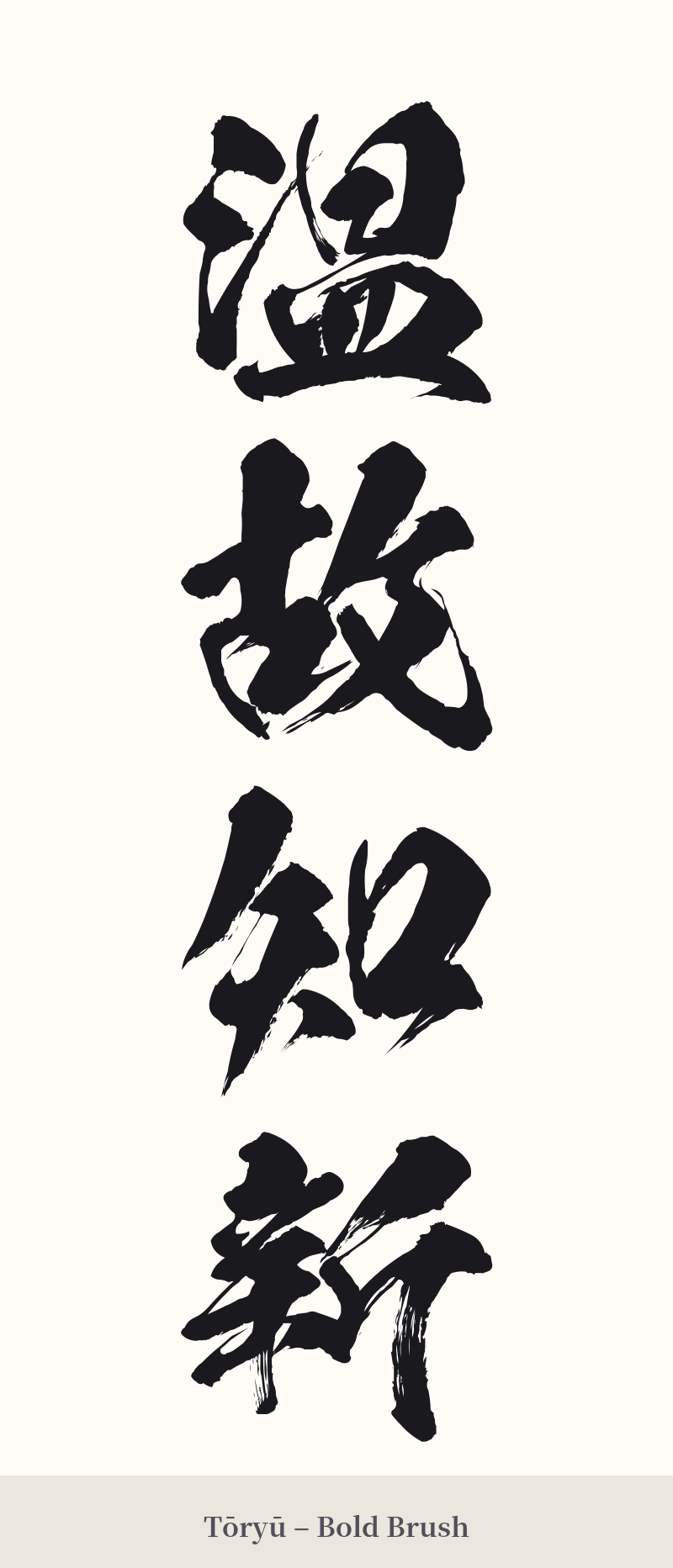
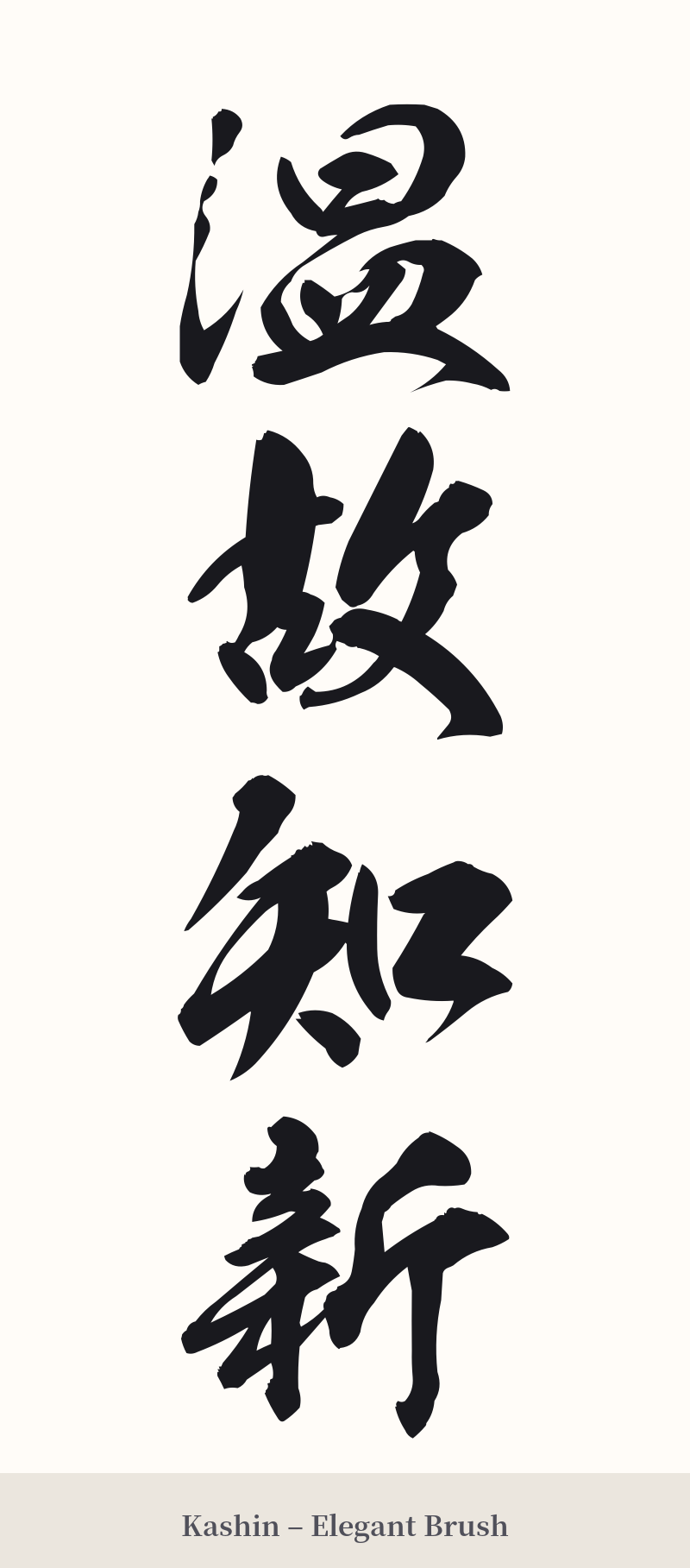
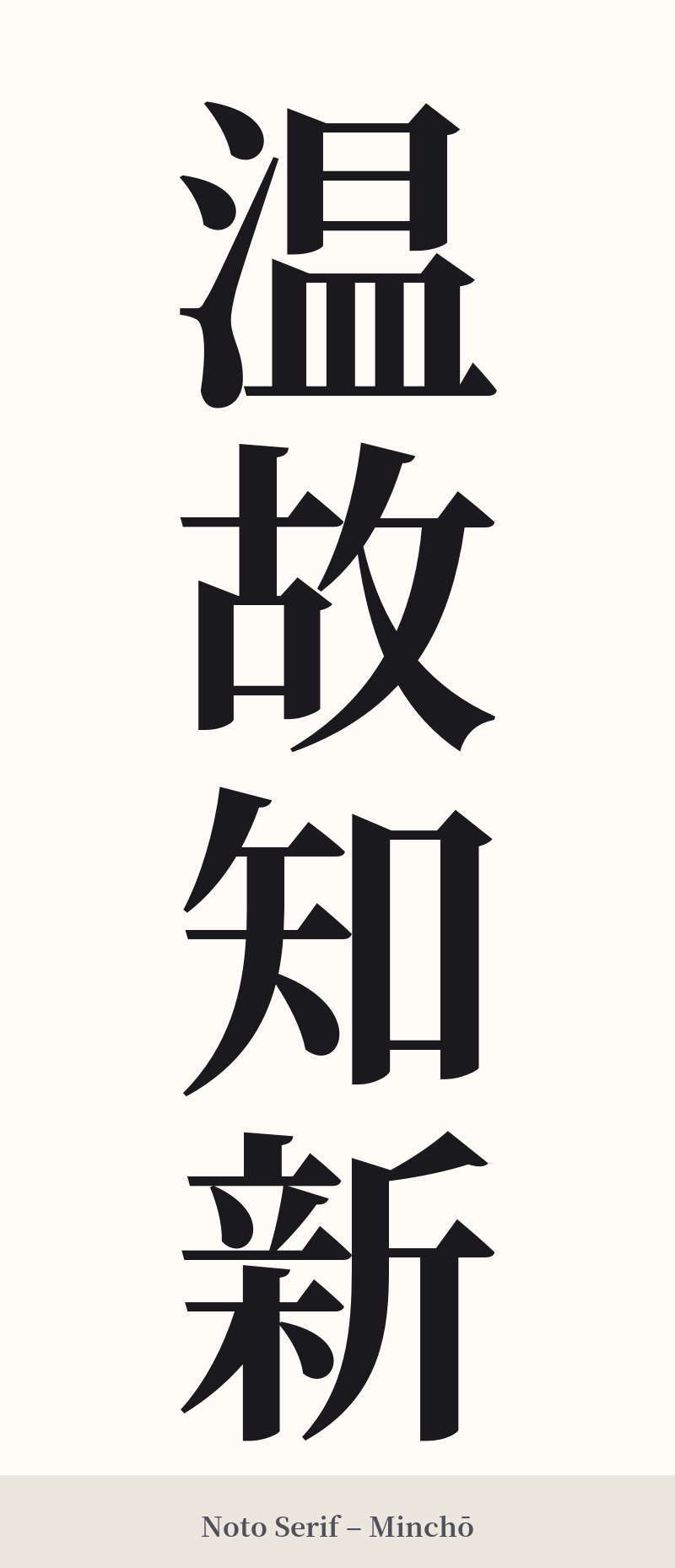
The same kanji can look dramatically different depending on the calligraphy style. Choose a font that matches the mood you want for your tattoo or design.
🎨 Tattoo Suitability
📐 Tattoo Design Guide
The four-character structure of 温故知新 offers excellent design flexibility. Its balance and symmetry make it a powerful statement piece.
– Placement: A vertical alignment is the most traditional and visually striking presentation for a yojijukugo. This looks exceptional along the spine, forearm, or calf. A horizontal layout also works well across the chest, upper back, or along the clavicle.
– Font Style: The choice of script can dramatically alter the mood. A crisp Kaisho (block script) emphasizes clarity, tradition, and discipline. A more fluid Gyosho (semi-cursive script) can convey a sense of dynamism and the creative link between old and new. For a highly artistic and abstract look, Sosho (cursive script) is an option, but be aware that it can be difficult for the untrained eye to read.
– Visual Elements: While 温故知新 is strong enough to stand alone, it can be paired with complementary imagery. An Enso circle could frame the kanji to represent enlightenment and the cycle of learning. Elements like a gnarled bonsai tree or a lotus flower could also symbolize growth from a strong foundation.
Comments