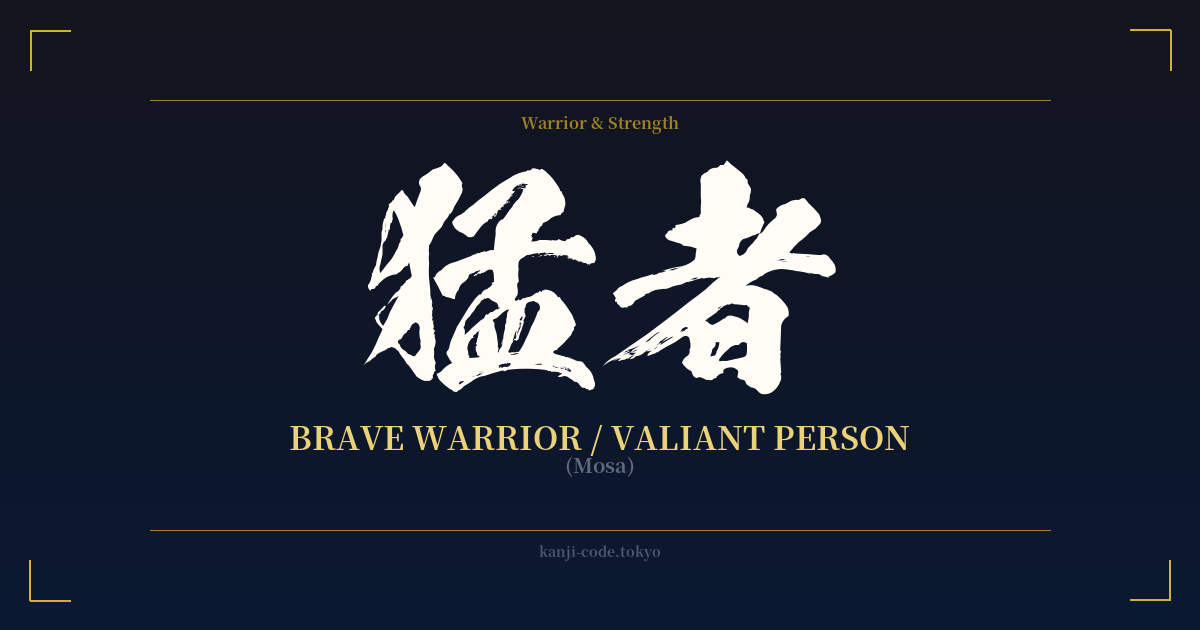
✍️ 猛者 (Mosa) — Cultural Context
猛者 (Mosa) is a Japanese word that transcends a simple translation of 'brave warrior.' It paints a picture of a truly formidable individual, someone whose courage is wild, untamed, and overwhelming. This isn't just a soldier following orders; a mosa is a force of nature on the battlefield, a champion whose prowess is legendary.
The word is a powerful combination of two kanji: 猛 (mō), meaning 'fierce,' 'wild,' or 'ferocious,' and 者 (sha/mono), meaning 'person.' The character 猛 often includes the 'beast' radical (犭), linking its intensity to that of a wild animal. When joined, they create a term that describes a person who embodies this raw, untamable strength.
Historically, the concept of the mosa is deeply intertwined with Japan's martial past. While words like 武士 (bushi) or 侍 (samurai) refer to a specific social class and its code of conduct, 猛者 describes a quality of spirit. A samurai could be a mosa, but so could a ronin, a warrior monk (sohei), or even a legendary figure from folklore. It’s about character and action, not title. Think of legendary warriors like Minamoto no Yoshitsune, whose daring tactics defied convention, or the fearsome female warrior Tomoe Gozen. They were celebrated not just for their skill, but for their awe-inspiring ferocity—the very essence of a mosa.
In modern Japan, 猛者 is not a word you'd hear in daily conversation. Its use is largely reserved for historical dramas, literature, manga, anime, and video games. It's the perfect term to describe a seemingly invincible anime hero, a final boss in a game, or even a top-tier esports player who dominates the competition. This modern usage keeps the word alive, associating it with exceptional skill and an indomitable will to win.
For someone outside of Japan, 猛者 captures the romantic ideal of the warrior spirit. It speaks to a courage that is not just disciplined, but passionate and fierce. It represents the inner strength to face insurmountable odds with a roar, not just quiet determination.
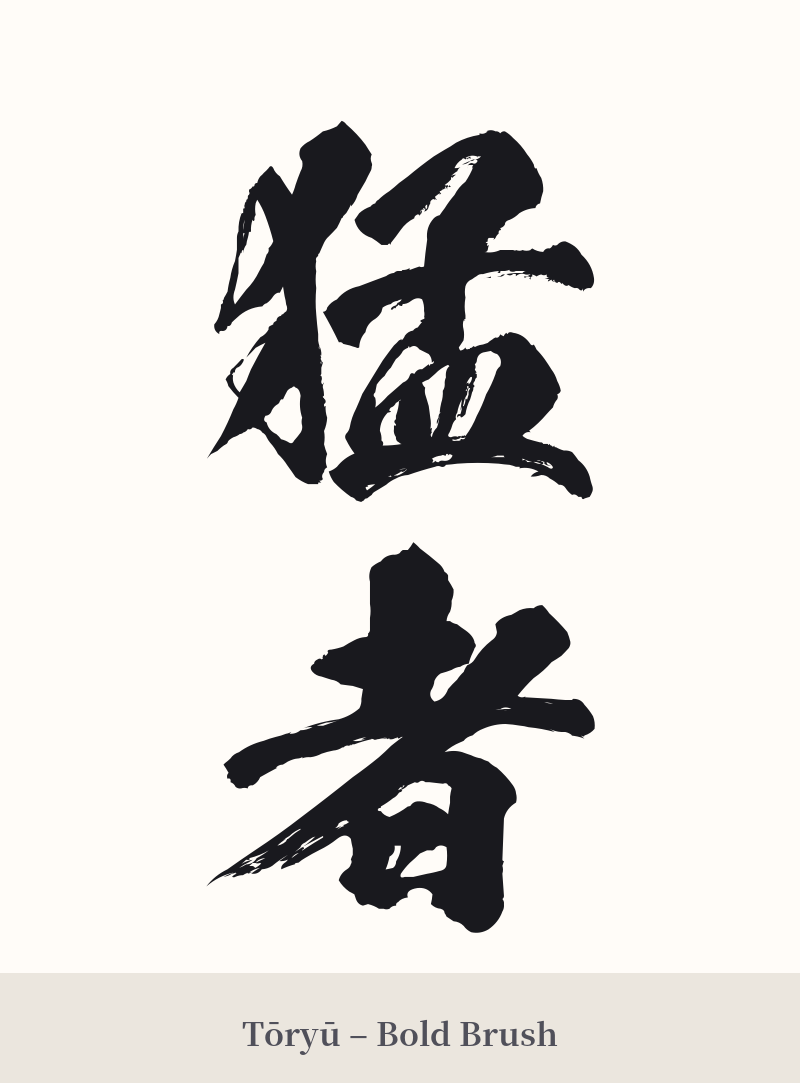
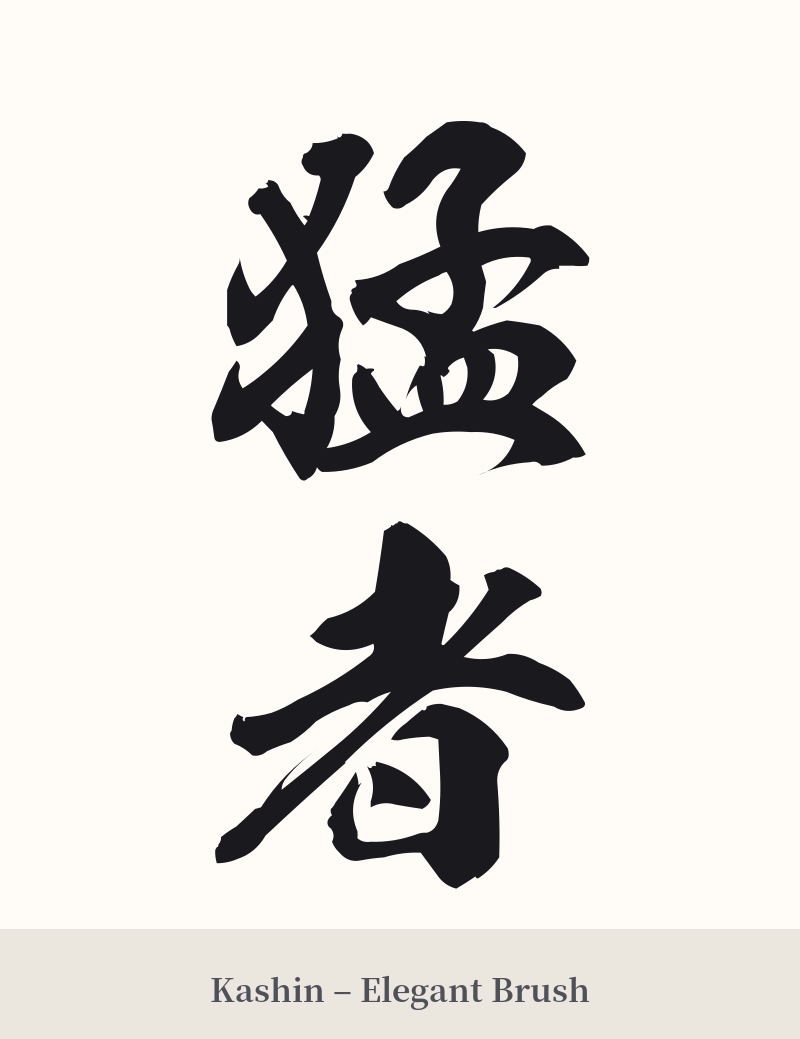
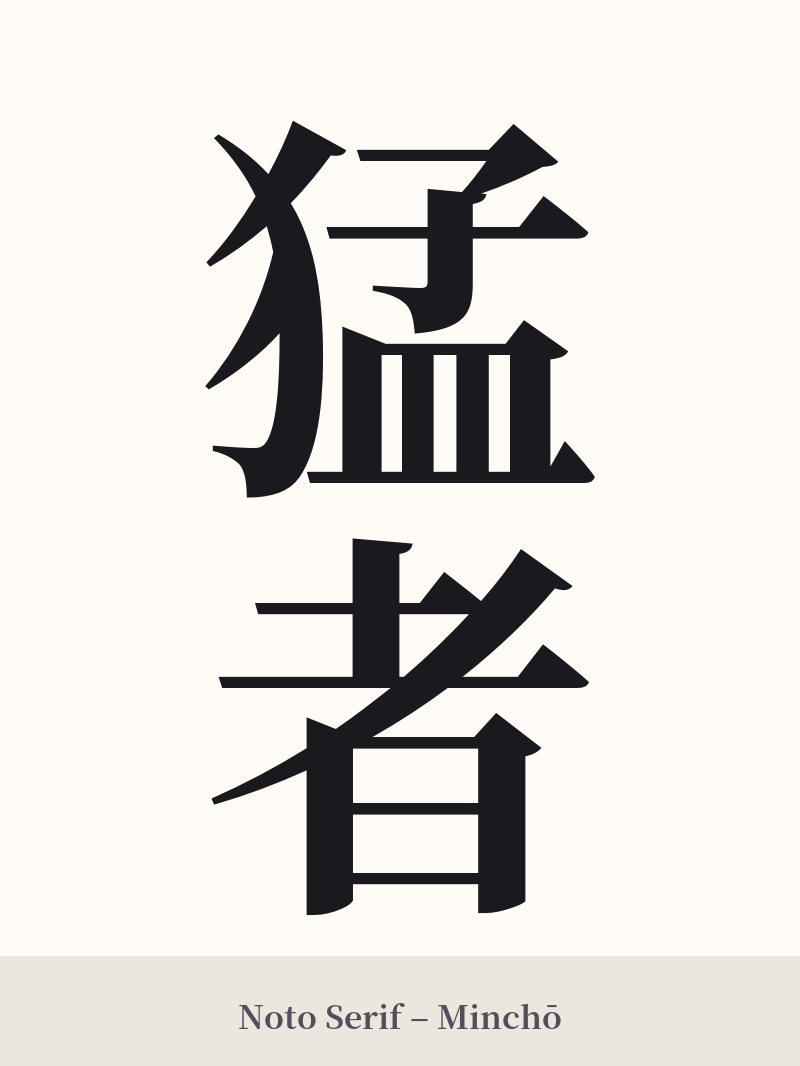
🖌️ Font Styles for 猛者
The same kanji can look dramatically different depending on the calligraphy style. Choose a font that matches the mood you want for your tattoo or design.
🎨 Tattoo Suitability
📐 Tattoo Design Guide
For a 猛者 tattoo, you want to emphasize its inherent power and ferocity. The design should feel bold and intentional.
– Placement: Areas that suggest strength are ideal. The forearm, calf, upper back across the shoulder blades, or the chest are all excellent choices. Vertical placement is traditional and highly recommended for this two-character compound.
– Font Style: Avoid thin, delicate fonts. A thick, powerful brush script (gyosho or sousho) can capture the 'wild' and 'fierce' nature of the kanji. A strong, angular block script (kaisho) will give it a sense of stability and historical weight. Look for fonts that have a dynamic, energetic quality.
– Visual Tips: Give the characters room to breathe; don't cram them together. The complexity of 猛 (11 strokes) contrasts nicely with the simpler 者 (8 strokes), creating a natural visual balance. Consider a splash of red ink or a background element like a turbulent wave or flame to further enhance the theme of fierce energy.
Comments