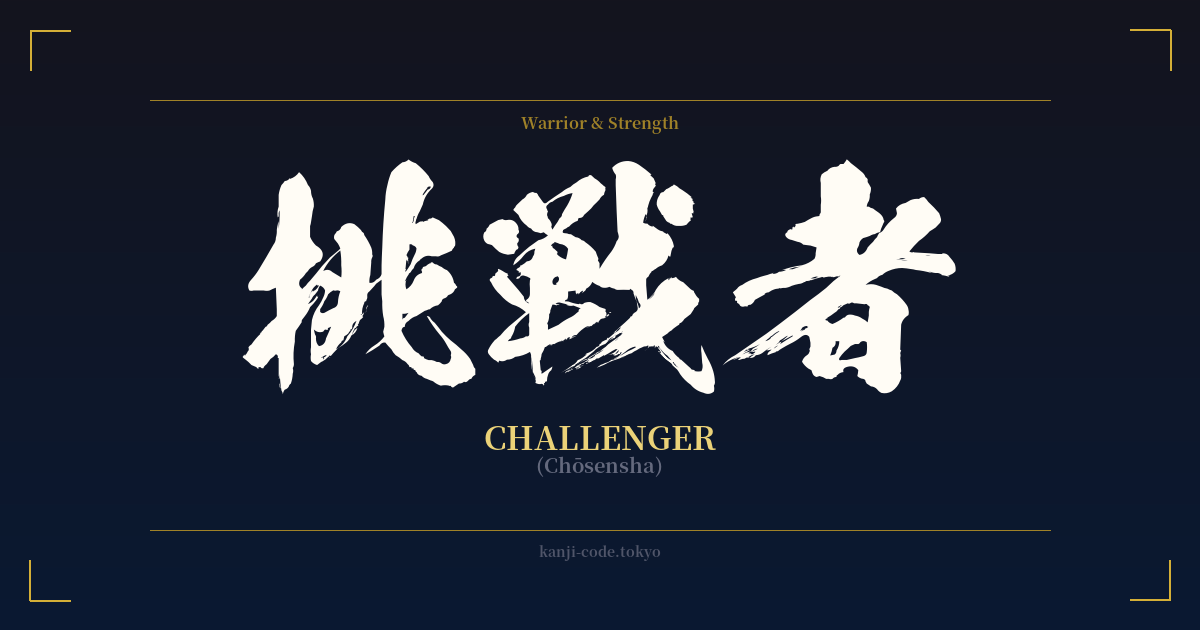
✍️ 挑戦者 (Chōsensha) — Cultural Context
挑戦者 (Chōsensha) is a Japanese word that translates to "challenger." It’s a term packed with the spirit of ambition, courage, and the sheer will to confront an obstacle. It doesn't just refer to a fighter in a ring; it describes anyone who dares to take on a difficult task, push boundaries, or strive for something seemingly out of reach.
The word is a powerful combination of three kanji: 挑 (chō – to challenge, provoke), 戦 (sen – to battle, fight), and 者 (sha – a person). Together, they literally paint a picture of "a person who challenges and battles." This structure gives the word a proactive, dynamic energy. A Chōsensha is not one who waits to be chosen or pushed into a conflict; they are the initiator, the one who seeks out the trial.
In Japanese culture, the concept of the challenger resonates deeply. It connects to the idea of hangan-biiki (判官贔屓), a cultural sympathy for the underdog. The challenger is often the smaller, less-favored party fighting against a dominant force, and their struggle is seen as noble regardless of the outcome. This spirit is celebrated in sports, from sumo wrestling to baseball, where a new contender rising to face a champion is a classic and beloved narrative.
The term extends far beyond physical contests. In the world of business, a startup company aiming to disrupt a market dominated by corporate giants is a Chōsensha. An artist trying a new, unconventional style is a Chōsensha. An individual learning a new skill or fighting a personal battle is a Chōsensha. It embodies the essence of personal growth and the pursuit of excellence.
This concept is also a cornerstone of modern Japanese pop culture, especially in manga and anime. Countless stories are built around a protagonist who starts as an ordinary person but becomes a challenger, pushing themselves past their limits to face overwhelming odds. This narrative arc makes 挑戦者 a familiar and inspiring term for many.
Ultimately, 挑戦者 represents the philosophy that the value lies in the act of trying. It’s about having the courage to step into the arena, to face the possibility of failure, and to grow from the experience. It’s less about guaranteed victory and more about the indomitable spirit that drives one to try in the first place.
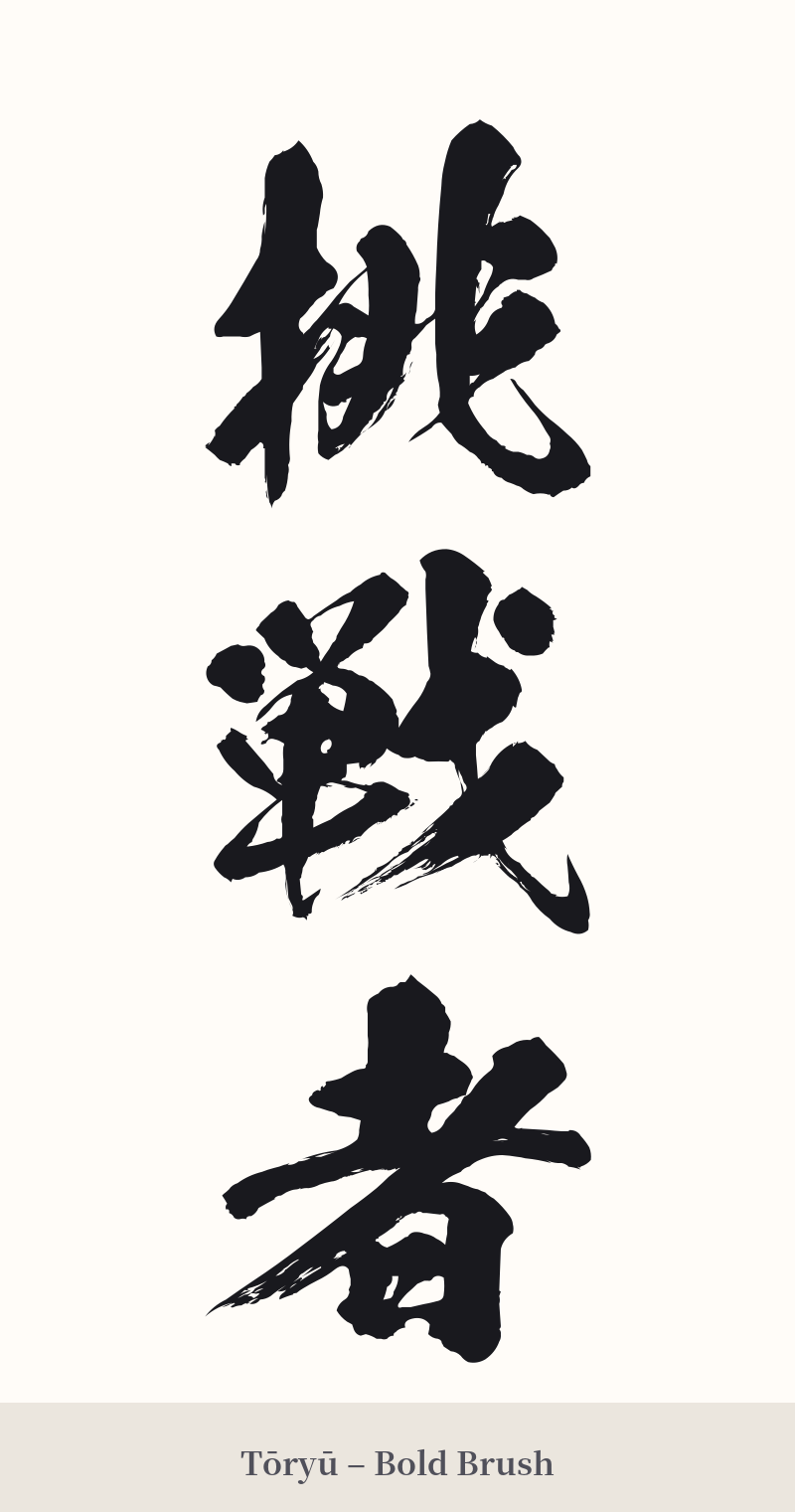
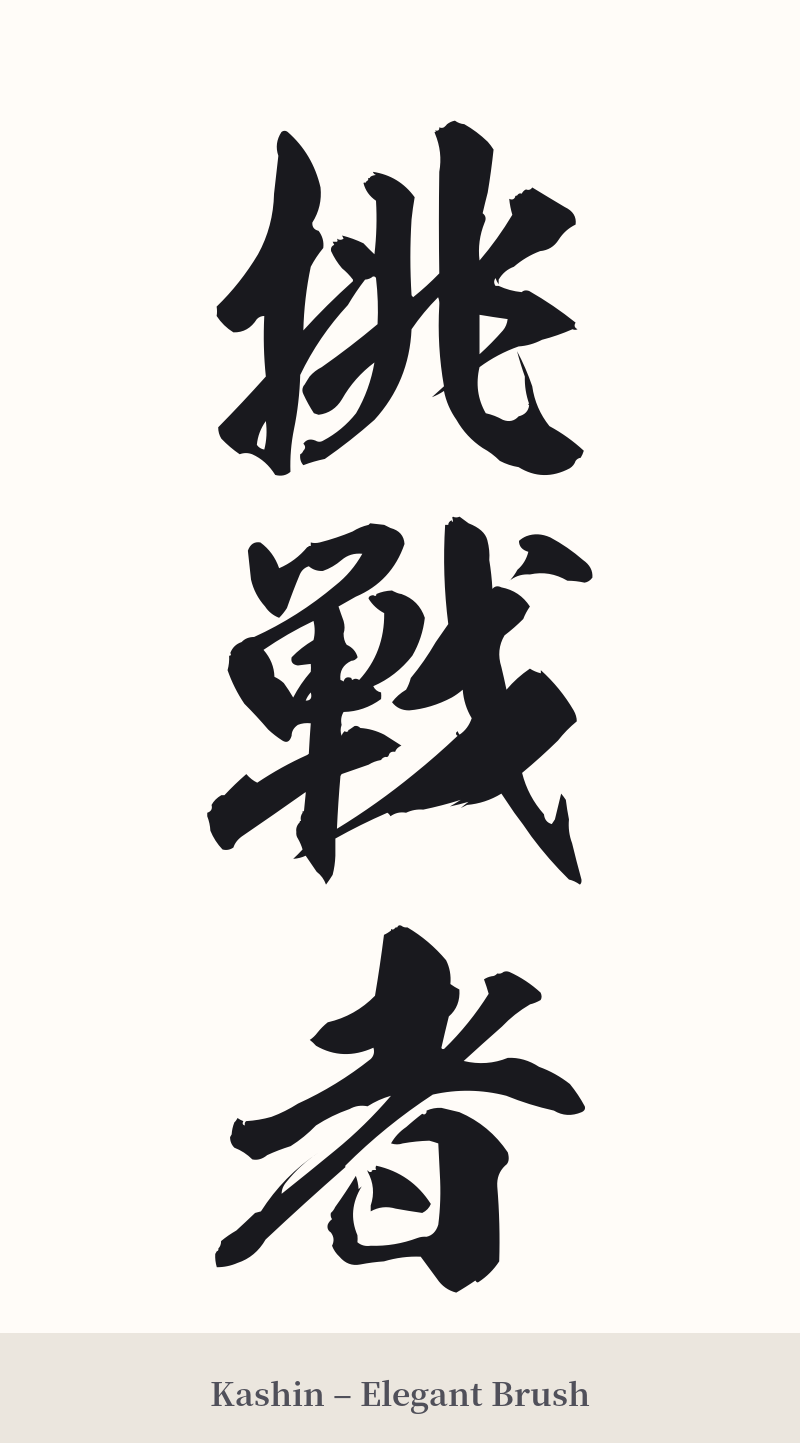
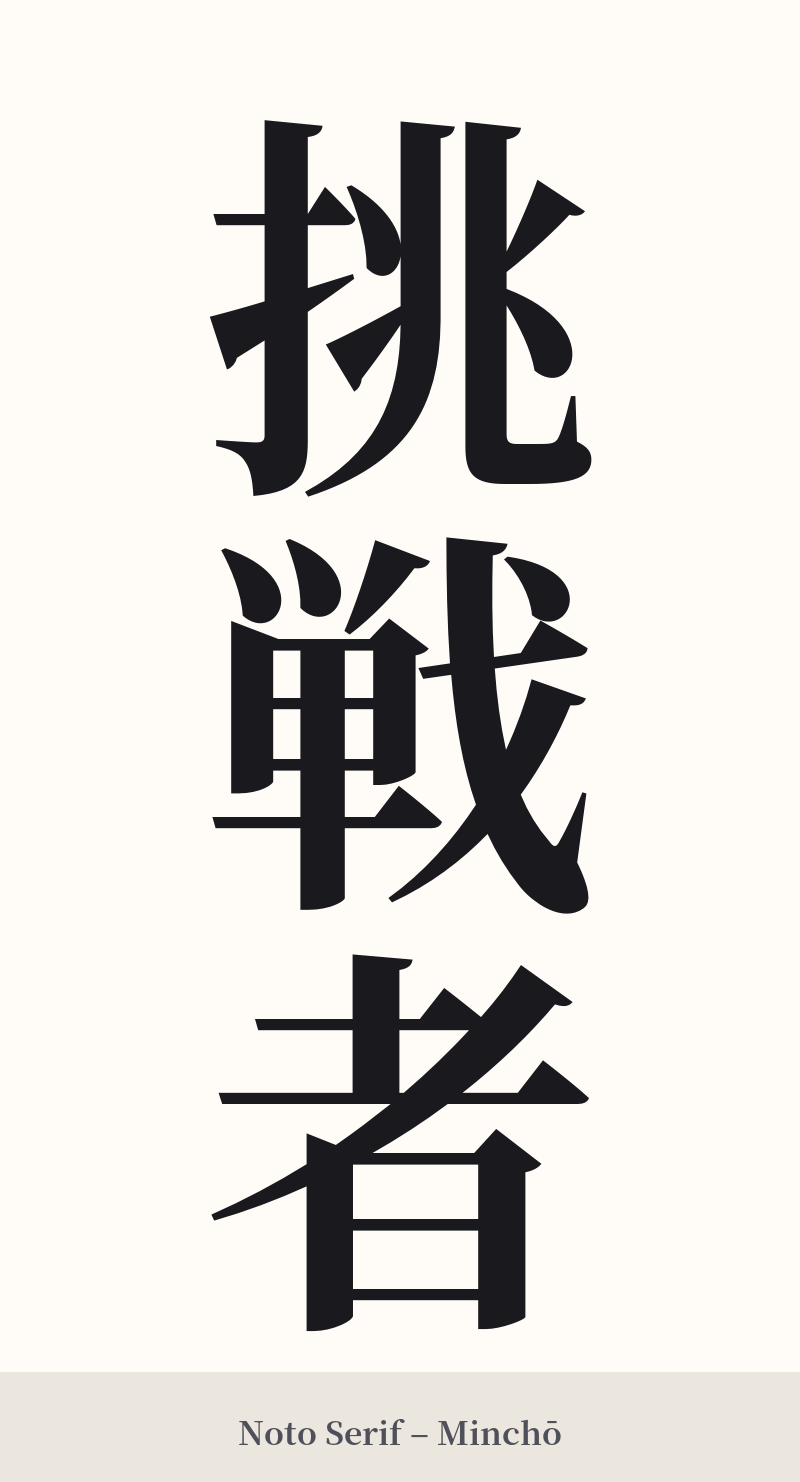
🖌️ Font Styles for 挑戦者
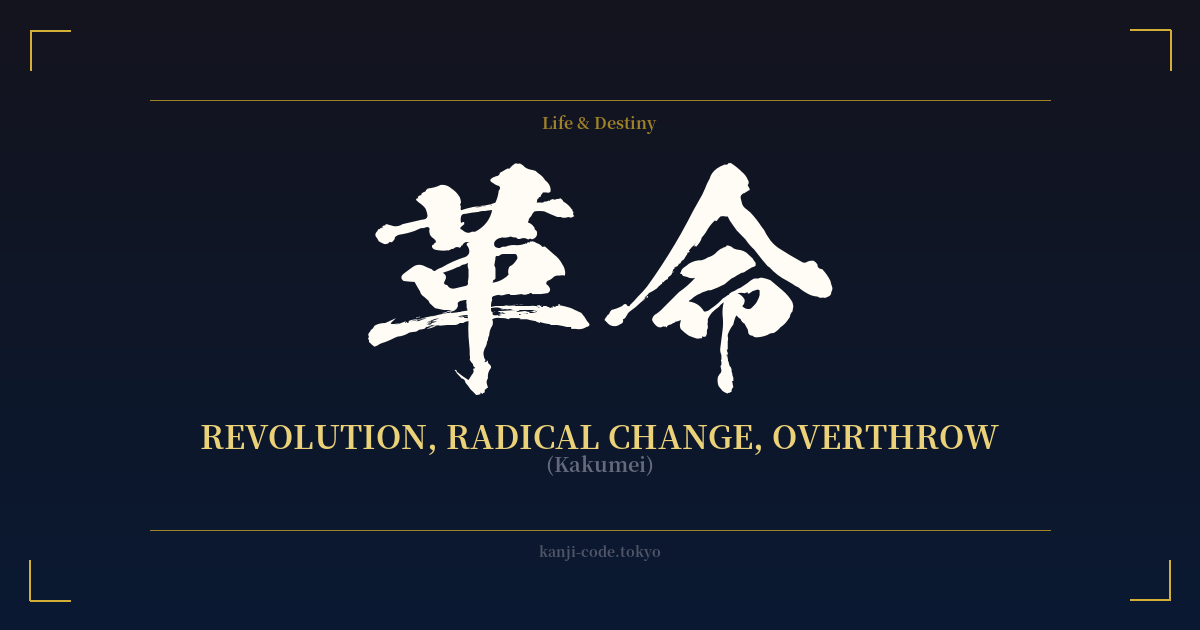
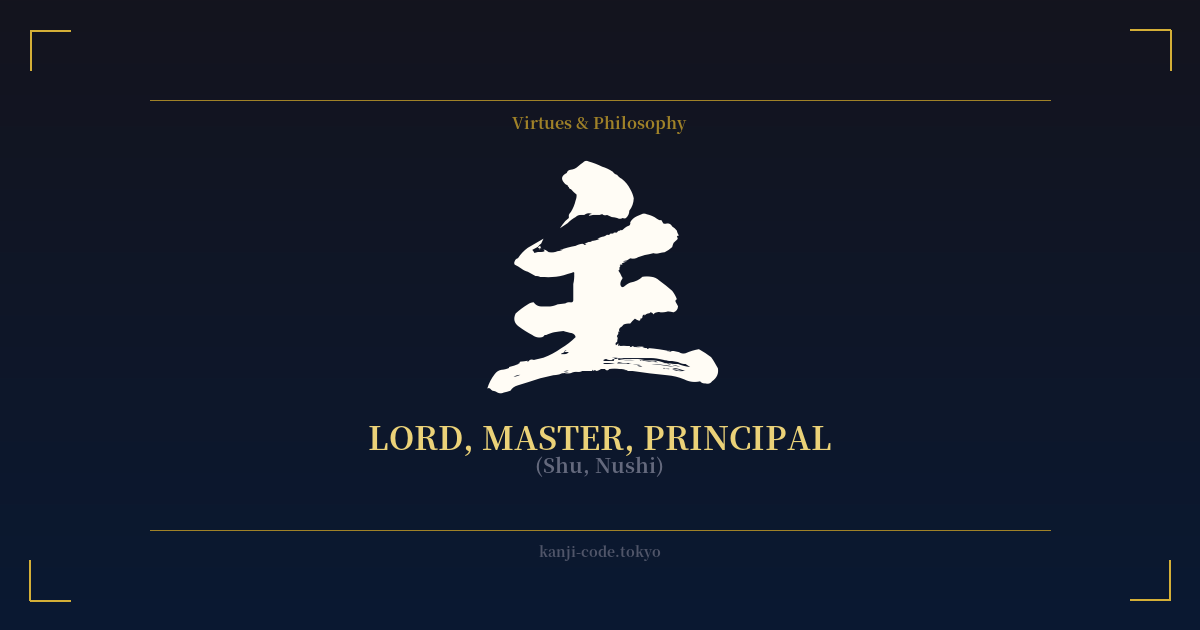
The same kanji can look dramatically different depending on the calligraphy style. Choose a font that matches the mood you want for your tattoo or design.
🎨 Tattoo Suitability
📐 Tattoo Design Guide
A tattoo of 挑戦者 (Chōsensha) conveys determination and a fighting spirit. Its three-character structure offers great versatility in design.
– Placement: A vertical alignment is traditional and visually striking, making it perfect for the forearm, the spine, or along the calf. For a horizontal design, the chest or upper back provides a strong canvas.
– Font Style: To emphasize the word's dynamic energy, consider a semi-cursive brush script (Gyosho). For a feeling of unshakeable resolve and power, a bold, angular block script (Kaisho) works exceptionally well. Avoid overly thin or delicate styles, as they can conflict with the strong meaning.
– Visual Tips: The design can be purely typographic or combined with other imagery. Consider a background of a turbulent wave or a stark mountain to represent the challenge being faced. The character 戦 contains the radical for a spear (戈), which a creative artist could subtly emphasize to highlight the 'battle' aspect.
Comments