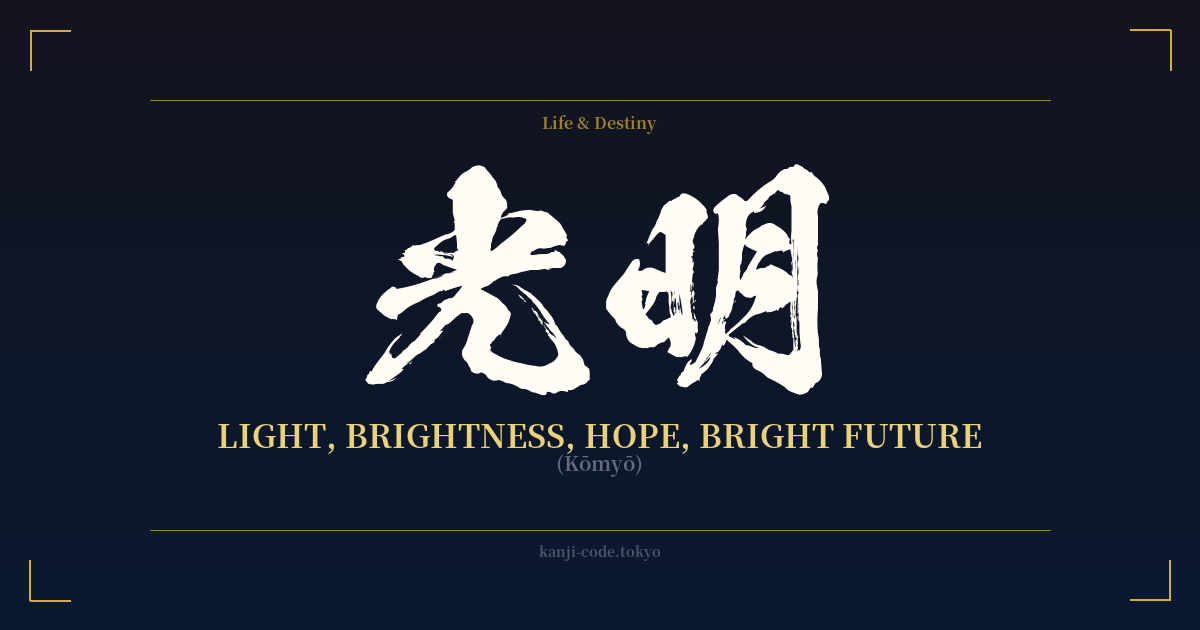
✍️ 光明 (Kōmyō) — Cultural Context
光明 (Kōmyō) is a Japanese word that beautifully transcends its literal meaning. On the surface, it combines 光 (kō), meaning 'light' or 'ray,' and 明 (myō), meaning 'bright.' Together, they form a word that simply means 'bright light' or 'brilliance.' However, the true depth of Kōmyō lies in its rich metaphorical and spiritual significance, which is deeply woven into Japanese culture, particularly through Buddhism.
In its most profound sense, Kōmyō represents hope, a bright future, and the promise of a path forward. It's the light at the end of the tunnel, not just as a destination, but as the guiding force that leads you there. This concept is powerfully illustrated in its Buddhist context, where Kōmyō is the light of the Buddha's infinite wisdom and compassion, which shines upon all living beings, dispelling the darkness of ignorance, worldly desires, and suffering.
This light is not merely observational; it is active and salvific. In Pure Land Buddhism, a major school of thought in Japan, it is the light of Amitābha Buddha (Amida Nyorai) that seeks out and embraces all who call upon his name, guiding them toward rebirth in the Pure Land. Temples are often named Kōmyō-ji (光明寺), literally 'Temple of Bright Light,' to honor this concept of enlightenment and salvation. Therefore, the word carries a heavy spiritual weight, symbolizing a state of grace, clarity, and deliverance from struggle.
Beyond its religious roots, Kōmyō is used in secular contexts to describe a hopeful prospect or a promising sign for the future. Finding 'kōmyō' in a difficult situation means finding a glimmer of hope or a potential solution. It speaks to a fundamental human desire for optimism and progress, a belief that even in darkness, light can be found.
Compared to the single character 光 (hikari), which can refer to any kind of physical light, Kōmyō is more abstract, more poetic, and more profound. Hikari is the light from a lamp; Kōmyō is the dawn that breaks after a long night, bringing with it the promise of a new day. It’s this combination of literal brightness and deep, hopeful symbolism that makes Kōmyō such a powerful and resonant word in the Japanese language.
🖌️ Font Styles for 光明
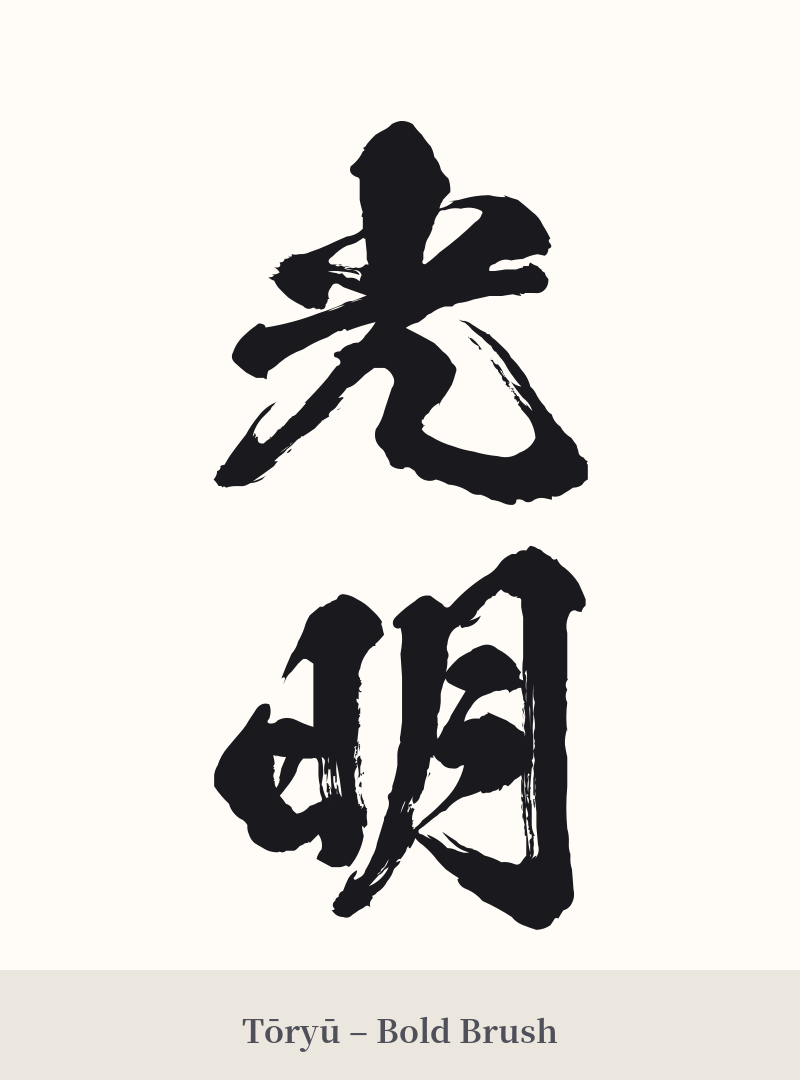
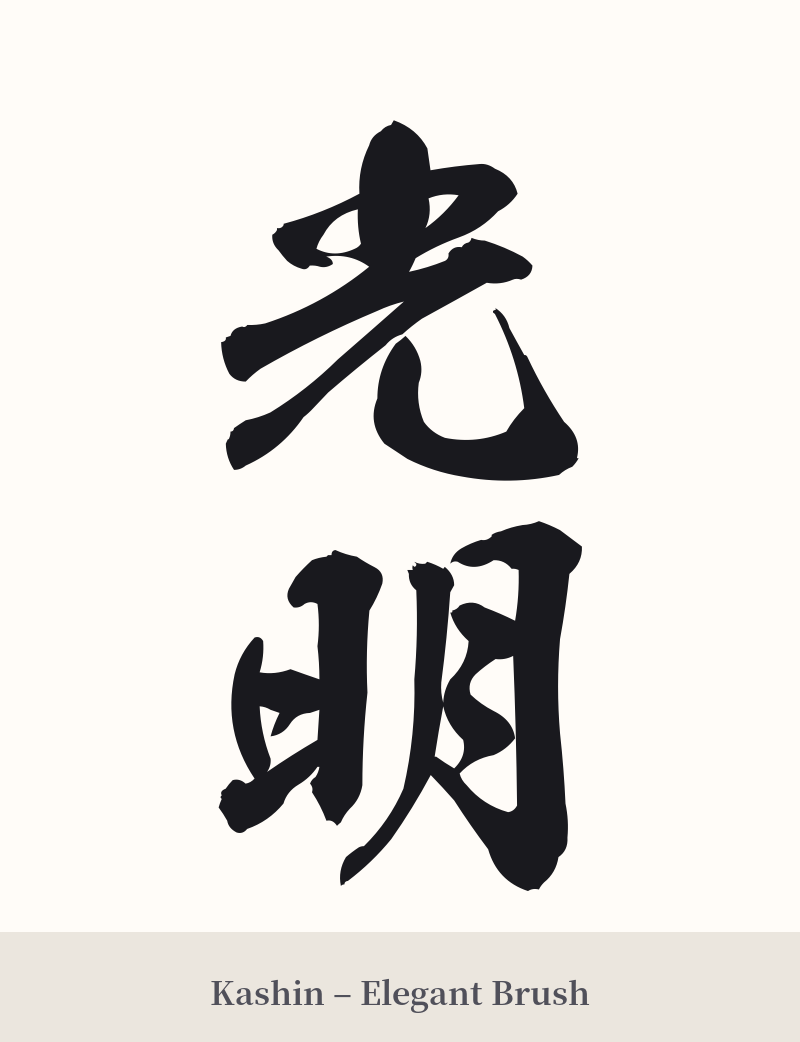
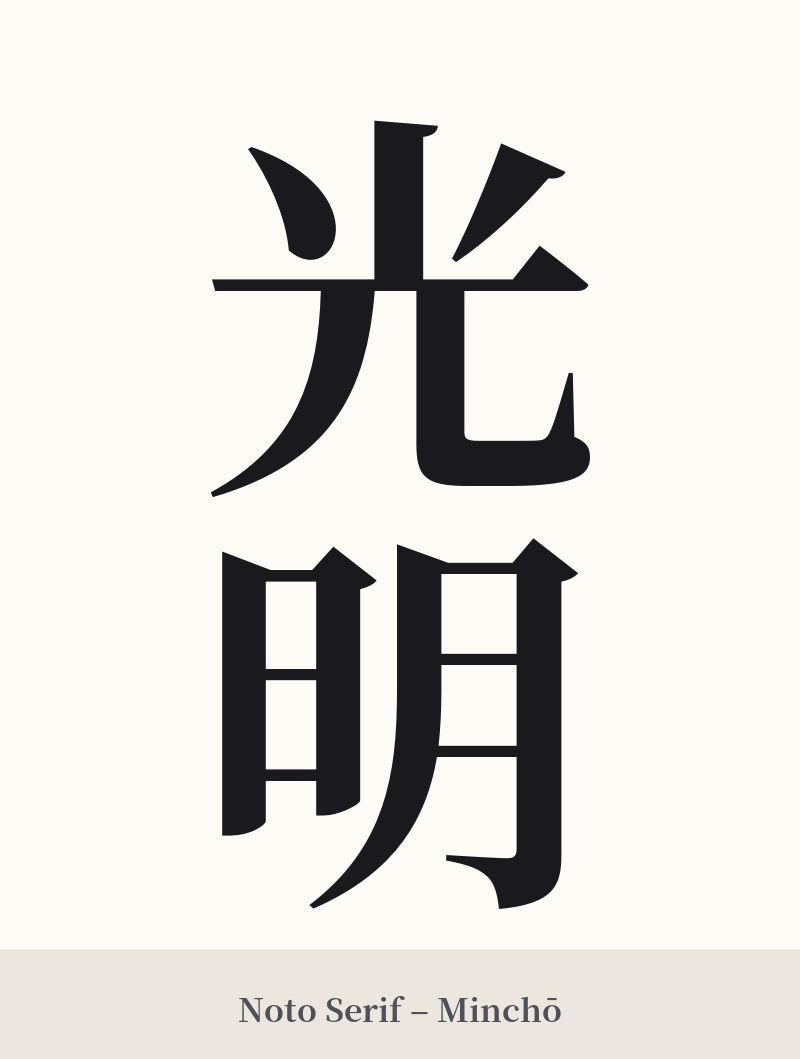
The same kanji can look dramatically different depending on the calligraphy style. Choose a font that matches the mood you want for your tattoo or design.
🎨 Tattoo Suitability
📐 Tattoo Design Guide
The two-character structure of 光明 offers great versatility in design. A vertical alignment is classic and works exceptionally well on the forearm, spine, or along the calf, emphasizing the concept of light flowing downwards or a path unfolding.
A horizontal placement is also effective across the chest, upper back, or below the collarbone. This can feel more grounded and stable.
For font styles, consider: – A bold, clean Kaisho (block script) to convey strength, clarity, and unwavering hope. – A flowing Gyosho (semi-cursive script) for a more artistic and personal touch, suggesting the fluid and organic nature of light. – A delicate Mincho style can lend an air of elegance and serenity, fitting for its spiritual undertones.
To enhance the design, you could incorporate imagery like rays of light emanating from the characters, or place it within a lotus flower, a symbol of purity and enlightenment that is closely tied to the Buddhist meaning of Kōmyō.
Comments