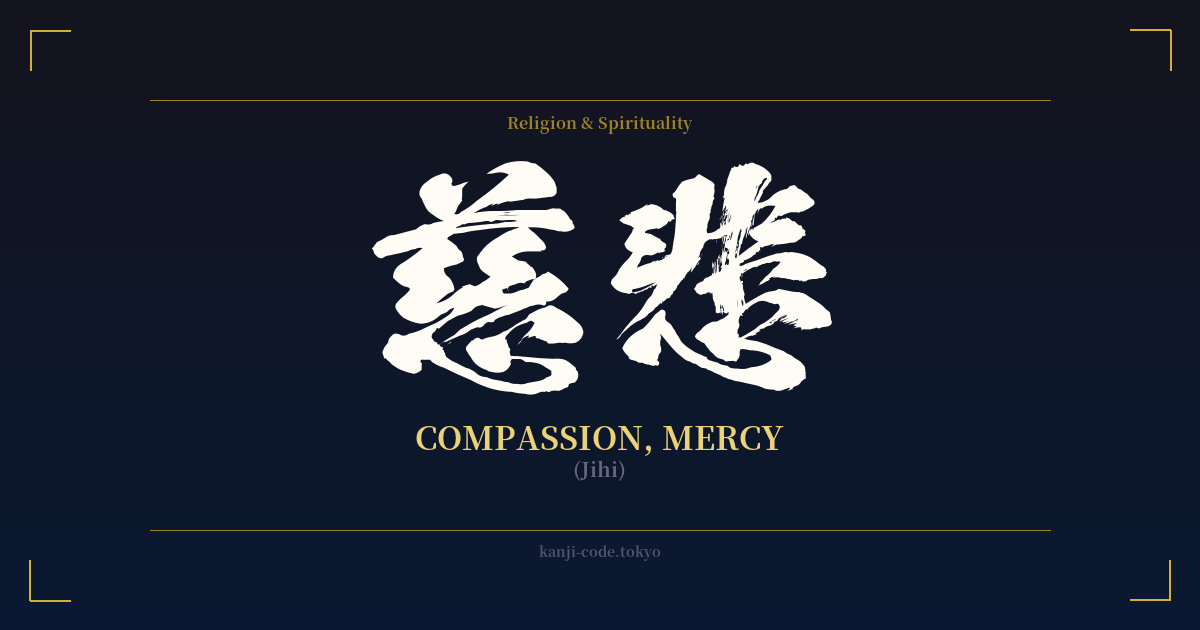
✍️ 慈悲 (Jihi) — Cultural Context
慈悲 (Jihi) is the Japanese word for 'compassion' or 'mercy,' but its meaning transcends simple kindness. It is a cornerstone concept in Buddhist philosophy, representing a profound and active empathy for all living beings. The term is a direct translation of two fundamental Sanskrit concepts, painting a complete picture of true compassion.
The first character, 慈 (ji), corresponds to maitrī. This is the loving-kindness that actively desires the happiness and well-being of others. It is a boundless, unconditional goodwill extended to everyone, without exception. It's not just a passive feeling but an active wish for others to find joy.
The second character, 悲 (hi), corresponds to karuṇā. While this kanji often means 'sadness' on its own, here it signifies the compassionate ache one feels upon witnessing the suffering of others. It is the deep empathy that compels one to act, to alleviate that pain and remove the causes of suffering. It is the desire to see others freed from their hardships.
Together, 慈悲 (Jihi) forms a powerful duality: the wish for others to be happy and the wish for them to be free from suffering. This concept is the driving force behind the actions of Bodhisattvas in Mahayana Buddhism. The most famous embodiment of Jihi is Kannon Bosatsu (Avalokiteshvara), the Bodhisattva of Compassion, who is said to hear the cries of the world and offer aid.
While deeply rooted in religion, Jihi has permeated Japanese culture and is understood in a secular context as well. It describes a level of empathy that goes far beyond mere pity or sympathy. It implies a sense of shared humanity and a moral responsibility to help those in need. It is a virtue held in high esteem, representing a quiet strength and a deep understanding of the interconnectedness of life.
🖌️ Font Styles for 慈悲
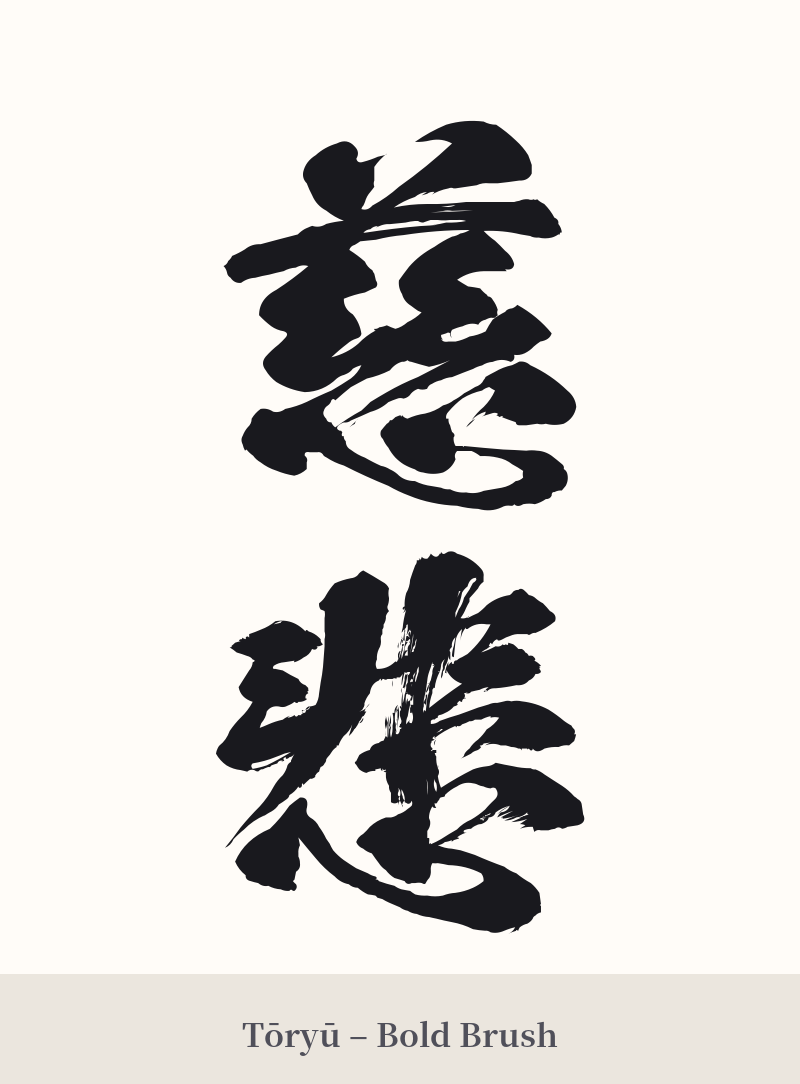
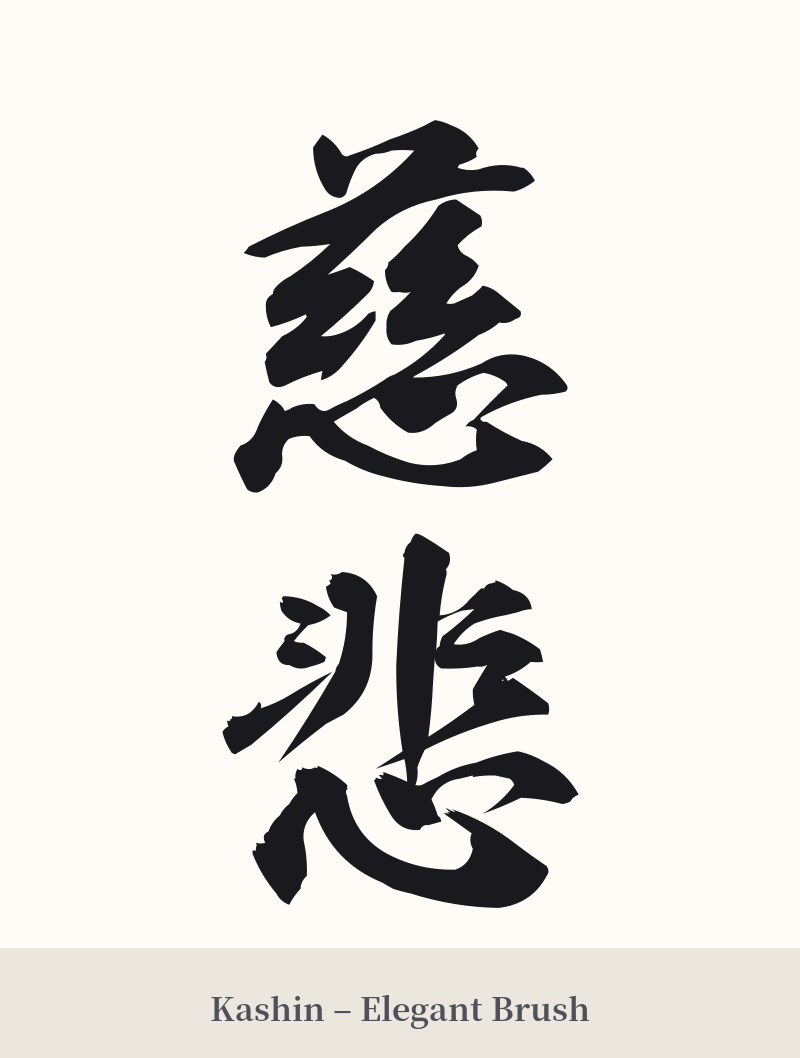
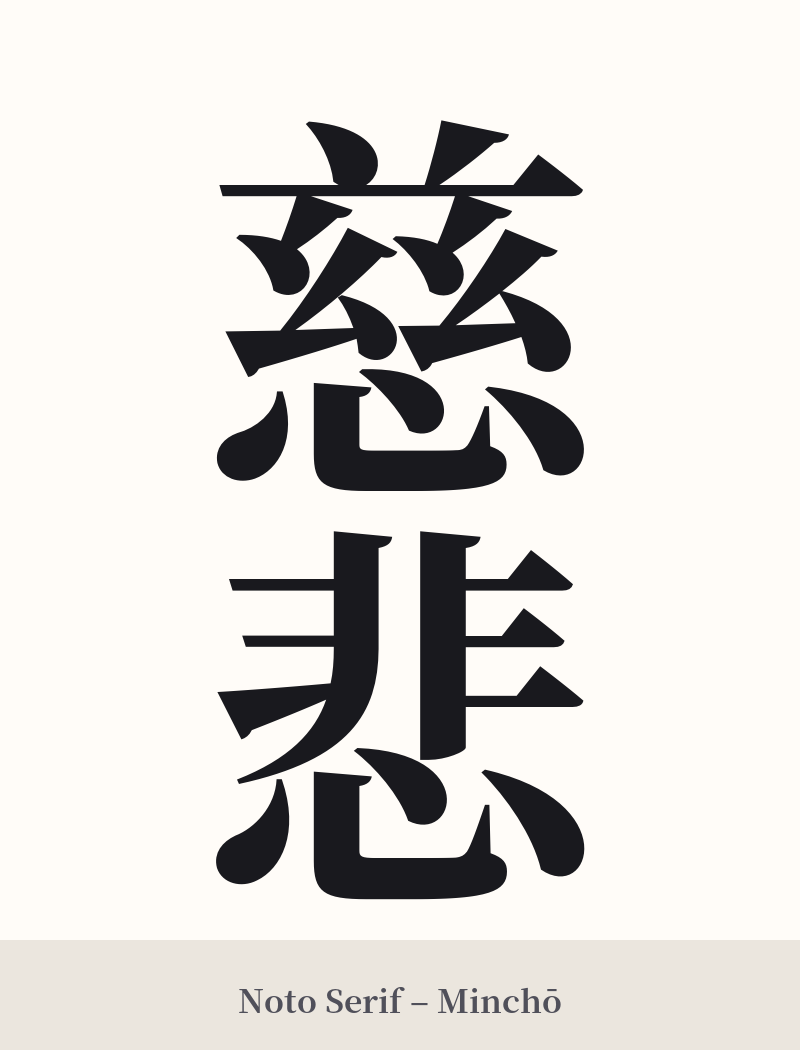
The same kanji can look dramatically different depending on the calligraphy style. Choose a font that matches the mood you want for your tattoo or design.
🎨 Tattoo Suitability
📐 Tattoo Design Guide
The profound meaning of 慈悲 (Jihi) lends itself to a thoughtful and deliberate tattoo design. Its balanced two-character structure offers great versatility.
– Placement: A vertical alignment is classic and powerful, making it ideal for the forearm, spine, or along the calf. For a horizontal design, the chest, upper back, or across the ribs are excellent choices that provide a wide canvas.
– Font Style: For a feeling of gravity and tradition, a clear Kaisho (block script) is perfect. To express a more personal and artistic flow, a semi-cursive Gyosho or a fully cursive Sosho style, mimicking a calligrapher's brush, can be very effective. A bold, ink-heavy shodo style will emphasize the word's strength.
– Visual Tips: Due to the moderate complexity of the characters (13 and 12 strokes), avoid making the tattoo too small, as the details could blur over time. Consider pairing it with symbolic imagery like a lotus flower, which represents purity and enlightenment rising from mud, perfectly complementing the theme of alleviating suffering.
Comments