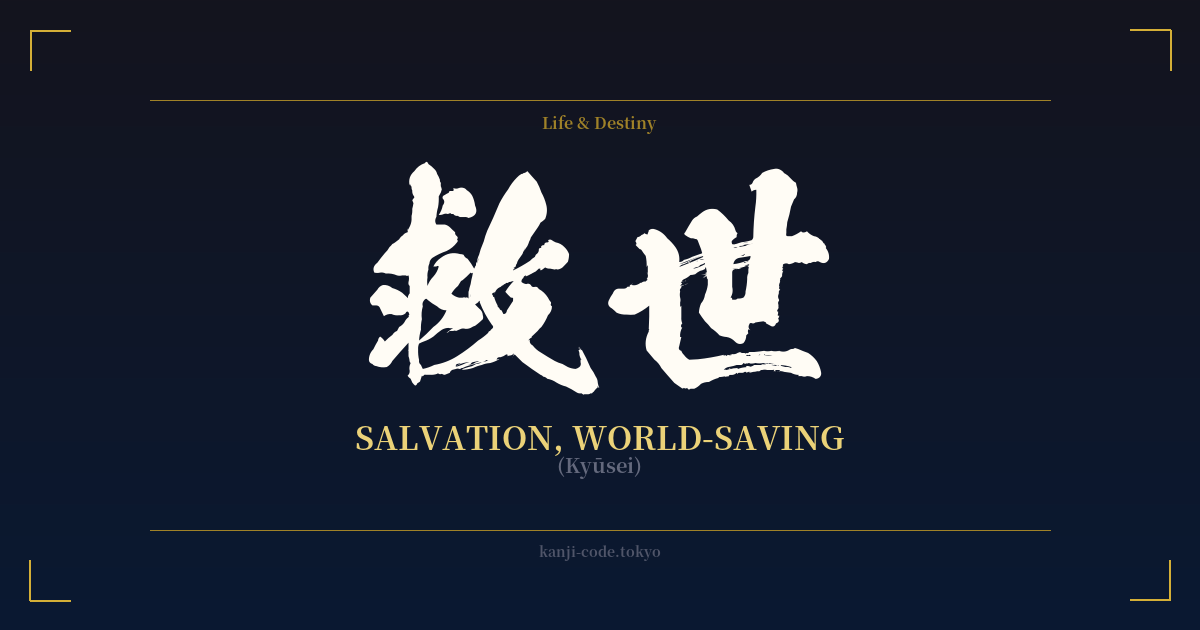
✍️ 救世 (Kyūsei) — Cultural Context
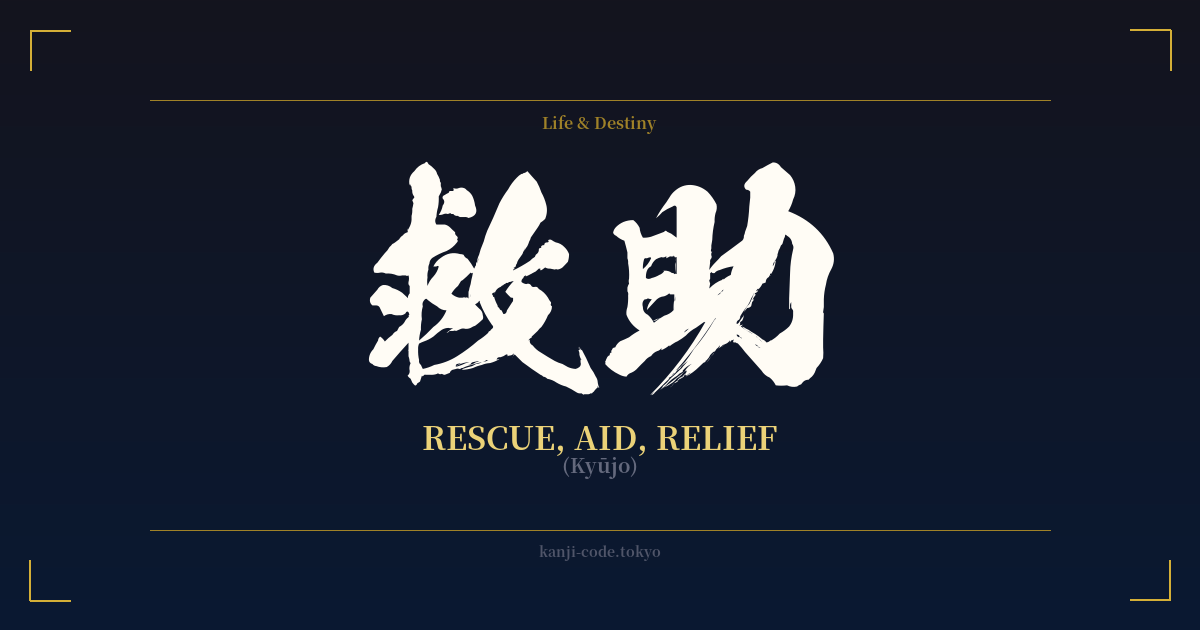
救世 (Kyūsei) is a Japanese word that translates to 'salvation' or, more literally, 'saving the world.' It is a compound of two kanji: 救 (kyū), meaning 'to save, rescue, or help,' and 世 (sei), meaning 'world, society, or generation.' Together, they form a term of immense scale and significance, evoking grand narratives of heroism, divine intervention, and ultimate redemption.
While not a word used in everyday conversation, 救世 is deeply embedded in the cultural and spiritual lexicon of Japan. Its most direct and powerful association is with the term 救世主 (Kyūseishu), which means 'Savior' or 'Messiah.' This highlights the primary context of 救世: it is the action or concept performed by a messianic figure. In a Japanese context, this can refer to Bodhisattvas in Buddhism, such as Kannon (Avalokiteshvara), who are enlightened beings dedicated to saving all of humanity from suffering.
Furthermore, with the introduction of Christianity to Japan, 救世主 became the standard term to refer to Jesus Christ. This has added another layer of meaning, firmly connecting the concept to Abrahamic ideas of a divine redeemer who offers salvation to the world. Therefore, the word carries a potent spiritual and religious gravity that transcends any single faith, speaking to a universal human hope for a figure or force that can deliver us from worldly despair.
Beyond religion, the theme of 救世 is a cornerstone of modern Japanese popular culture, especially in anime, manga, and video games. Countless stories feature a protagonist, often an unlikely hero, who is destined to save the world from a catastrophic threat—be it a demon king, an alien invasion, or an environmental disaster. From Son Goku in Dragon Ball to Naruto Uzumaki, the 'world-saving hero' is a central archetype. In this context, 救世 represents the ultimate goal, the heroic mandate that drives the narrative and gives the hero's struggle purpose. It embodies the fight against overwhelming odds for the sake of humanity, making it a powerful symbol of hope, responsibility, and ultimate victory.
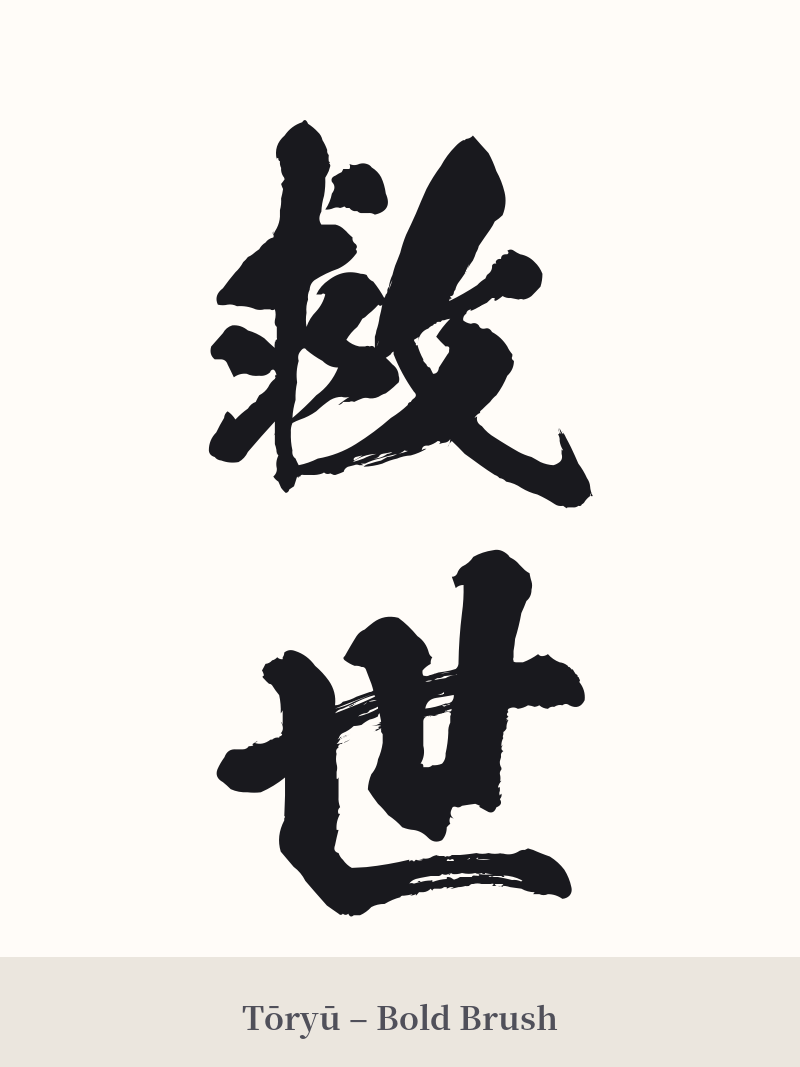
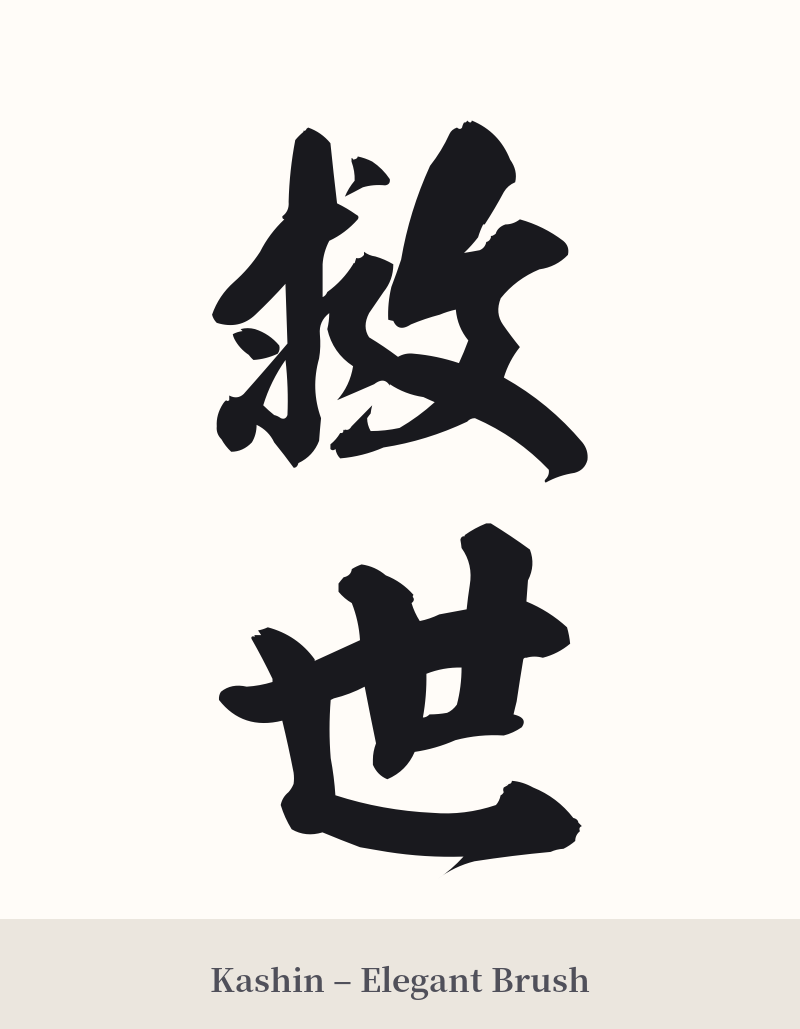
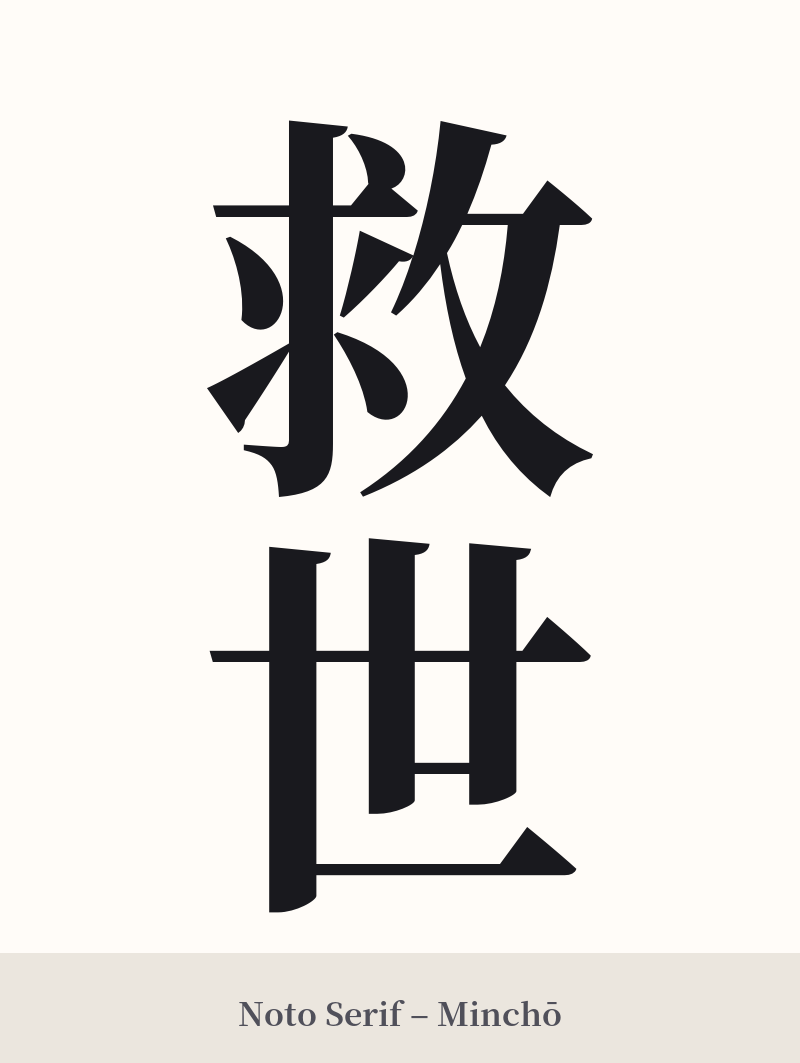
🖌️ Font Styles for 救世
The same kanji can look dramatically different depending on the calligraphy style. Choose a font that matches the mood you want for your tattoo or design.
🎨 Tattoo Suitability
📐 Tattoo Design Guide
For a tattoo of 救世, the design should match the word's epic and powerful nature.
– Placement: This word suits prominent and significant placements. A vertical alignment along the spine, down the forearm, or on the chest allows the kanji to make a strong statement. For a more personal connection, the inner bicep is also a good choice.
– Font Style: A bold, impactful script is recommended. A strong Kaisho (block script) emphasizes clarity and power. For a more dynamic and flowing feel, a semi-cursive Gyosho style can capture the sense of action and intervention inherent in the word. A dramatic, heavily-brushed Shodo style would also look incredible, highlighting the epic quality.
– Visual Tips: 救世 works exceptionally well as a standalone piece due to its inherent power. Consider a vertical orientation, which is traditional and aesthetically pleasing. It could also be the centerpiece of a larger design, perhaps incorporated with imagery of a guardian figure, a lotus flower (symbolizing purity and enlightenment in Buddhism), or abstract elements like light breaking through darkness to visually represent the concept of salvation.
Comments