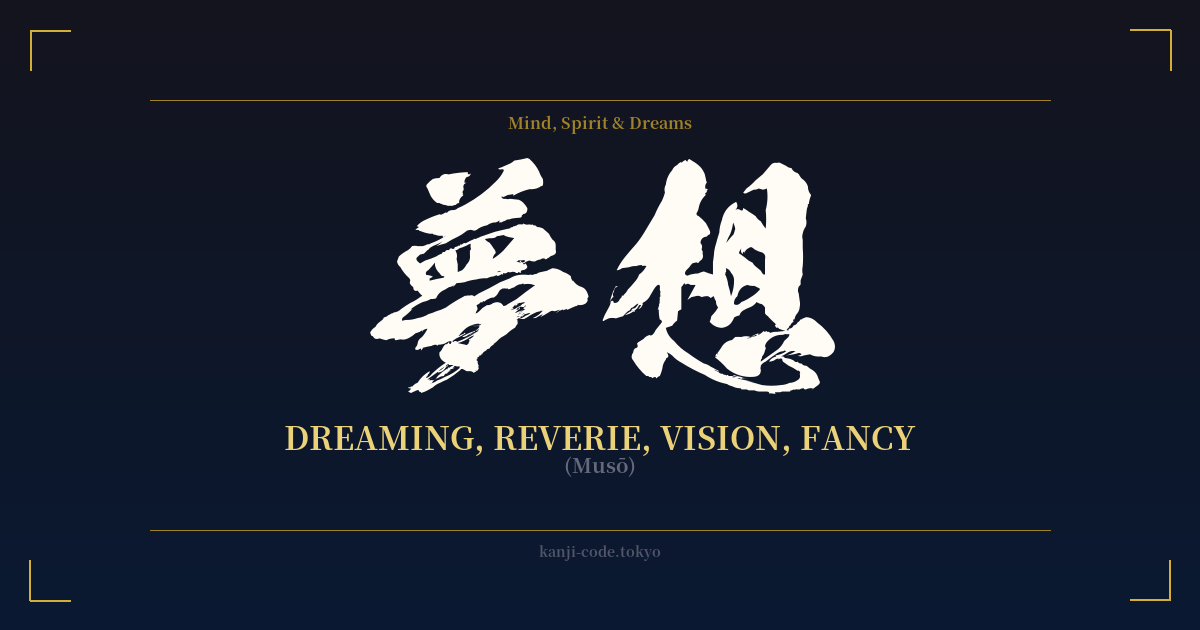
✍️ 夢想 (Musō) — Cultural Context
The Japanese word 夢想 (Musō) captures a state of mind far richer than a simple nighttime dream. It is the world of reverie, the waking vision, the daydream filled with longing or creative ambition. While it can mean 'fancy' or 'fantasy,' its core lies in the act of envisioning something that is not yet real, whether a future goal, a lost memory, or a flight of pure imagination.
In Japanese culture, Musō is not just a passive state but a powerful, active one. It connects deeply to both artistic and martial traditions. In literature and poetry, it's the artist's reverie, the moment of inspiration where a fleeting vision is captured. It evokes images of a scholar gazing at the moon, composing a poem, or a painter trying to manifest an ethereal landscape onto silk. This concept speaks to the Japanese aesthetic of mono no aware—the gentle sadness of passing things—as dreams and visions are by their nature beautiful yet ephemeral.
Perhaps its most potent association is within the world of the samurai and martial arts. Here, Musō transcends simple daydreaming and becomes a profound state of consciousness. In swordsmanship, achieving a state of 'musō' is akin to reaching 'mushin' (無心), or 'no-mind.' It is a state where the warrior moves without conscious thought, their actions flowing with perfect intuition, as if guided by a dream. The body and weapon become one, reacting to threats faster than the rational mind can process. The legendary swordsman Miyamoto Musashi, in his 'Book of Five Rings,' speaks of a strategy that is formless and fluid, a mindset that could be described as a product of this ultimate state of focus.
The name Musō even appears in the lineage of martial arts, such as the Musō Jikiden Eishin-ryū school of swordsmanship, suggesting that the 'divine dream' or 'vision' is the very origin of their techniques. This elevates the word from a simple mental activity to a source of divine inspiration and ultimate skill. Therefore, Musō carries a dual weight: the soft, poetic quality of a daydream and the focused, powerful intensity of a warrior's highest state of being.
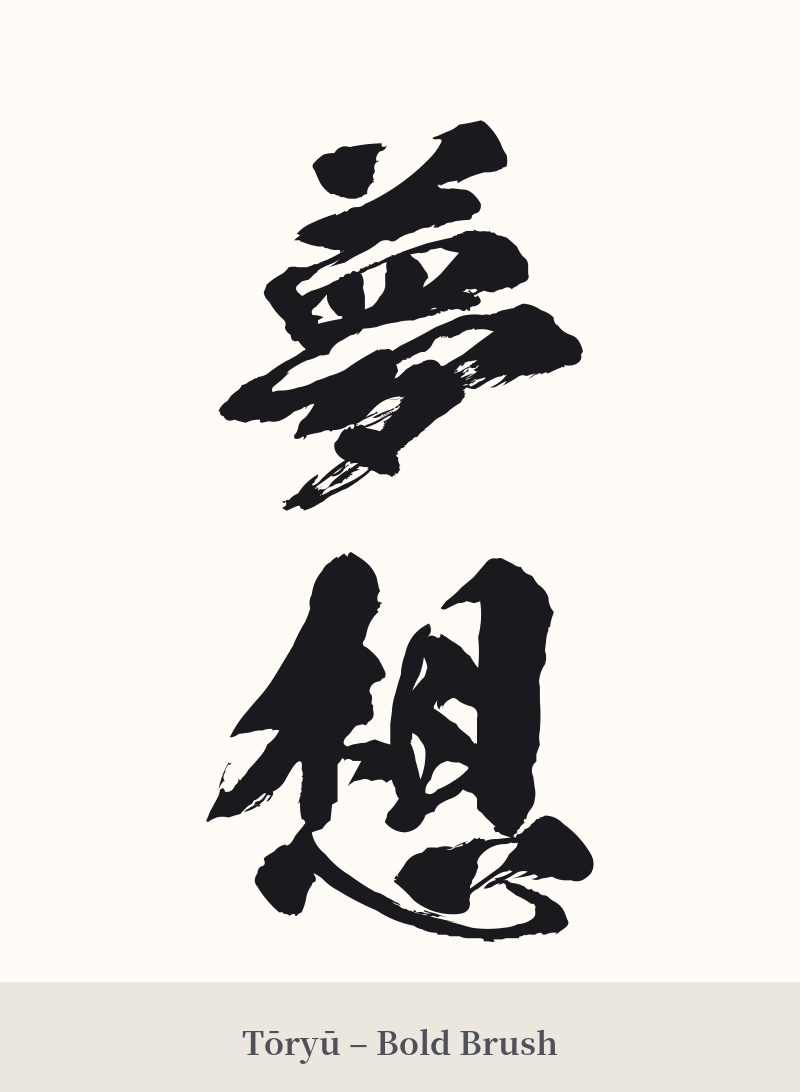
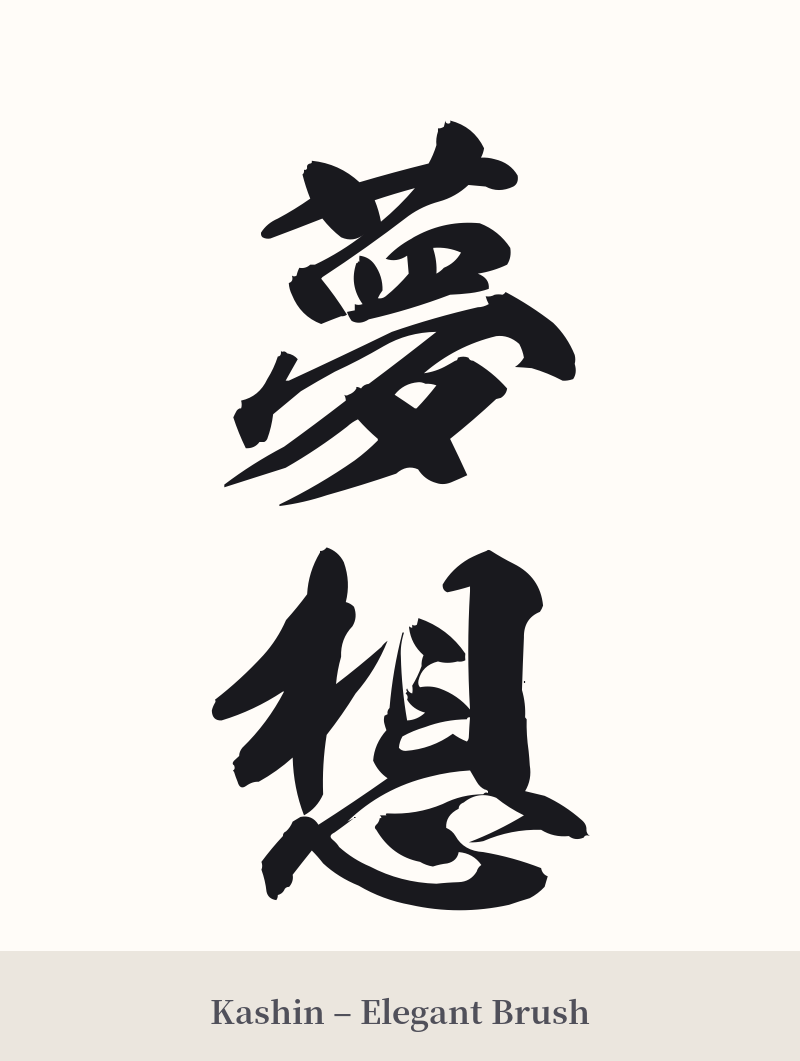
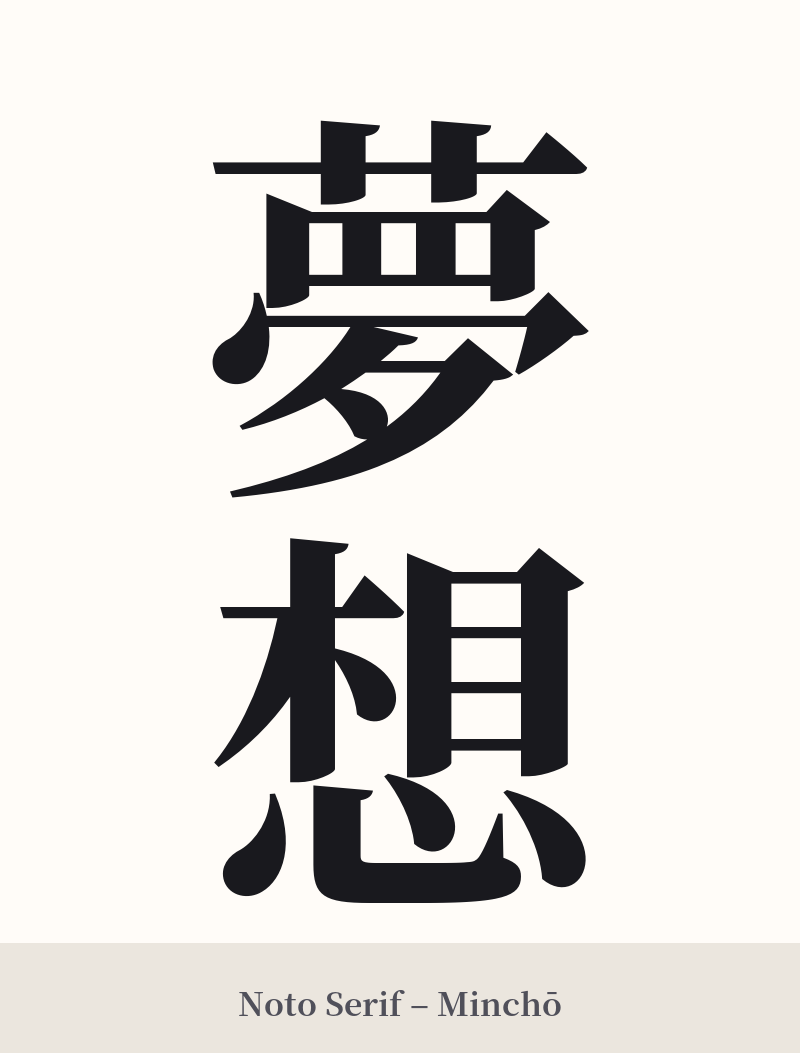
🖌️ Font Styles for 夢想
The same kanji can look dramatically different depending on the calligraphy style. Choose a font that matches the mood you want for your tattoo or design.
🎨 Tattoo Suitability
📐 Tattoo Design Guide
For a 夢想 (Musō) tattoo, the design should reflect its dual nature of ethereal beauty and focused intent. A vertical alignment is traditional and beautifully complements the flow of the characters, making it ideal for the forearm, the back of the calf, or along the spine.
Consider these stylistic approaches: – Kaisho (Block Script): This style provides clarity and strength. It emphasizes the 'vision' and 'aspiration' aspects of Musō, presenting the goal as something solid and defined. – Gyosho (Semi-Cursive Script): A flowing, slightly connected style that perfectly captures the 'reverie' and 'dream-like' quality. It adds a sense of movement and elegance. – Sosho (Cursive Script): For a highly artistic and abstract interpretation. The characters become almost pictographic, like a wisp of smoke or a fleeting thought, emphasizing the ephemeral nature of a dream.
To enhance the design, you could incorporate subtle background elements. A soft ink wash (bokashi) can create a dreamy, atmospheric effect. You might also consider weaving in imagery like a crescent moon, floating cherry blossom petals, or tendrils of mist to visually reinforce the theme of a beautiful, transient vision.
Comments