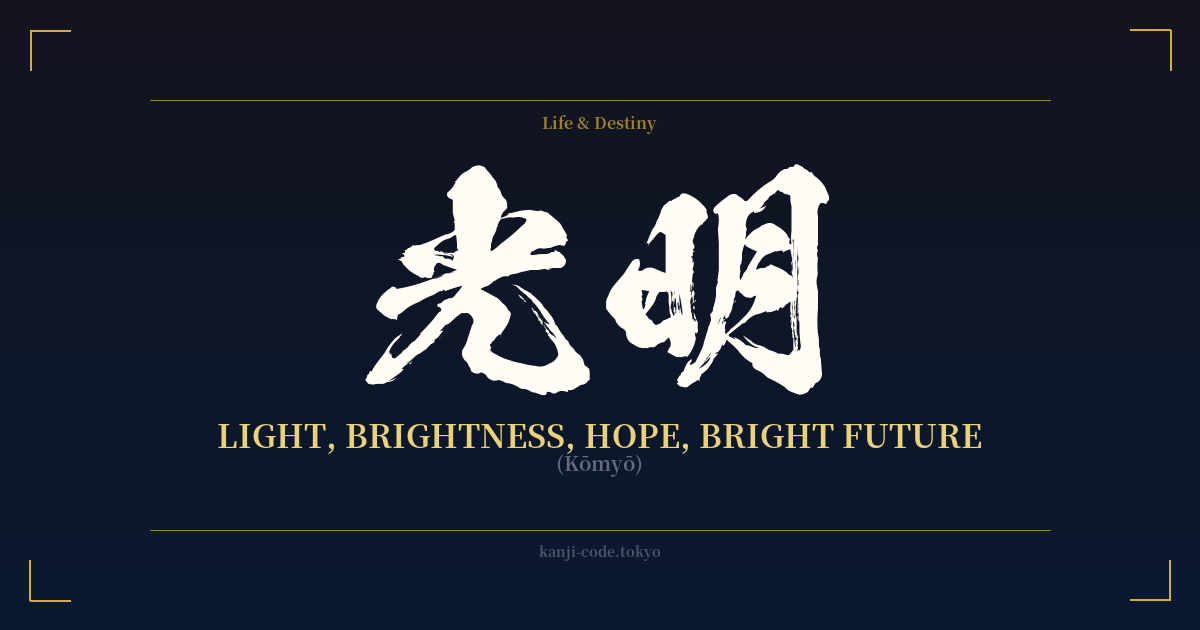
✍️ 光明 (Kōmyō) — Contexto cultural
Kōmyō (光明) es una palabra japonesa que trasciende bellamente su significado literal. A primera vista, combina 光 (kō), que significa "luz" o "rayo", y 明 (myō), que significa "brillante". Juntas, forman una palabra que simplemente significa "luz brillante" o "resplandor". Sin embargo, la verdadera profundidad de Kōmyō reside en su rico significado metafórico y espiritual, profundamente arraigado en la cultura japonesa, especialmente a través del budismo.
En su sentido más profundo, Kōmyō representa la esperanza, un futuro brillante y la promesa de un camino a seguir. Es la luz al final del túnel, no solo como destino, sino como la fuerza que guía hacia él. Este concepto se ilustra poderosamente en su contexto budista, donde Kōmyō es la luz de la sabiduría y la compasión infinitas del Buda, que brilla sobre todos los seres vivos, disipando la oscuridad de la ignorancia, los deseos mundanos y el sufrimiento.
Esta luz no es meramente observacional; es activa y salvífica. En el budismo de la Tierra Pura, una importante escuela de pensamiento en Japón, es la luz del Buda Amitābha (Amida Nyorai) la que busca y acoge a todos los que invocan su nombre, guiándolos hacia el renacimiento en la Tierra Pura. Los templos suelen llamarse Kōmyō-ji (光明寺), literalmente 'Templo de la Luz Brillante', para honrar este concepto de iluminación y salvación. Por lo tanto, la palabra conlleva un profundo significado espiritual, simbolizando un estado de gracia, claridad y liberación de la lucha.
Más allá de sus raíces religiosas, Kōmyō se utiliza en contextos seculares para describir una perspectiva esperanzadora o una señal prometedora para el futuro. Encontrar 'kōmyō' en una situación difícil significa hallar un rayo de esperanza o una posible solución. Refleja un deseo humano fundamental de optimismo y progreso, la creencia de que incluso en la oscuridad se puede encontrar la luz.
En comparación con el carácter único 光 (hikari), que puede referirse a cualquier tipo de luz física, Kōmyō es más abstracto, más poético y más profundo. Hikari es la luz de una lámpara; Kōmyō es el amanecer que llega tras una larga noche, trayendo consigo la promesa de un nuevo día. Es esta combinación de brillo literal y simbolismo profundo y esperanzador lo que convierte a Kōmyō en una palabra tan poderosa y evocadora en el idioma japonés.
🖌️ Estilos de fuente para 光明
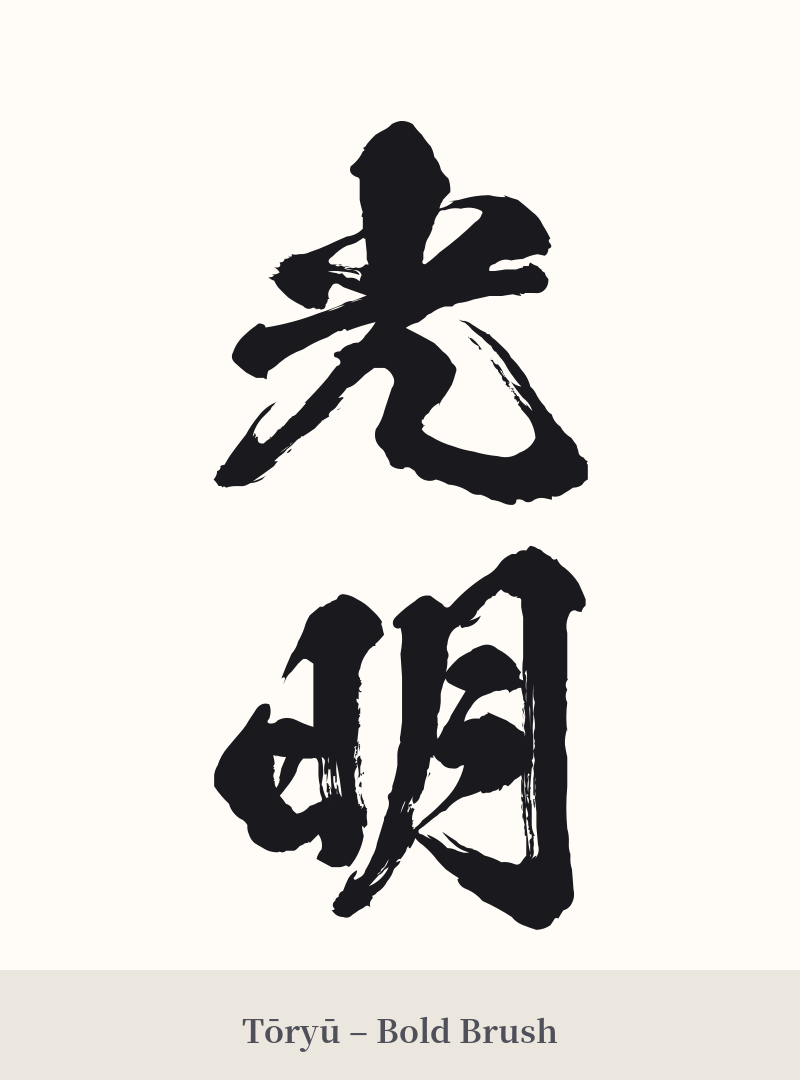
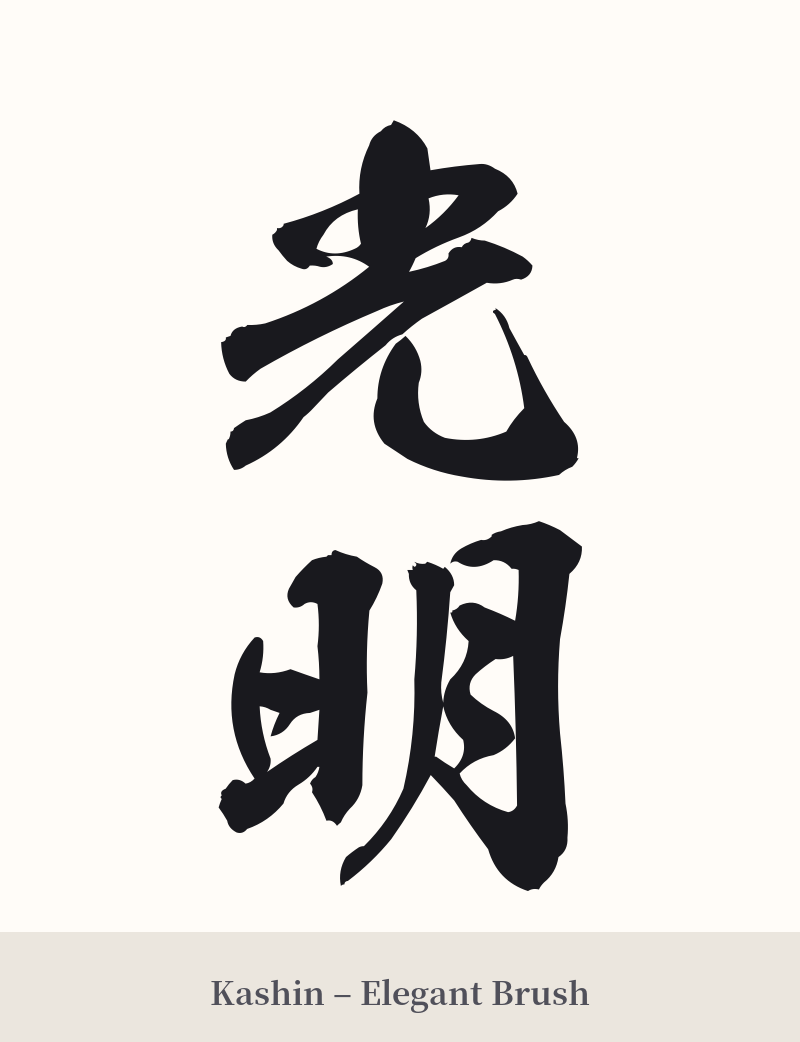
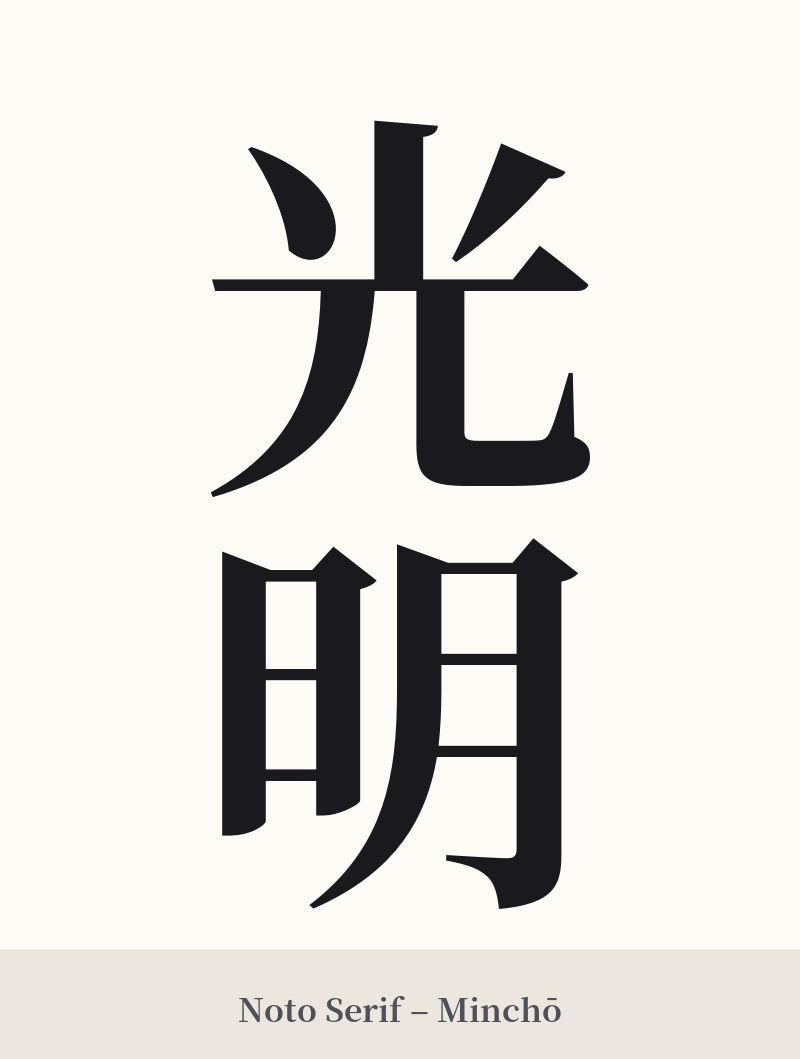
Los mismos caracteres kanji pueden verse muy diferentes según el estilo de caligrafía. Elige una fuente que se ajuste al ambiente que deseas para tu tatuaje o diseño.
🎨 Idoneidad para tatuajes
📐 Guía de diseño de tatuajes
La estructura de dos caracteres de 光明 ofrece una gran versatilidad de diseño. La alineación vertical es clásica y funciona excepcionalmente bien en el antebrazo, la columna vertebral o la pantorrilla, enfatizando el concepto de luz que fluye hacia abajo o un camino que se despliega.
También es eficaz colocarlo horizontalmente sobre el pecho, la parte superior de la espalda o debajo de la clavícula. Esto puede proporcionar una mayor sensación de estabilidad y conexión con la tierra.
Para los estilos de fuente, considere: – Una tipografía Kaisho (de imprenta) audaz y limpia para transmitir fuerza, claridad y esperanza inquebrantable. – Una tipografía Gyosho (semicursiva) fluida para un toque más artístico y personal, que sugiere la naturaleza fluida y orgánica de la luz. – Un estilo Mincho delicado puede aportar un aire de elegancia y serenidad, acorde con sus connotaciones espirituales.
Para realzar el diseño, podrías incorporar imágenes como rayos de luz que emanan de los personajes, o colocarlo dentro de una flor de loto, un símbolo de pureza e iluminación que está estrechamente ligado al significado budista de Kōmyō.
Comentarios