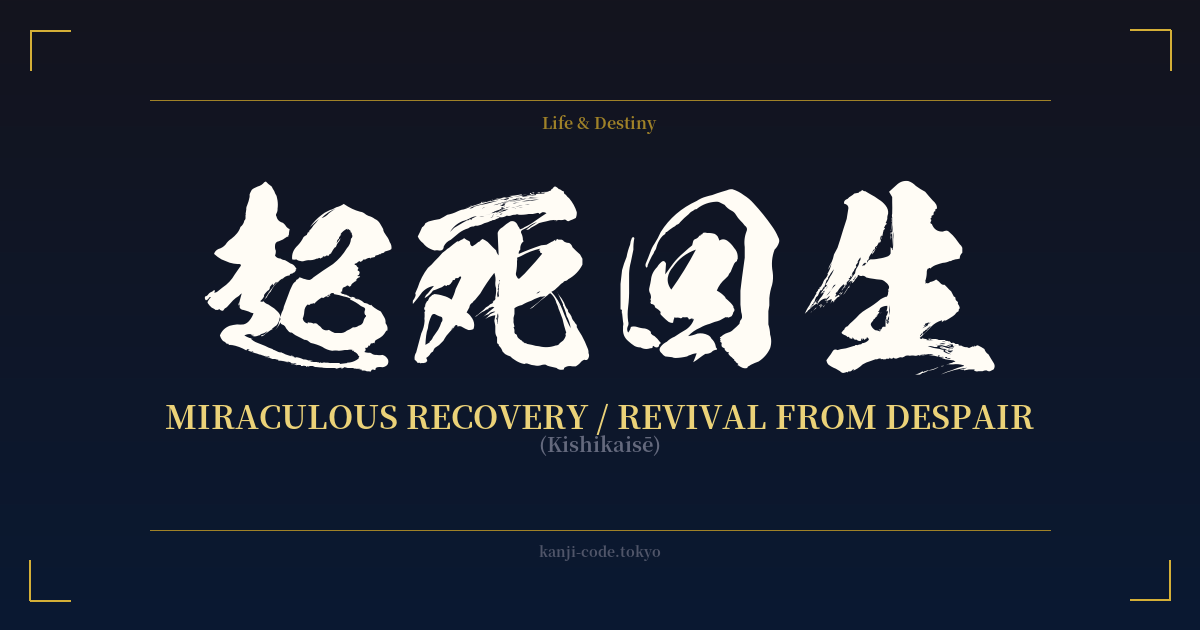
✍️ 起死回生 (Kishikaisē) — Cultural Context
起死回生 (Kishikaisē) is a powerful four-character idiom that literally translates to “wake the dead and return to life.” While its literal meaning is fantastical, its true essence lies in the figurative sense: to pull something back from the brink of total failure, to snatch victory from the jaws of defeat, or to make a miraculous comeback from a desperate situation.
This expression is the Japanese equivalent of a “Hail Mary pass” in sports, a “phoenix rising from the ashes” in mythology, or an “eleventh-hour rescue” in a story. It’s not about a simple recovery; it’s about a dramatic reversal of fortune when all hope seems lost. The phrase carries the weight of a desperate struggle that culminates in an almost unbelievable success.
Its origins are traced back to ancient China, referencing legendary physicians who were said to possess skills so profound they could revive patients on the verge of death. These stories, though likely apocryphal, cemented the idea of reversing a seemingly irreversible fate. In Japan, this concept was embraced and integrated into the cultural lexicon, resonating deeply with the samurai ethos of perseverance and the Buddhist themes of life, death, and rebirth.
Today, you’ll hear 起死回生 used in a wide variety of contexts. In the world of sports, it describes a team that scores in the final seconds to win a championship. In business, it might refer to a company on the verge of bankruptcy that launches a new product and becomes wildly successful. On a personal level, it can describe someone overcoming a life-threatening illness or pulling themselves out of a deep depression.
What makes 起死回生 so compelling is that it acknowledges the depth of the despair. The inclusion of the character for “death” (死) is crucial—it establishes the stakes. This isn't just about bouncing back from a minor setback. It’s about facing utter annihilation and, through sheer will, luck, or a stroke of genius, turning everything around. It is a testament to the indomitable nature of the human spirit.
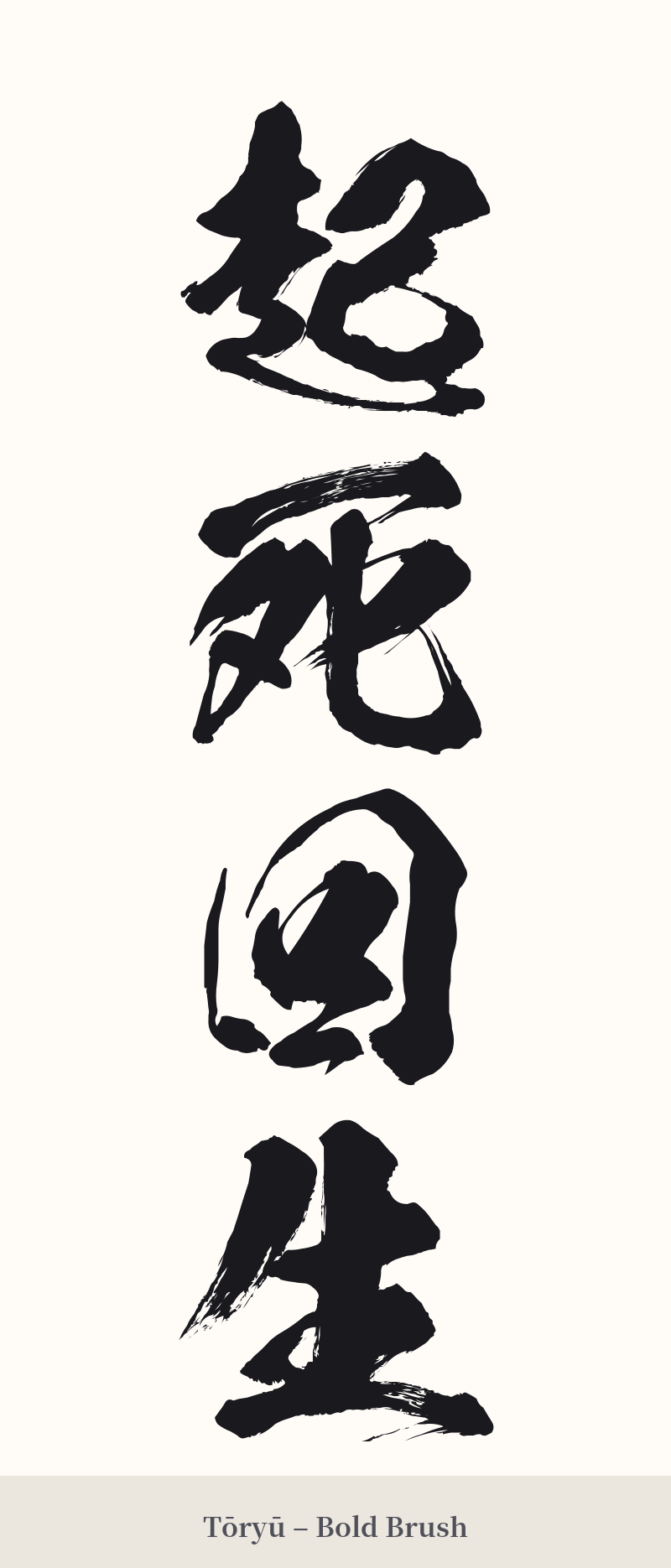
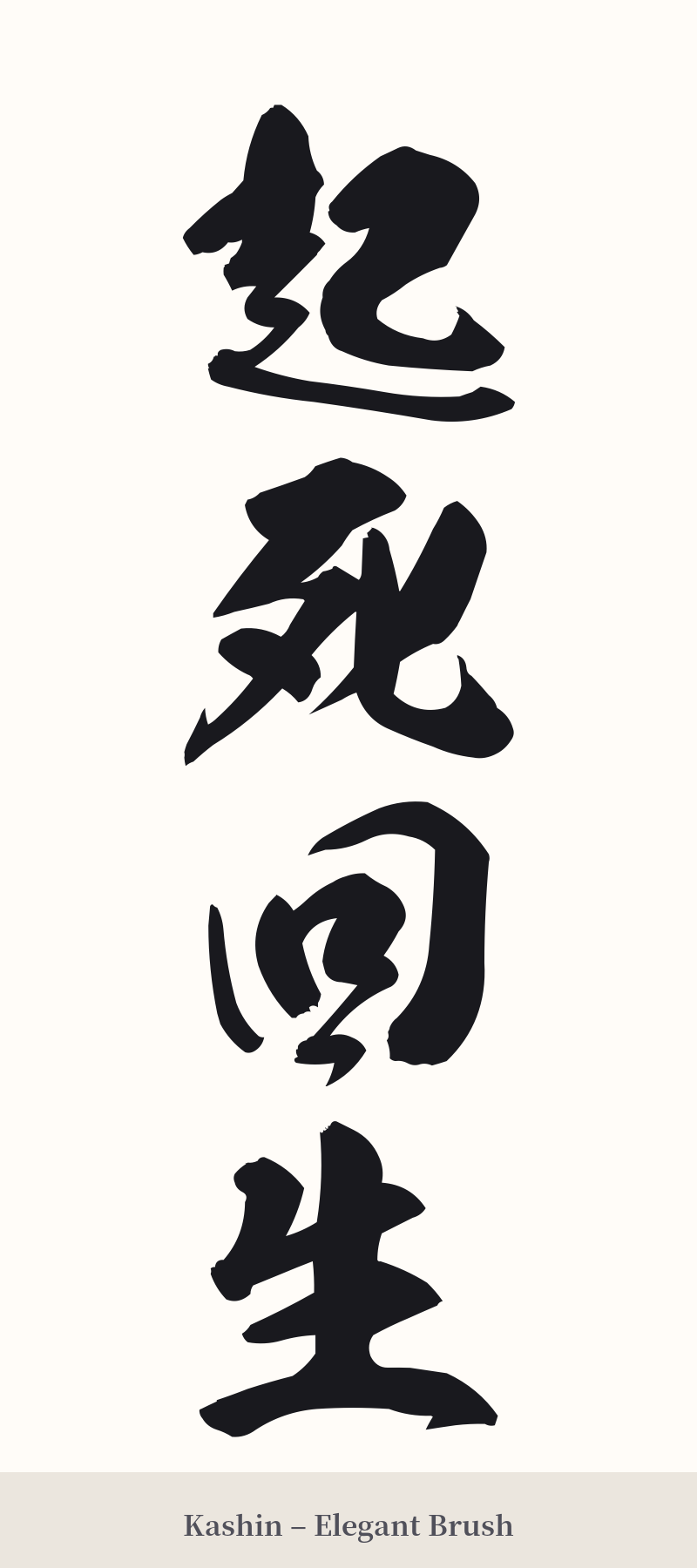
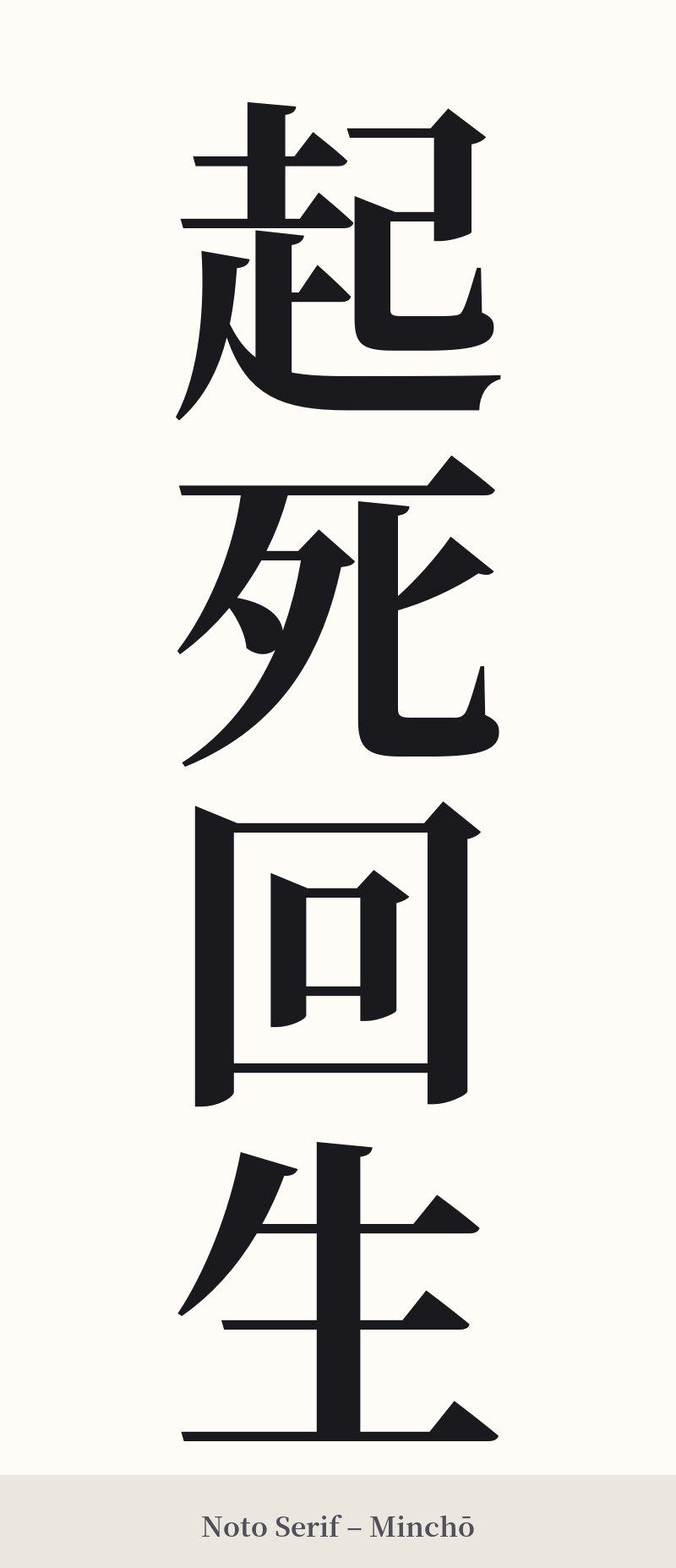
🖌️ Font Styles for 起死回生
The same kanji can look dramatically different depending on the calligraphy style. Choose a font that matches the mood you want for your tattoo or design.
🎨 Tattoo Suitability
📐 Tattoo Design Guide
The four-character structure of 起死回生 offers a classic and aesthetically pleasing look for a tattoo.
– Placement: Vertical alignment is traditional and highly recommended. It looks powerful along the forearm, the calf, or down the spine. For a horizontal design, the chest, upper back, or across the ribs are excellent choices.
– Font Style: A dynamic, semi-cursive calligraphy style (Gyōsho) can capture the energy and dramatic struggle inherent in the phrase. For a more stoic and grounded feel, a clean and precise block script (Kaisho) emphasizes clarity and determination.
– Visual Elements: Consider complementing the kanji with imagery that reinforces its meaning. A phoenix, a lotus flower blooming from mud, or a dragon ascending towards the heavens are all powerful symbols of rebirth and overcoming adversity. A subtle kintsugi (golden joinery) effect, with golden cracks running through or around the characters, can also beautifully symbolize healing and finding strength in imperfection.
Comments