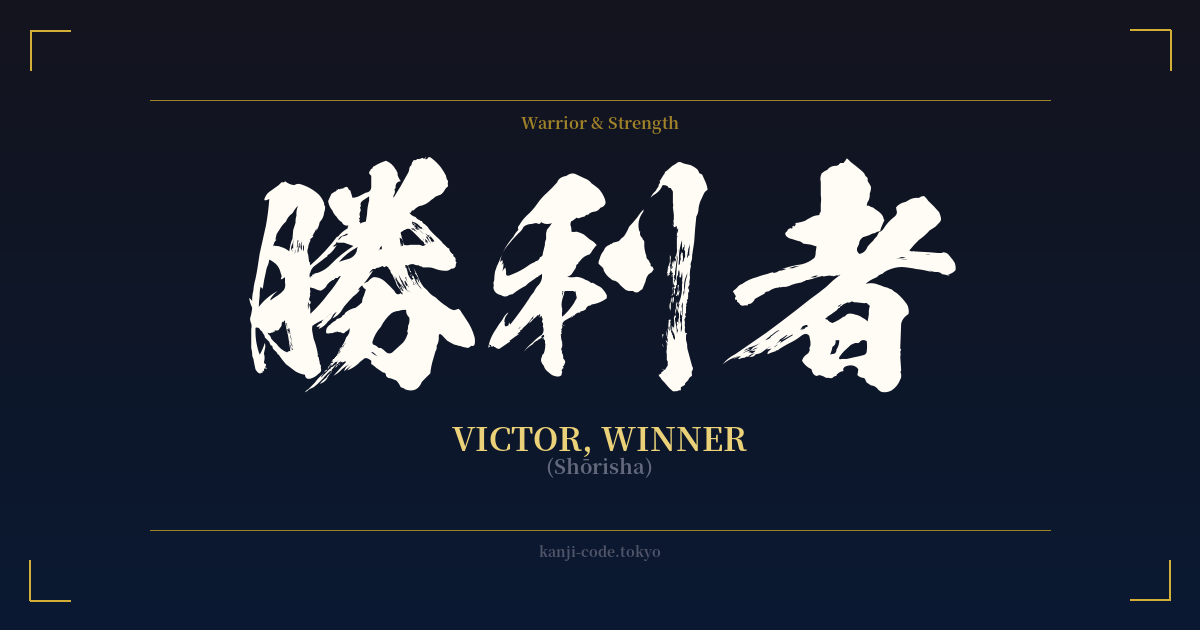
✍️ 勝利者 (Shōrisha) — Cultural Context
勝利者 (Shōrisha) is a powerful and formal term in Japanese that translates directly to 'victor' or 'winner.' It's more than just a label for someone who wins a game; it carries a weight of achievement, struggle, and the culmination of effort. The word is composed of 'shōri' (勝利), meaning 'victory,' and 'sha' (者), a suffix denoting 'person.' This structure makes it clear: this is the individual who has seized victory.
The term distinguishes itself from its common synonym, 勝者 (shōsha). While both mean 'winner,' 勝利者 (Shōrisha) often implies a grander, more significant triumph. The inclusion of 利 (ri), meaning 'advantage' or 'benefit,' within the word 勝利 (shōri) suggests a victory that was gained, secured, and resulted in a tangible or meaningful advantage. It evokes images of a champion in a major tournament, a hero at the end of a long battle, or a person who has overcome immense personal odds.
In Japanese culture, the idea of a 'victor' is deeply intertwined with concepts of perseverance (我慢, gaman) and discipline. Victory is rarely seen as the result of mere luck or raw talent alone. It is the reward for dedication, strategic thinking, and the refusal to give up. This concept resonates through traditional martial arts (budō), historical tales of samurai, and modern competitive arenas like sports and business.
When someone is called a Shōrisha, it's a title of great respect. It acknowledges not just the outcome but the entire journey leading to it. In stories and media, the Shōrisha is the protagonist who, through trials and tribulations, finally stands triumphant. This makes the word aspirational—it's not just about who you are now, but who you strive to become by conquering the challenges before you. It represents the pinnacle of achievement after a worthy struggle, a universally resonant theme that gives the word its enduring power.
🖌️ Font Styles for 勝利者
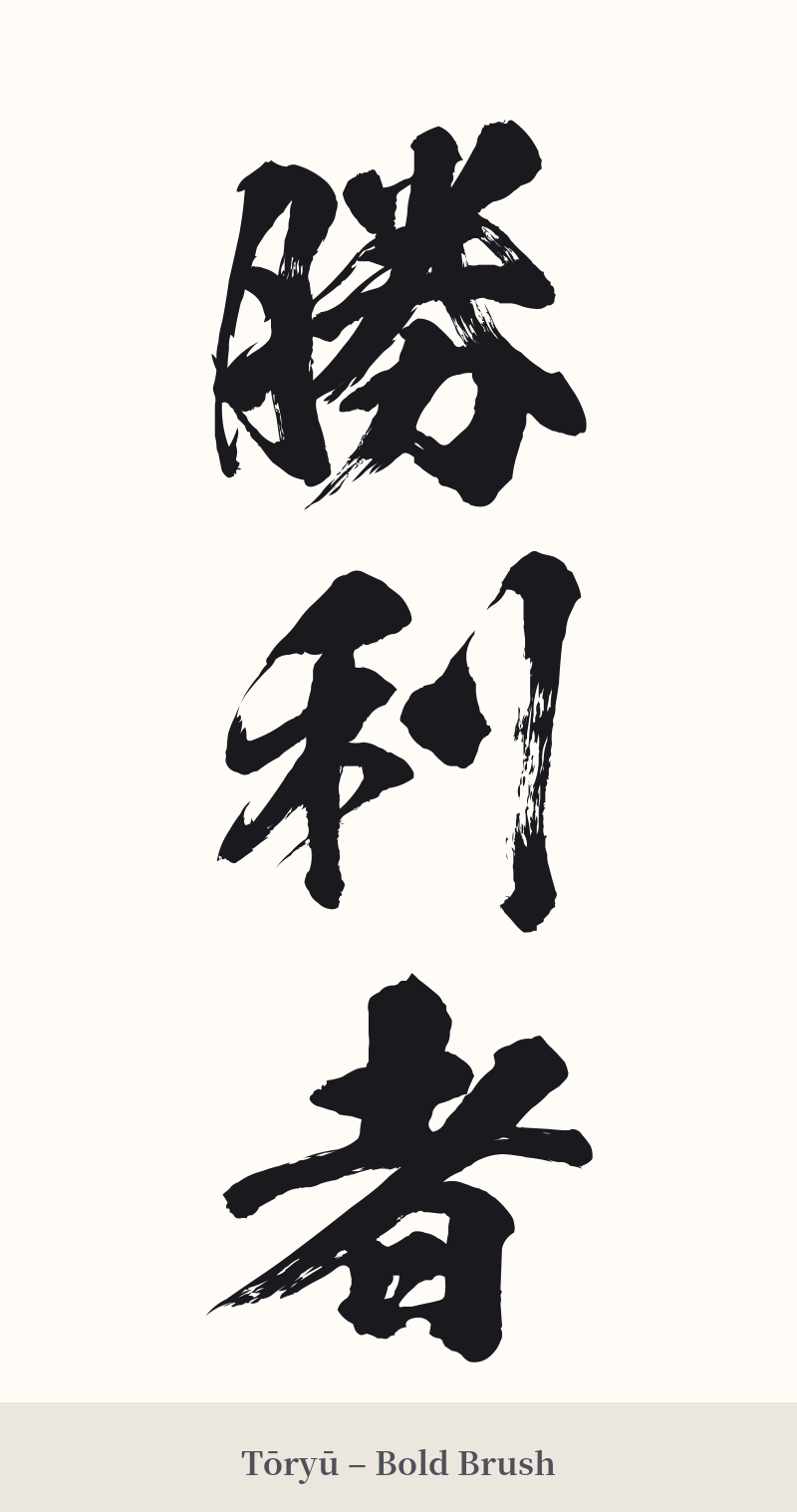
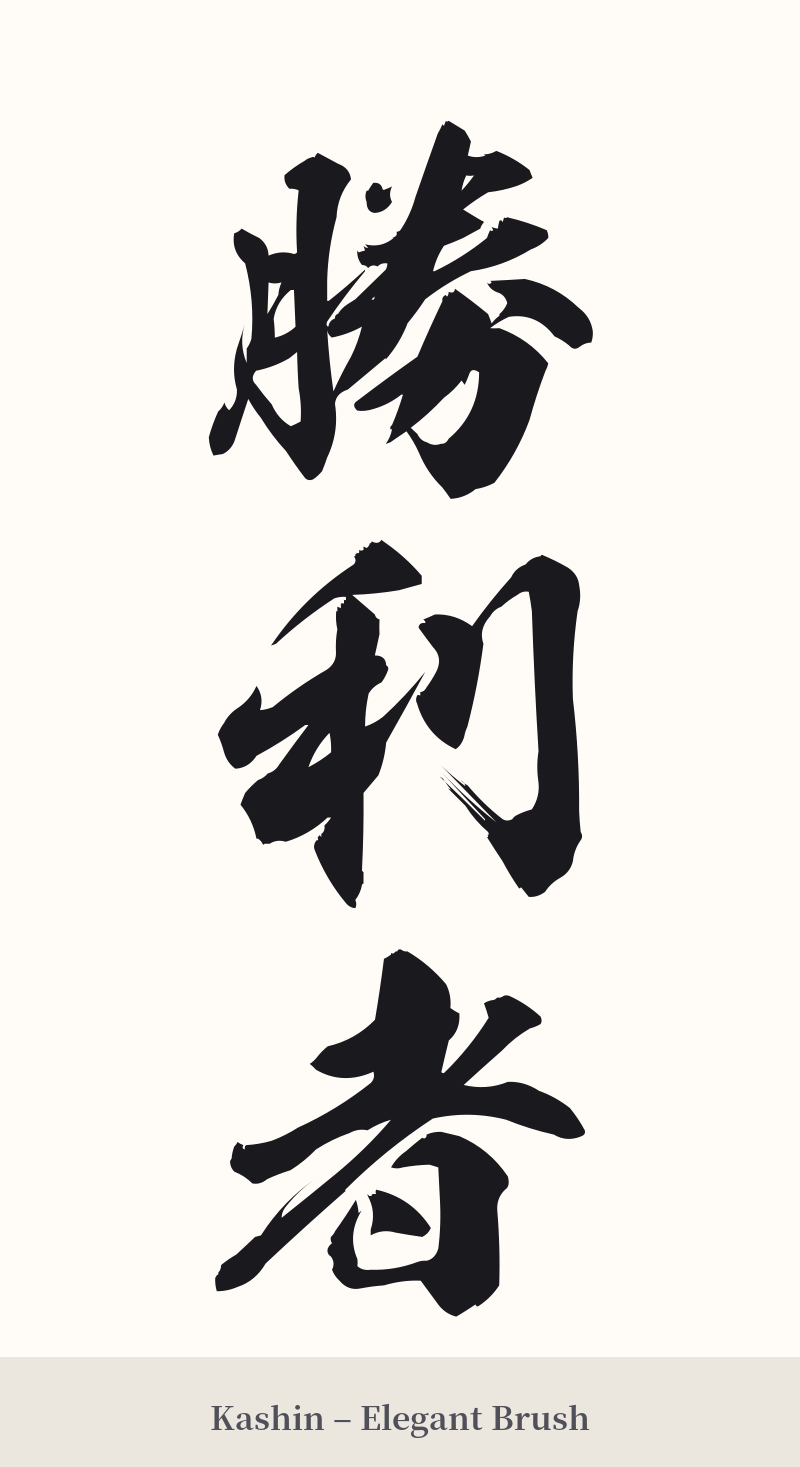
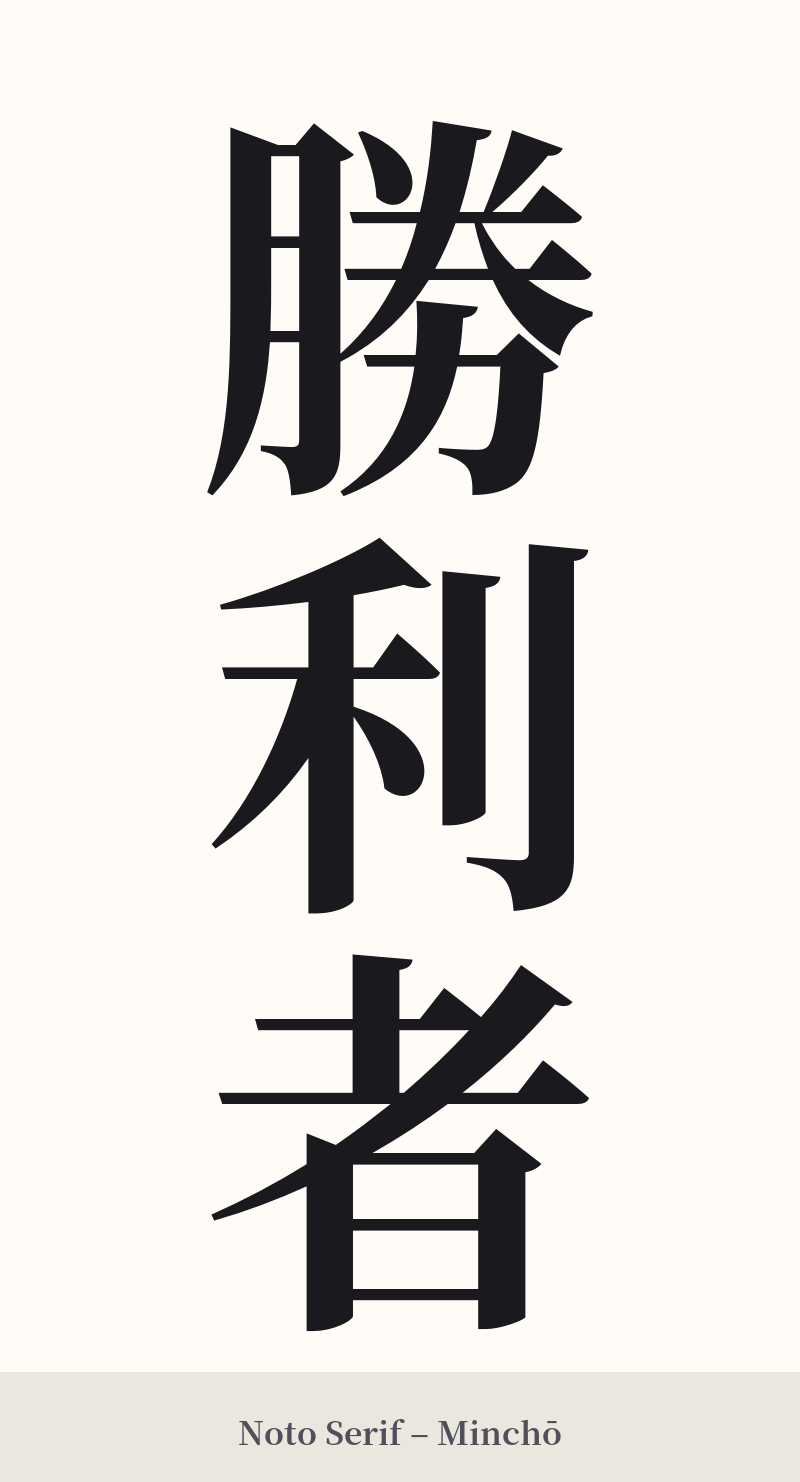
The same kanji can look dramatically different depending on the calligraphy style. Choose a font that matches the mood you want for your tattoo or design.
🎨 Tattoo Suitability
📐 Tattoo Design Guide
勝利者 offers strong design potential due to its three-character structure and powerful meaning. Here are some recommendations for a tattoo:
– Placement: A vertical orientation is classic and visually striking, making it ideal for the forearm, the side of the calf, or along the spine. For a horizontal layout, the chest, upper back, or across the shoulder blades provides a strong canvas.
– Font Style: To emphasize the dynamic energy of victory, a calligraphy or brushstroke style (書道, shodō) is an excellent choice. The fluid, energetic strokes can convey movement and power. For a more solid and unyielding feel, a bold, blocky font like a Mincho or Gothic style can work well, symbolizing stability and strength.
– Visual Complements: While 勝利者 is powerful enough to stand alone, it can be paired with symbolic imagery. Consider designs like a koi fish swimming upstream (symbolizing perseverance), a dragon (power and good fortune), or a phoenix (rebirth and triumph over adversity). The kanji can be integrated into the background or placed alongside the main image.
Comments