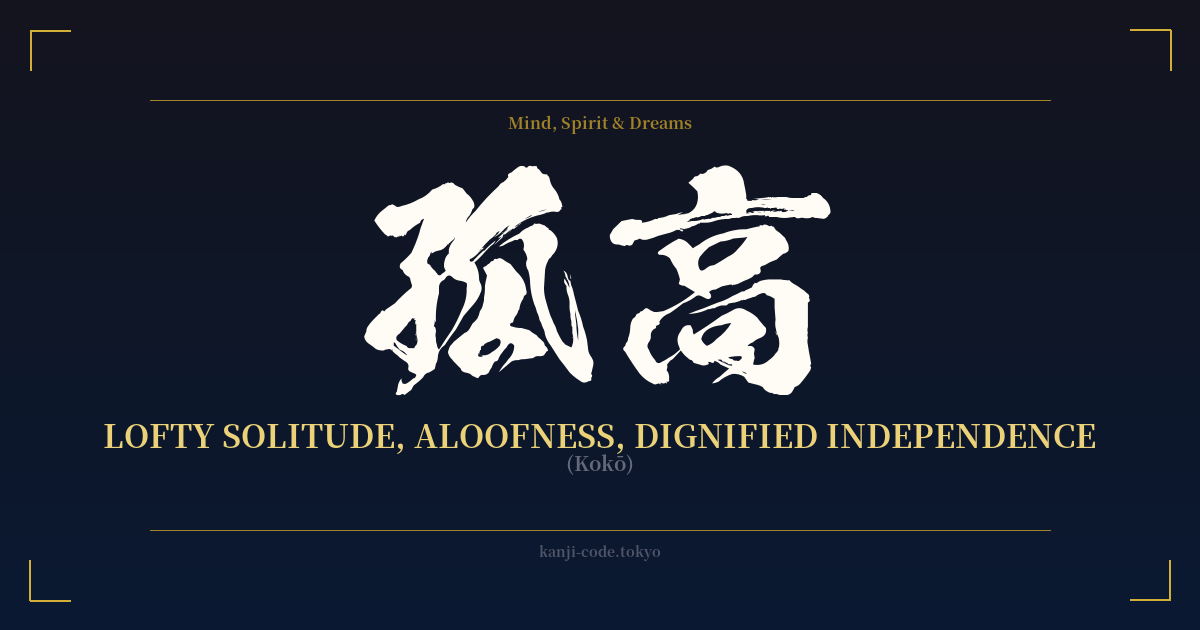
✍️ 孤高 (Kokō) — Cultural Context
孤高 (Kokō) is a term that transcends simple translation. While it can be rendered as 'lofty solitude' or 'dignified independence,' its essence captures a profound Japanese aesthetic and philosophical ideal. It does not speak of the sadness of loneliness, but rather the strength, purity, and integrity of one who stands alone, unswayed by the masses.
The word is a beautiful fusion of its two parts: 孤 (ko), meaning 'alone' or 'orphan,' and 高 (kō), meaning 'high' or 'tall.' Together, they paint a vivid picture: a solitary peak reaching for the sky, a lone eagle soaring above the clouds, or a single pine tree clinging to a cliff face. This is not isolation born of rejection, but a chosen state of being, elevated and distinct.
In Japanese culture, Kokō is often associated with the archetype of the master artisan, the dedicated martial artist, or the introspective scholar. Think of a swordsmith forging a blade in seclusion, a Zen monk deep in meditation, or a poet finding inspiration far from the noise of the city. These figures achieve greatness not in spite of their solitude, but because of it. It allows for intense focus, unwavering commitment to a craft or principle, and the cultivation of an inner world that requires no external validation.
This concept contrasts sharply with the often negative Western view of being alone. Kokō is an honorable state. It implies a person of such strong character and high ideals that they cannot, or will not, compromise their principles to simply 'fit in.' They walk their own path, guided by an internal compass.
However, this path is not without its challenges. The person embodying Kokō may be seen as aloof, proud, or difficult to connect with. They operate on a different plane, and bridging that distance can be daunting for others. This duality is central to its meaning—the admiration for their strength is often mixed with a sense of their unreachability. To embrace Kokō is to accept both the power of independence and the reality of detachment.
🖌️ Font Styles for 孤高
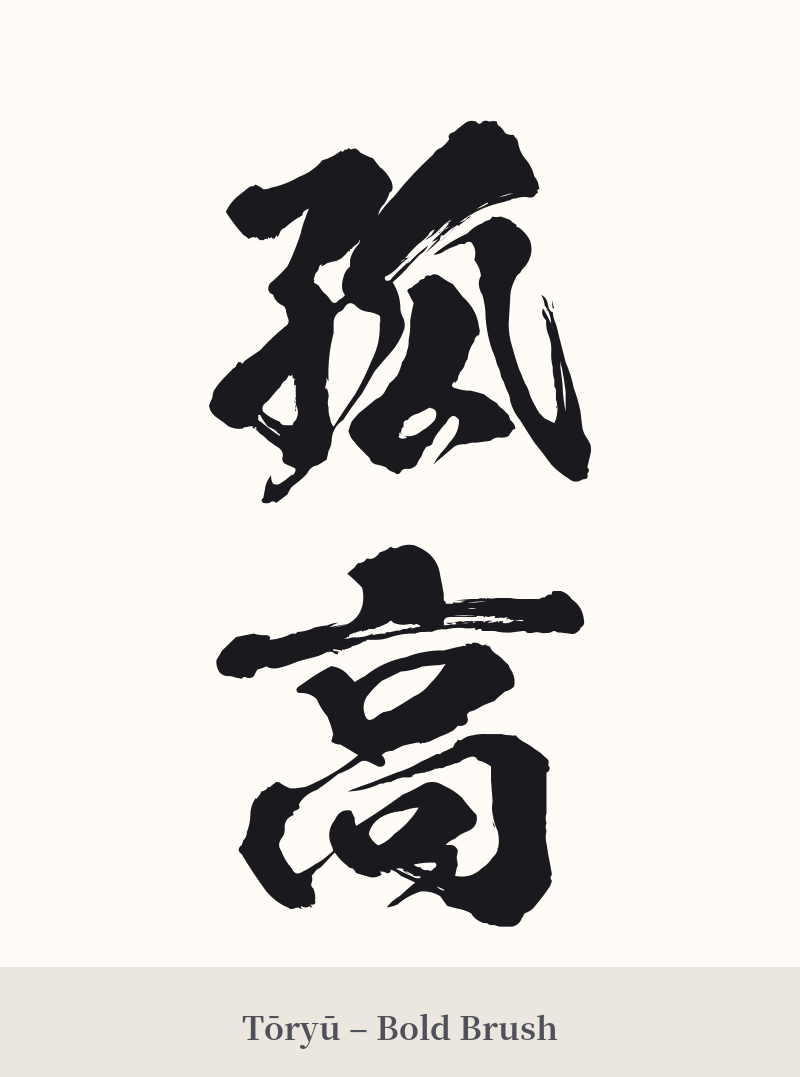
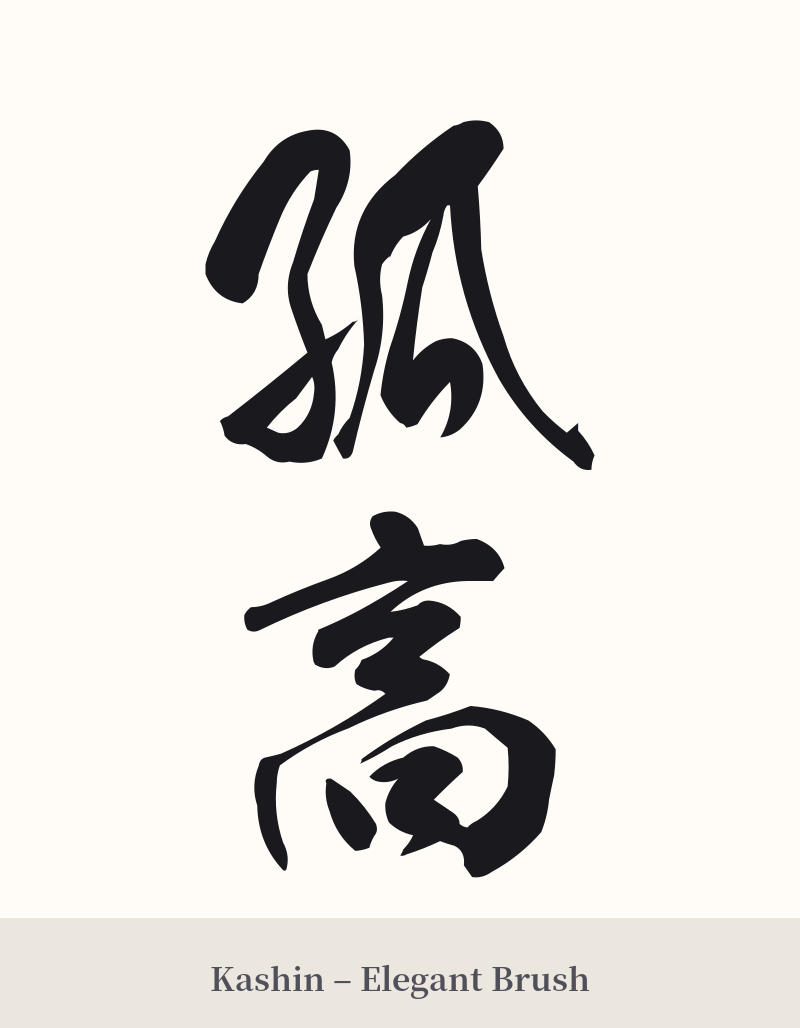
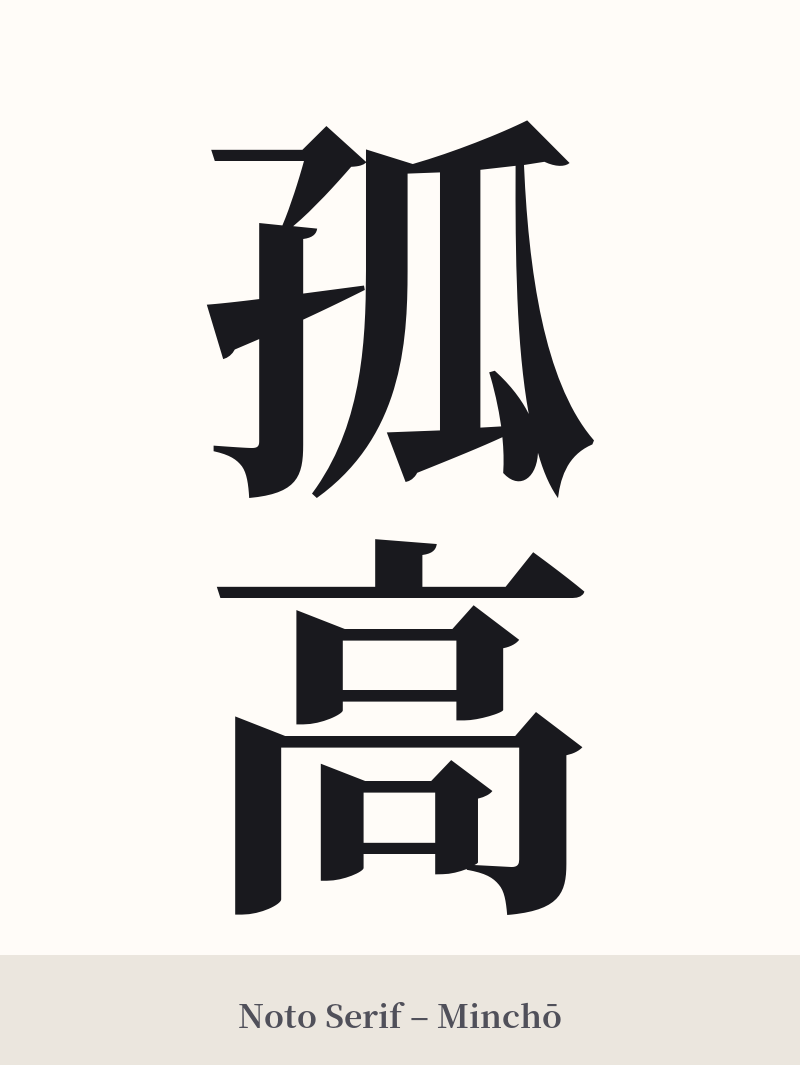
The same kanji can look dramatically different depending on the calligraphy style. Choose a font that matches the mood you want for your tattoo or design.
🎨 Tattoo Suitability
📐 Tattoo Design Guide
The dignified and solitary nature of 孤高 (Kokō) lends itself to clean, strong tattoo designs.
– Placement: A vertical alignment is traditional and visually striking. Consider placing it along the spine, the forearm, or the back of the calf to emphasize the 'lofty' and upright feeling. For a more personal statement, the ribs or inner bicep are excellent choices.
– Font Style: A dynamic, semi-cursive brushstroke style (Gyōsho) can capture the blend of strength and fluid independence. For a more stoic and resolute feel, a crisp, architectural block script (Kaisho) works perfectly. Avoid overly ornate or complex fonts that would contradict the word's stark purity.
– Visual Complements: While the kanji stands powerfully on its own, it can be paired with minimalist imagery that shares its theme. A single branch of a pine tree, a silhouette of a mountain peak, or a simple enso circle (Zen circle of enlightenment) can enhance the design without overwhelming it.
Comments