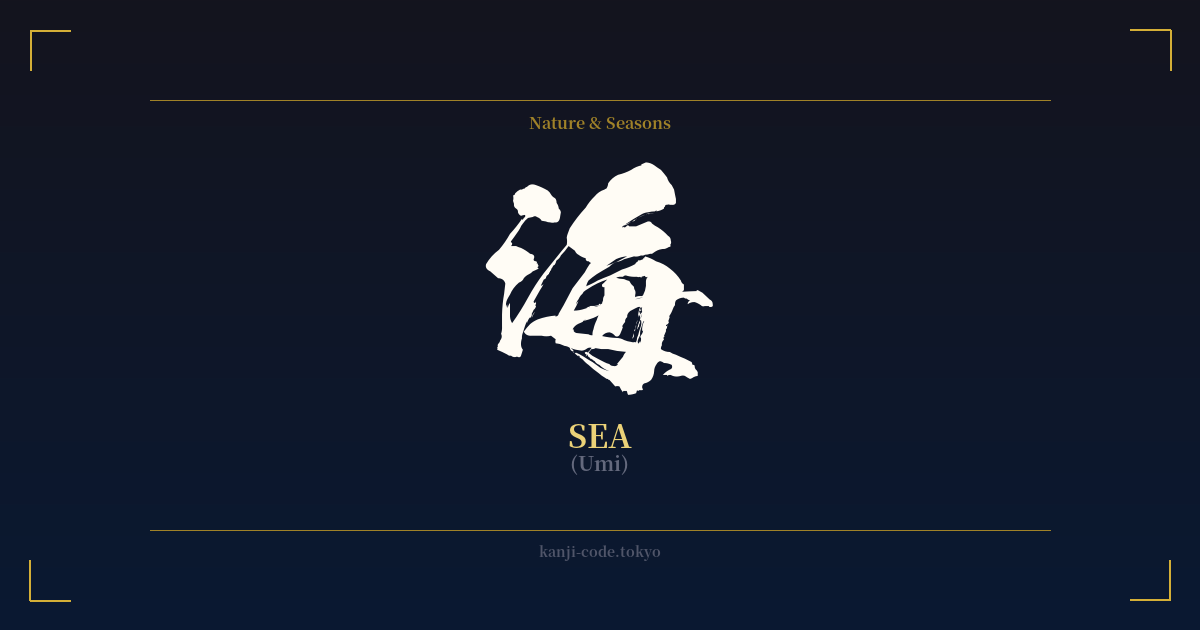
✍️ 海 (Umi) — Cultural Context
As an island nation, the sea is not just a geographical feature for Japan; it is woven into the very fabric of its culture, identity, and spirituality. The kanji 海 (Umi) encapsulates this deep, multifaceted relationship. It represents a source of life and sustenance, providing food for centuries, but also a force of immense power and unpredictability, capable of both isolation and connection.
The character itself offers clues to its meaning. It is composed of two parts: the radical on the left, 氵 (sanzui), is a depiction of water. The right side, 毎 (mai), is more complex. While it now means 'every,' its ancient form depicted a woman with an elaborate headdress, possibly related to the character for 'mother' (母). This has led to interpretations of 海 as the 'mother of waters,' a womb-like expanse from which life emerges—a concept that resonates with the sea's role as the origin of life on Earth.
In Shinto, Japan's indigenous religion, the sea is a sacred space. It is seen as a powerful agent of purification, and rituals of cleansing in the sea (misogi) are still practiced. The sea is also home to powerful kami (gods), most notably Ryūjin, the dragon god of the sea, who controls the tides and is a symbol of the ocean's might. Many important shrines, including parts of the Ise Grand Shrine complex, are built to face the sea, honoring its divine significance.
The influence of 'Umi' pervades Japanese art and literature. It is a constant muse, from the iconic woodblock print 'The Great Wave off Kanagawa' by Hokusai, which captures its terrifying beauty, to countless haiku and poems that reflect on its tranquility, vastness, and melancholy. The sea in Japanese culture is a dual symbol: it can be calm and serene (a peaceful beach) or violent and destructive (a typhoon or tsunami). This duality is not seen as good versus evil, but as a fundamental aspect of nature's power.
Understanding 海 also involves contrasting it with 洋 (yō), which translates to 'ocean.' While similar, 'umi' typically refers to the seas surrounding Japan—the immediate, familiar, and culturally significant bodies of water. 'Yō,' on the other hand, often implies the vast, open oceans and has connotations of 'foreign' or 'Western,' as seen in words like yōshoku (Western food). To choose 海 is to choose a symbol deeply rooted in the Japanese experience.
🖌️ Font Styles for 海
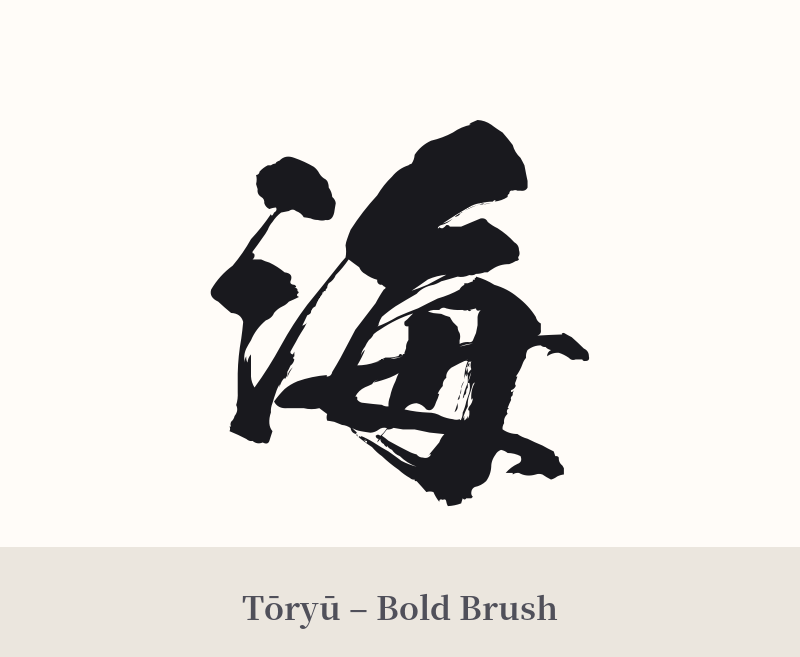
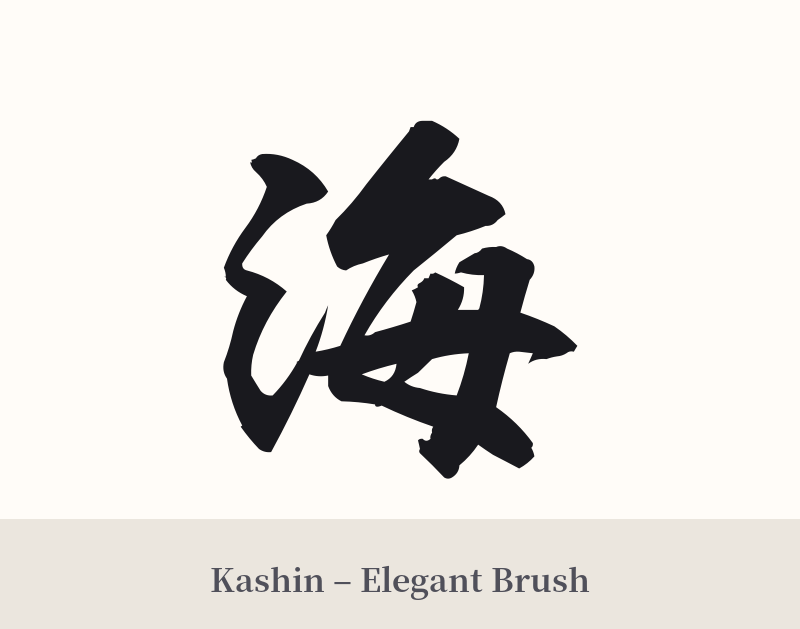
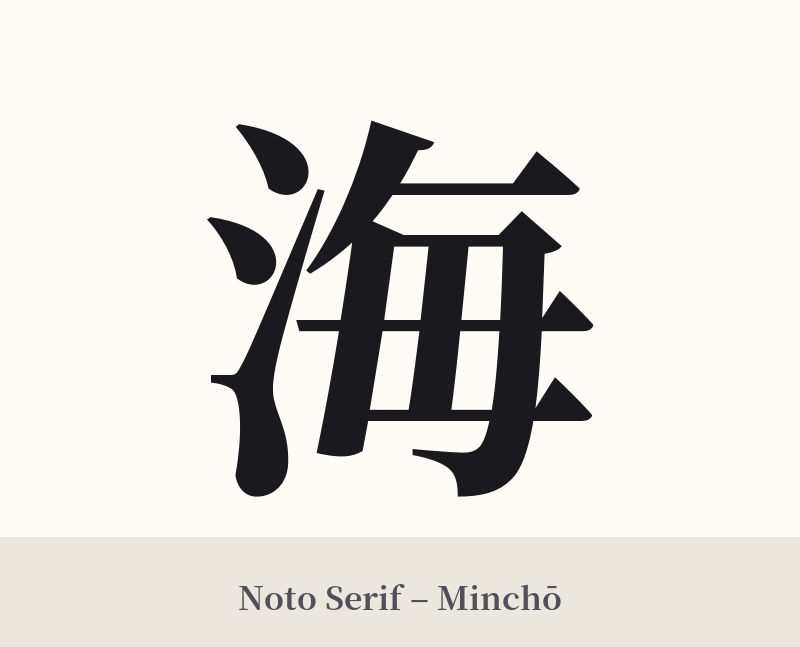
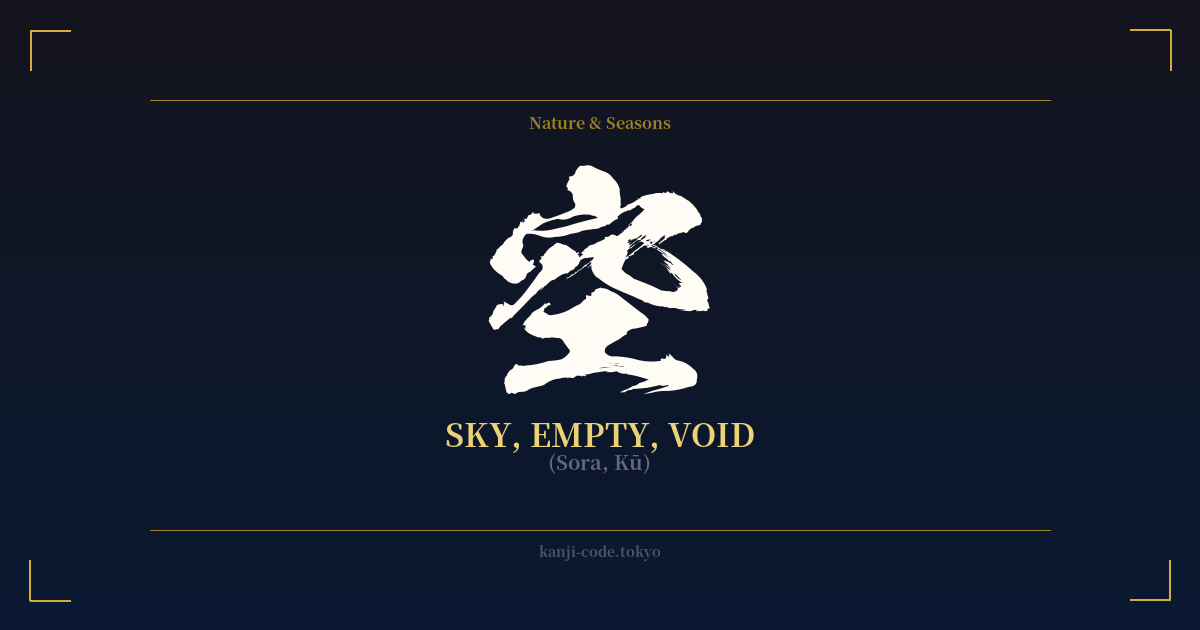
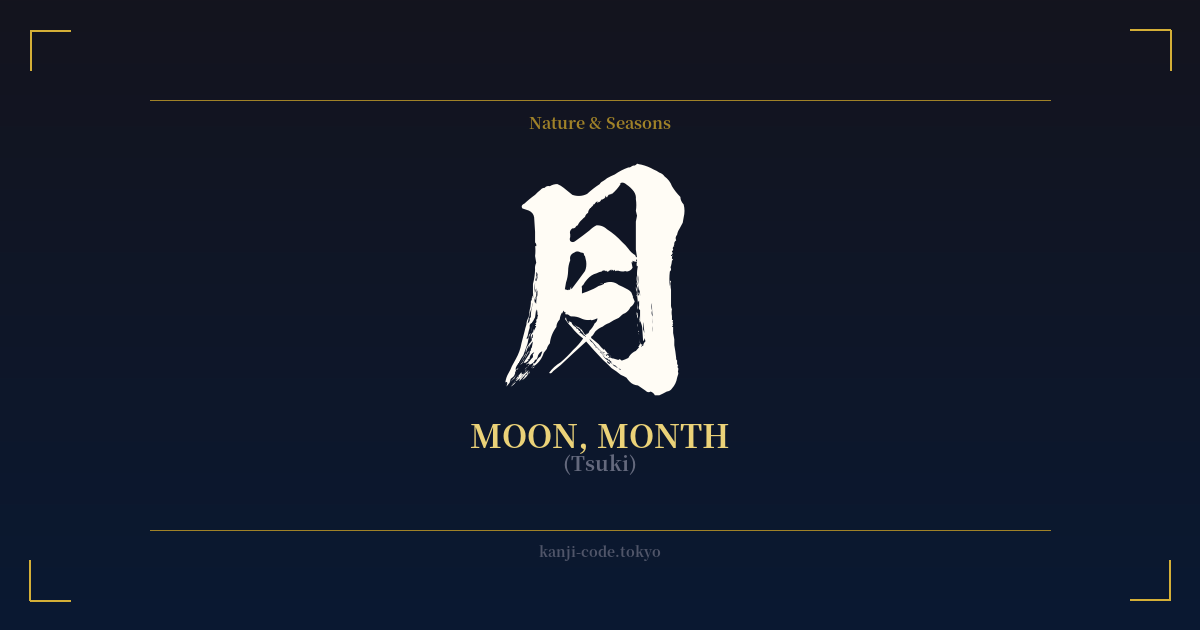
The same kanji can look dramatically different depending on the calligraphy style. Choose a font that matches the mood you want for your tattoo or design.
🎨 Tattoo Suitability
📐 Tattoo Design Guide
The kanji 海 is visually balanced and offers great flexibility for tattoo design. Its combination of the flowing 'water' radical and the more structured right side allows for diverse artistic interpretations.
– Placement: This character works well on various parts of the body. For a smaller, more personal tattoo, the wrist, ankle, or back of the neck are excellent choices. For a larger, more impactful statement, it can be inked on the forearm, calf, or as a central element in a back piece.
– Font Style: A dynamic, semi-cursive script (Gyōsho) can emphasize the fluidity and movement of water. For a bolder look that speaks to the sea's power and stability, a crisp, strong block script (Kaisho) or a traditional Mincho font is highly effective.
– Visual Tips: 海 can be a powerful standalone symbol. It can also be seamlessly integrated into a larger Japanese-style piece (irezumi). Consider pairing it with classic water-related imagery like waves, koi fish, or a sea dragon (Ryū) to create a cohesive and meaningful scene.
Comments