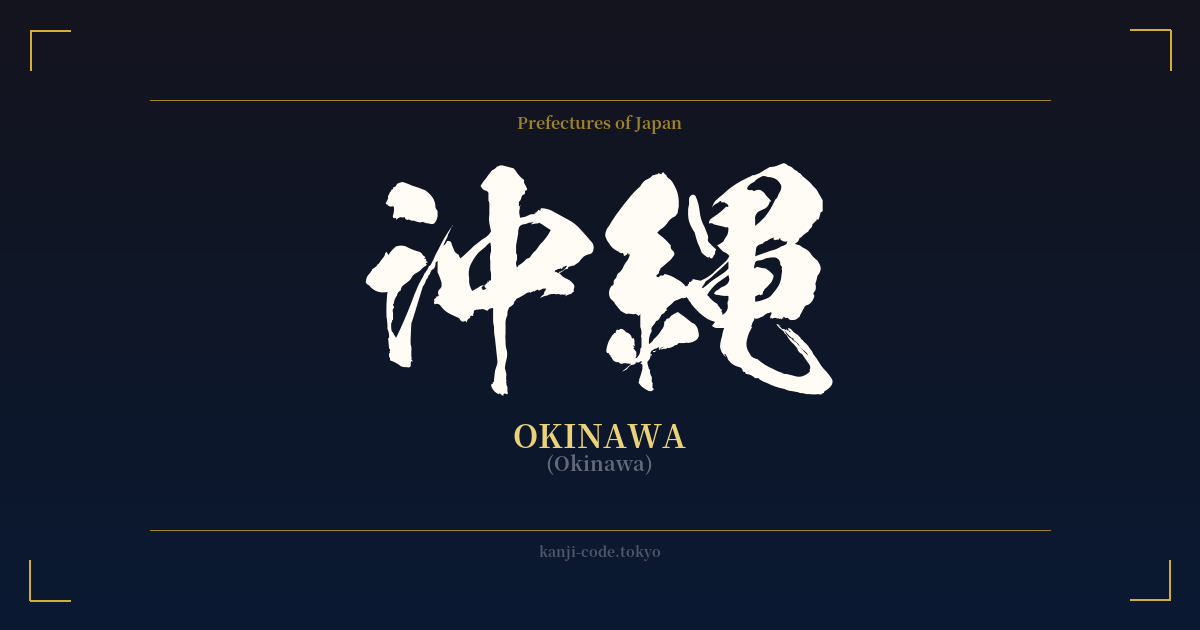
✍️ 沖縄 (Okinawa) — Cultural Context
The word 沖縄 (Okinawa) literally translates to “offing rope” or “rope in the open sea.” This poetic name beautifully captures the image of the Ryukyu archipelago, a long chain of islands stretching across the East China Sea like a rope cast out from the mainland. While a prefecture of Japan today, Okinawa’s story is one of a distinct and proud culture, shaped by centuries of independence, trade, and resilience.
For much of its history, this was the Ryukyu Kingdom, a sovereign nation that thrived as a vital hub for maritime trade. Its strategic location allowed it to build strong relationships with China, Japan, and other Southeast Asian nations. This exchange created a unique cultural fusion evident in its language, cuisine, textiles (like the vibrant bingata), and architecture. The Ryukyuan kings ruled from Shuri Castle, a magnificent structure that symbolized the kingdom's golden age and distinct identity.
In 1879, the Meiji government of Japan officially annexed the kingdom, dissolving it and establishing Okinawa Prefecture. This marked a period of forced assimilation, where the local language and customs were suppressed in favor of mainland Japanese culture. Despite this, the Okinawan people, or Uchinanchu, fiercely held onto their heritage.
The 20th century brought unimaginable tragedy. The Battle of Okinawa in 1945 was one of the deadliest battles of World War II, devastating the land and resulting in the loss of a massive portion of the civilian population. The island became a cornerstone of peace movements, with memorials and museums dedicated to the prayer for “no more war.” The post-war era saw the islands fall under U.S. administration until their reversion to Japan in 1972, though a significant U.S. military presence remains a complex and often contentious issue.
Today, Okinawa is known for its stunning subtropical beaches, coral reefs, and a laid-back atmosphere that contrasts with the hustle of mainland Japan. It is the birthplace of Karate, a martial art that embodies principles of self-defense and discipline. Its culture is a vibrant tapestry of traditional Eisa dancing, soulful sanshin music, and a philosophy that values community, peace, and cherishing life—the spirit of ichariba chode, the belief that once we meet, we are brothers and sisters.
🖌️ Font Styles for 沖縄
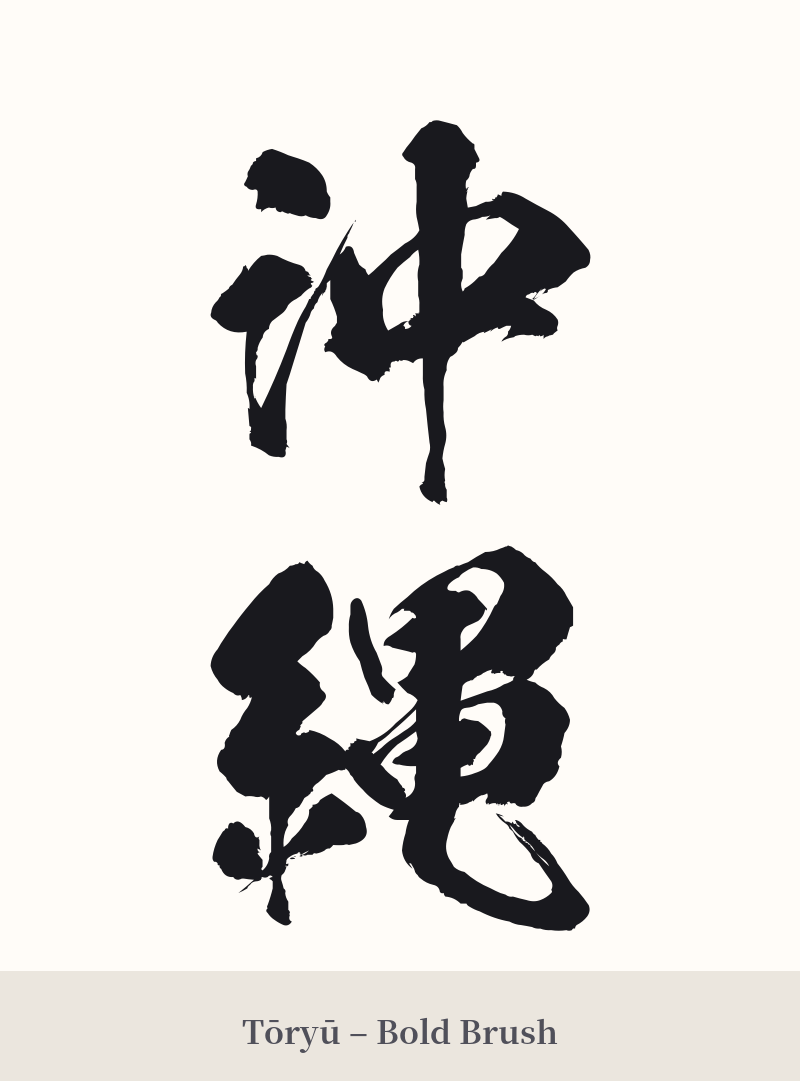
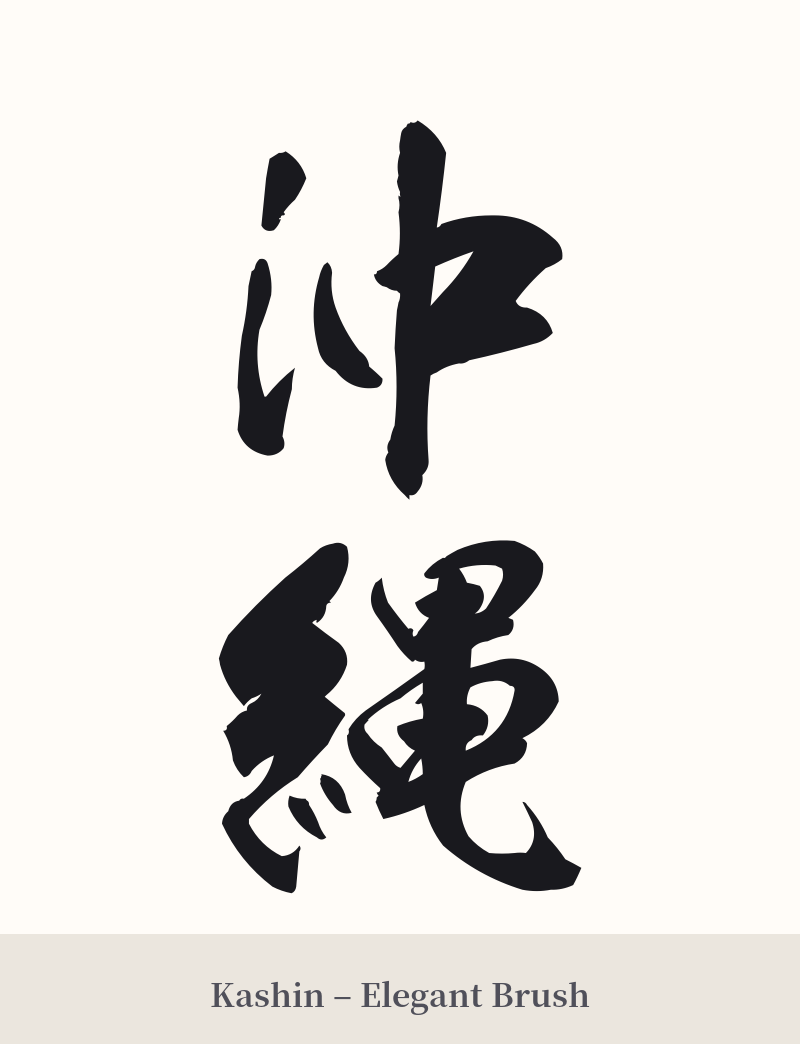
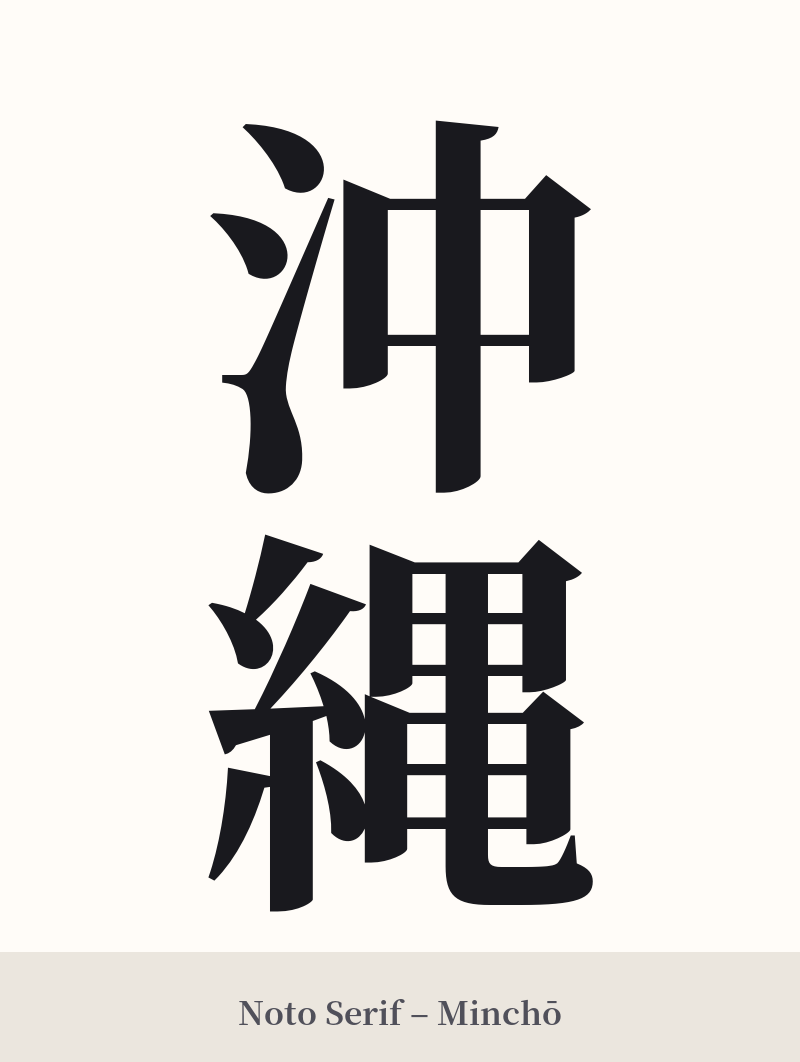
The same kanji can look dramatically different depending on the calligraphy style. Choose a font that matches the mood you want for your tattoo or design.
🎨 Tattoo Suitability
📐 Tattoo Design Guide
A tattoo of 沖縄 (Okinawa) is a tribute to a place and its profound history. To do it justice, consider both style and placement carefully.
– Placement: Due to the complexity of the second character, this design needs space. The forearm, calf, shoulder blade, or upper back are excellent choices. This allows the artist to render the strokes of 縄 clearly, preventing them from merging over time.
– Style: A traditional calligraphy script (shodō) is highly recommended. A dynamic, semi-cursive gyōsho style can convey a sense of flow and resilience, while a formal kaisho block script offers clarity and strength. A bold, thick brushstroke can emphasize the design's power.
– Orientation: Vertical is the most classic and aesthetically balanced orientation for these kanji. It flows naturally and reflects traditional Japanese writing.
– Visuals: Consider pairing the kanji with symbolic Okinawan imagery. A protective shisa (guardian lion-dog), a hibiscus flower, the pattern of bingata fabric, or even a subtle wave motif can add a personal layer and deepen the cultural connection.
Comments