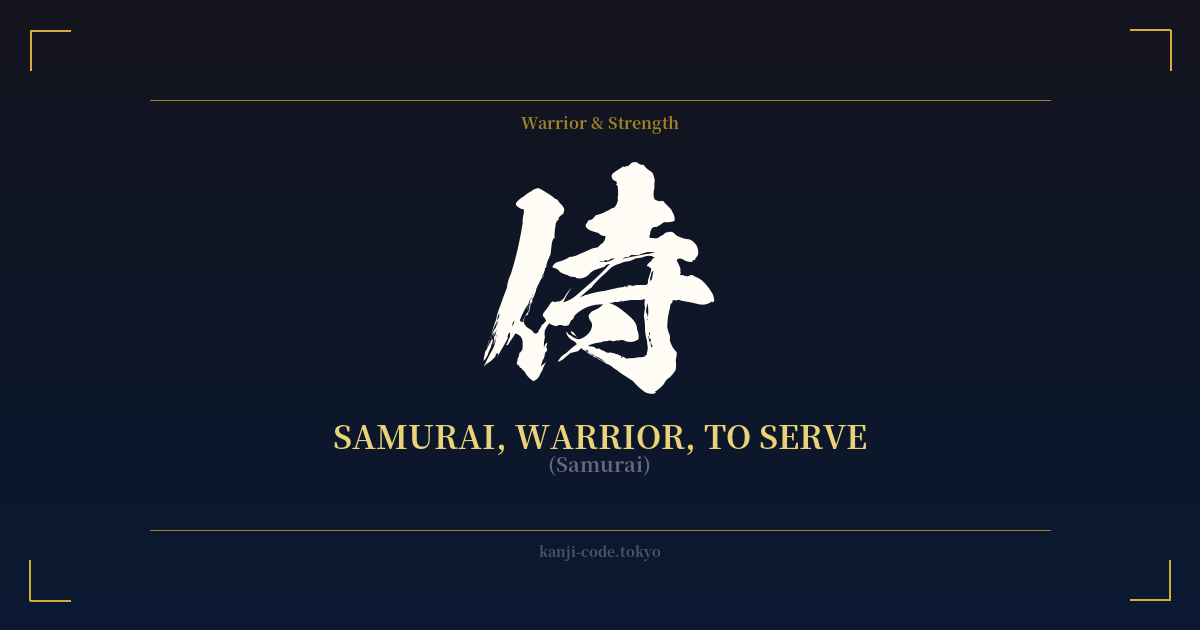
✍️ 侍 (Samurai) — Cultural Context
The kanji 侍 (Samurai) is one of the most recognizable characters in the Japanese language, evoking powerful images of armored warriors, gleaming swords, and a strict code of honor. However, its true origin is rooted not in battle, but in service.
The word itself derives from the archaic verb 'saburau,' which means 'to wait upon' or 'to serve.' In the courtly Heian period (794-1185), the term referred to attendants and retainers who served nobles. These early samurai were more like personal staff and bodyguards than the warrior class they would become.
The character's etymology beautifully reflects this origin. 侍 is composed of two parts: the left-side radical 亻, which is a variation of 人 (hito), meaning 'person,' and the right-side character 寺 (tera), which means 'temple' or, in this context, a government office or place of importance. Together, they create a pictograph of a person attending to duties in a significant place, encapsulating the idea of dedicated service.
As Japan’s central authority weakened and the country splintered into warring provinces, the role of the 'saburau' evolved dramatically. Landowners needed protection, and these loyal retainers were trained in the martial arts, becoming a formidable military force. By the Kamakura period (1185-1333), the samurai had risen to become the de facto rulers of Japan, establishing a shogunate that would last for nearly 700 years.
During the peaceful Edo period (1603-1868), the samurai's role shifted from active combatant to a ruling administrative class. It was during this time that their ethical code, Bushido (武士道, 'The Way of the Warrior'), was formalized. Bushido emphasized virtues like loyalty (忠義, chūgi), justice (義, gi), courage (勇, yū), and honor (名誉, meiyo). Life was to be lived with discipline and purpose, and death was preferred over dishonor.
The Meiji Restoration in 1868 brought an end to the feudal system and the samurai class was officially abolished. Their privileges were stripped, and they were forced to integrate into a rapidly modernizing society. Yet, this abrupt end only served to crystallize their legend. The samurai became a powerful symbol of Japan's past, a cultural icon representing discipline, sacrifice, and the quintessential Japanese spirit.
Today, the kanji 侍 carries this immense weight of history. It is more than just 'warrior'; it is a symbol of a complex social class, a profound philosophy, and a legacy of service that shaped a nation. To understand 侍 is to understand that true strength is found in loyalty and devotion to a cause greater than oneself.
🖌️ Font Styles for 侍
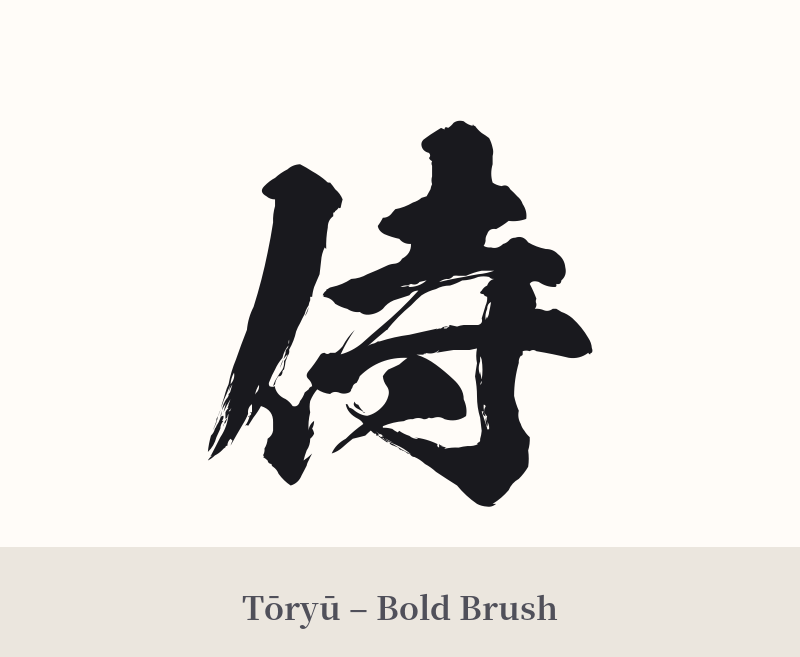
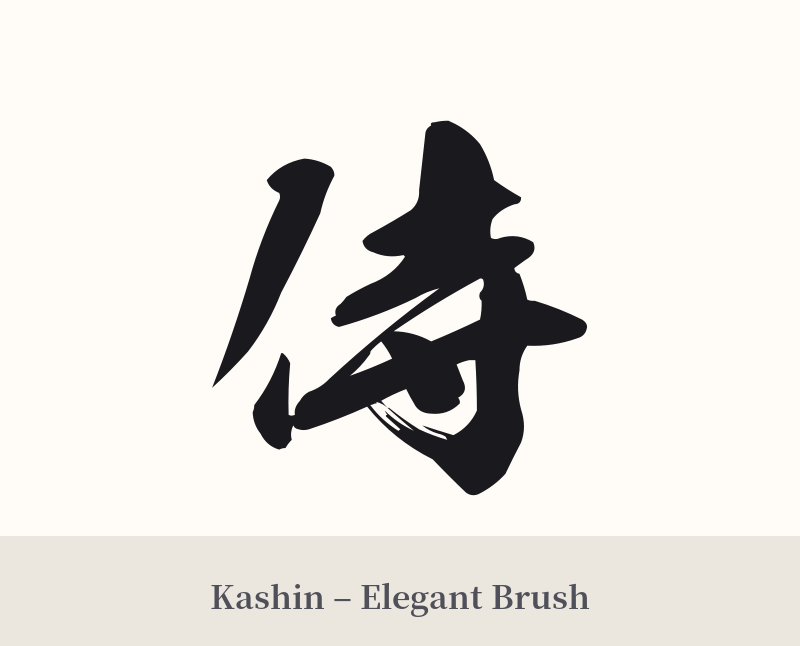
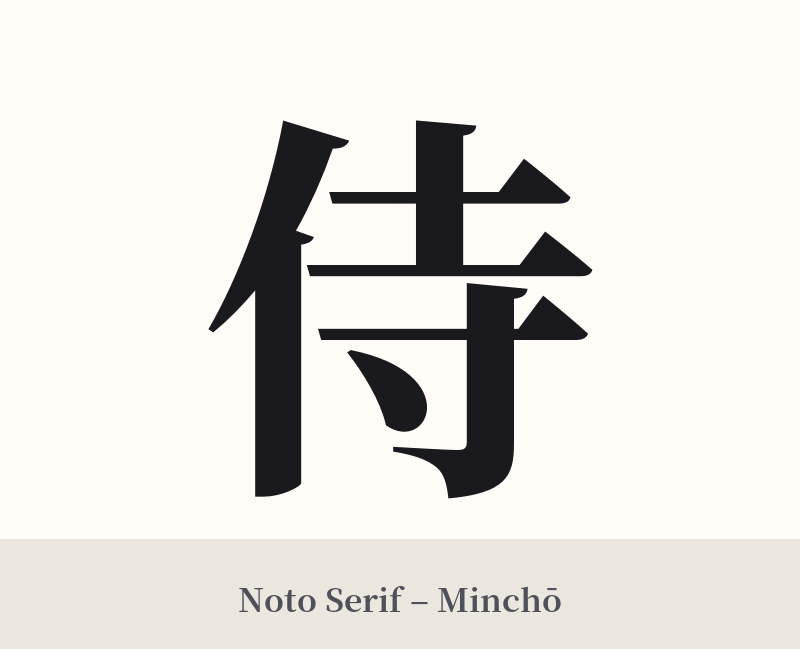
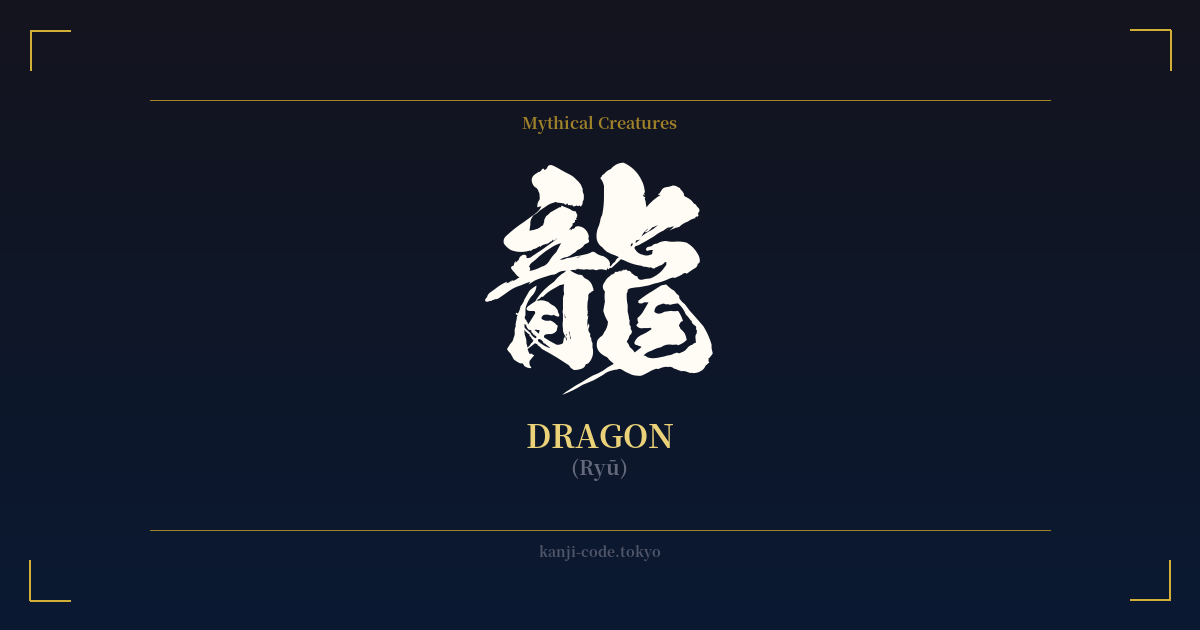
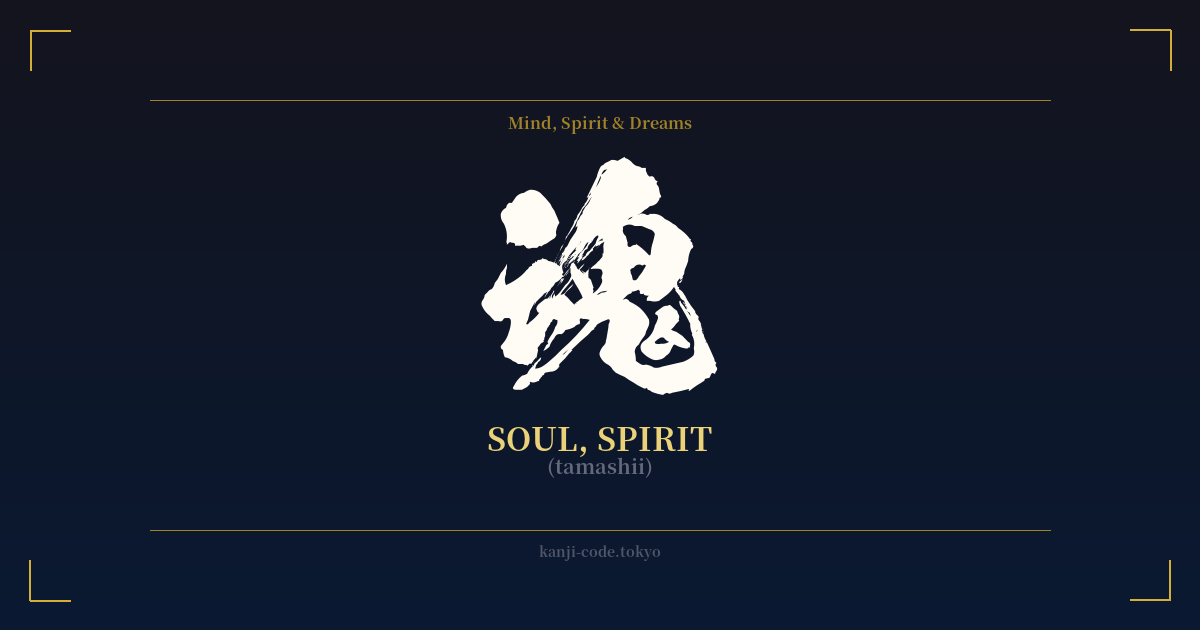
The same kanji can look dramatically different depending on the calligraphy style. Choose a font that matches the mood you want for your tattoo or design.
🎨 Tattoo Suitability
📐 Tattoo Design Guide
The kanji 侍 is a powerful and visually balanced character, making it an excellent choice for a tattoo. It's recognizable and carries a deep sense of history and strength.
– Placement: Its vertical structure works well on the forearm (either inner or outer), the calf, or along the ribs. For a larger, more impactful piece, it looks commanding on the back, placed centrally between the shoulder blades.
– Font Style: For a traditional and dynamic feel, a calligraphy brushstroke style (gyōsho or sōsho) is highly recommended. This captures the motion and spirit of the samurai. For a more stoic, formal, and clear look, a clean block script (kaisho) is a timeless choice.
– Visual Elements: While 侍 stands powerfully on its own, it can be paired with complementary imagery. Consider incorporating a family crest (kamon), a branch of cherry blossoms (sakura) to symbolize the transient nature of life, or the silhouette of a katana. A background of enso (a hand-drawn circle) can also frame the kanji beautifully, representing enlightenment and the universe.
Comments