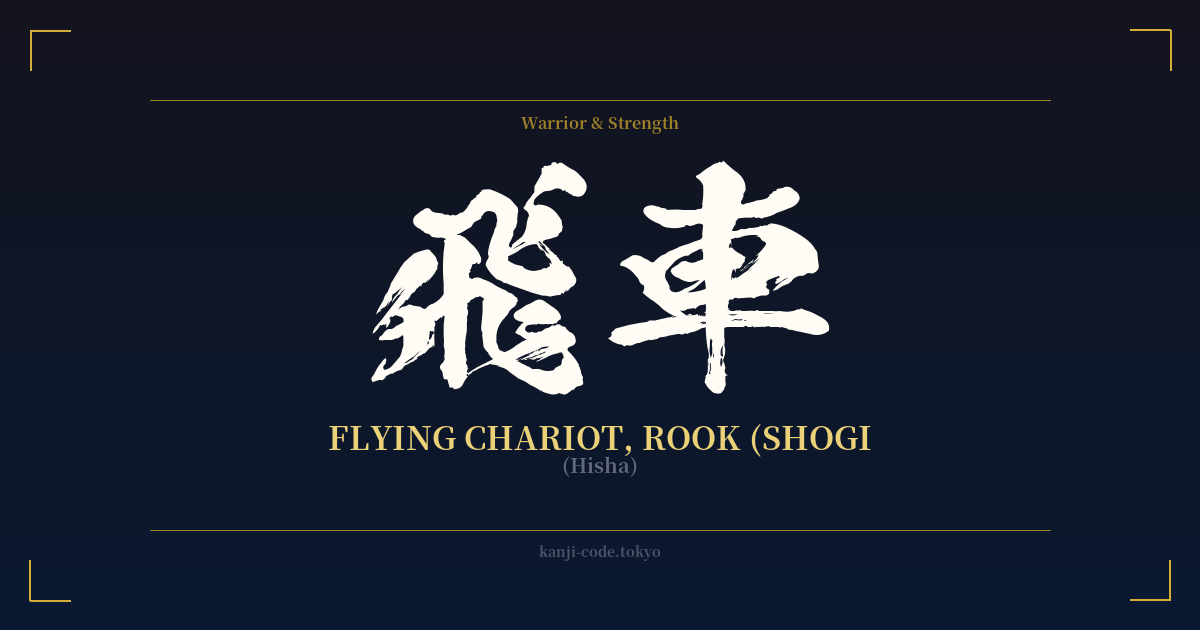
✍️ 飛車 (Hisha) — Cultural Context
飛車 (Hisha) is a name that commands respect on the battlefield of the Shogi board. Literally translating to "Flying Chariot," this piece is the equivalent of the Rook in Western chess and is one of the most powerful and decisive pieces in the game. Its movement is straightforward and devastating: it can travel any number of unoccupied squares vertically or horizontally, cutting through enemy lines with unstoppable force.
The term itself evokes a powerful historical image. Chariots were ancient engines of war, symbols of military might and royal authority. To imagine a "flying" chariot is to picture an overwhelming force that transcends the limitations of the physical world—a weapon of pure speed and impact. This is the essence of the Hisha on the Shogi board: a direct, unambiguous threat that controls the game's major channels.
However, the story of the Hisha does not end with its initial power. One of the most fascinating aspects of Shogi is the promotion of pieces. When the Hisha reaches the enemy's back three ranks, it can promote to a 龍王 (Ryūō), or "Dragon King." This transformation is profound, granting the piece the ability to move like a king one square diagonally in addition to its original Rook-like movement. This promotion symbolizes ascension, the realization of one's full potential, and achieving a new level of mastery and power. The Hisha is not just a powerful piece; it's a piece with the potential for greatness.
In Japanese culture, Shogi is more than just a game. It is considered an art form and a mental discipline, reflecting the strategic thinking of samurai battle tactics. The Hisha, therefore, is not just a game piece but a symbol of a particular philosophy: favor directness, control the key paths to victory, and always be ready to strike with overwhelming force. It represents the decisive move that can turn the tide of any conflict, a concept known as "ippatsu gyaku ten" (turning the tables in one move). For this reason, 飛車 embodies foresight, strategic dominance, and the raw power of a perfectly executed plan.
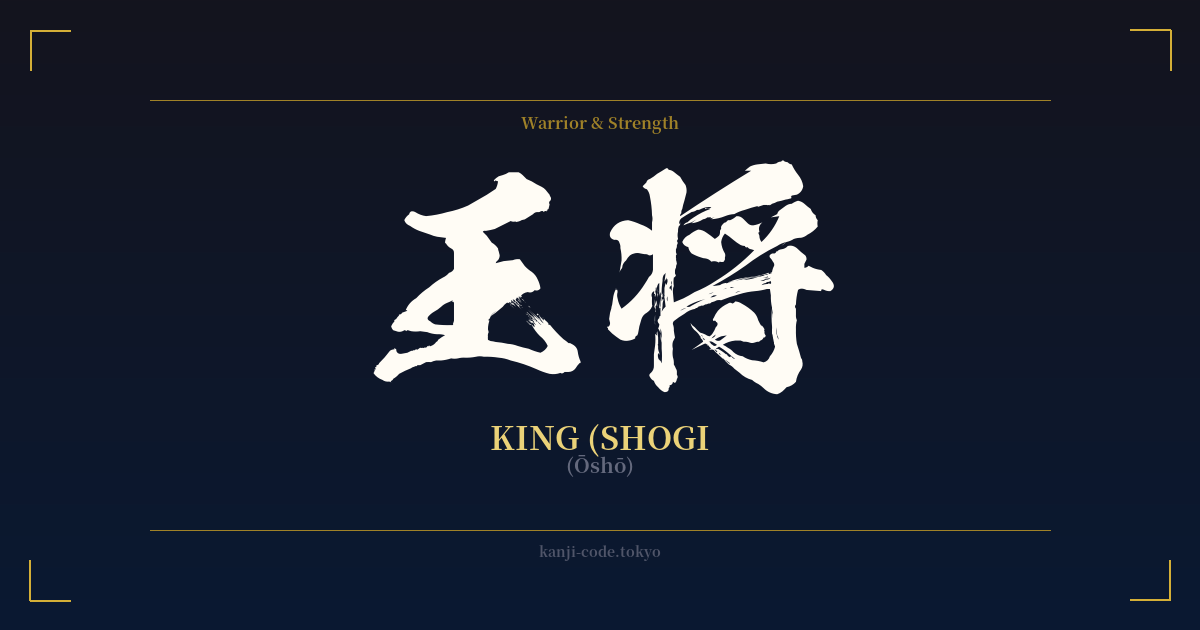
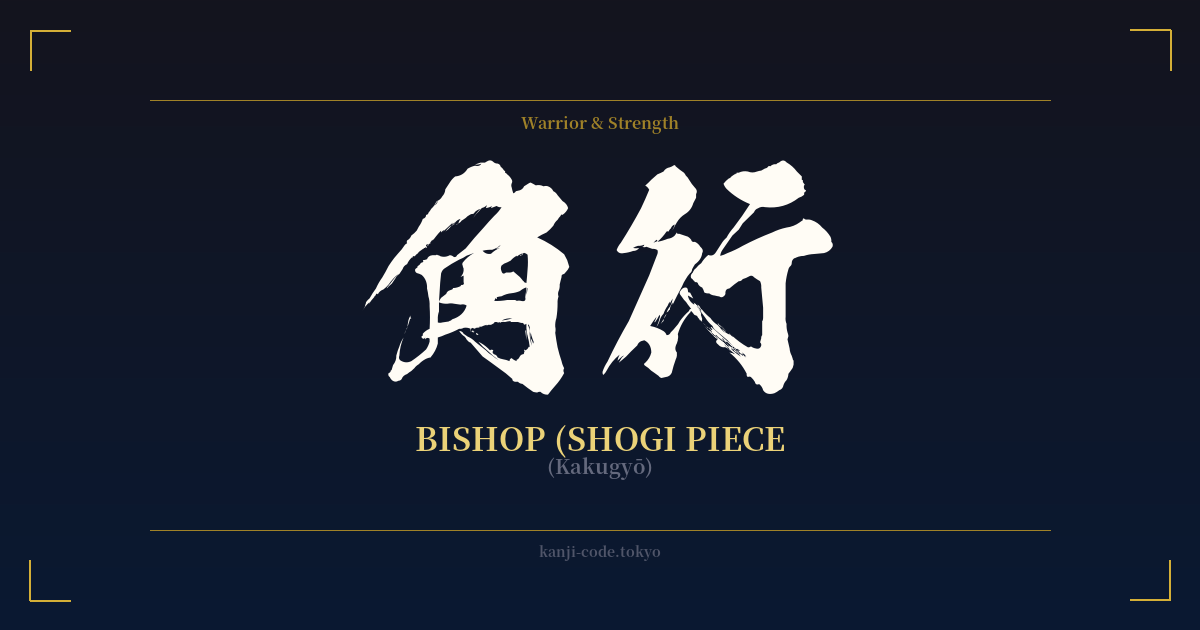
🖌️ Font Styles for 飛車
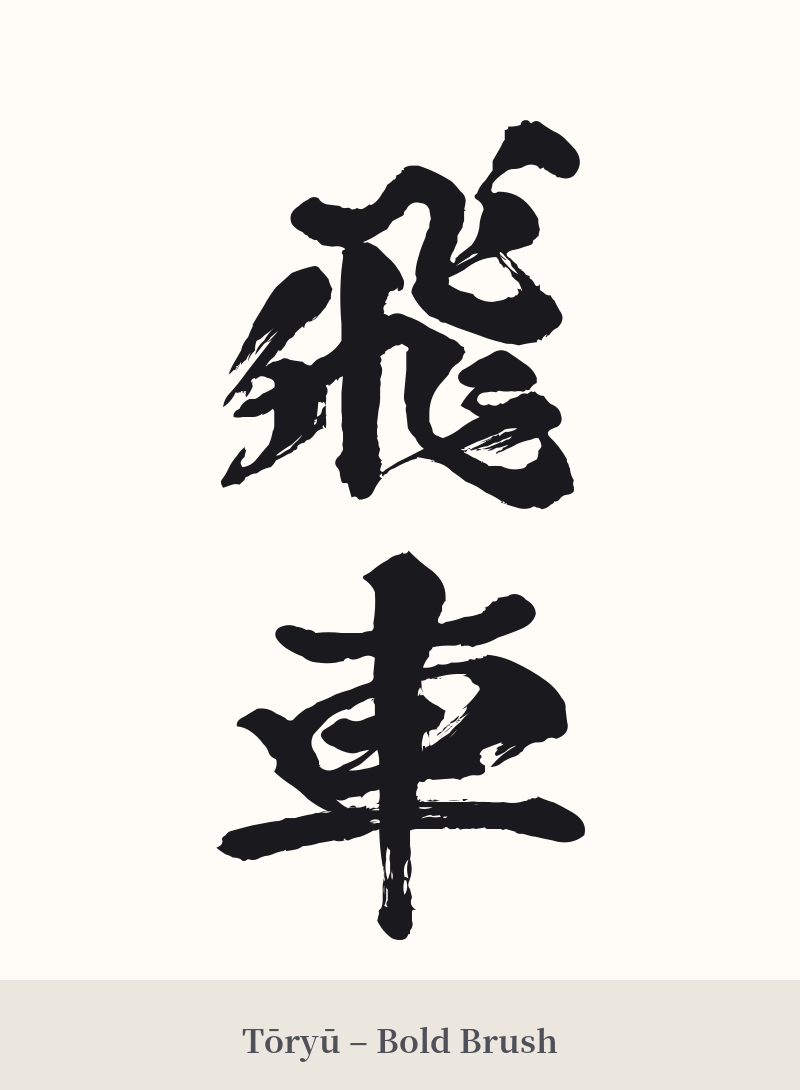
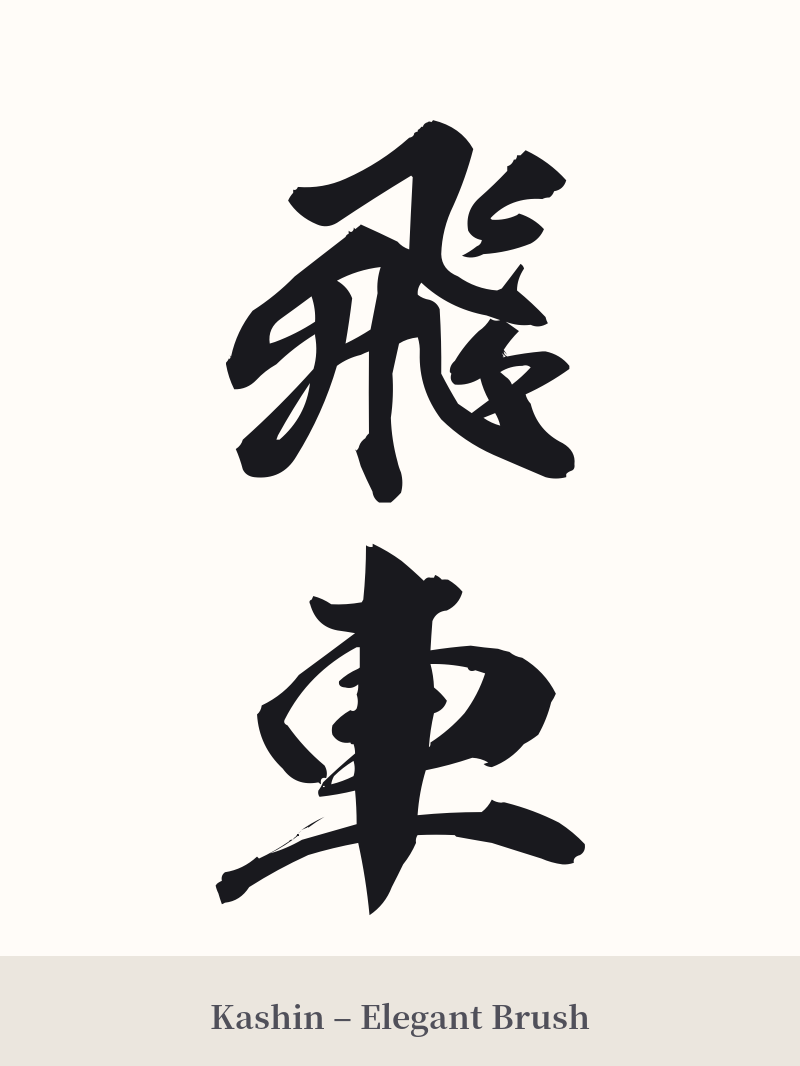
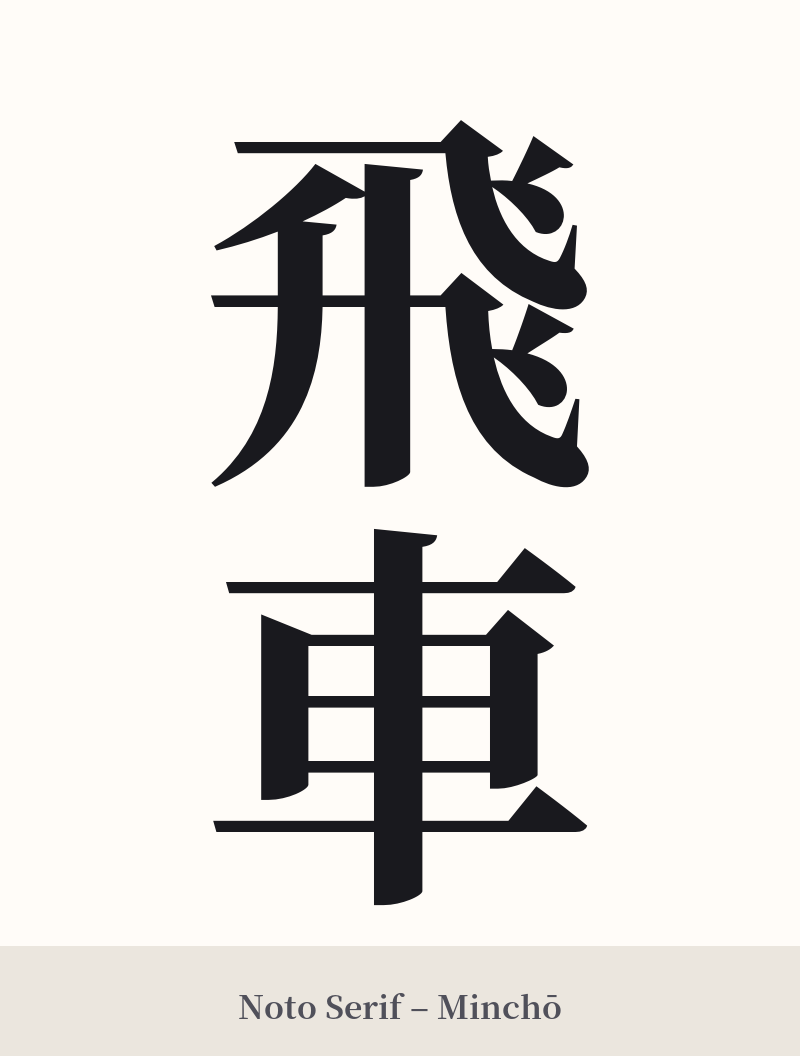
The same kanji can look dramatically different depending on the calligraphy style. Choose a font that matches the mood you want for your tattoo or design.
🎨 Tattoo Suitability
📐 Tattoo Design Guide
The two characters of 飛車 offer a balanced and powerful visual for a tattoo. Due to its vertical nature in Japanese writing, it is perfectly suited for placements that emphasize length.
– Placement: A vertical orientation along the forearm, calf, or triceps works exceptionally well. For a larger, more impactful piece, the spine or sternum provides a dramatic canvas.
– Font Style: The style can drastically alter the feeling. A bold, semi-cursive gyōsho (行書) or an aggressive sōsho (草書) style can emphasize the "flying" and dynamic nature of the piece. Conversely, a crisp, blocky kaisho (楷書) style can highlight its role as a strategic game piece, evoking the look of the characters carved onto a wooden Shogi tile.
– Visual Tips: Consider incorporating subtle imagery related to its meaning. A hint of a dragon scale pattern within the strokes could allude to its promotion to the Dragon King (龍王). Pairing it with its counterpart, the 角行 (Kakugyō – the Bishop), can create a design about balanced strategic forces. However, the kanji alone is strong enough to stand on its own without any additional elements.
Comments