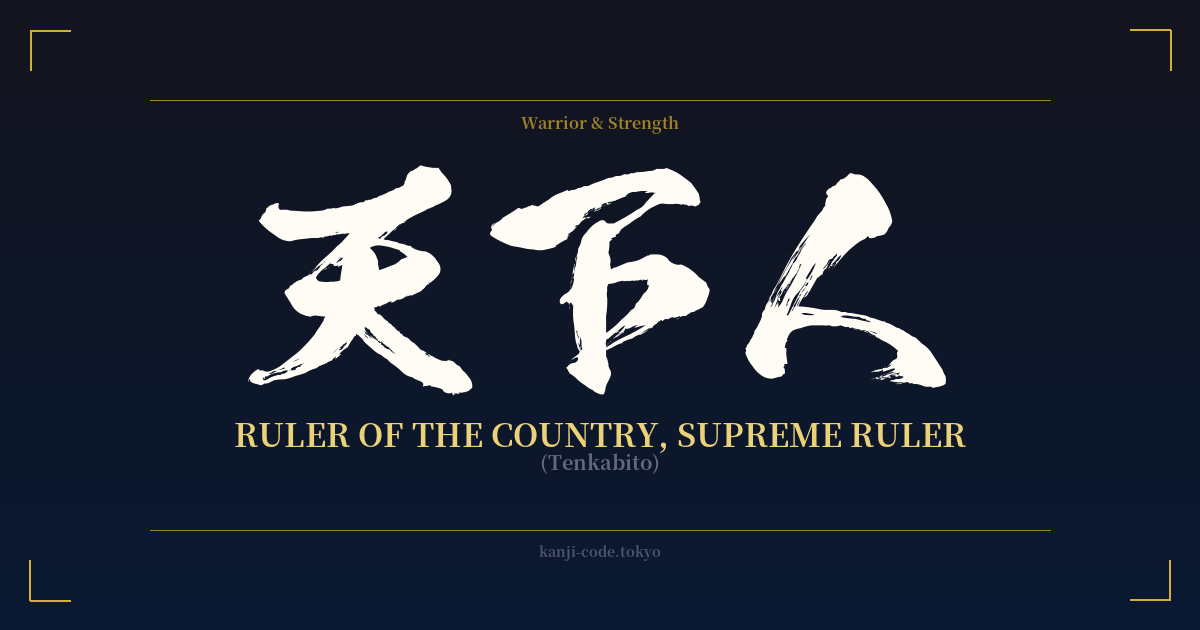
✍️ 天下人 (Tenkabito) — Cultural Context
The term 天下人 (Tenkabito) resonates with some of the most dramatic and formative periods in Japanese history. It literally translates to "person of all under heaven," but its meaning is far more potent: the supreme ruler, the unifier of the realm. This isn't a title one is simply born into; it's a designation earned through unparalleled ambition, strategic genius, and overwhelming military might.
The concept is inextricably linked to the Sengoku period (c. 1467–1615), or the Warring States era, a century of near-constant civil war and social upheaval. During this time, regional lords known as daimyō fought for control of Japan. A Tenkabito was the one who rose above the chaos to bring the entire country under their singular command.
The most famous figures associated with this title are the "Three Great Unifiers of Japan." The first was Oda Nobunaga, a ruthless and brilliant innovator who came closest to total unification. His personal seal read 天下布武 (Tenka Fubu), meaning "to bring the realm under one sword," a perfect expression of the Tenkabito ideal. He was the quintessential man of ambition who sought to become the master of the nation.
After Nobunaga's assassination, his loyal general Toyotomi Hideyoshi completed the unification. Born a peasant, Hideyoshi's rise to become the Tenkabito is one of history's greatest underdog stories. He ruled not as Shōgun, but as the Imperial Regent (Kampaku), proving that the title of Tenkabito transcended official court ranks—it was a statement of de facto power.
Finally, Tokugawa Ieyasu, once a hostage of the Oda clan, patiently outmaneuvered his rivals after Hideyoshi's death. He won the decisive Battle of Sekigahara in 1600, was appointed Shōgun, and established the Tokugawa Shogunate, which would rule Japan for over 250 years of relative peace. He was the final Tenkabito of the era, the one whose victory created a lasting order.
In modern Japan, Tenkabito is often used metaphorically. It can describe someone who has reached the absolute pinnacle of their field, whether in business, sports, or the arts. To call someone the "Tenkabito of the tech industry" implies they have crushed all competition and now dominate the landscape. The word carries a heavy weight of history, ambition, and ultimate victory against all odds.
🖌️ Font Styles for 天下人
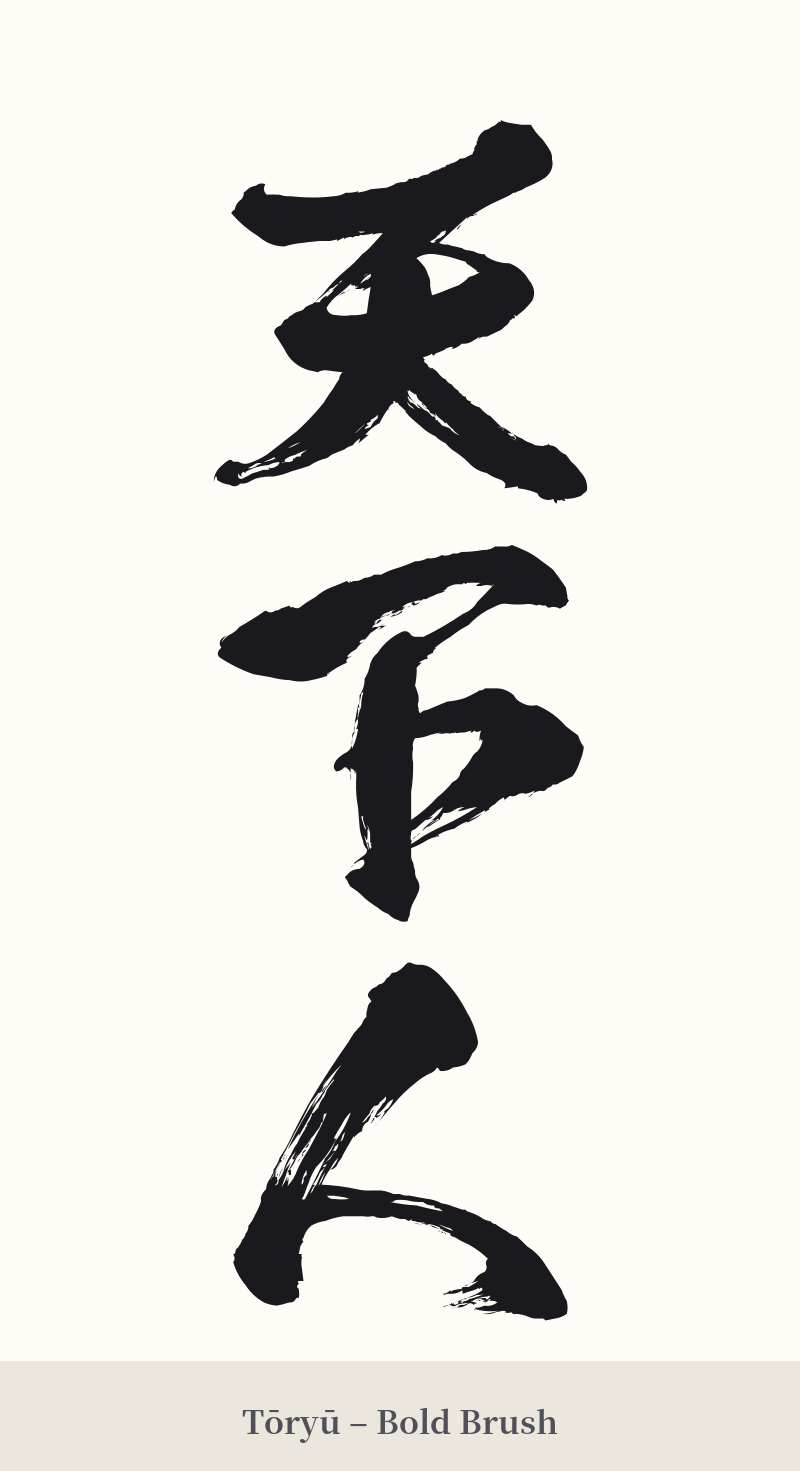
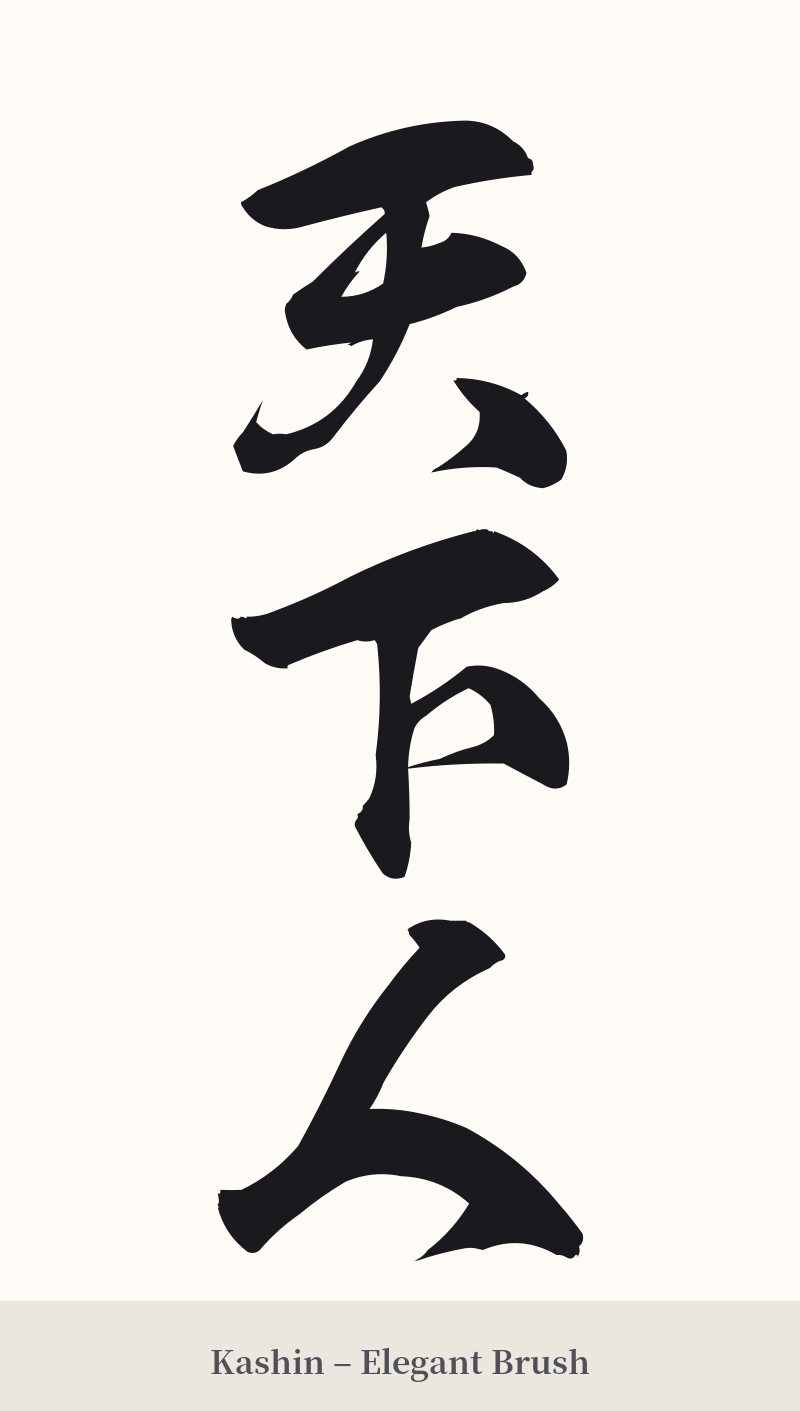
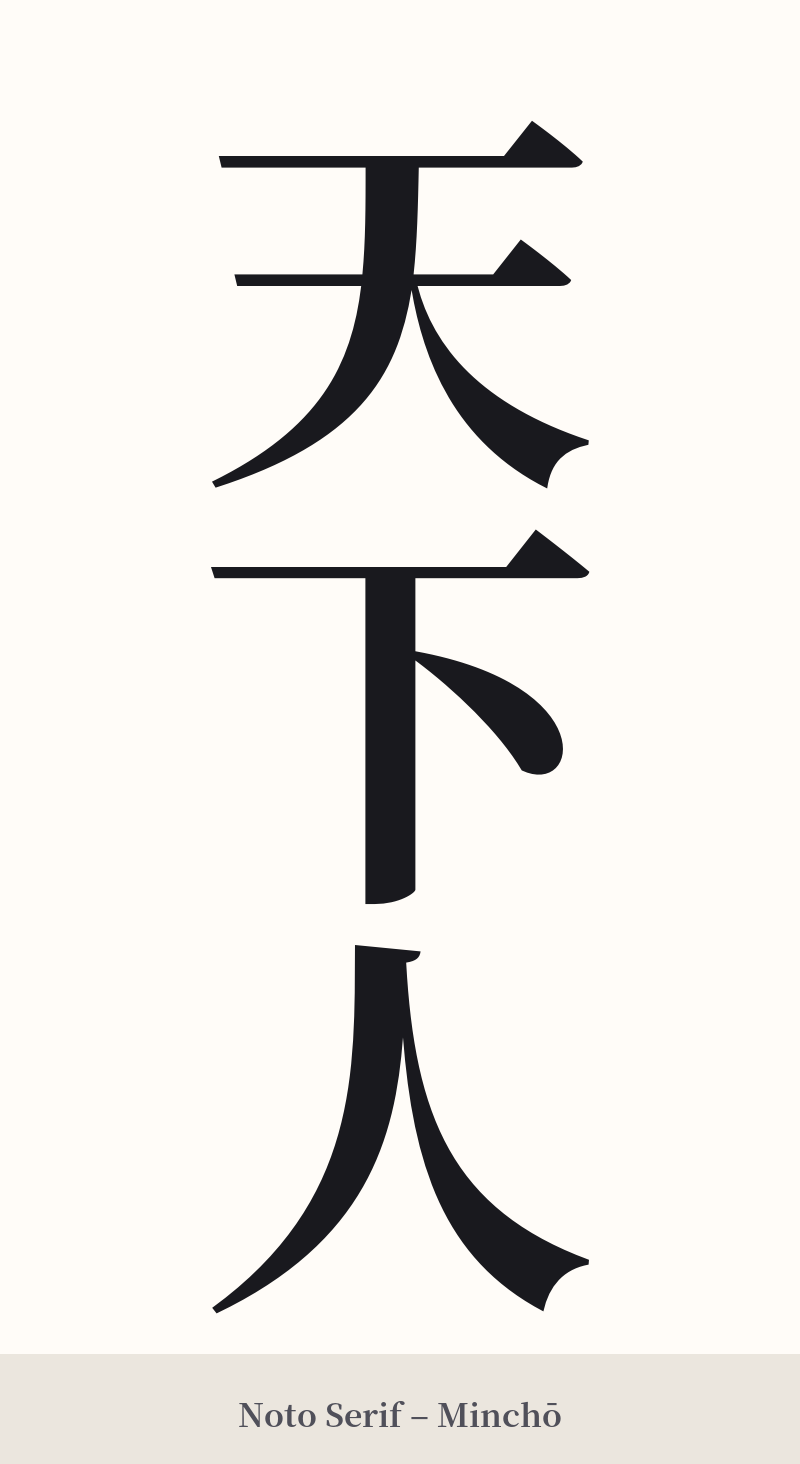
The same kanji can look dramatically different depending on the calligraphy style. Choose a font that matches the mood you want for your tattoo or design.
🎨 Tattoo Suitability
📐 Tattoo Design Guide
For a powerful word like 天下人, the design should reflect its authority and historical weight. As a three-character compound, it works exceptionally well when oriented vertically.
– Placement: A vertical layout on the forearm, the calf, or running down the spine creates a commanding and elegant look. This mimics the traditional way Japanese is written and allows the characters to flow into one another.
– Font Style: The choice of script can dramatically alter the feeling. For a raw, energetic feel that evokes the chaos of the Sengoku period, consider a semi-cursive (Gyōsho) or fully cursive (Sōsho) style. For a more stable, authoritative, and regal look, a crisp block script (Kaisho) is an excellent choice, emphasizing the order brought by the ruler.
– Visual Embellishments: To add more context, you could incorporate the 'kamon' (family crest) of one of the great unifiers. For example, Oda Nobunaga's 'Oda Mokkō' crest or Toyotomi Hideyoshi's 'Gosan no Kiri' crest. Pairing the kanji with a dragon—a symbol of heavenly power and imperial rule—can also amplify its meaning.
Comments