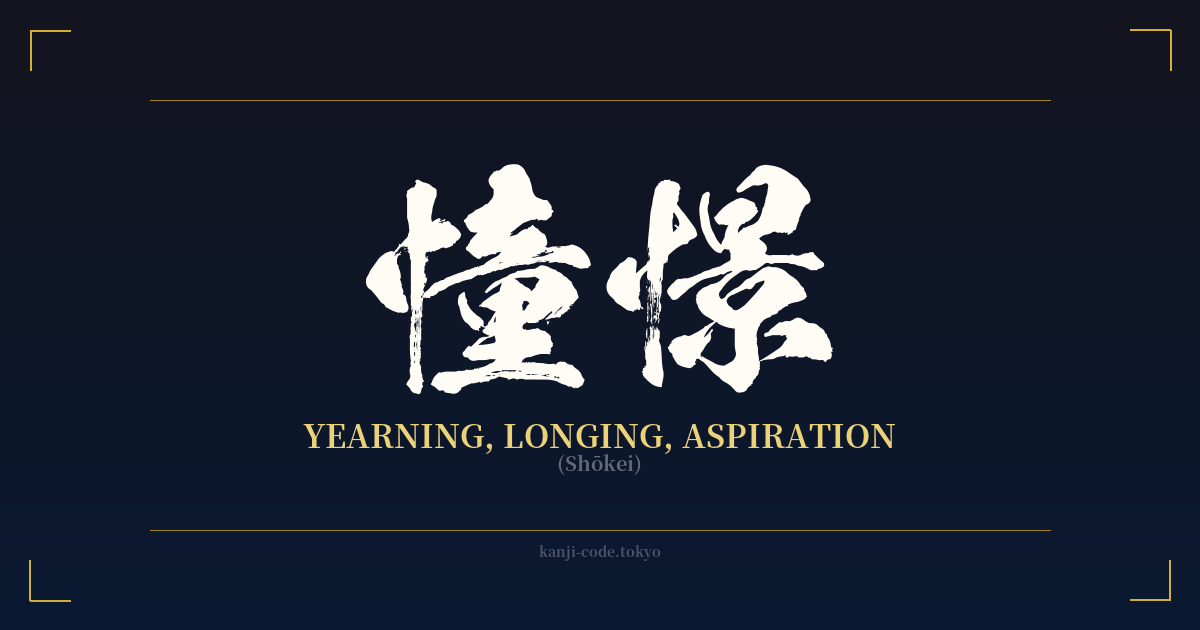
✍️ 憧憬 (Shōkei) — Cultural Context
憧憬 (Shōkei) is a word that captures one of the most poignant and deeply human emotions: a profound and distant yearning. It goes far beyond simple 'wanting' or 'liking.' Shōkei describes a longing for an ideal, a person, a place, or a state of being that feels almost sacred and often unattainable. It’s the feeling of looking up at the stars and aspiring to reach them, knowing full well you cannot.
This term is steeped in literary and artistic nuance. You won’t hear it in casual conversation at a convenience store; instead, it populates the verses of poetry, the lyrics of heartfelt songs, and the pages of novels. It describes the adoration a fan has for a distant idol, the deep respect a student feels for a great master, or the bittersweet pining for a love that can never be. The distance is a key component of Shōkei – the admiration happens from afar, and the object of the yearning is placed on a pedestal.
Culturally, Shōkei connects to the Japanese aesthetic concept of mono no aware, the 'pathos of things.' This is an appreciation for the transient, impermanent nature of beauty. The feeling of Shōkei is beautiful precisely because the object of desire is out of reach. The longing itself becomes a powerful, motivating, and sometimes melancholic force. It is not about possession, but about the purity of the aspiration.
For example, one might feel Shōkei for the romanticized ideal of the samurai era, knowing it's a past that cannot be revisited. A young artist might harbor Shōkei for a legendary painter, striving to emulate their spirit without ever meeting them. It’s a respectful, almost reverent form of admiration.
Unlike a more direct word like 愛 (ai, love), which can be mutual and tangible, Shōkei is often a one-way street. It is an internal state, a fire kept alive by admiration and imagination. It’s the emotion that fuels dreams and pushes individuals toward self-improvement, driven by the image of a far-off ideal. To understand Shōkei is to understand the beauty in the chase, not just the prize.
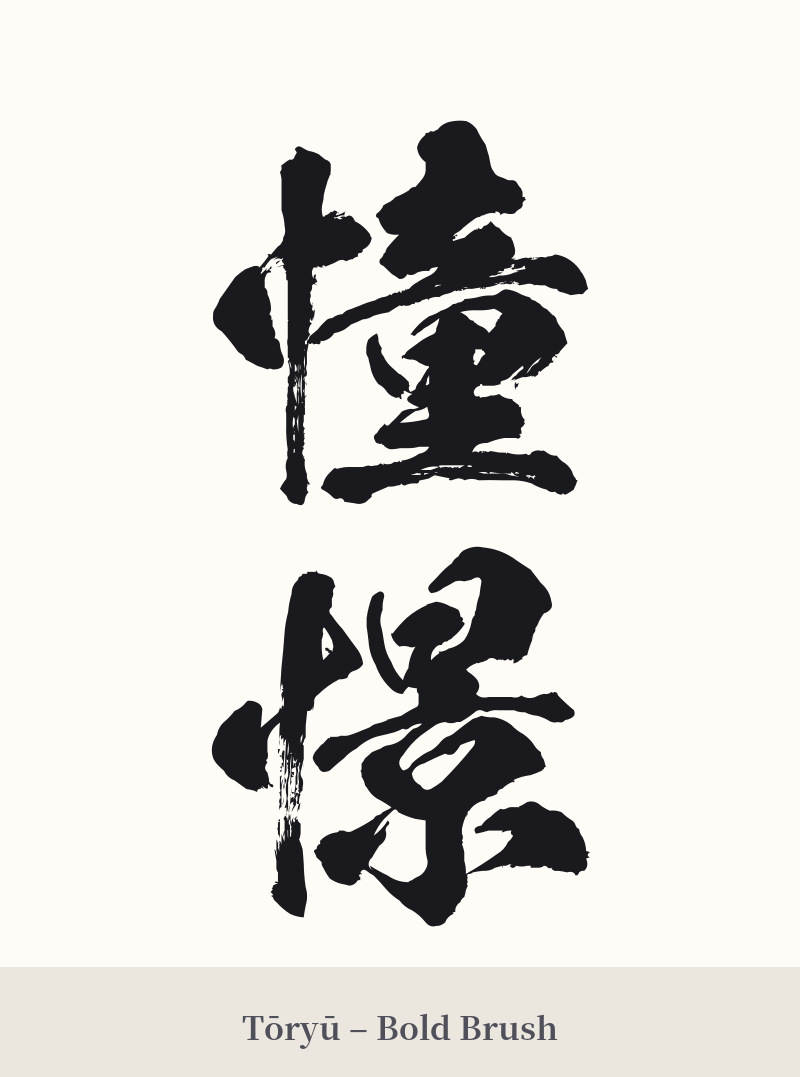
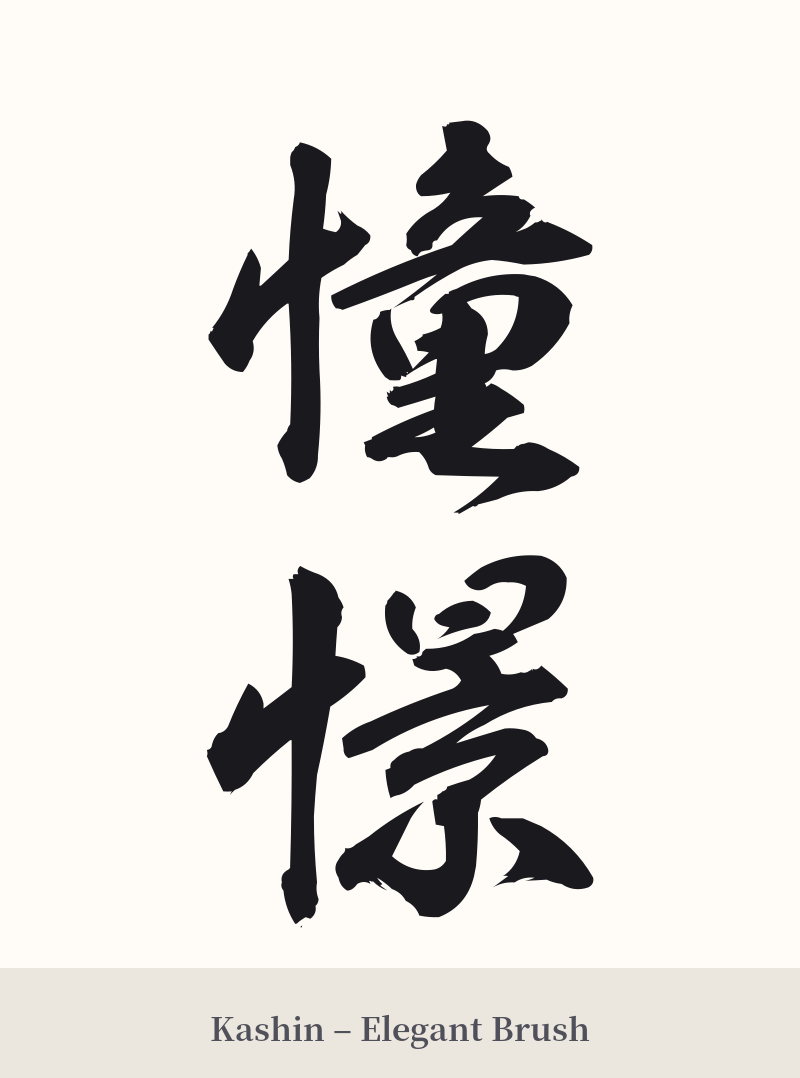
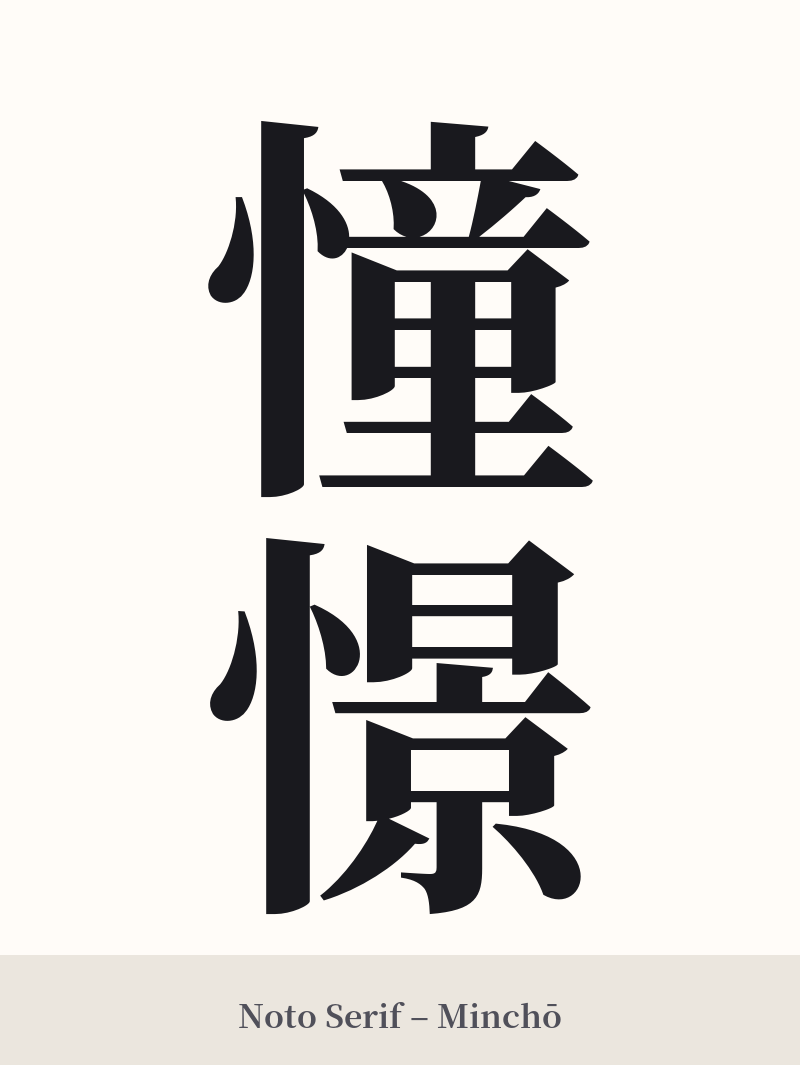
🖌️ Font Styles for 憧憬
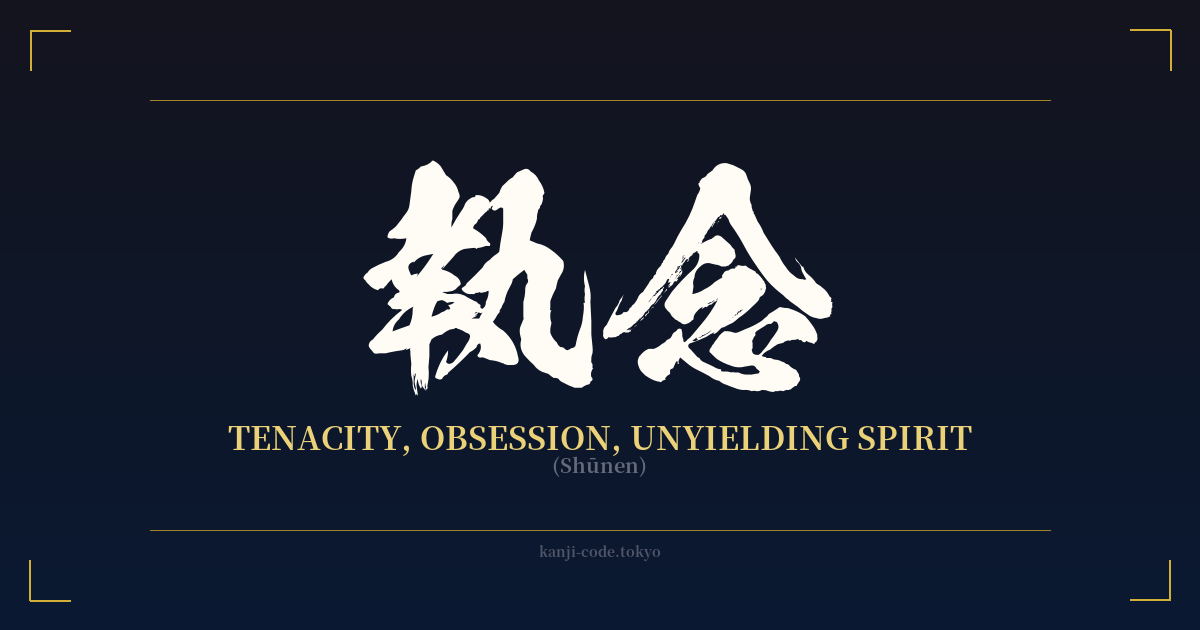
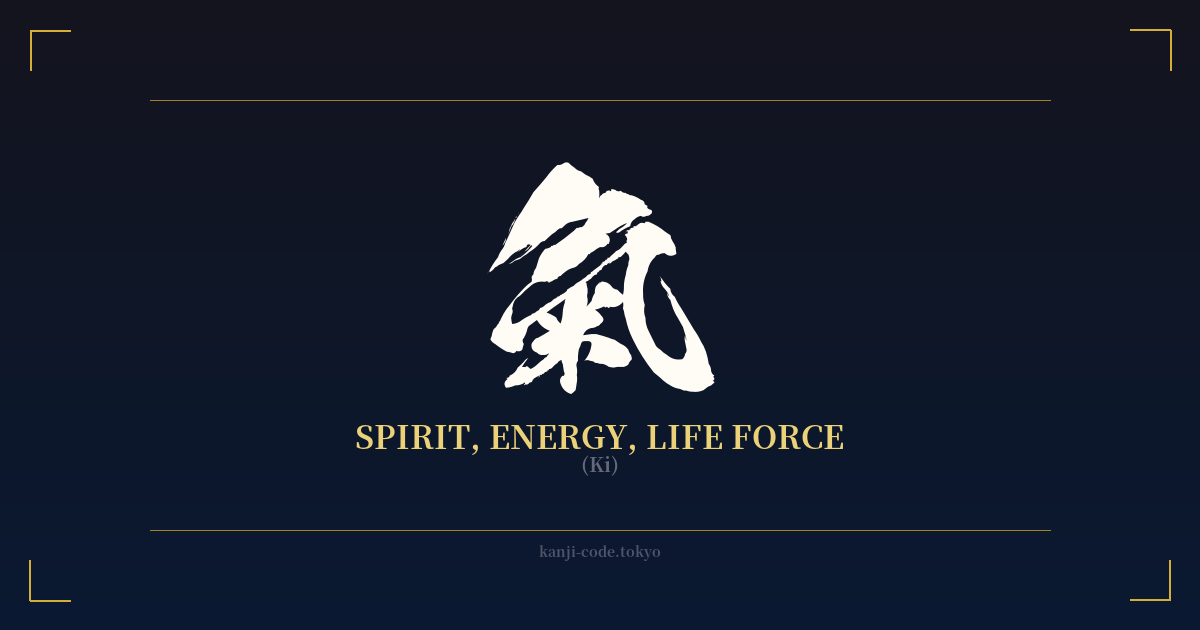
The same kanji can look dramatically different depending on the calligraphy style. Choose a font that matches the mood you want for your tattoo or design.
🎨 Tattoo Suitability
📐 Tattoo Design Guide
The complexity of 憧憬 demands careful consideration in a tattoo design. The two characters are visually dense, each with 15 strokes, so clarity is paramount.
– Placement: Choose a larger, flatter area of the body to allow for sufficient detail. The back, chest, forearm, or calf are excellent choices. Avoid small or highly curved areas like the wrist or ankle, as the lines could blur over time.
– Style: A skilled calligrapher is essential. A semi-cursive style (gyōsho) can capture the flowing, emotional quality of yearning. For a bolder, more intense statement, a precise block script (kaisho) would highlight the structure and strength of the aspiration.
– Visual Elements: Consider pairing 憧憬 with imagery that symbolizes the object of your yearning. This could be a distant star, a mountain peak shrouded in mist, or a single cherry blossom petal falling—visual metaphors for something beautiful and just out of reach.
Comments