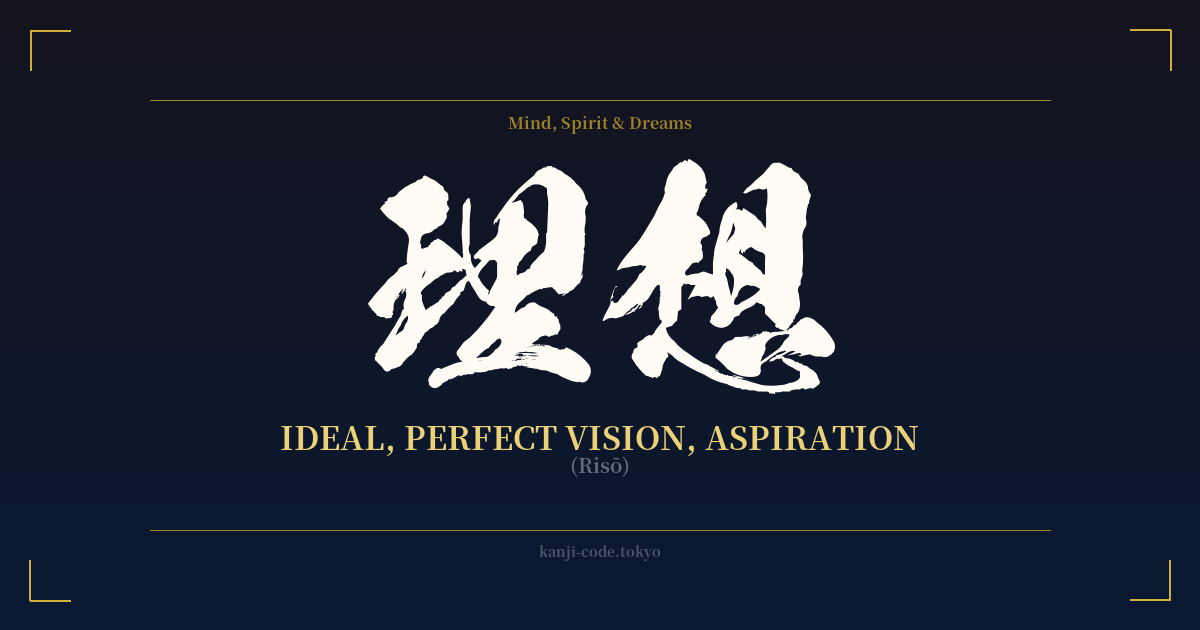
✍️ 理想 (Risō) — Cultural Context
The Japanese word 理想 (Risō) translates to 'ideal,' but its meaning runs much deeper than a simple preference. It represents a perfect vision, a standard of excellence, or an aspiration that is constructed through both logic and feeling. It is a concept born from the intersection of rational thought and heartfelt desire.
To understand Risō, we must look at its component kanji: 理 (ri) and 想 (sō). The first character, 理, stands for reason, logic, and the underlying principles that govern the universe. It suggests a structured, ordered, and justifiable foundation. The second character, 想, means thought, idea, or conception, and it contains the radical for 'heart' (心) at its core. This implies that the thought is not merely intellectual but also deeply felt and imagined.
Therefore, 理想 is not a whimsical fantasy. It is an 'ideal' that has been carefully considered and conceptualized—a 'reasoned thought.' This distinguishes it from a more general word like 夢 (yume), or 'dream.' While a dream can be a fleeting wish, an ideal (risō) is a destination you chart with a map. It’s the blueprint for a better self, a perfect relationship, or a more just society.
In Japanese culture, the pursuit of an ideal is both celebrated and treated with caution. Having a 'risō' is a powerful motivator for self-improvement and innovation. Phrases like 理想の生活 (risō no seikatsu – ideal life) or 理想のパートナー (risō no pātonā – ideal partner) are common. They represent the peak of what one hopes to achieve or find.
However, there is also an awareness of the gap between the ideal and the real. The word for 'reality' is 現実 (genjitsu), and it is often placed in direct opposition to 'risō.' The expression 理想は高い (risō wa takai), meaning 'the ideals are high,' can be a compliment to one's ambition or a subtle critique of their lack of realism. This duality—the inspirational power of a perfect vision versus the pragmatic constraints of reality—is a central theme in Japanese literature, art, and personal philosophy. A tattoo of 理想, therefore, is a statement of ambition, a commitment to a personal North Star, and an acknowledgment of the beautiful struggle to bring a perfect vision into an imperfect world.
🖌️ Font Styles for 理想
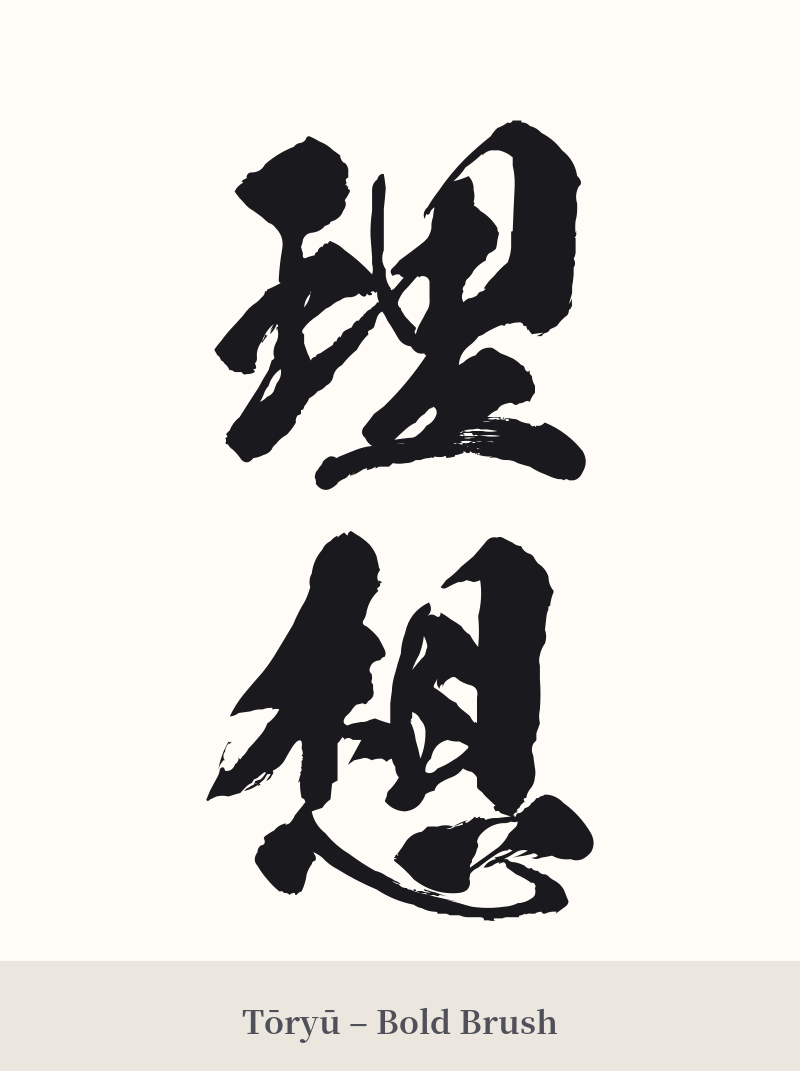
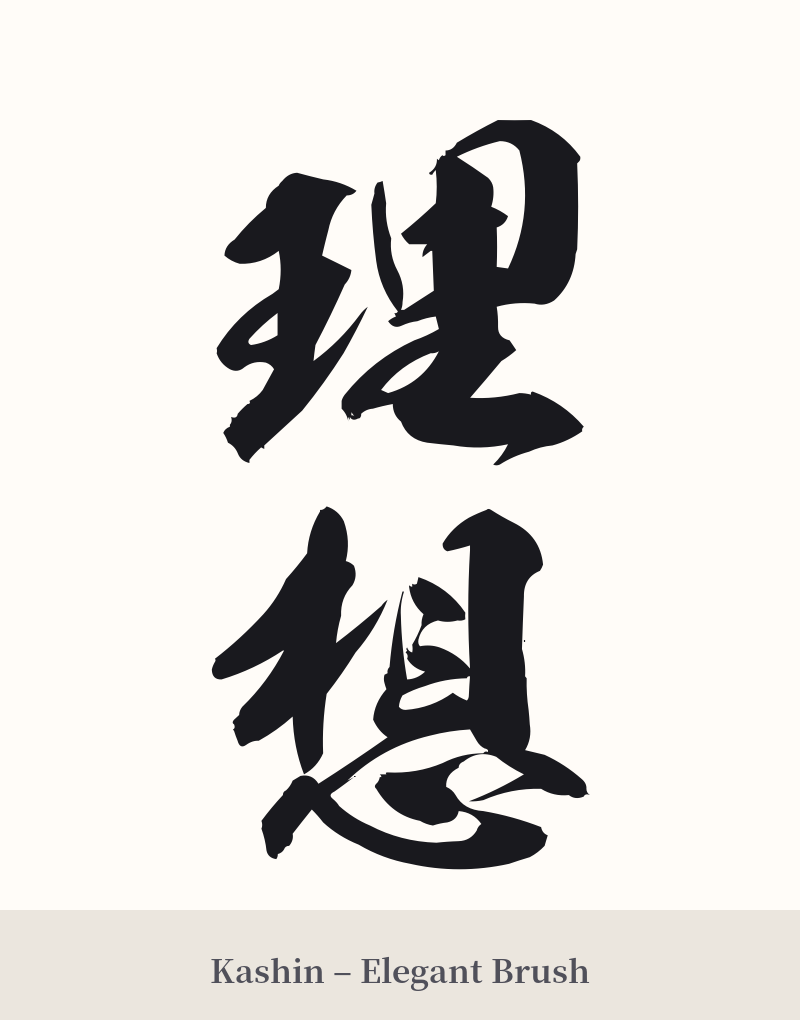
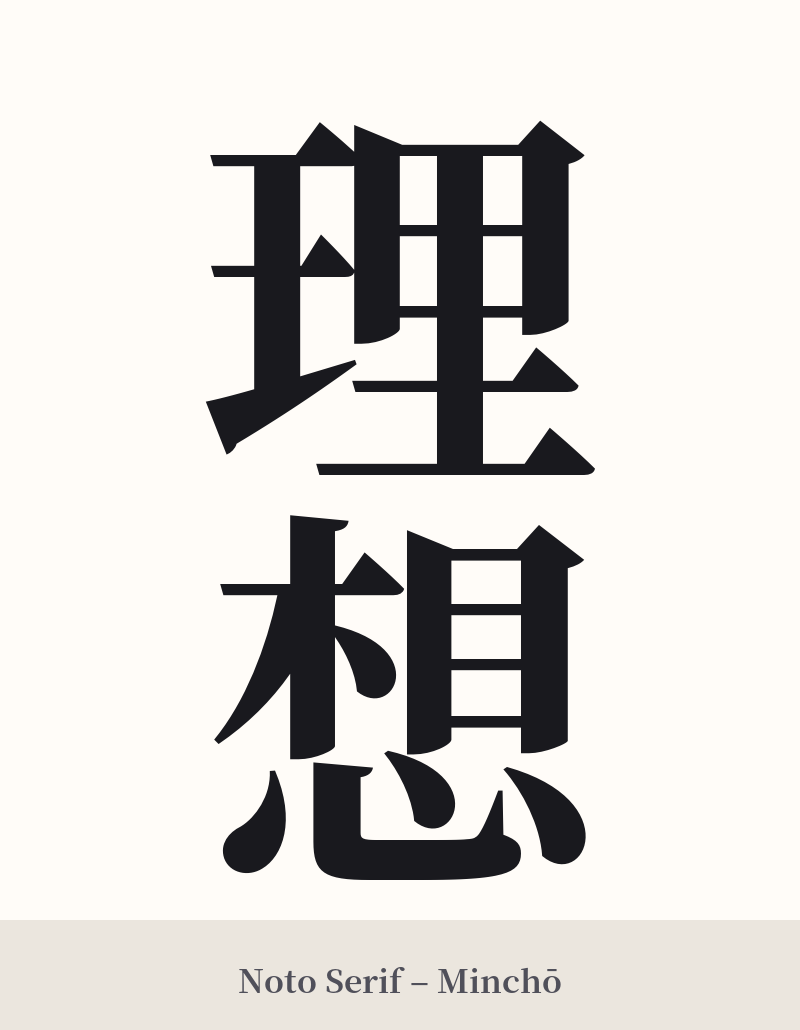
The same kanji can look dramatically different depending on the calligraphy style. Choose a font that matches the mood you want for your tattoo or design.
🎨 Tattoo Suitability
📐 Tattoo Design Guide
A tattoo of 理想 (Risō) is a declaration of your personal standard and aspirations. The design should reflect the balance between its intellectual and heartfelt nature.
– Placement: A vertical alignment on the forearm, spine, or along the bicep creates a sense of purpose and upward striving. For a more grounded and stable feel, a horizontal placement across the chest or upper back works well.
– Font Styles: – Kaisho (楷書): This standard, block-like script emphasizes the 'reason' and 'logic' (理) in the word. It gives the tattoo a feeling of solidity, structure, and timelessness. – Gyōsho (行書): A semi-cursive style adds a touch of fluidity and movement, reflecting the active pursuit and 'thought' (想) behind the ideal. It's perfect for conveying a sense of journey and aspiration. – Mincho (明朝): This classic, print-style font is elegant and intellectual, suitable for someone who connects with the philosophical depth of the word.
– Visual Tips: Consider the interplay between the two characters. 理 is more angular and structured, while 想 has a softer feel with the 'heart' radical (心) at its base. A skilled artist can use this contrast to create a visually balanced and dynamic piece. You could also incorporate a symbol of your personal ideal, such as a compass for guidance or a lotus flower for purity, alongside the kanji.
Comments