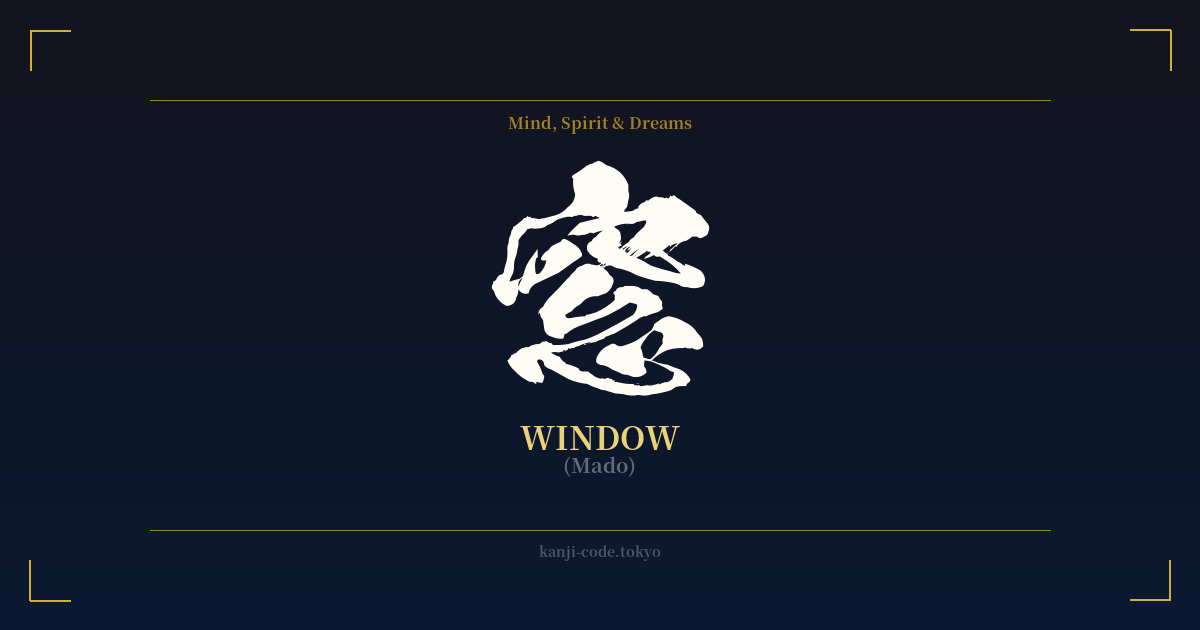
✍️ 窓 (Mado) — Cultural Context
The Japanese kanji for window, 窓 (mado), is a character that beautifully bridges the literal and the metaphorical. On the surface, it simply denotes an opening in a wall that allows light and air to pass through. Yet, woven into its very structure and cultural usage is a much deeper story about perspective, connection, and the space between the inner and outer worlds.
The character itself offers a glimpse into this duality. The top part, 穴, is the radical for 'hole' or 'cavity,' clearly indicating an opening. Below this sits a component derived from a character that once depicted a lattice or flue, over the character for 'heart' or 'mind' (心). This composition paints a picture not just of a physical opening, but of an opening that affects the heart or mind—a window to the soul.
In traditional Japanese architecture, windows are not mere functional elements. They are integral to the aesthetic philosophy of 'shakkei,' or 'borrowed scenery.' A window, often a circular 'marumado' or a sliding 'shōji' screen, is meticulously placed to frame a perfect, curated view of the garden or landscape outside. The window doesn't just let you see outside; it transforms the outside into a living work of art, brought into the interior space. It’s a deliberate act of controlling perspective and fostering a connection with nature.
This architectural principle extends into the character's metaphorical life. 窓 can represent a 'window of opportunity,' a chance to see and seize something new. The expression 'kokoro no mado' (心の窓) literally means 'window of the heart/mind,' referring to one's openness, perspective, or the way one reveals their inner self. A person with a 'wide window' is open-minded, while a 'closed window' suggests someone who is shut off from the world.
Conversely, the term 'madogiwazoku' (窓際族), meaning 'the window-side tribe,' has a more melancholic connotation. It refers to older, passed-over employees in Japanese companies who are given desks by the window with no real work to do, left to simply look outside as their careers fade. Here, the window symbolizes a painful separation from the central, active life of the company.
From framing a beautiful landscape to symbolizing a career's end, 窓 (mado) is a powerful character. It reminds us that a window is more than just glass and a frame; it's a boundary that defines our relationship with the world outside, shaping what we see and how we see it.
🖌️ Font Styles for 窓
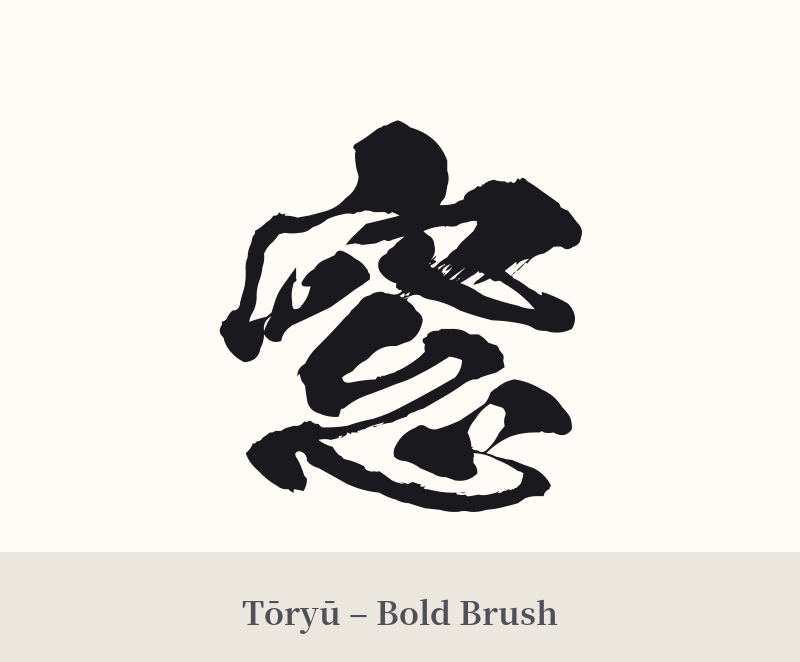
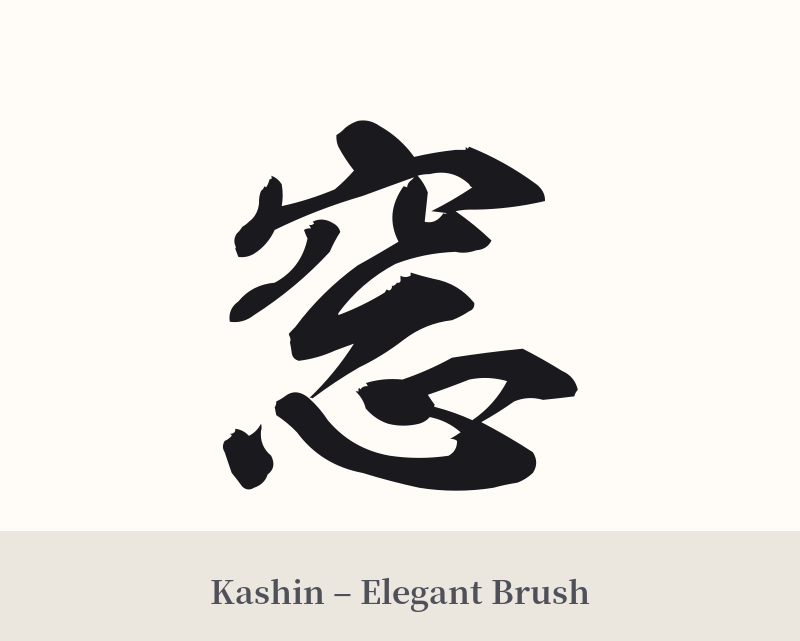
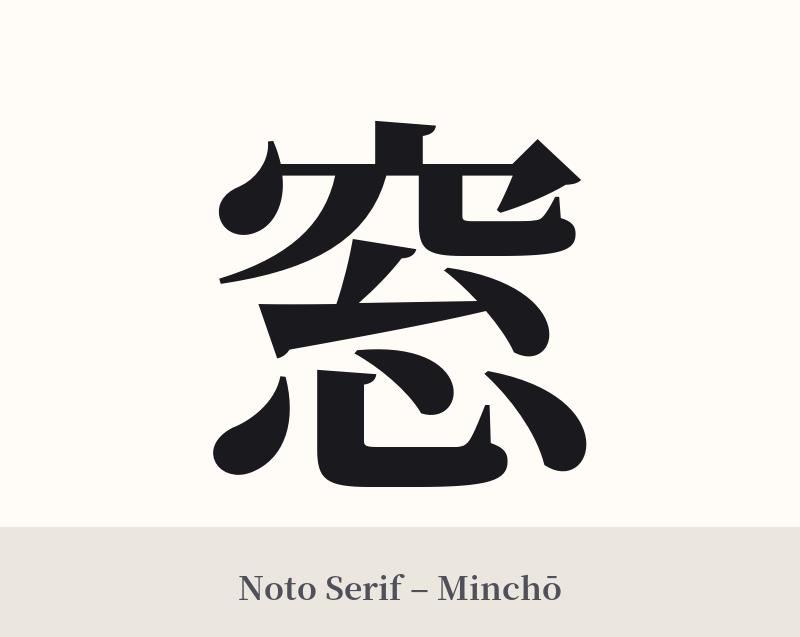
The same kanji can look dramatically different depending on the calligraphy style. Choose a font that matches the mood you want for your tattoo or design.
🎨 Tattoo Suitability
📐 Tattoo Design Guide
The kanji 窓 (mado) offers rich visual and symbolic potential for a tattoo. Its balanced structure works well in various styles and placements.
– Placement: Consider places that align with the idea of 'opening' or 'perspective.' The forearm, where it can be easily seen, works well. The back of the neck or between the shoulder blades can suggest a 'window to the soul.' A placement on the ribcage can feel like a personal, private window.
– Style: A crisp, architectural Mincho style font would emphasize the 'frame' aspect of the window. A flowing, expressive calligraphy (shodō) style can highlight the poetic, emotional side of the character. For a more conceptual design, the kanji itself could be used as a frame, with a small, subtle image visible 'through' it.
– Visual Tips: The open spaces within the character are important. Ensure your artist keeps these areas clean and defined, especially the 'hole' radical at the top and the 'heart' radical at the bottom. This preserves the character's legibility and symbolic integrity.

Comments