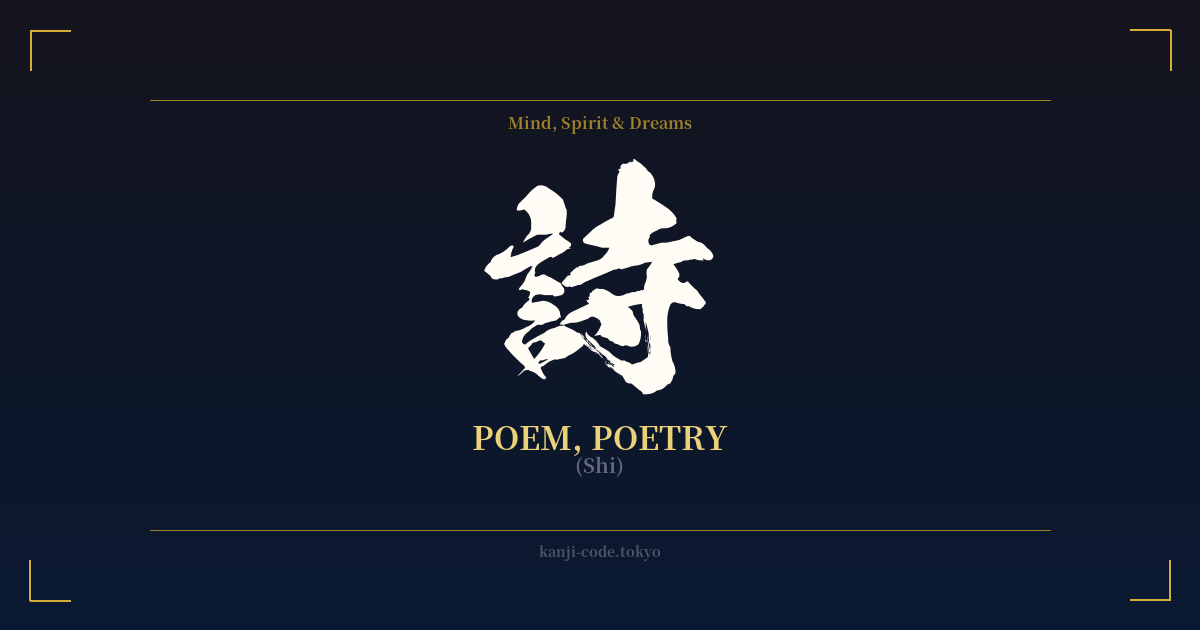
✍️ 詩 (Shi) — Cultural Context
The kanji 詩 (shi) is a testament to the power and beauty of structured language. Its very form tells a story. It is composed of two distinct parts: the radical 言 (gon/gen) on the left, meaning 'words' or 'speech,' and the character 寺 (ji/tera) on the right, meaning 'temple.' This combination beautifully illustrates the essence of poetry: words that are as measured, sacred, and thoughtfully arranged as the practices within a temple. It's not just talking; it's a higher form of expression, where language is refined to its most potent and evocative state.
In Japan, poetry has been a cornerstone of the culture for over a millennium. The earliest and most revered anthology, the Man'yōshū (Collection of Ten Thousand Leaves), compiled in the 8th century, contains thousands of poems that capture the full spectrum of human experience. This tradition evolved into classical forms like waka, a 31-syllable verse, which was the preferred medium of aristocrats and courtiers in the Heian period. To be skilled in composing poetry was a sign of refinement, intelligence, and sensitivity.
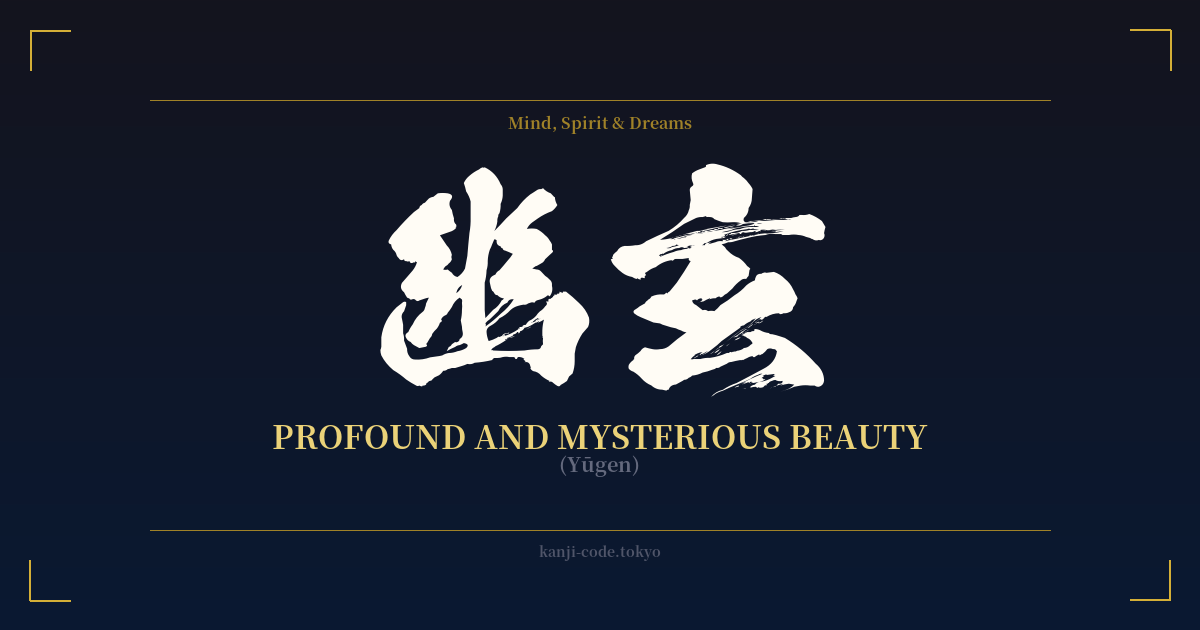
Perhaps the most famous form of Japanese poetry known to the world is the haiku. Master poets like Matsuo Bashō used this concise 5-7-5 syllable structure to capture a fleeting moment in nature and connect it to a deeper, often Zen-inspired, feeling. The spirit of 詩 is alive in every haiku—the discipline of its form holds a universe of meaning. It embodies the Japanese aesthetic of yūgen, or profound, subtle grace, and the awareness of the impermanence of things, known as mono no aware.
Beyond literature, 詩 is deeply intertwined with other traditional arts. In shodō (calligraphy), famous poems are a common subject, with the artist's brushstrokes adding another layer of emotion and interpretation to the words themselves. A poem might be inscribed on a hanging scroll, a ceramic vase, or a painted screen, integrating it into the visual and spatial environment. This demonstrates that in Japanese culture, poetry is not meant to be confined to a page but to be lived with and experienced through multiple senses.
Choosing the kanji 詩 is to embrace this rich heritage. It represents not just the product—a poem—but the entire process: the quiet contemplation, the careful selection of words, the distillation of complex emotion into a pure and elegant form, and the profound connection between the human heart and the natural world.
🖌️ Font Styles for 詩
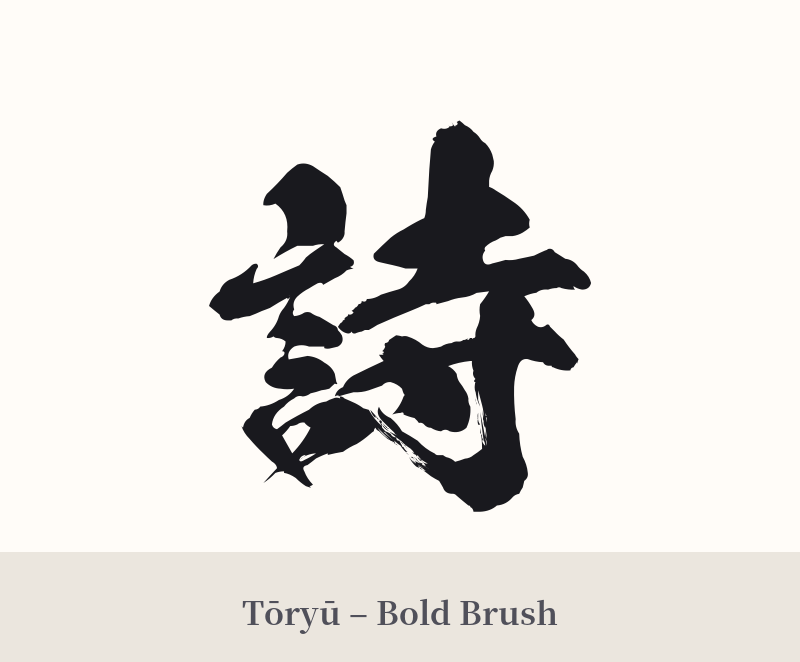
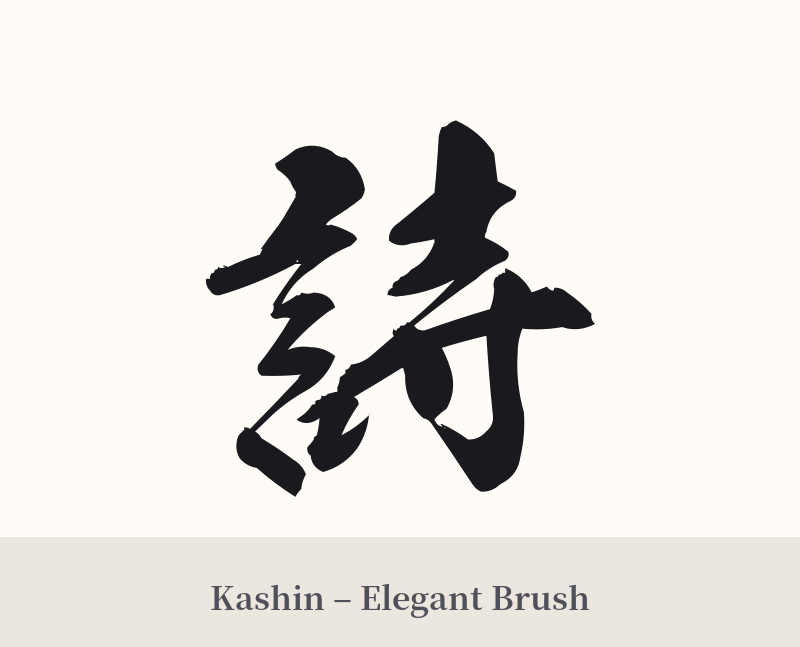
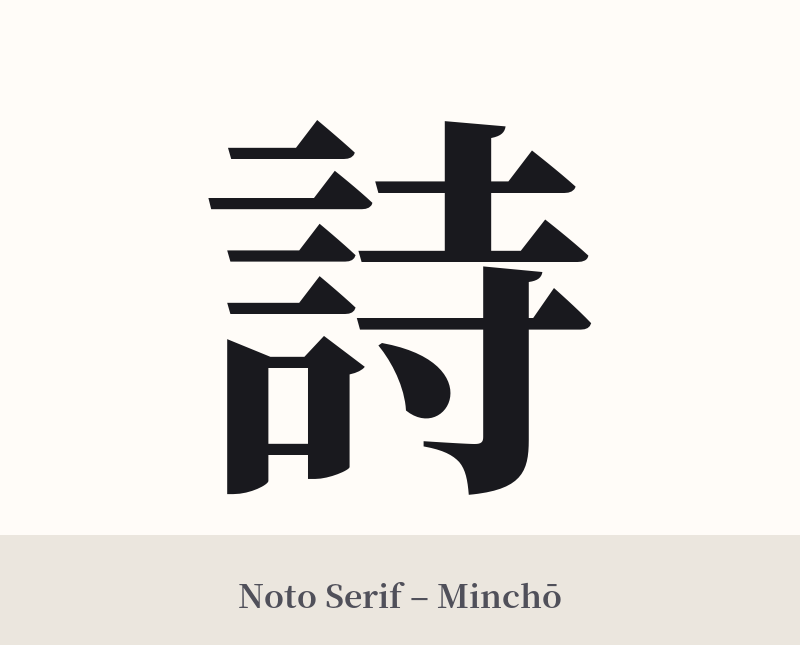
The same kanji can look dramatically different depending on the calligraphy style. Choose a font that matches the mood you want for your tattoo or design.
🎨 Tattoo Suitability
📐 Tattoo Design Guide
The kanji 詩 (shi) is elegant and balanced, making it suitable for a variety of tattoo designs that emphasize grace and meaning.
– Placement: Consider areas that allow for a vertical orientation, which complements the character's structure. The inner forearm, the calf, or running along the spine or ribcage are excellent choices. For a more subtle placement, the back of the neck or behind the ear can work well if the size is appropriate.
– Font Style: The style of calligraphy can dramatically alter the mood. A clean, precise kaisho (block script) emphasizes the order and structure inherent in poetry. For a more fluid and artistic feel, a flowing gyōsho (semi-cursive) or a dynamic sōsho (cursive) script can evoke the passion and emotion of the creative process.
– Visual Elements: To enhance its meaning, consider pairing 詩 with imagery associated with Japanese poetry. Common motifs include a single cherry blossom petal, a crescent moon, a maple leaf, a dragonfly, or even a simple Enso circle. A design that mimics a brushstroke or a splash of ink can also beautifully frame the character, grounding it in the art of calligraphy.
Comments