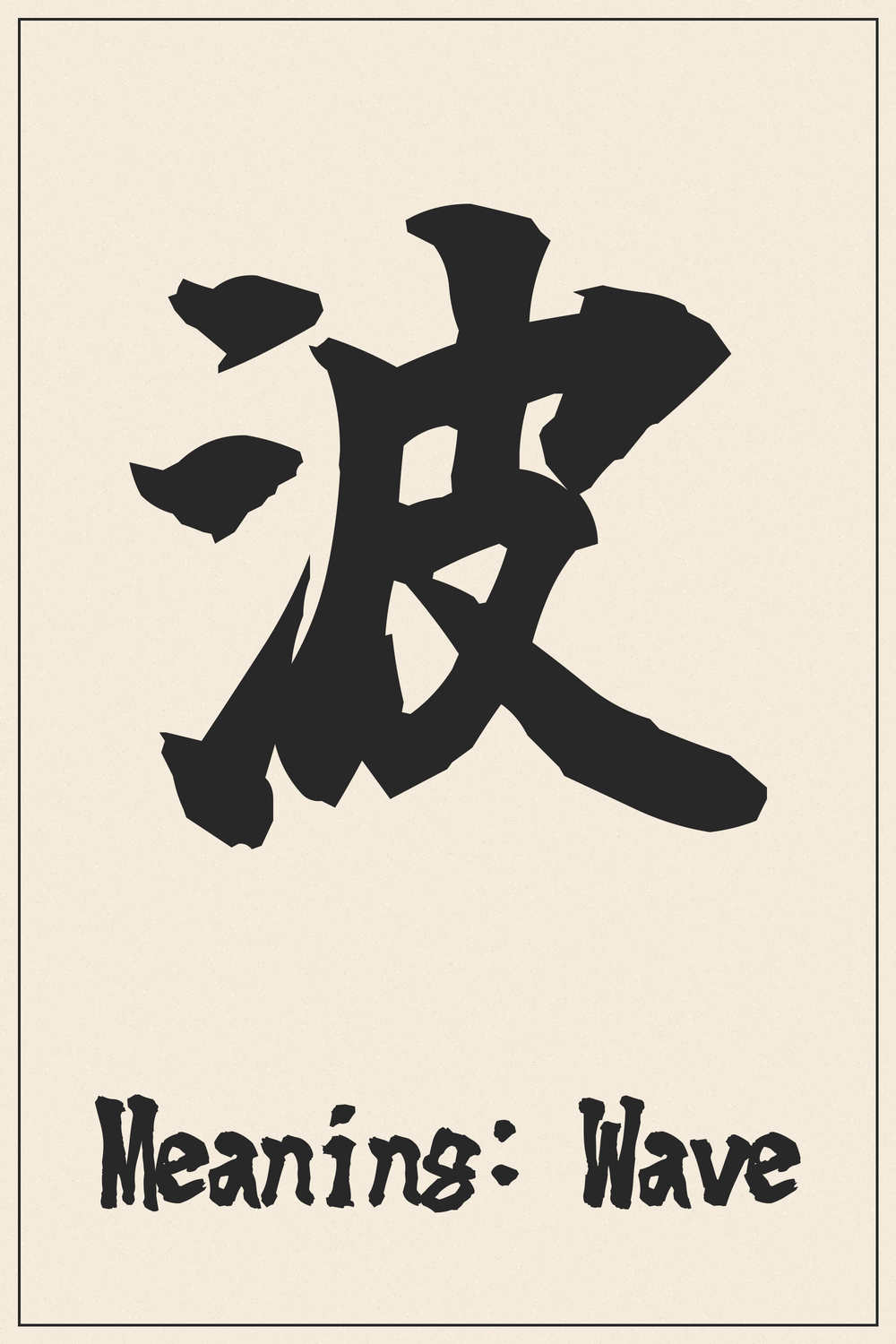
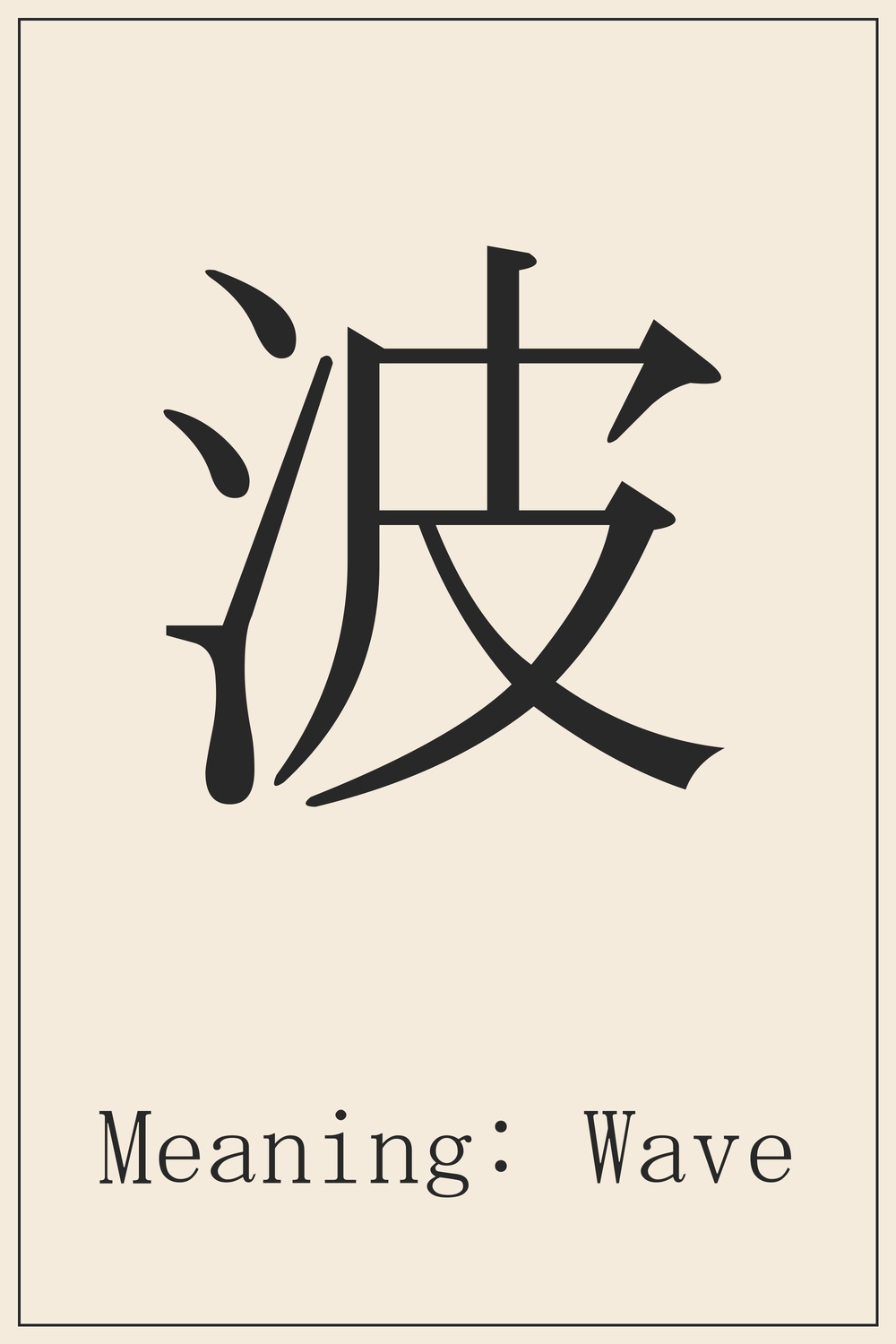
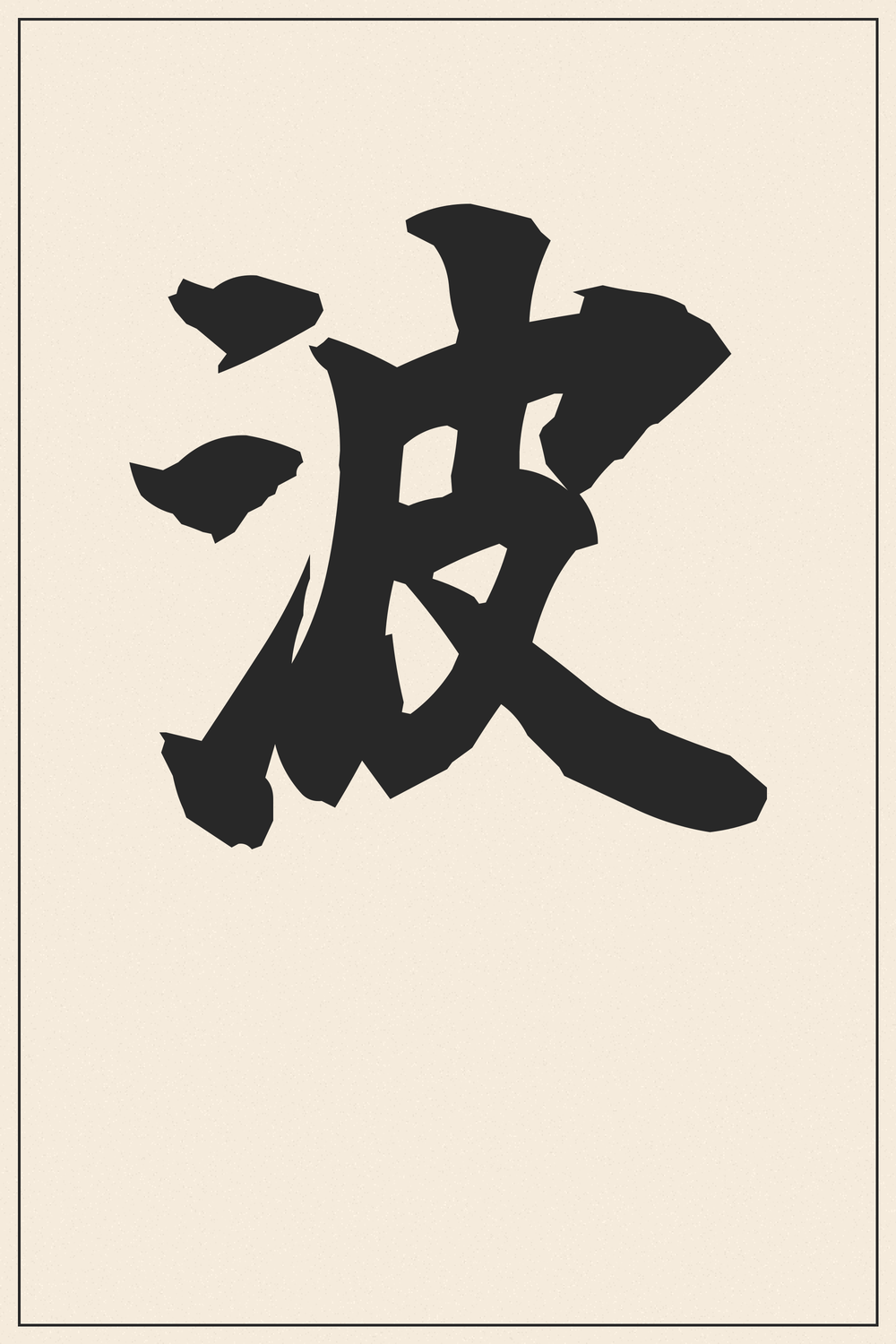
The Kanji 波 embodies the relentless power and serene beauty of the ocean’s waves. It represents movement, change, and the persistent force of nature.
The atmosphere of a Kanji character changes dramatically depending on the font style. A character that looks elegant in a brush style might look bold and modern in a different font.
Recommendation:
Since a tattoo is permanent, we strongly recommend comparing various font styles beyond what is shown here. Use our designs as a trusted reference for the correct structure, but feel free to explore different artistic variations to find the perfect match for your vision.
The Deep Meaning Behind 波
The Kanji 波 (nami) originates from an understanding of water’s dynamic forms. It combines components that visually and phonetically evoke the imagery of water in motion, specifically the breaking and spreading action characteristic of a wave.
Culturally, waves hold significant symbolism in Japan, representing both the transient nature of life (mono no aware) and enduring strength. From the iconic woodblock print ‘The Great Wave off Kanagawa’ by Hokusai to its presence in traditional folklore, 波 signifies change, resilience, and the vastness of nature’s power.
Kanji Breakdown
The character 波 is comprised of two key components, each contributing to its overall meaning and sound.
Meaning: Water radical. This radical is consistently found in Kanji related to liquids, rivers, and aquatic phenomena, directly linking 波 to its fundamental element.
Meaning: Skin, hide, or to break open. In 波, 皮 primarily serves as a phonetic component, giving the character its ‘ha’ or ‘pa’ sound, while subtly suggesting the idea of the water’s ‘surface’ breaking or spreading.
Conclusion
The Kanji 波 (nami) is a profound symbol of the ocean’s majesty and the cyclical nature of existence. It represents both overwhelming force and serene beauty, embodying the constant ebb and flow that defines our world and our lives.
Choosing 波 for a tattoo is to embrace a connection to the enduring power of nature, reflecting resilience, adaptability, and the serene acceptance of change. Its visual appeal and deep meaning make it a truly compelling choice.
Comments