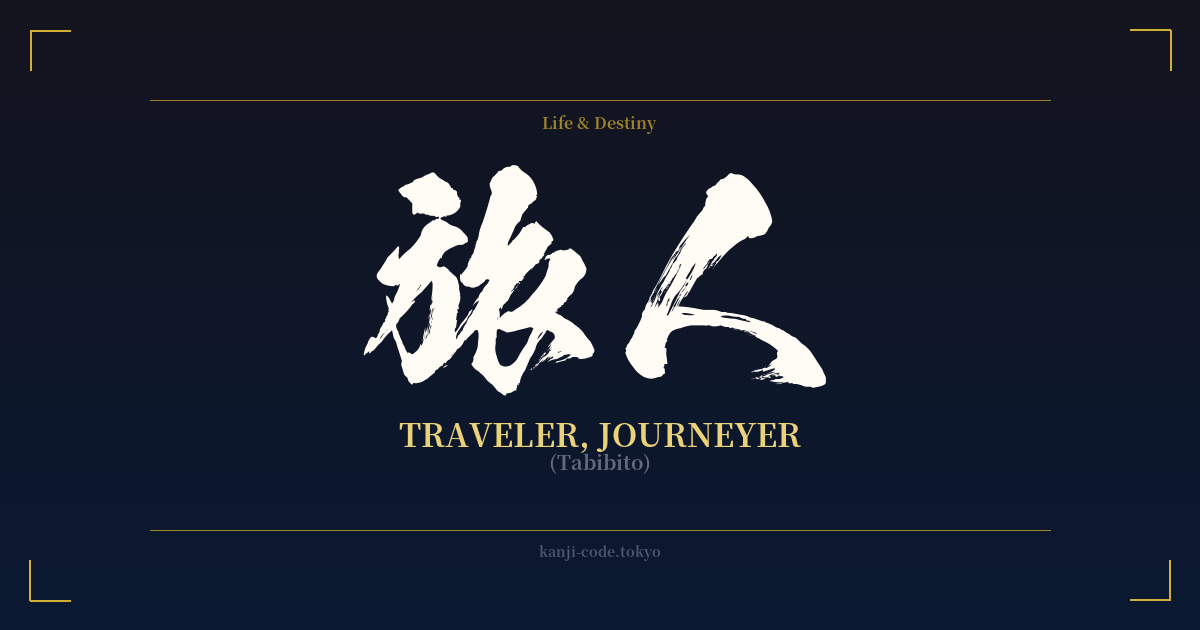
✍️ 旅人 (Tabibito) — Cultural Context
旅人 (Tabibito) is a word that resonates deeply within Japanese culture, capturing a spirit of wandering, discovery, and the profound journey of life itself. On the surface, it simply means “traveler,” but its essence goes far beyond the modern concept of a tourist. The term carries a poetic, almost romantic weight, evoking images of a lone figure on a path, seeking knowledge, experience, or enlightenment.
Historically, travel in Japan was often a difficult and perilous undertaking. During the Edo period (1603-1868), movement between domains was heavily restricted by the shogunate. To travel, one needed official permits, and checkpoints were numerous. This context imbued the figure of the traveler with a sense of freedom and mystique. The tabibito was someone who existed outside the rigid social structures of the time.
Perhaps the most famous tabibito in Japanese history is the haiku master Matsuo Bashō. His seminal work, “Oku no Hosomichi” (The Narrow Road to the Deep North), is a travel diary in prose and verse that chronicles his long journey on foot through northern Japan. Bashō’s travels were not for leisure; they were a spiritual and artistic pilgrimage. He embodied the ideal of the traveler as a seeker, finding profundity in the fleeting moments and simple beauty of the landscapes he passed through. This has cemented the image of the tabibito as a philosopher and an artist, one who journeys to understand the world and their place in it.
This idea of travel as a spiritual quest is also central to the many pilgrimage routes that crisscross Japan, such as the Shikoku Pilgrimage of 88 temples or the ancient Kumano Kodō trails. Pilgrims, known as o-henro-san, are a type of tabibito, undertaking a physically and mentally demanding journey for spiritual purification and merit.
In modern times, while travel has become accessible, the word 旅人 (Tabibito) retains its classic, introspective nuance. It's often used in songs, literature, and anime to describe a character on a quest for self-discovery, someone who is not just moving from place to place, but is on a journey to find their purpose. It speaks to the wanderlust in the human soul and the belief that the path itself is as important as the destination.
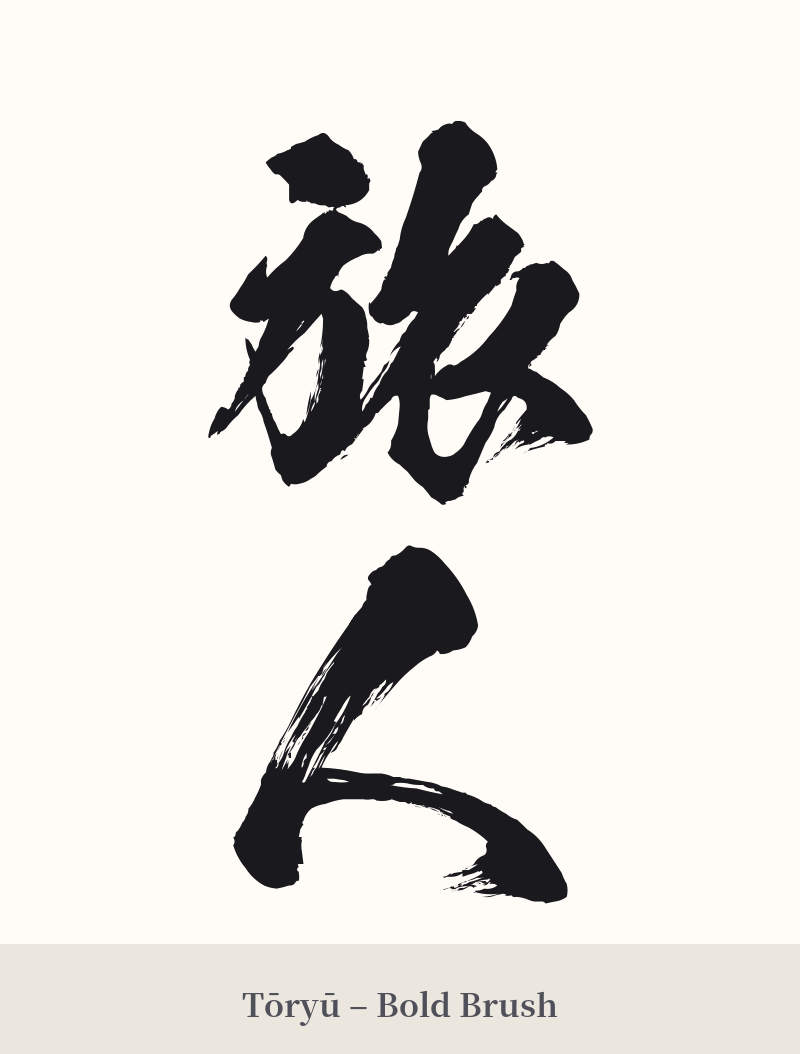
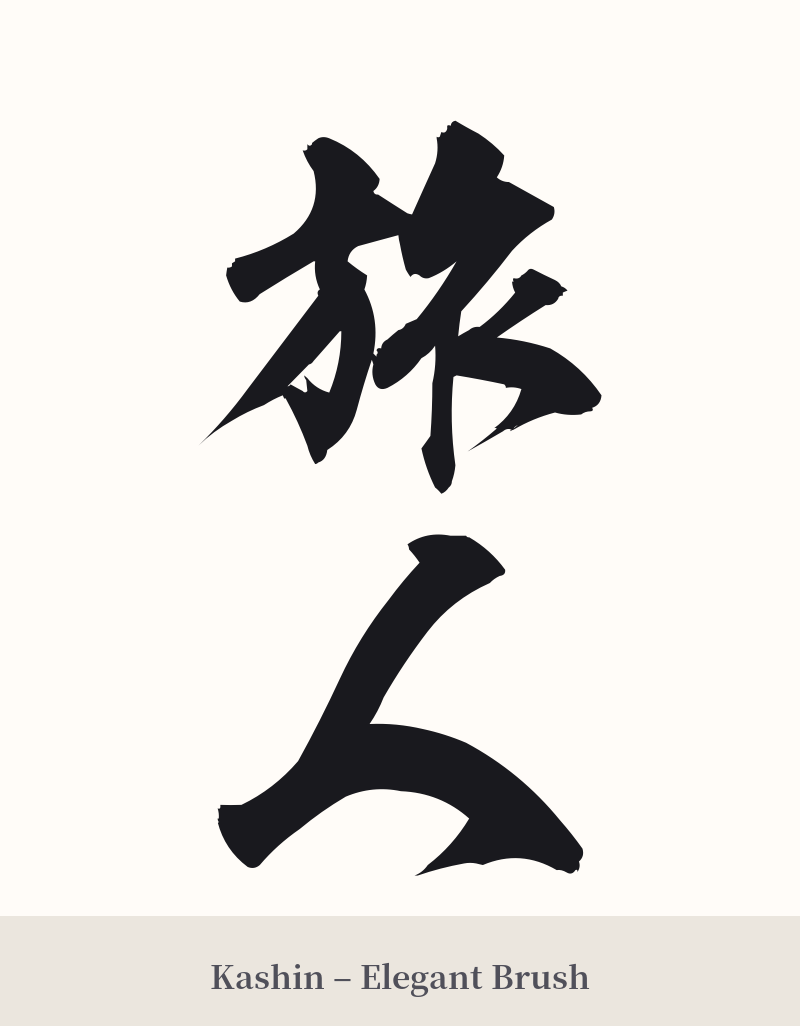
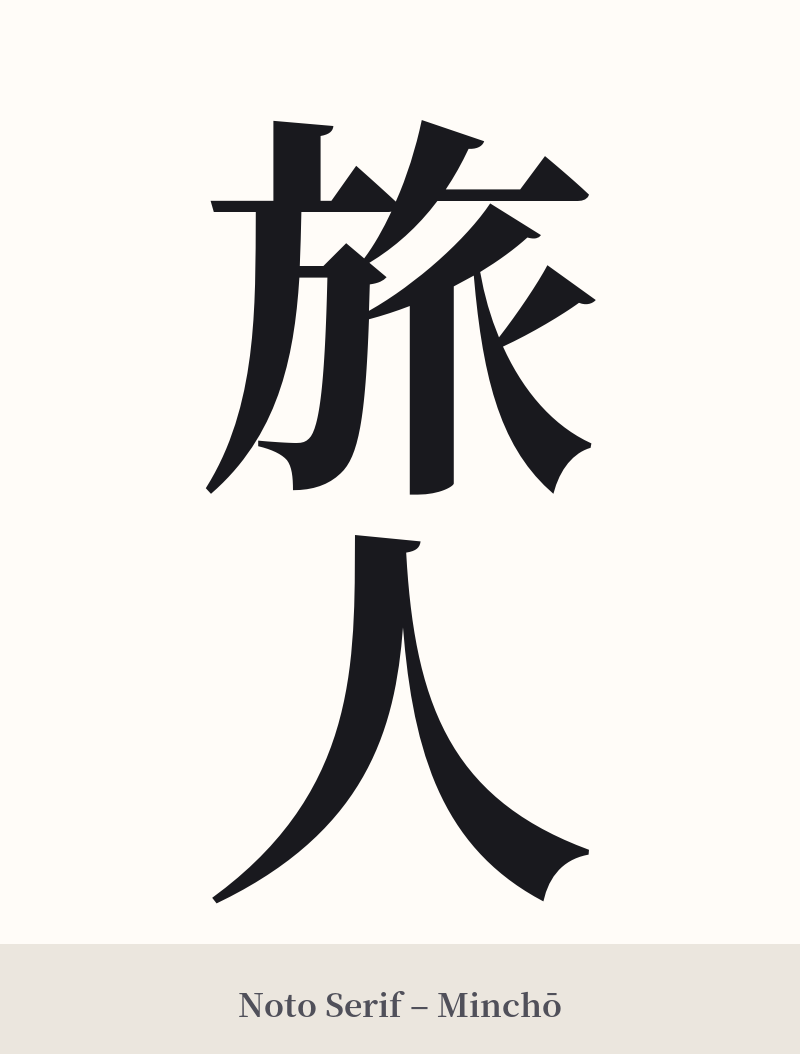
🖌️ Font Styles for 旅人
The same kanji can look dramatically different depending on the calligraphy style. Choose a font that matches the mood you want for your tattoo or design.
🎨 Tattoo Suitability
📐 Tattoo Design Guide
For a 旅人 (Tabibito) tattoo, the design should reflect the feeling of movement and personal journey.
– Placement: Vertical alignment works beautifully along the spine, forearm, or calf, mimicking a path. Horizontal placement is well-suited for the chest, back, or across the ribs, suggesting a horizon.
– Font Styles: A semi-cursive script (Gyōsho) can capture the fluid, wandering nature of a traveler. For a more grounded and determined feel, a clean, classic block script (Kaisho) is an excellent choice. Avoid overly stylized or aggressive fonts that clash with the word's poetic meaning.
– Visual Elements: Consider pairing the kanji with complementary imagery. A simple enso circle can represent the completeness of the journey and the universe. Other ideas include a drifting maple leaf or cherry blossom petal, a subtle compass rose, or minimalist mountain or wave lines to evoke the landscapes of a journey.

Comments