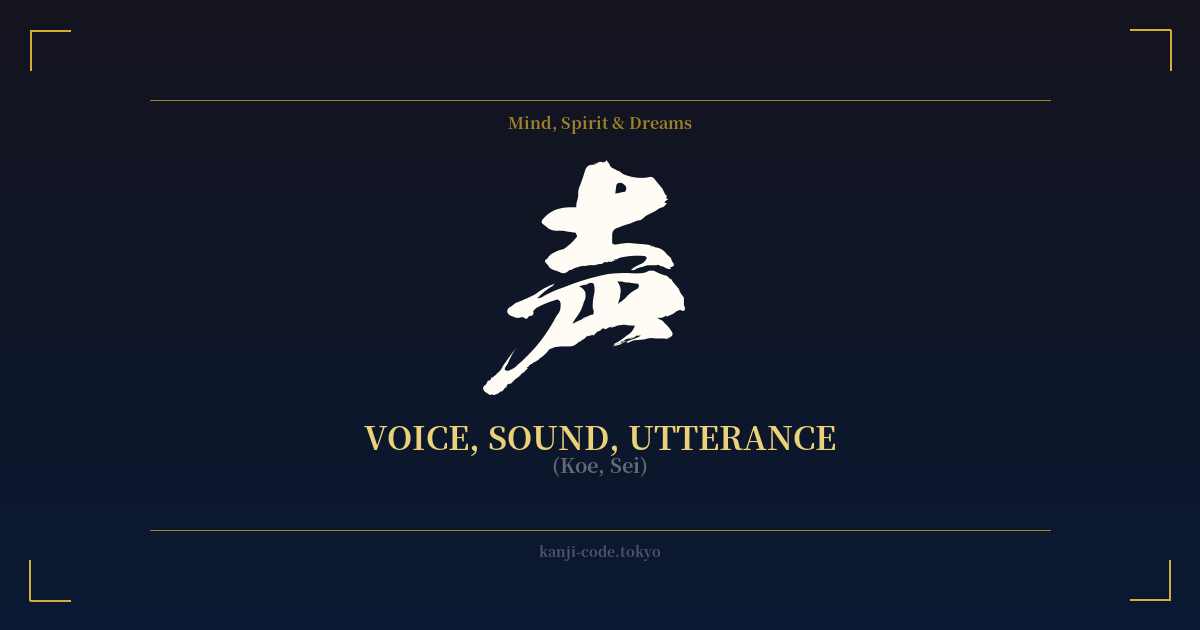
✍️ 声 (Koe, Sei) — Cultural Context
The kanji 声 (koe) is a simple character that holds a universe of meaning. On the surface, it translates to 'voice' or 'sound,' but its cultural and philosophical weight in Japan goes much deeper, touching upon identity, expression, and the very essence of being.
Historically, the character's origin is quite poetic. It is a phono-semantic compound, originally depicting a hand with a stick (殳) striking a suspended stone chime (磬). It was the sound of a deliberately struck instrument, a clear, resonant tone created by human action. Over centuries, this evolved to represent the sound produced by living things, particularly the human voice, differentiating it from other types of sound.
This brings us to a crucial distinction in the Japanese language: the difference between 声 (koe) and 音 (oto). While both can be translated as 'sound,' their usage is distinct. 声 (koe) almost exclusively refers to sounds made by the vocal cords of a living being—a person's voice, a bird's song, an animal's cry. In contrast, 音 (oto) is a broader term for any sound, including the noise of the wind, the sound of music, or the clap of thunder.
This distinction imbues 声 with a sense of life and intention. It’s not just noise; it’s a form of communication, an expression of a living spirit. This is beautifully captured in common Japanese phrases. 'Kokoro no koe' (心の声) means 'the voice of the heart' or 'inner voice,' referring to one's true, unspoken feelings and intuition. It suggests that our deepest self has a voice that deserves to be heard.
Similarly, 'minna no koe' (みんなの声) translates to 'the voice of the people,' signifying public opinion or a collective sentiment. This concept is vital in Japan's consensus-oriented culture, where the collective voice holds significant social and political weight. A single character thus bridges the gap between the most intimate, personal feeling and the broadest societal force.
In Japanese arts, the 'voice' is paramount. In Noh theater, the specific vocal techniques are as important as the masks and movements. In poetry, the author's 'voice' dictates the tone and impact. And in modern pop culture, the role of the seiyū (声優), or voice actor, is celebrated, with top seiyū gaining celebrity status for their ability to breathe life into animated characters through their voice alone. To have a 'koe' is to have a presence, an identity, and a means of connecting with the world.
🖌️ Font Styles for 声
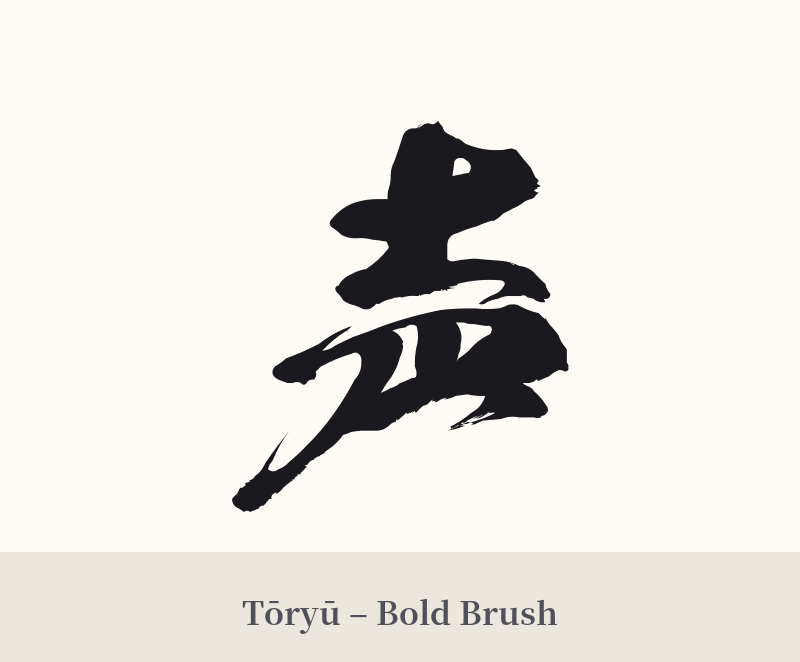
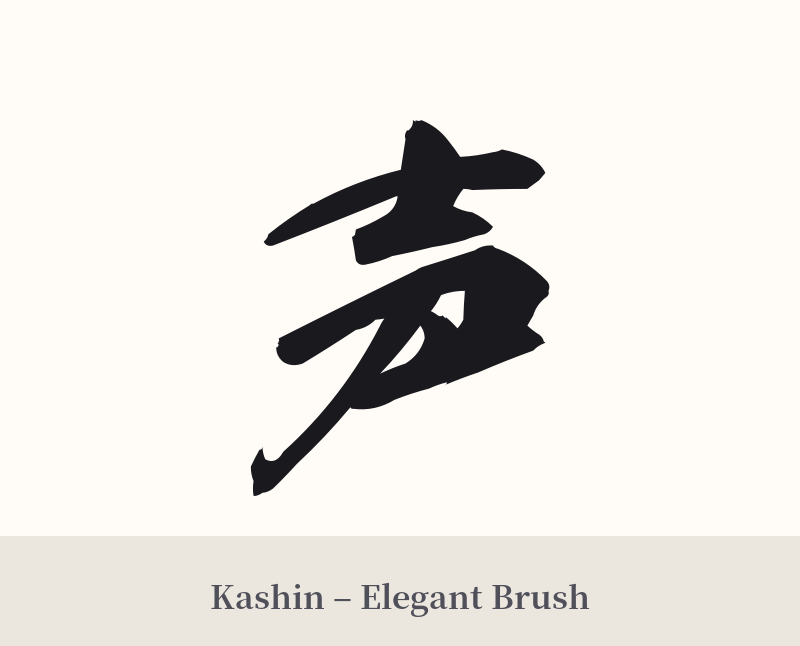
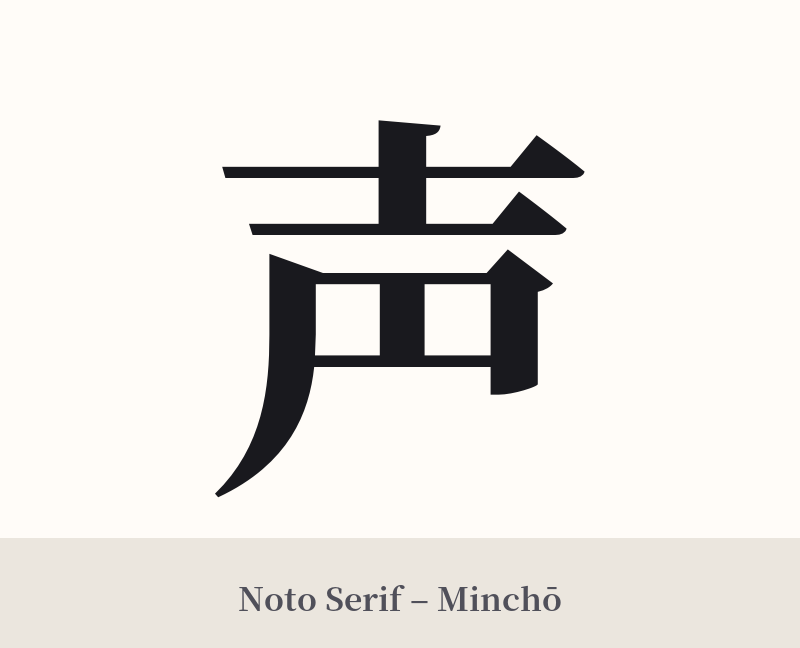
The same kanji can look dramatically different depending on the calligraphy style. Choose a font that matches the mood you want for your tattoo or design.
🎨 Tattoo Suitability
📐 Tattoo Design Guide
The kanji 声 (koe) offers a lot of versatility for a tattoo design, thanks to its balanced form and profound meaning.
– Placement: For a design symbolizing 'inner voice' or personal truth, consider placing it over the heart, on the ribs, or on the inner wrist. To represent 'speaking your truth' or self-expression, the forearm, back of the neck, or even near the throat can be powerful choices.
– Style: A dynamic, semi-cursive calligraphy style (gyōsho) can capture the flowing, living nature of a voice. For a bolder statement about having a powerful voice, a strong, angular block script (kaisho) or a dramatic brushstroke (shodō) would be effective. A minimalist, clean font like Mincho can give it a modern, elegant feel.
– Visual Combinations: While it stands strong on its own, 声 can be paired with other elements to enhance its meaning. Consider integrating it with a soundwave pattern, a singing bird, or subtle cherry blossoms to add a layer of Japanese aesthetic. Placing it within a circle (ensō) can symbolize the voice of the universe or the completeness of one's own voice.
Comments