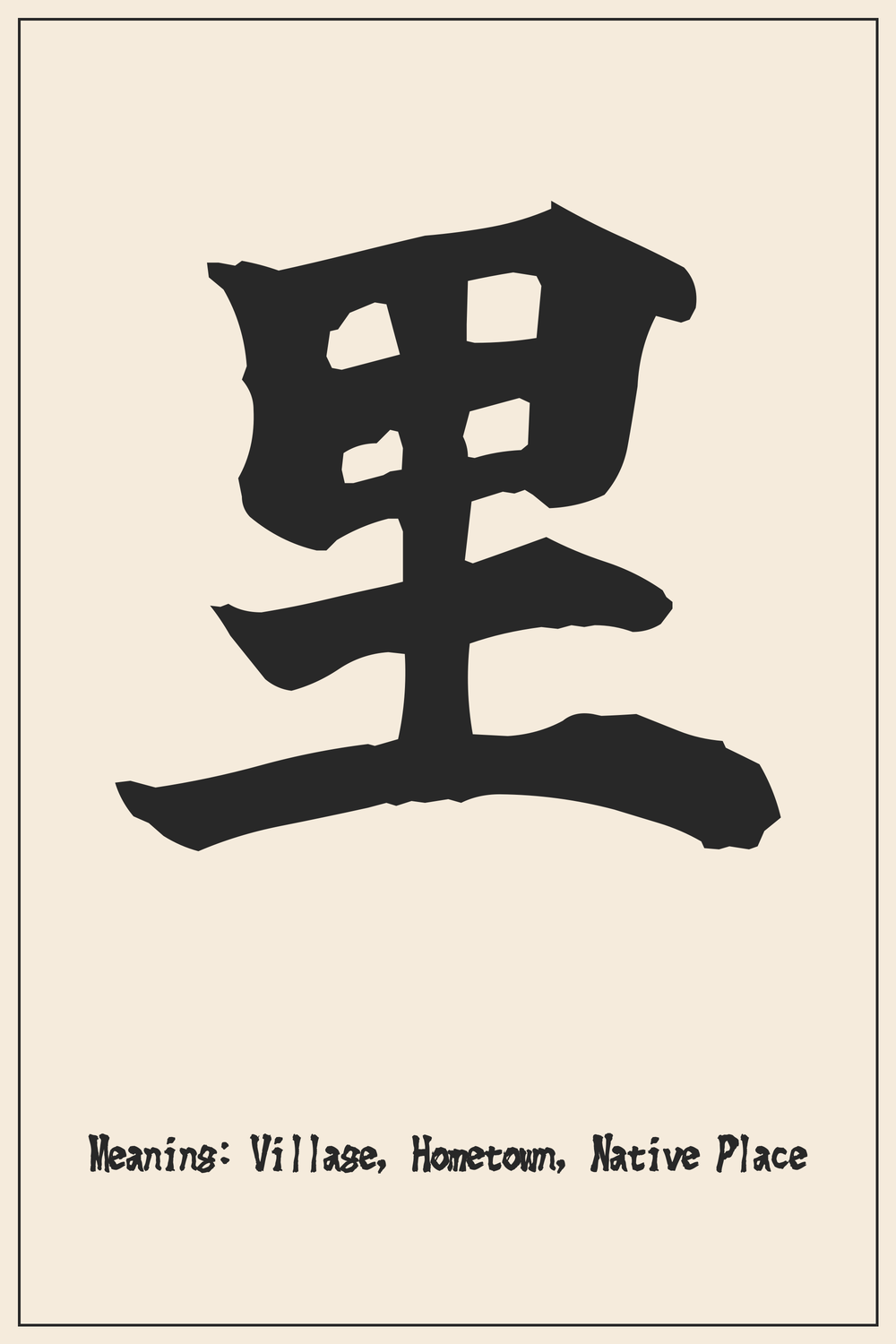
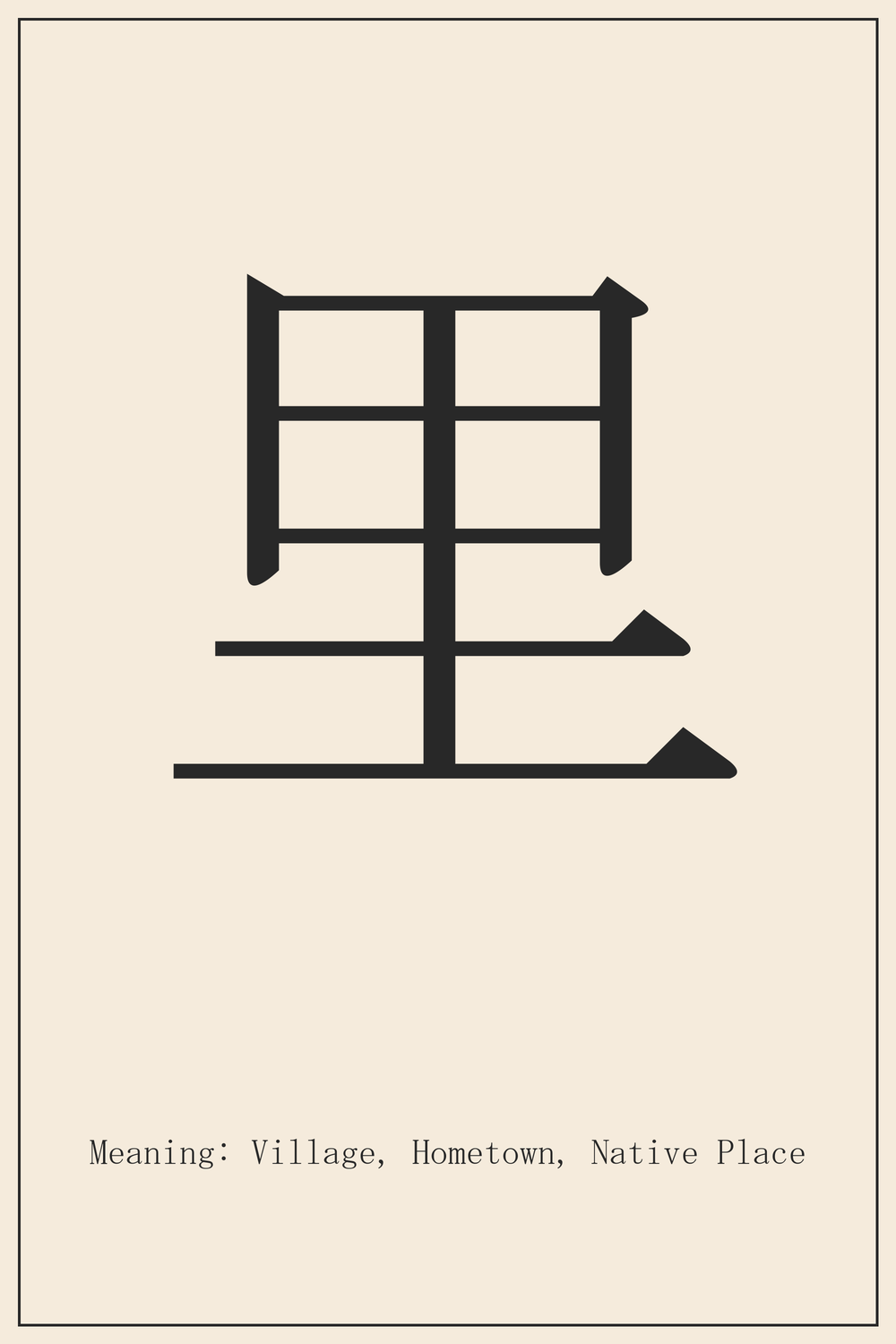
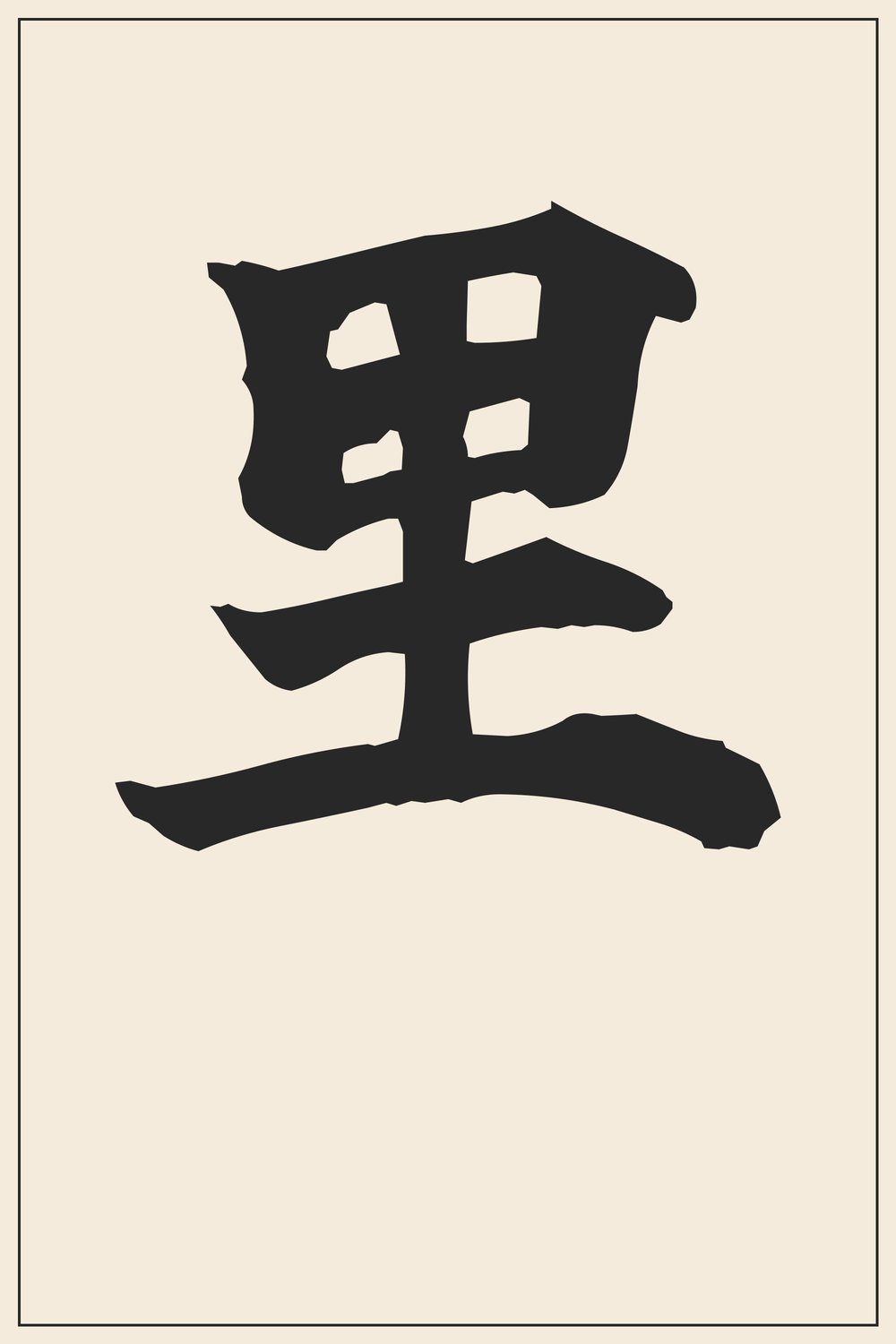
The Kanji 里 (Sato) encapsulates the essence of home, community, and one’s origins. It speaks to the deep connection individuals feel to their birthplace and the enduring bonds of their native land.
The atmosphere of a Kanji character changes dramatically depending on the font style. A character that looks elegant in a brush style might look bold and modern in a different font.
Recommendation:
Since a tattoo is permanent, we strongly recommend comparing various font styles beyond what is shown here. Use our designs as a trusted reference for the correct structure, but feel free to explore different artistic variations to find the perfect match for your vision.
The Deep Meaning Behind 里
The Kanji 里 (Sato) is rich in meaning, primarily denoting ‘village,’ ‘hometown,’ or ‘native place.’ It also historically referred to a unit of distance, similar to a league, representing the distance between villages.
Culturally, 里 carries profound significance in Japan. The concept of ‘Furusato’ (故郷), often translated as ‘hometown’ or ‘spiritual home,’ evokes deep feelings of nostalgia, belonging, and connection to one’s origins. It represents not just a physical location but the emotional ties to family, community, and childhood memories.
Kanji Breakdown
The character 里 is a compound ideograph that illustrates a settlement within a cultivated area. Its ancient form depicted a field over earth, symbolizing a community rooted in its land.
Etymology: This single character is believed to be a pictogram depicting a field (田) above a land or earth component (土). This visual representation inherently connects the character to concepts of land, agriculture, and human settlement, thus solidifying its meaning of ‘village’ or ‘hometown.’
Conclusion
The Kanji 里 is a powerful symbol representing not just a physical location but the deep-seated connection to one’s origins, community, and the cherished memories of a native place. It embodies the essence of belonging and the comfort of ‘home.’
Choosing 里 for a tattoo signifies a profound appreciation for one’s roots and the bonds that shape identity. Its clear aesthetics and rich cultural resonance make it a meaningful and beautiful choice for personal expression.
Comments