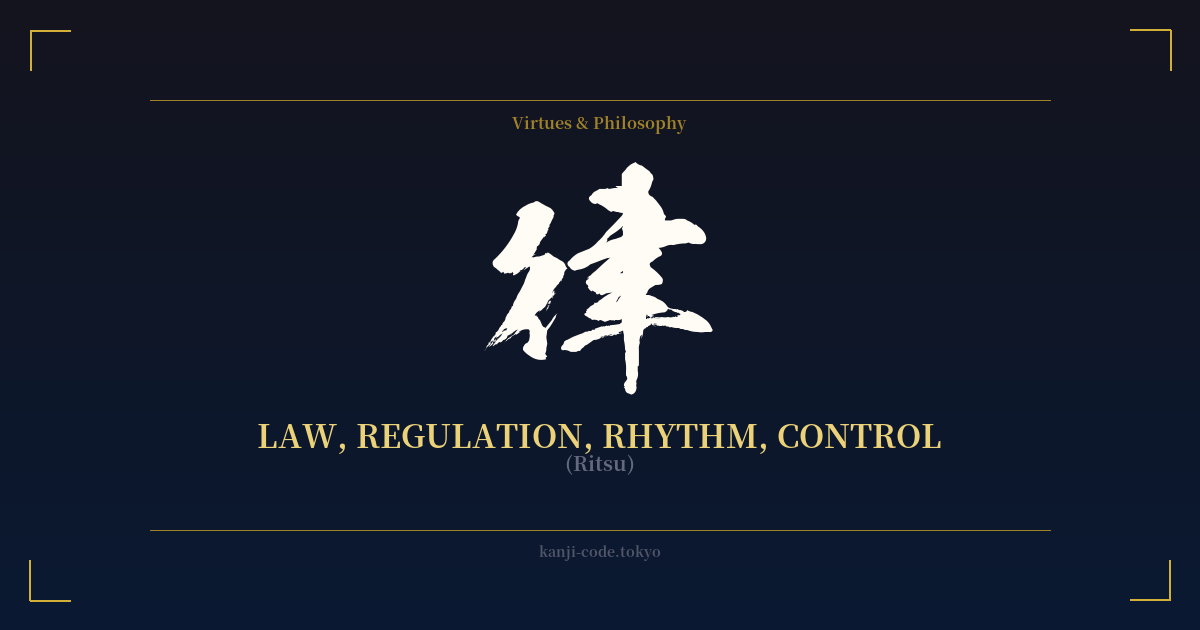
✍️ 律 (Ritsu) — Cultural Context
The kanji 律 (Ritsu) is a character rich with layers of meaning, embodying the fundamental concepts of order, principle, and control. At its core, it speaks to a system, a set of rules that govern either the external world or the internal self. Its meaning is beautifully dual, encompassing both societal law and personal discipline.
Historically, 律 is most famously associated with the Ritsuryō (律令) system, the complex legal and governmental codes adopted by Japan from Tang Dynasty China during the 7th and 8th centuries. The 律 (Ritsu) were the criminal codes, while the 令 (Ryō) were the administrative codes. This system laid the foundation for the early Japanese state, and the kanji 律 thus carries the weight of history, authority, and the very structure of civilization.
However, the power of 律 extends far beyond the courtroom or government halls. It finds a deeply personal and philosophical expression in the concept of 自律 (jiritsu), or 'self-discipline.' This is not merely about restraint but about mastering oneself through a set of internal principles. In Japanese culture, this idea is paramount in everything from the martial arts (Budo), where practitioners follow a strict code of conduct and training, to the meditative practices of Zen Buddhism, which seek enlightenment through disciplined focus.
This idea of a guiding principle is embedded in the character's etymology. 律 is composed of the radical 彳, which depicts a person walking or a step, and 聿, a pictograph of a hand holding a brush. Together, they create a powerful image: following a path that has been written down, or the act of writing the very rules one follows. It suggests a conscious, deliberate journey along a structured path.
Interestingly, 律 also has an artistic and natural dimension. It is used in words like 旋律 (senritsu), meaning 'melody,' and 音律 (onritsu), meaning 'musical rhythm.' This beautifully connects the concept of 'rules' to the inherent, pleasing order found in music. The regulations of pitch, tempo, and harmony are not seen as restrictive but as the very framework that allows beauty and emotion to emerge. In this sense, 律 represents the natural laws and rhythms that govern the universe, from the changing of the seasons to the beat of a heart.
🖌️ Font Styles for 律
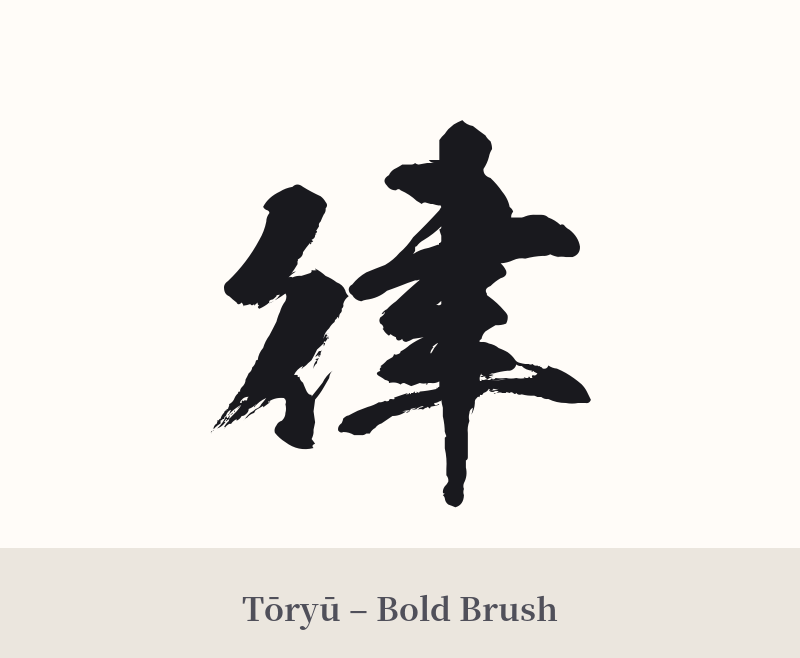
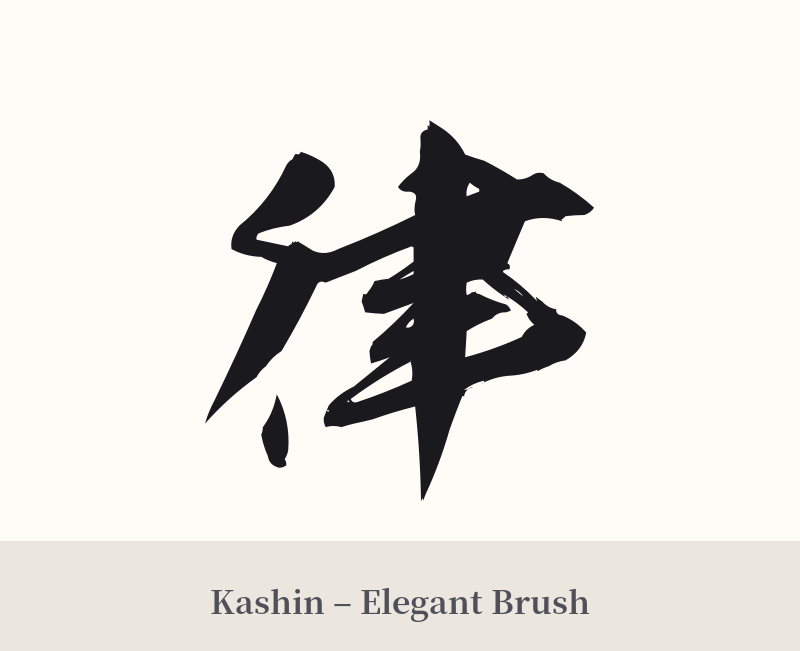
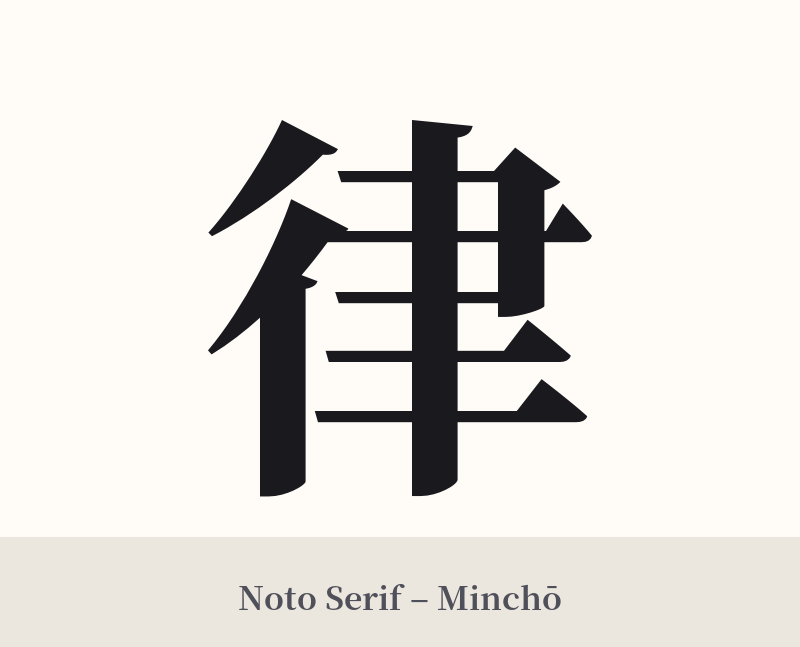
The same kanji can look dramatically different depending on the calligraphy style. Choose a font that matches the mood you want for your tattoo or design.
🎨 Tattoo Suitability
📐 Tattoo Design Guide
The kanji 律 offers great versatility in tattoo design, allowing you to emphasize its different facets through style and placement.
– Placement: For a design that speaks to a guiding principle or life path, consider linear placements like the forearm, the spine, or the calf. For a more introspective meaning related to self-discipline, the chest over the heart or the back of the neck can be very effective.
– Font Style: A strong, crisp Kaisho (block script) style emphasizes the meaning of 'law,' 'order,' and 'unwavering principle.' In contrast, a more fluid Gyōsho (semi-cursive) or Sōsho (cursive) script can bring out the 'rhythm' and 'melody' aspect of the character, making it feel more organic and flowing.
– Visual Complements: Consider pairing 律 with other symbolic elements. Placing it within an Ensō (Zen circle) can powerfully represent the concept of self-discipline within the context of enlightenment and the universe. For a musician, incorporating subtle musical staves or notes around the character could personalize the 'rhythm' meaning.
Comments