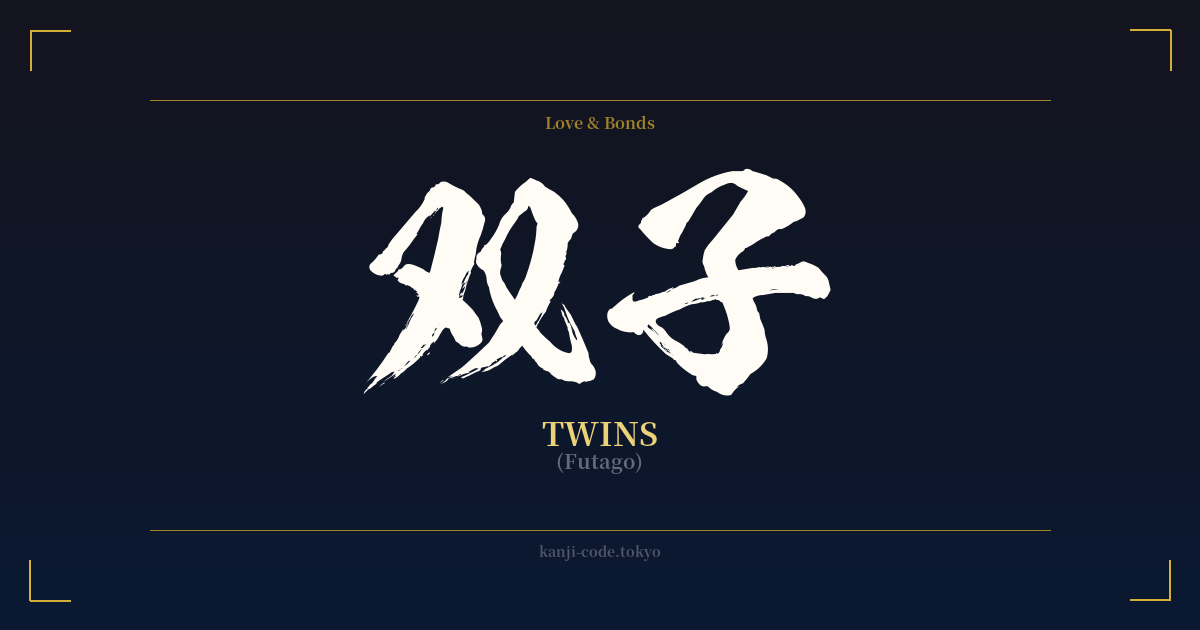
✍️ 双子 (Futago) — Cultural Context
The Japanese word for twins, 双子 (Futago), is a beautifully direct combination of kanji that perfectly captures its meaning. It joins the character for a 'pair' with the character for 'child,' creating the literal translation: 'a pair of children.' This straightforwardness is characteristic of many Japanese compound words, but the story behind it is rich with cultural nuance.
Historically, the perception of twins in Japan has varied. In some ancient contexts, particularly concerning imperial or noble succession, the birth of twins could be seen as an ill omen, creating complications for inheritance and lineage. Folk beliefs sometimes associated them with animal-like multiple births or a division of a single soul, leading to superstition in certain rural areas. However, these views are largely relics of the past and do not reflect modern Japanese society.
Today, twins are celebrated in Japan just as they are in most other cultures. They are seen as a unique blessing and a symbol of a profound, almost mystical connection. The concept of two individuals sharing a single origin sparks fascination and is often a subject of interest in media and daily life. The term 'Futago' is the common, everyday word used with warmth and affection.
In Japanese pop culture, twins are a popular trope, often used to explore themes of identity, duality, and connection. Famous examples include the mischievous Hitachiin brothers in the anime 'Ouran High School Host Club,' who use their 'twin-ness' as a key part of their persona, and the devoted demon maids Ram and Rem in 'Re:Zero.' These portrayals highlight the deep, often unspoken understanding that is believed to exist between twins, a bond that transcends ordinary sibling relationships.
The character 双 (sō or futa) itself is fascinating. Its ancient form is a pictograph of two birds being held in one hand, emphasizing the idea of a matched set. This concept extends beyond people, appearing in words like 双璧 (sōheki), meaning 'a pair of jewels' or 'two masters of equal standing.' When combined with 子 (ko), meaning 'child,' the word becomes a powerful and specific emblem of this unique human relationship.
🖌️ Font Styles for 双子
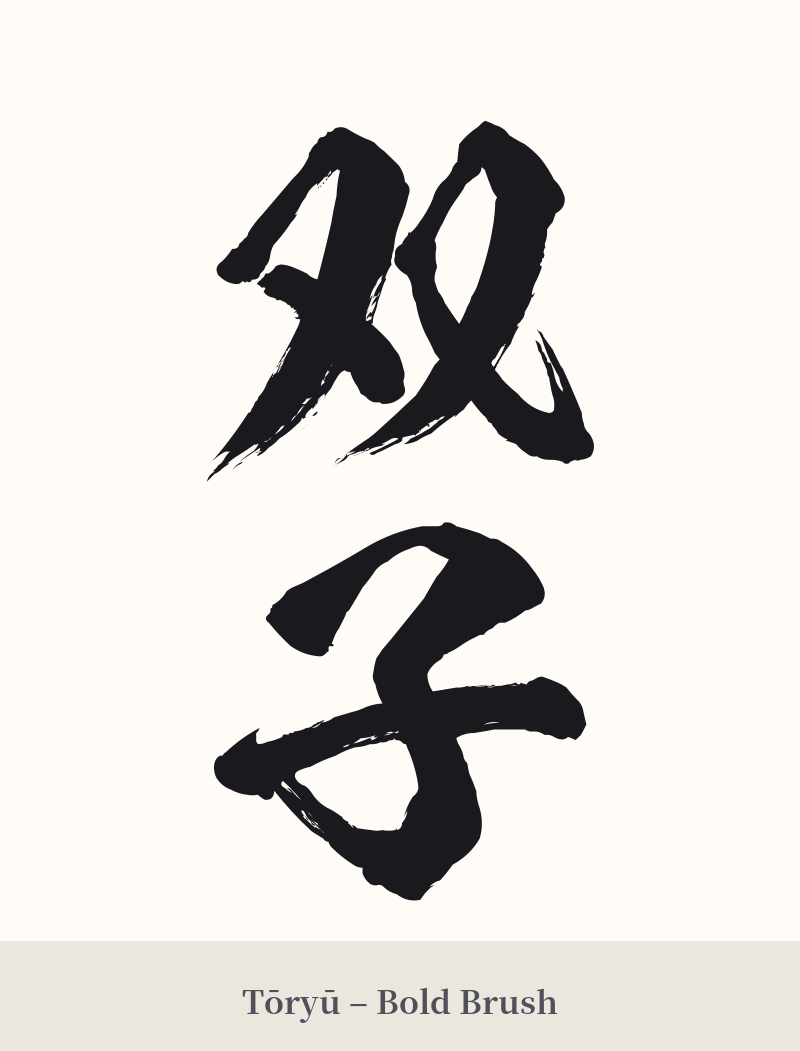
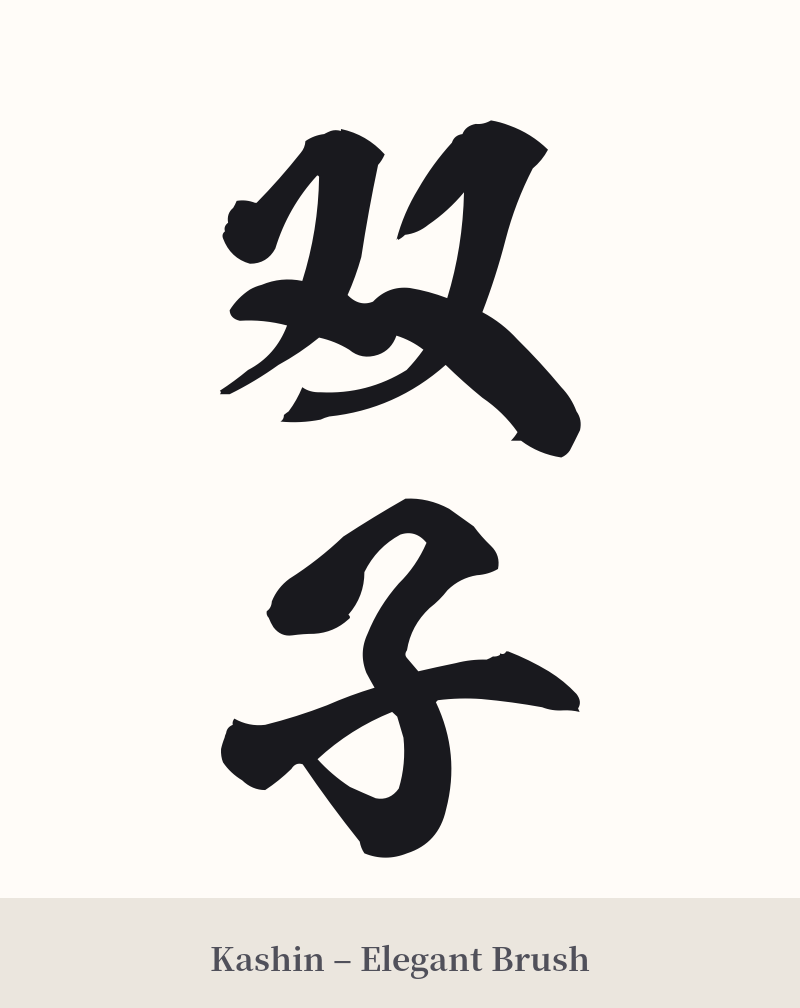
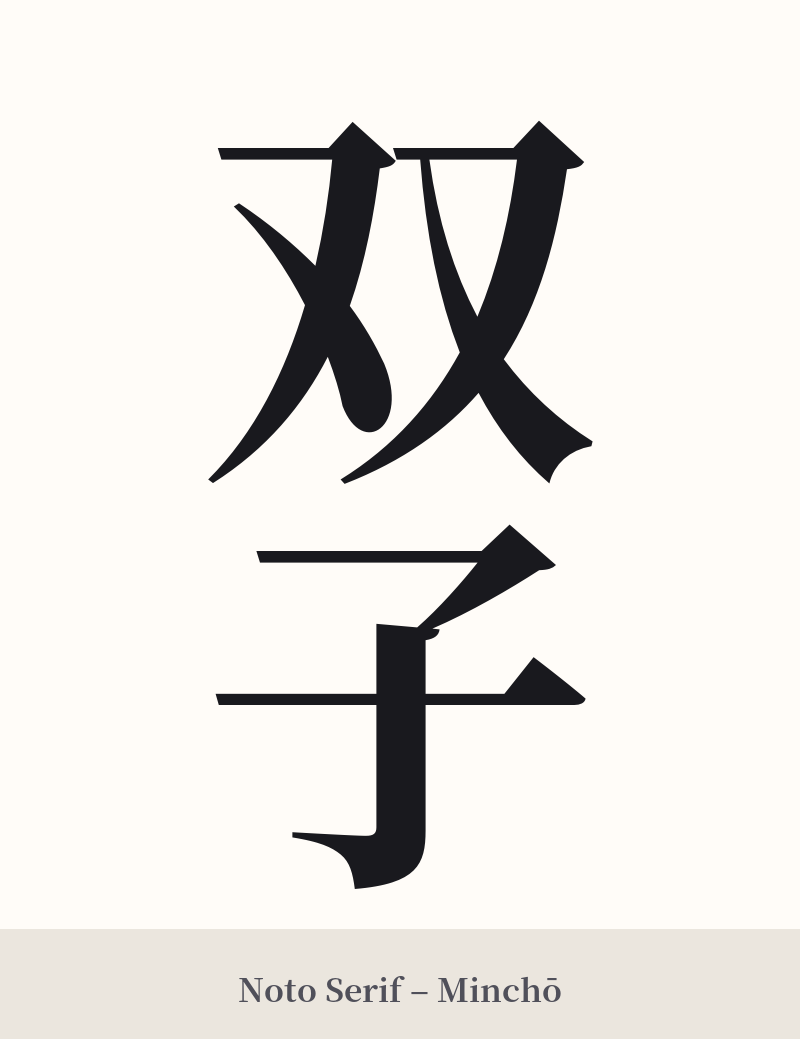
The same kanji can look dramatically different depending on the calligraphy style. Choose a font that matches the mood you want for your tattoo or design.
🎨 Tattoo Suitability
📐 Tattoo Design Guide
For a 双子 (Futago) tattoo, the design should emphasize balance and connection. Given its personal nature, it's often chosen for matching tattoos between twins.
– Placement: This two-character word works well horizontally on the wrist, collarbone, or inner forearm. A vertical alignment is also a classic choice, looking elegant along the spine, ankle, or behind the ear.
– Font Style: A clean, simple font like a Mincho (serif) or Gothic (sans-serif) style complements the simplicity of the characters themselves. For a more personal and artistic touch, a semi-cursive or calligraphic style (gyōsho) can add a sense of flow and individuality, as if it were personally brushed.
– Visual Tips: Consider integrating a design element that represents your unique bond. This could be a thin red line connecting the two characters, referencing the 'red thread of fate' (運命の赤い糸), or incorporating a small symbol of a shared memory or birth flower. The two characters could even be tattooed on each twin respectively, creating a whole when they are together.
Comments