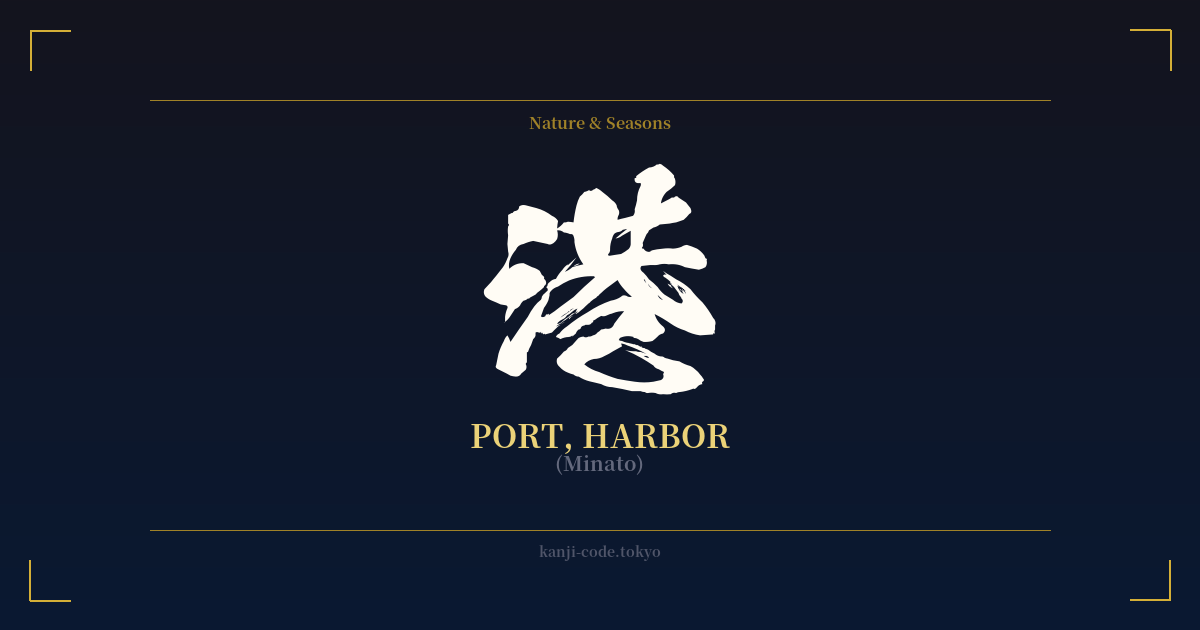
✍️ 港 (Minato) — Cultural Context
The kanji 港 (Minato) is more than just a character for 'port' or 'harbor'; it is a powerful symbol deeply embedded in the psyche of an island nation. For centuries, Japan's identity has been shaped by the sea, and ports were the vital gateways through which culture, goods, and ideas flowed in and out. The character itself beautifully illustrates this, combining the 氵(sanzui) radical for water on the left with the phonetic component 巷 (kō) on the right, which suggests a street or a meeting place. In essence, a 'minato' is where the water meets the community, a literal and figurative point of connection.
Historically, cities like Yokohama, Kobe, and Nagasaki rose to prominence as bustling port towns. They were Japan's windows to the world, especially after the country's long period of isolation. These harbors became melting pots of culture, where foreign influences first took root and blended with Japanese traditions. To this day, these cities retain a unique, cosmopolitan atmosphere that speaks to their history as hubs of international exchange. A port was a place of opportunity and excitement, but also of poignant farewells and uncertain futures.
This duality gives 港 its rich symbolic resonance. It represents a safe haven, a place of refuge from the tumultuous open sea, where ships and sailors can find rest and repair. It is the destination at the end of a long voyage, symbolizing homecoming, security, and belonging. At the same time, a port is inherently a place of departure. It stands for the beginning of a new adventure, the courage to venture into the unknown, and the bittersweet pain of leaving home behind. This makes 港 a liminal space, a threshold between the familiar and the foreign, safety and risk, arrival and departure.
In Japanese literature and art, harbors are often depicted with a sense of melancholy and nostalgia, known as 'mono no aware'. They are settings for dramatic reunions, tearful goodbyes, and quiet moments of reflection while watching the ships sail away. The sight of a harbor at dusk, with its lights twinkling on the water, evokes a powerful feeling of both longing and peace. This blend of hope, nostalgia, and the endless cycle of journeys makes 港 a deeply evocative and emotionally complex kanji.
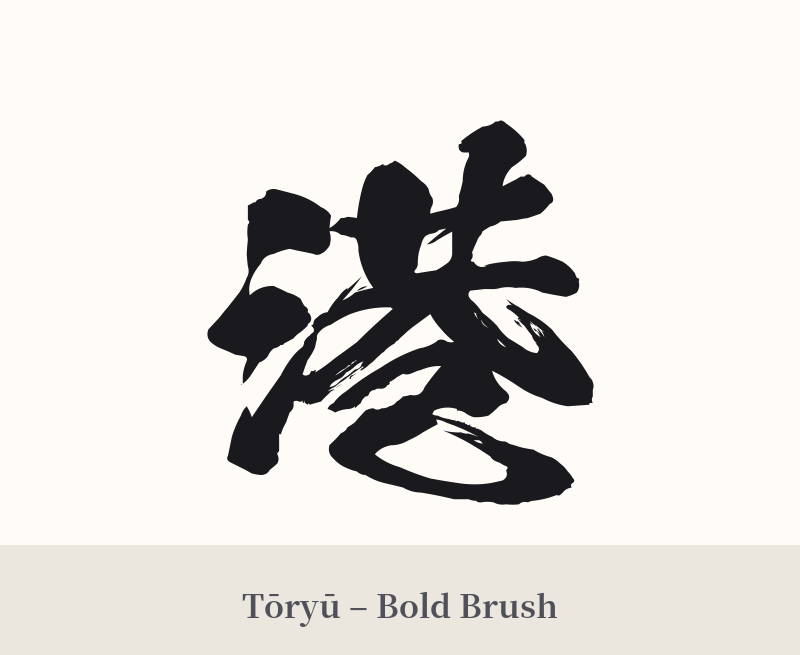
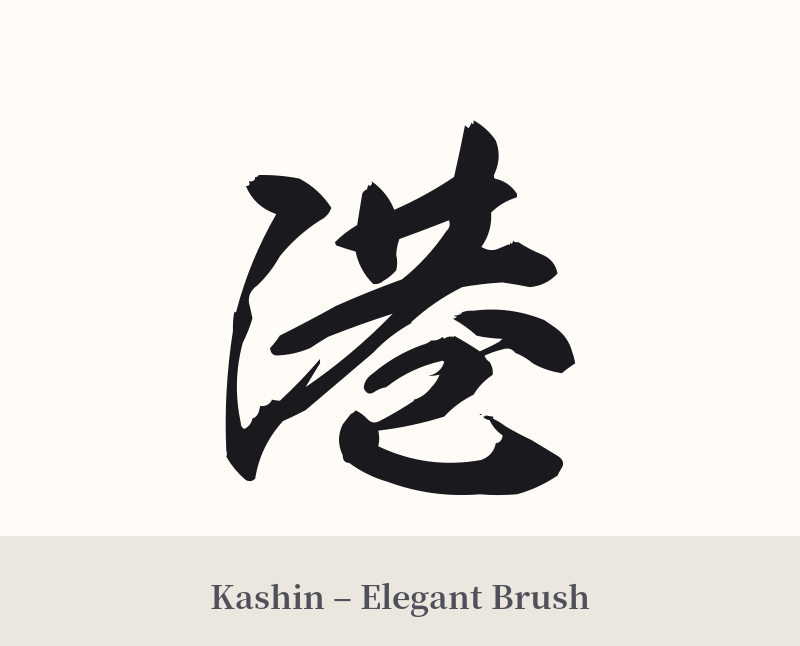
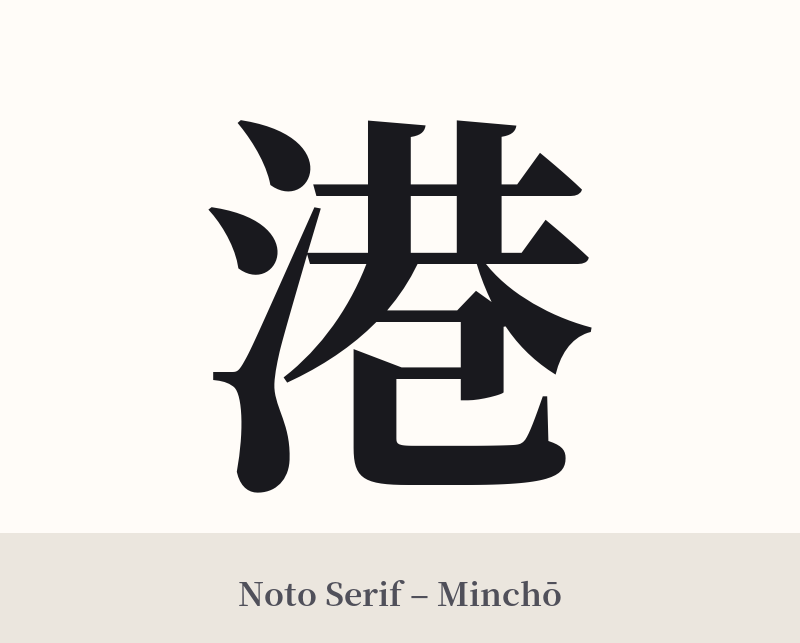
🖌️ Font Styles for 港
The same kanji can look dramatically different depending on the calligraphy style. Choose a font that matches the mood you want for your tattoo or design.
🎨 Tattoo Suitability
📐 Tattoo Design Guide
The kanji 港 offers wonderful versatility for a tattoo design, balancing symbolic depth with a clean aesthetic.
– Placement: Consider a location that reflects the kanji's meaning. The back of the neck or shoulder blade can symbolize a point of departure or a journey's beginning. The forearm or wrist allows for a constant reminder of one's safe haven or connection to the world. A placement over the heart or on the ribs can represent a cherished home or a person who feels like a harbor.
– Style: A traditional calligraphy style, like Gyosho (semi-cursive) or Sosho (cursive), can emphasize the flow of water and the emotional depth of the character. For a more solid and classic look, a Mincho or Kaisho font with its clean lines is an excellent choice. The character's balanced structure also lends itself well to modern, geometric interpretations.
– Visual Tips: While 港 is strong enough to stand alone, it can be beautifully integrated with other elements. Consider subtle wave patterns in the background, a small anchor incorporated near the character, or the silhouette of a single ship sailing away. A compass rose could also complement the theme of journey and direction. For a minimalist approach, the character itself is all you need.

Comments