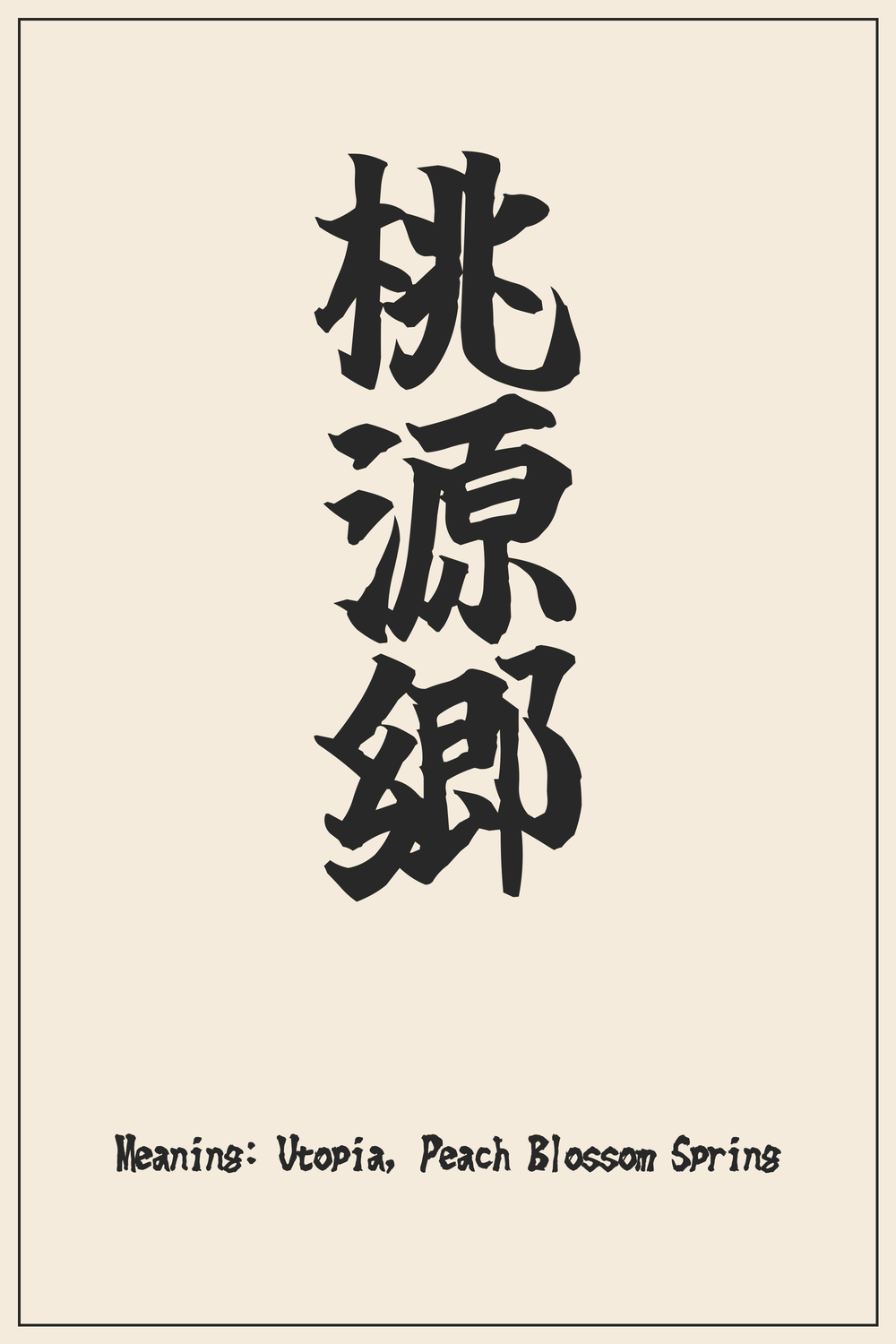
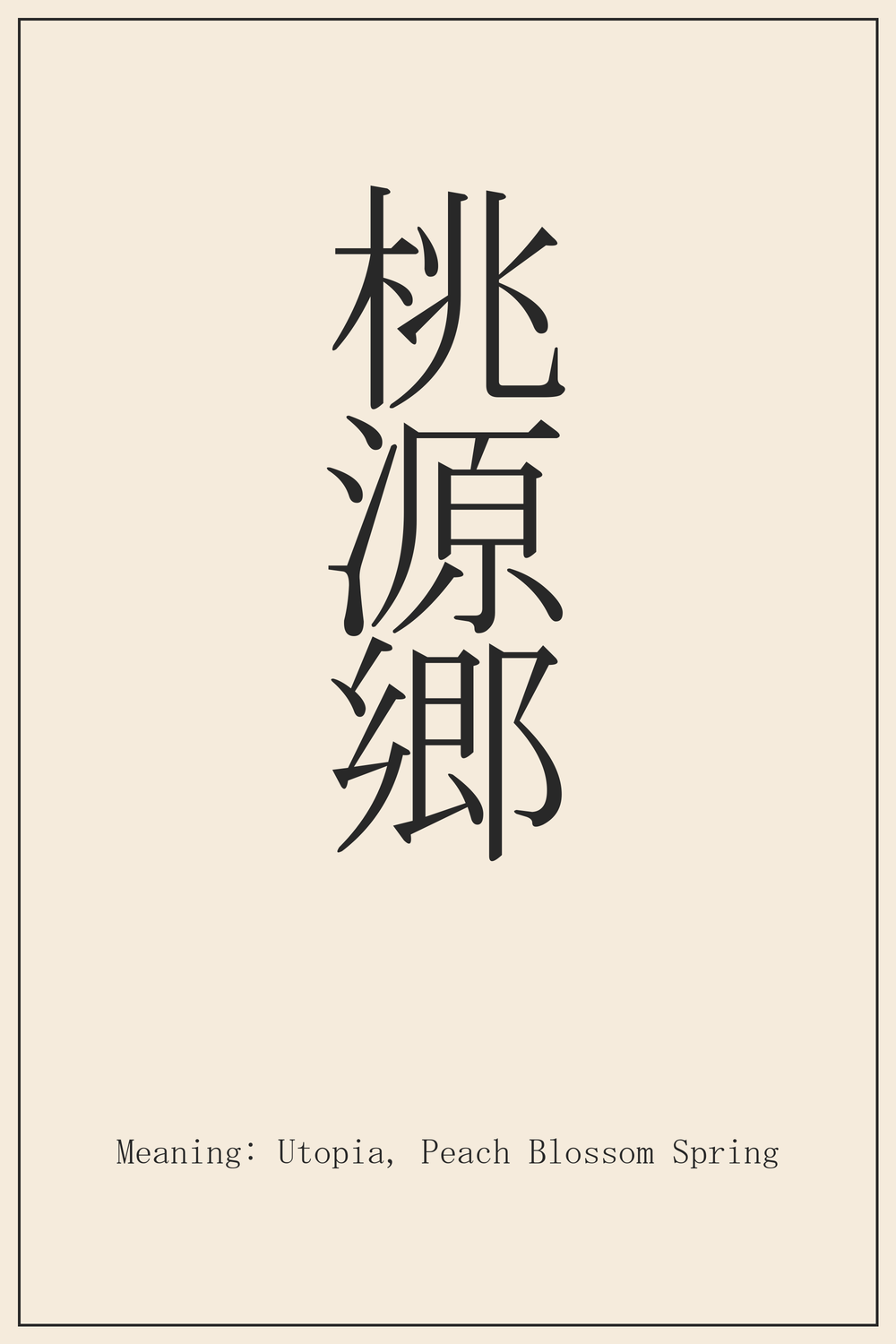
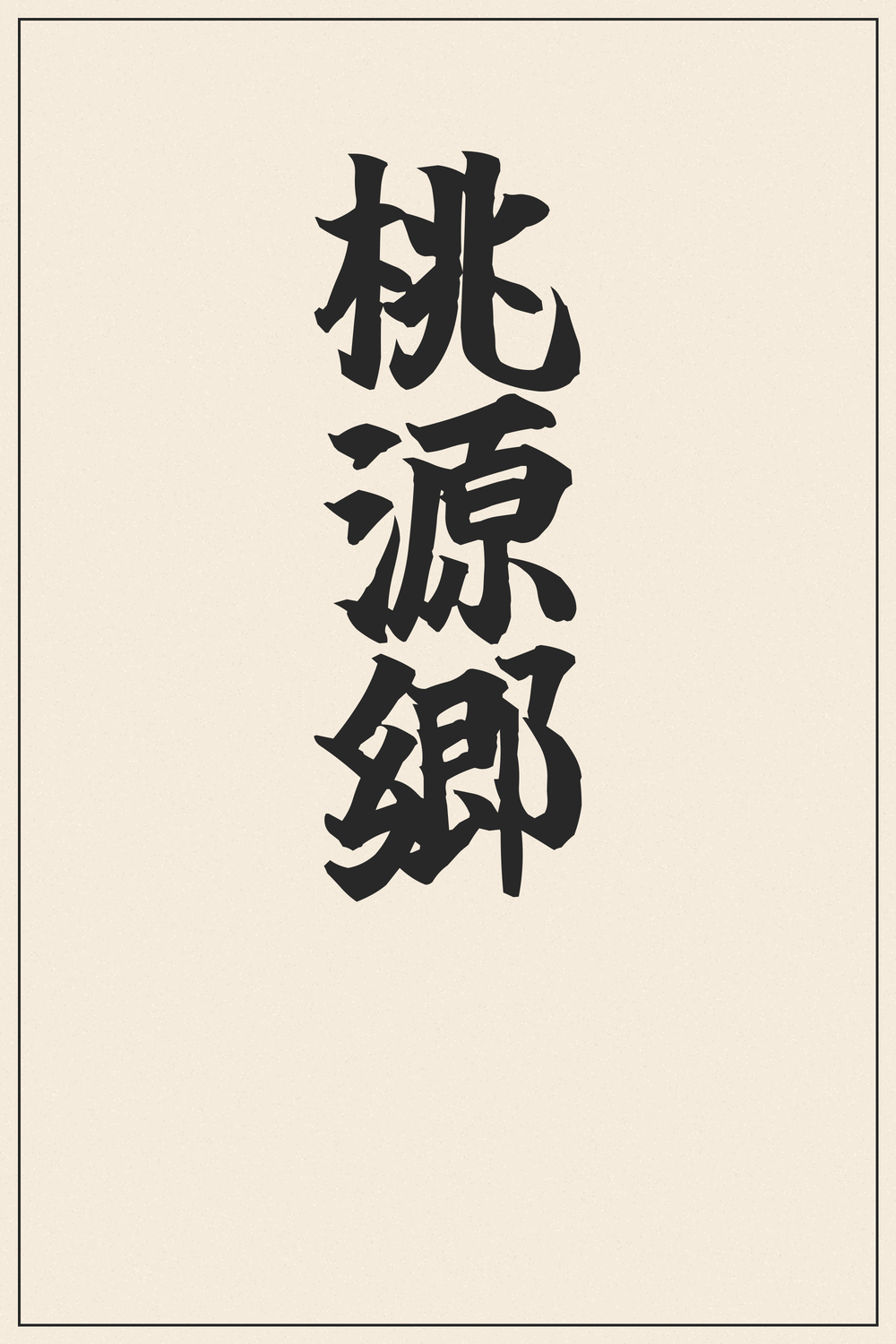
Dive into the ethereal beauty of 桃源郷, a Kanji compound that conjures visions of an idyllic, hidden paradise. This profound symbol speaks to the universal yearning for a perfect world, untroubled by worldly cares.
The atmosphere of a Kanji character changes dramatically depending on the font style. A character that looks elegant in a brush style might look bold and modern in a different font.
Recommendation:
Since a tattoo is permanent, we strongly recommend comparing various font styles beyond what is shown here. Use our designs as a trusted reference for the correct structure, but feel free to explore different artistic variations to find the perfect match for your vision.
The Deep Meaning Behind 桃源郷
The term 桃源郷, or ‘Peach Blossom Spring,’ originates from a famous prose poem by the Eastern Jin dynasty poet Tao Yuanming. It describes a chance encounter with a hidden village where people live a simple, harmonious life, cut off from the tumultuous world outside.
This concept rapidly became a powerful metaphor across East Asian cultures for a utopian ideal, an uncorrupted sanctuary, and a timeless retreat from the struggles and anxieties of civilization. It embodies a longing for simplicity, natural beauty, and profound peace.
Kanji Breakdown
Each character within 桃源郷 contributes to its rich tapestry of meaning, creating a vivid image of a perfect world.
Peach: Often associated with immortality, good fortune, and spring in East Asian folklore. The peach blossoms are the iconic gateway to the hidden land.
Source, Origin: This character signifies the starting point or wellspring, emphasizing the pure and untouched nature of the paradise.
Village, Hometown: It evokes a sense of community, belonging, and a return to a simpler, rustic way of life.
Conclusion
Choosing 桃源郷 for a tattoo is to embrace a symbol of ultimate peace and an idealized existence. It represents a personal haven, a place where tranquility and beauty reign supreme, untainted by the clamor of the modern world.
This Kanji serves as a profound reminder of the potential for inner peace and the pursuit of a perfect sanctuary, whether physical or metaphorical. It is a timeless emblem for those who seek harmony and an enduring escape from worldly strife.
Comments