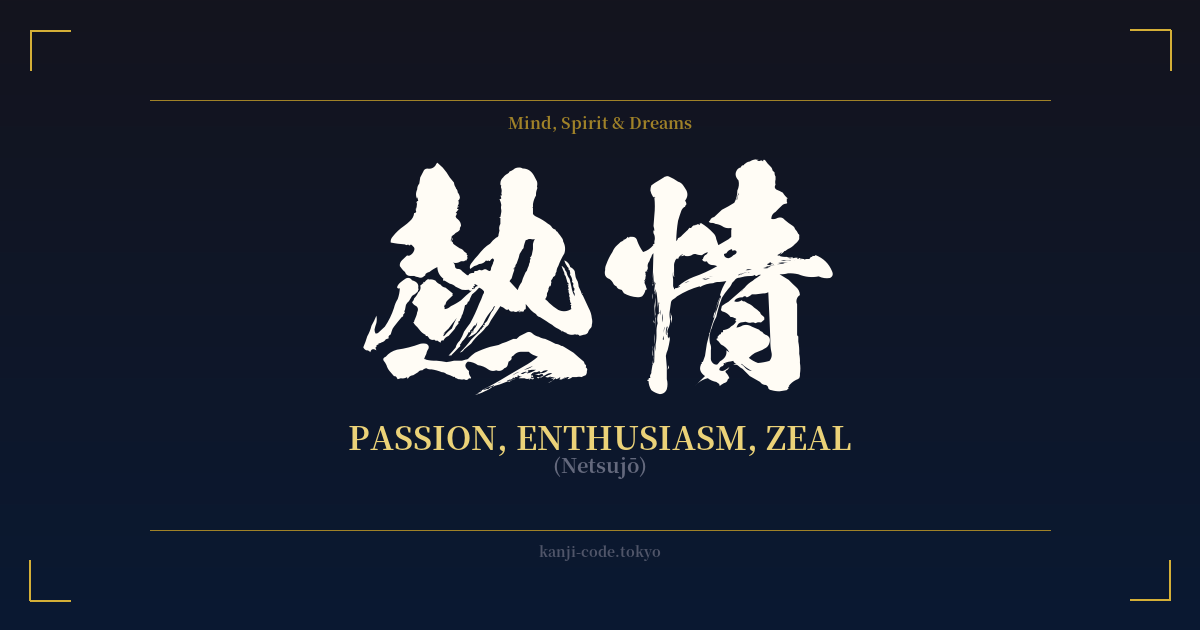
✍️ 熱情 (Netsujō) — Cultural Context
The Japanese word 熱情 (Netsujō) translates to passion, zeal, or fervent enthusiasm. It’s a term that burns with an almost tangible heat, capturing a powerful, expressive, and often outward-facing devotion to a cause, a person, or an art form. It’s the fire in the belly of an activist, the intense focus of a master craftsman, and the roaring energy of a musician lost in their performance.
Breaking it down, the word is a combination of 熱 (netsu), meaning “heat” or “fever,” and 情 (jō), meaning “emotion” or “feeling.” Together, they paint a vivid picture of “hot emotions” or “feverish feelings.” This isn't a quiet, smoldering passion; Netsujō implies an active, dynamic, and palpable energy. It’s a force that drives action and is visible to others.
In Japanese culture, which often values restraint and subtlety, the concept of Netsujō stands out. It's an acknowledgment of the raw, untamable power of human emotion. While its uncontrolled expression might be frowned upon, channeling this passionate energy into a pursuit is highly respected. It connects deeply with the idea of ikigai (生き甲斐), or one's reason for being. Finding your ikigai often involves discovering what you have Netsujō for and dedicating yourself to it with disciplined fervor.
You might hear the term used to describe a politician’s fiery speech, an athlete’s unwavering dedication to their sport, or the intense love in a dramatic story. It's a common word in song lyrics, literature, and movie titles, often used to signify a peak emotional state or a core motivating drive.
Interestingly, Japanese has another word for passion, 情熱 (Jōnetsu), which reverses the characters. While very similar, there's a subtle nuance. Jōnetsu often feels more like a sustained, internal fire—a deep, personal ardor. Netsujō, in contrast, can feel more explosive and immediate, like a burst of enthusiastic energy. Choosing Netsujō suggests a desire to express a passion that is active, visible, and intensely alive.
🖌️ Font Styles for 熱情
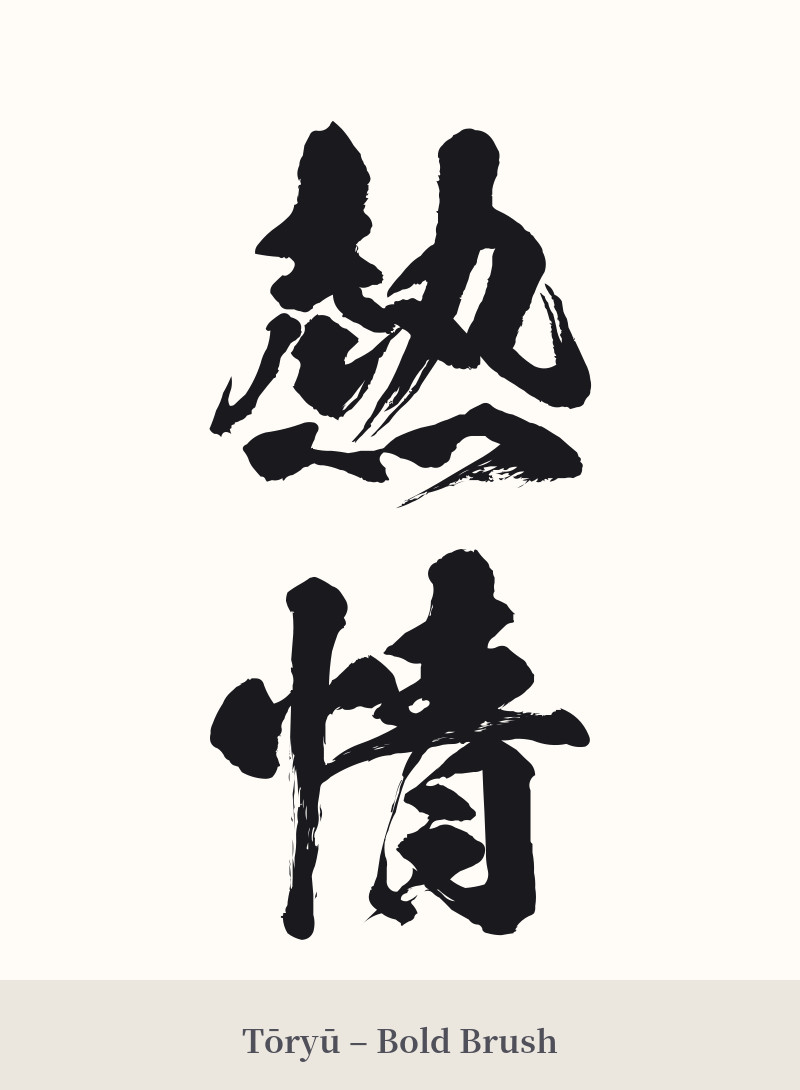
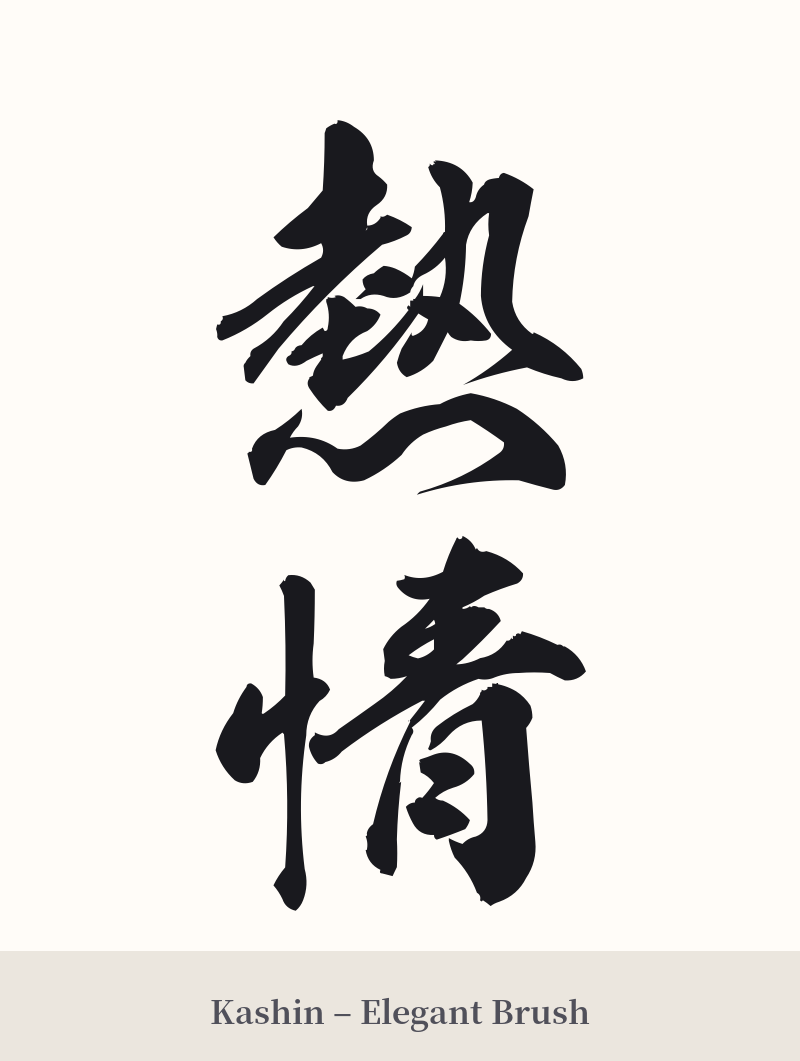
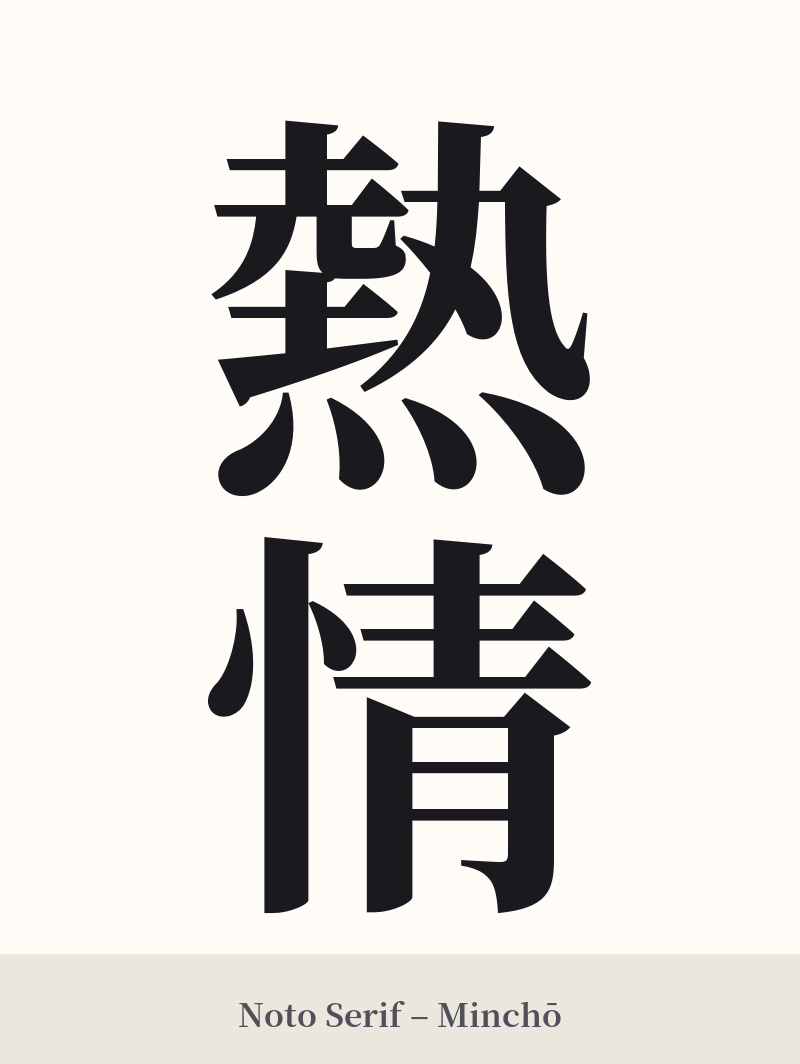
The same kanji can look dramatically different depending on the calligraphy style. Choose a font that matches the mood you want for your tattoo or design.
🎨 Tattoo Suitability
📐 Tattoo Design Guide
For a tattoo of 熱情, the design should match its fiery and energetic meaning. Given the detailed characters, placement is key to ensuring clarity and longevity.
– Placement: Consider areas that allow for adequate sizing, such as the forearm, the calf, the upper back across the shoulder blades, or along the ribs. These spots provide a flat, stable canvas for the artist to render the strokes cleanly.
– Font Style: The choice of script can dramatically alter the feeling of the tattoo. A bold, blocky Kaisho script emphasizes strength and unwavering commitment. For a more fluid and dynamic look that reflects the flow of passion, a semi-cursive Gyosho script is an excellent choice. A highly stylized, artistic script can also work well, perhaps with strokes that mimic licks of flame.
– Visual Tips: To enhance the meaning, you could ask your artist to subtly incorporate visual elements. For example, the 'fire' radical (灬) at the bottom of 熱 could be stylized to look more like actual flames. A background of soft, watercolor-like red or orange could also amplify the feeling of heat and emotion without overpowering the characters themselves. Always prioritize legibility; the beauty of kanji lies in the integrity of its form.
Comments