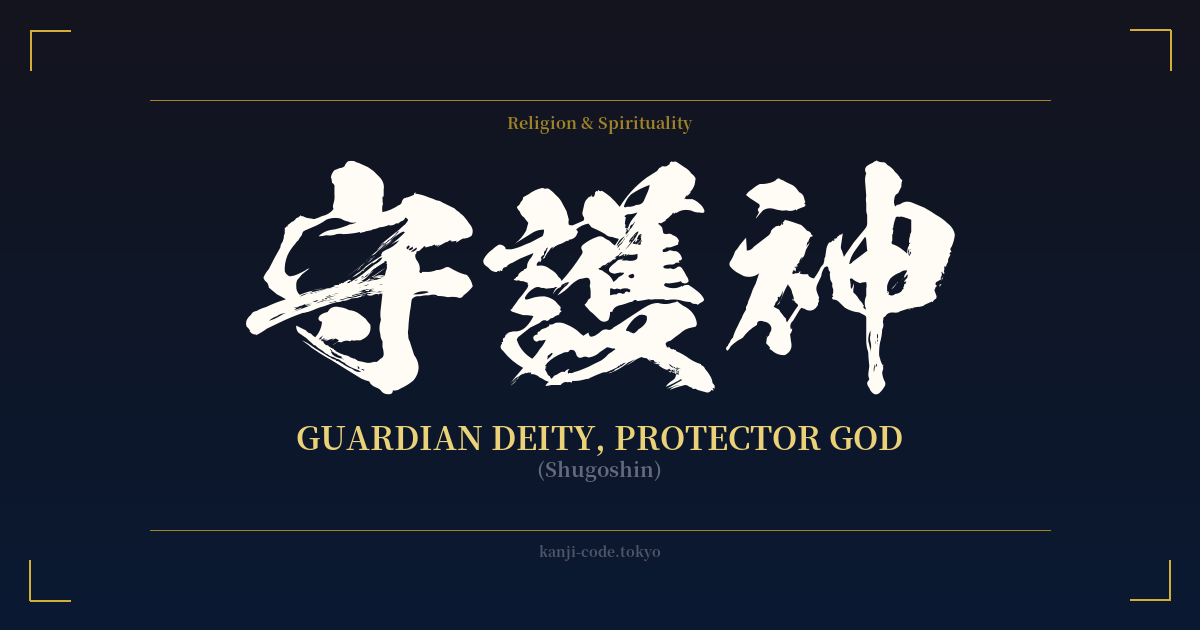
✍️ 守護神 (Shugoshin) — Cultural Context
The Japanese word 守護神 (Shugoshin) translates to 'Guardian Deity' or 'Protector God,' but its meaning runs far deeper than a simple definition. It embodies a core concept in Japanese spirituality, representing a divine or spiritual entity that offers protection, guidance, and support to a specific person, family, place, or nation.
The idea of a Shugoshin is woven into the fabric of both Shintoism and Buddhism in Japan. In Shinto, the native religion of Japan, the concept is closely related to ujigami (氏神), the ancestral clan gods that watch over a particular community or its founding family. Every shrine, village, and even natural landmark like a mountain or river was believed to have its own resident deity or kami acting as its protector.
With the arrival of Buddhism, the pantheon of protectors expanded. Fearsome and powerful figures like the Niō (仁王), the muscular guardian statues that flank temple gates, and the Shitennō (四天王), the Four Heavenly Kings who guard the cardinal directions, became popular subjects of worship. These figures are archetypal Shugoshin, acting as divine bodyguards against evil spirits and misfortune.
However, a Shugoshin is not always a famous, named god from religious scripture. The concept is intensely personal. For an individual, a Shugoshin could be an ancestor's spirit watching over the family line. It could be the deity of a local shrine where one prays for safety, or a specific god from the vast pantheon that a person feels a special connection to, such as Inari, the god of rice and prosperity, or Tenjin, the god of scholarship.
In modern Japan, the term has taken on a more secular, metaphorical meaning as well. A star player on a sports team might be called the team's 'Shugoshin' for their defensive prowess. A beloved pet who seems to watch over the family can be seen as a small guardian. This flexibility speaks to the enduring power of the concept: the deep human need for a symbol of unwavering protection and support in a sometimes uncertain world. It represents a source of strength, a spiritual anchor, and a reassuring presence, whether divine or symbolic.
🖌️ Font Styles for 守護神
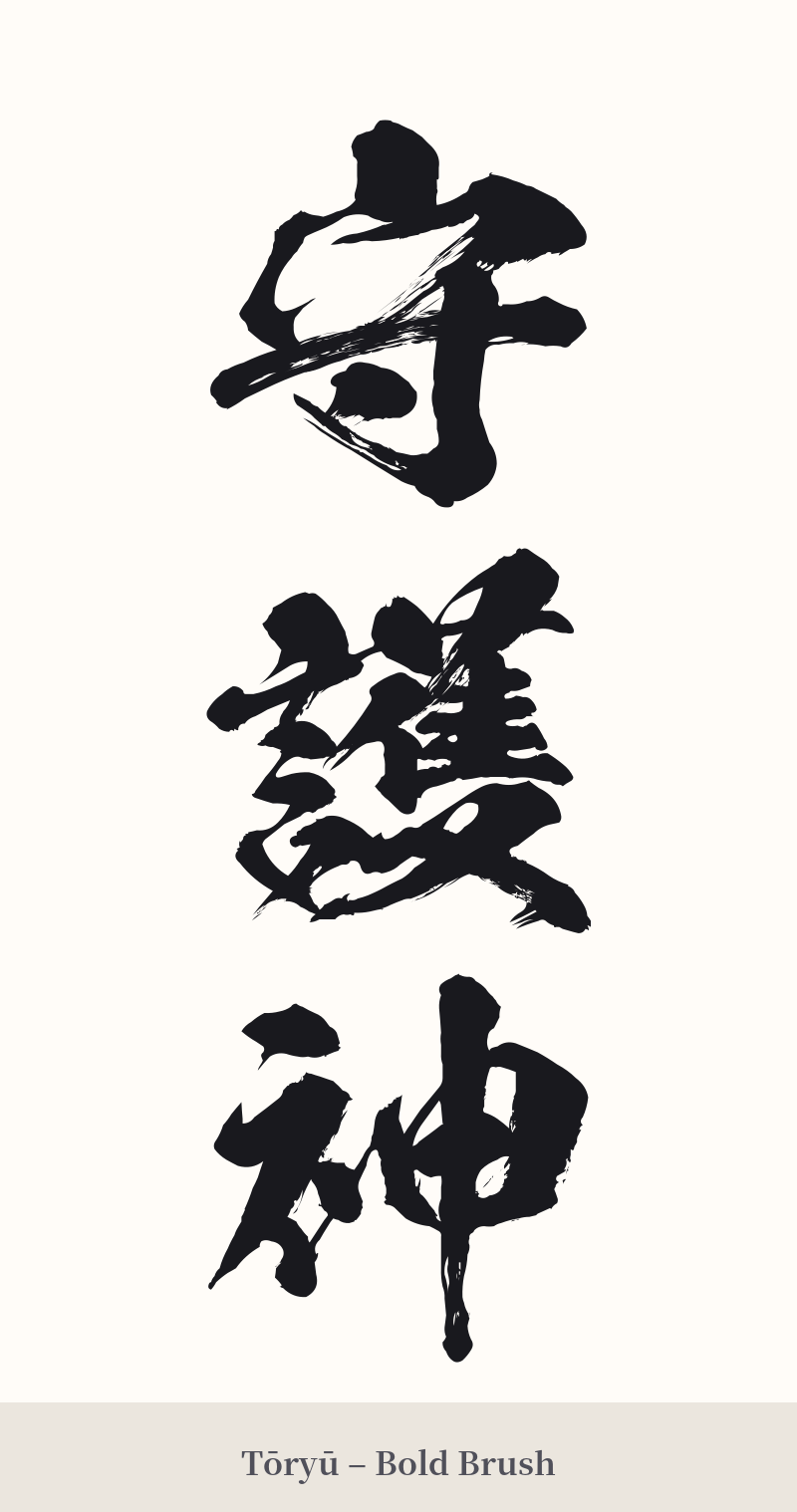
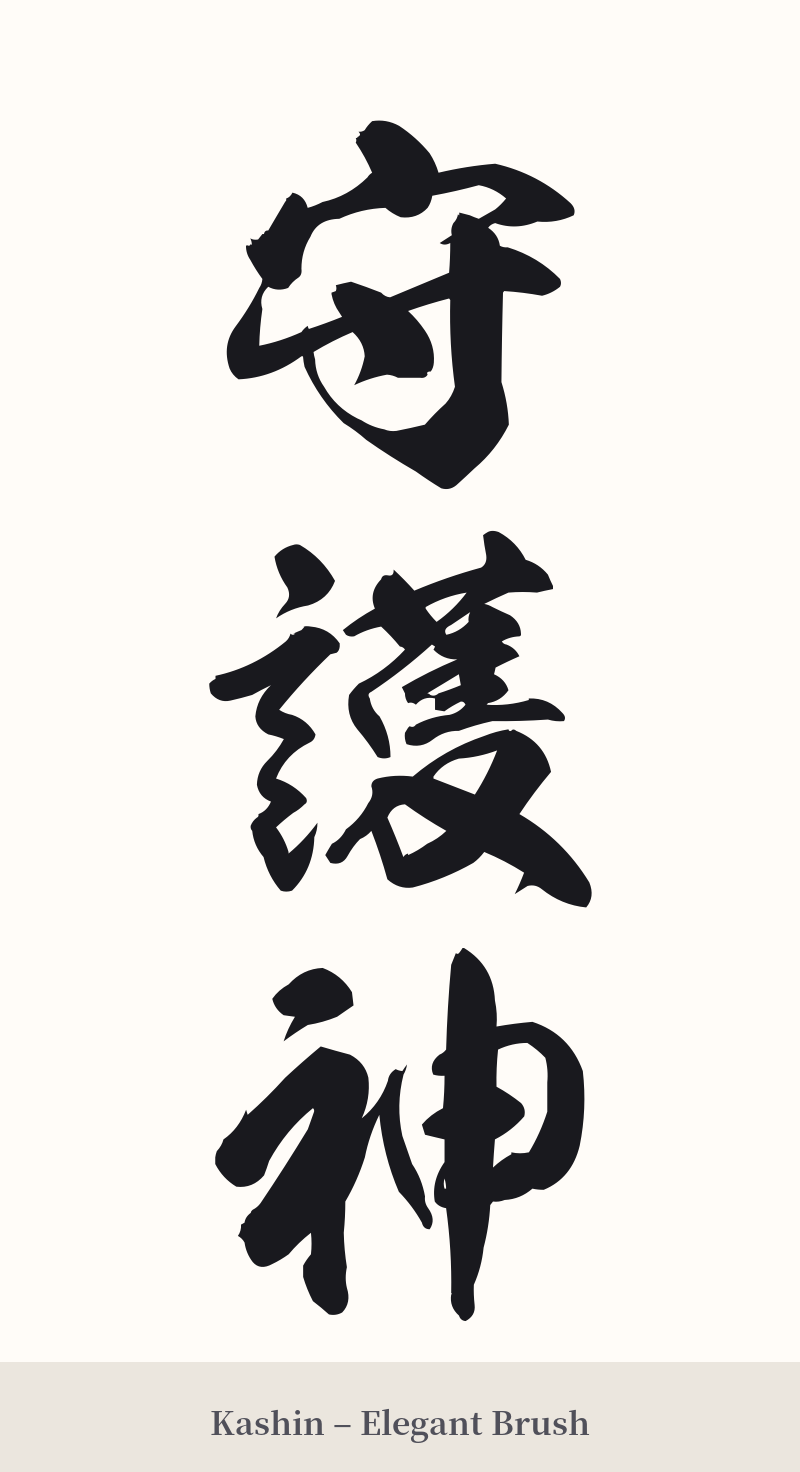
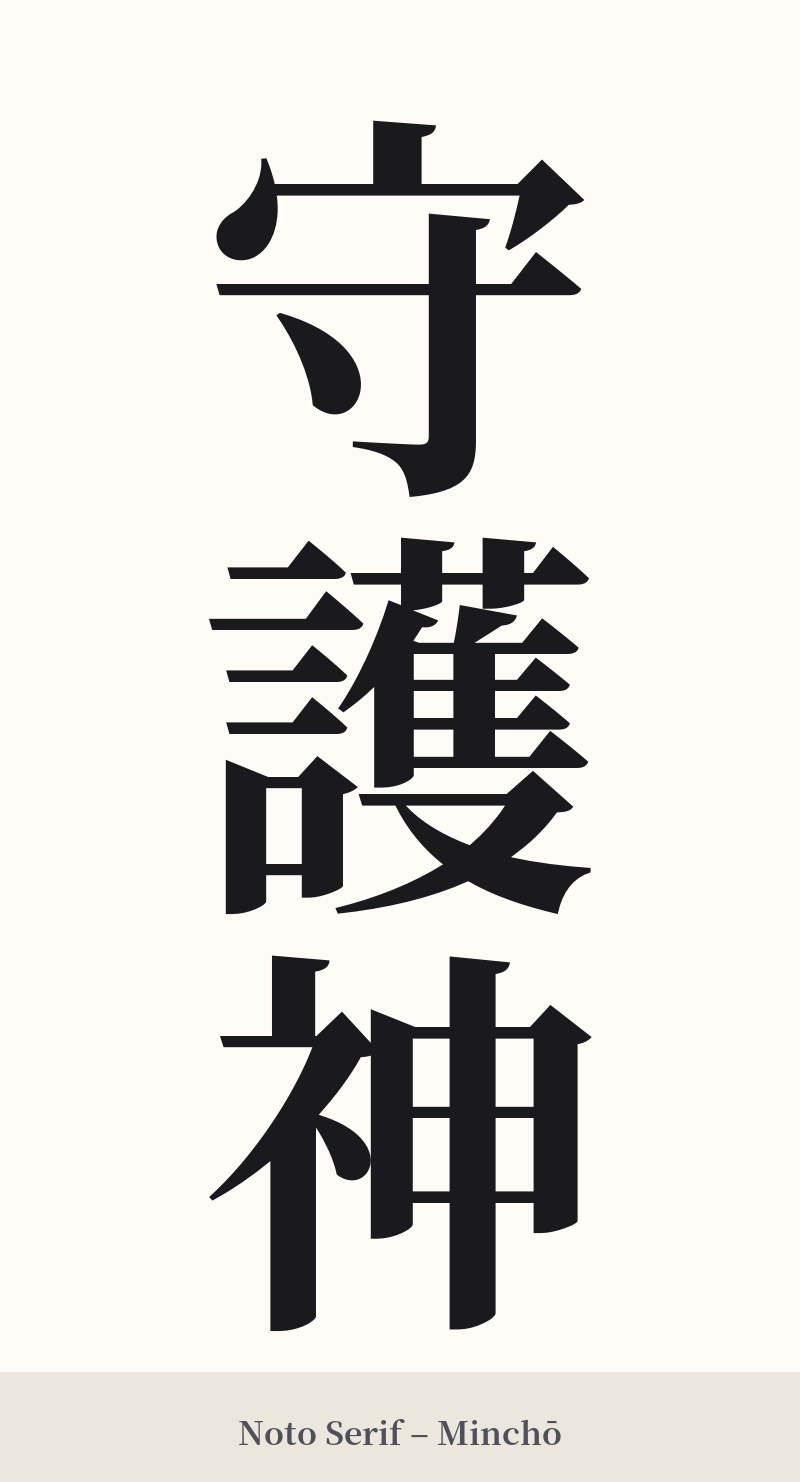
The same kanji can look dramatically different depending on the calligraphy style. Choose a font that matches the mood you want for your tattoo or design.
🎨 Tattoo Suitability
📐 Tattoo Design Guide
A Shugoshin tattoo is a statement of personal belief in a protective force. The design should reflect this power and significance.
– Placement: The vertical nature of the three kanji makes it ideal for the spine, forearm, or calf. For a horizontal layout, the chest or upper back provides a strong canvas that allows for sufficient detail.
– Style: A bold, dynamic calligraphy style (shodō) can emphasize the 'divine' and 'powerful' aspects of the word. For a more refined and classic look, a Mincho or Gyosho script works beautifully. Given the complexity of the '護' character, avoid overly thin or small fonts.
– Visuals: Consider pairing the kanji with imagery that reinforces its meaning. This could be a specific deity like a dragon (Ryū) or a fierce temple guardian (Niō). Other powerful symbols include lotus flowers (purity and enlightenment), storm clouds, or a simple Enso circle to represent the universe it protects.
Comments