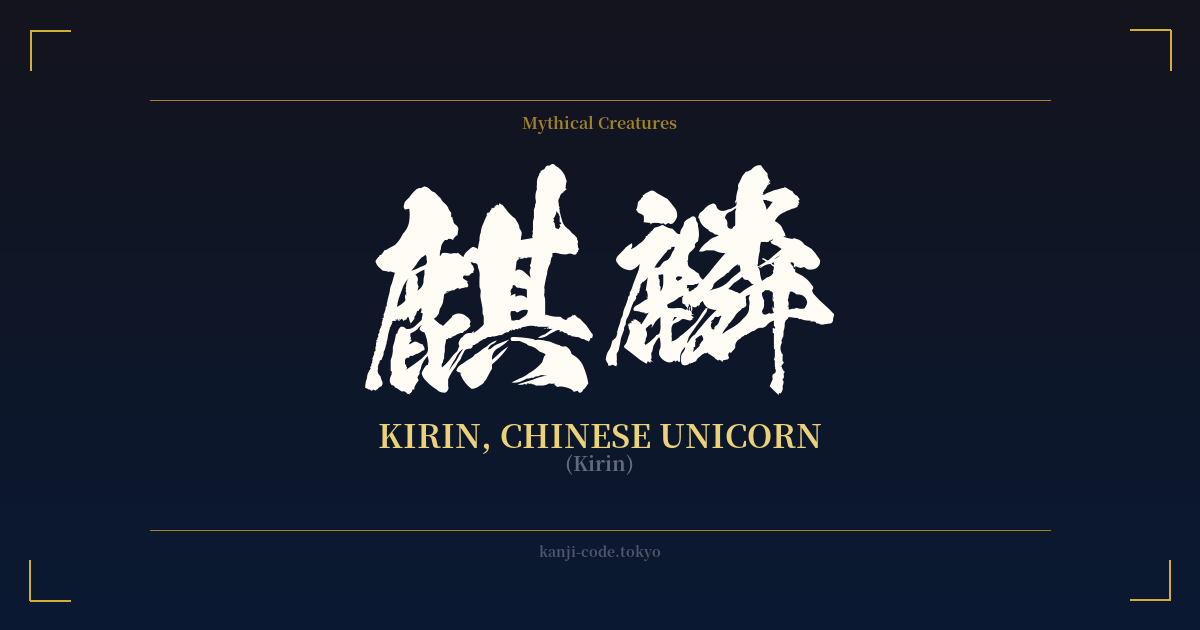
✍️ 麒麟 (Kirin) — Cultural Context
The Kirin, represented by the kanji 麒麟, is one of the most revered and fascinating creatures in East Asian mythology. Often translated as the 'Chinese unicorn,' this comparison only scratches the surface of its deep symbolic meaning. Unlike the Western unicorn, the Kirin is a composite beast, often depicted with the body of a deer, the scales of a fish or dragon, the hooves of an ox, and a dragon-like head with a single, fleshy horn.
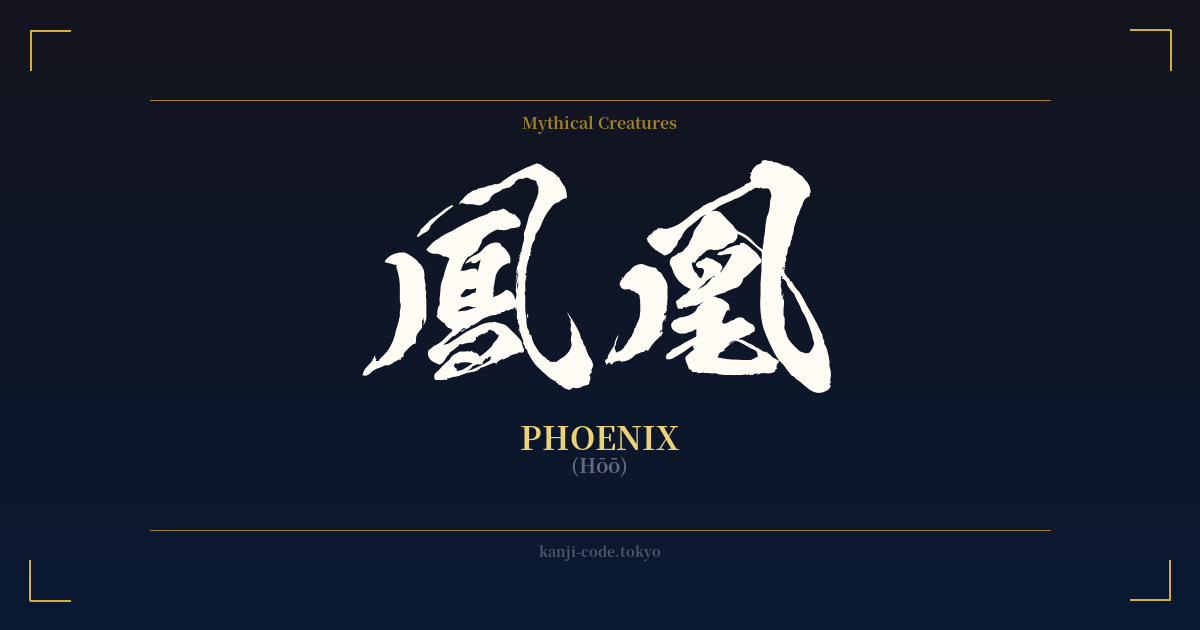
Originating in China, the Kirin was readily adopted into Japanese folklore and culture, where it holds a special place alongside other sacred beasts like the Dragon (龍) and the Phoenix (鳳凰). It is considered a chimerical creature, with 麒 (Ki) representing the male and 麟 (Rin) the female aspect, though they are almost always referred to together as 'Kirin'.
The most defining characteristic of the Kirin is its profound benevolence. It is a creature of ultimate peace and purity. Legend says the Kirin is so gentle that it walks without trampling a single blade of grass and can even walk on water. Its appearance is a cause for celebration, as it is believed to herald an era of peace and prosperity or to signal the birth or death of a great sage or benevolent ruler. This makes the Kirin a powerful symbol of good fortune, justice, wisdom, and serenity.
In historical tales, the Kirin is a righteous creature that can discern the pure of heart from the wicked. It is said to punish the guilty and protect the innocent, acting as a divine arbiter. This association with justice adds another layer to its rich symbolism, moving it beyond a simple omen of good luck to a guardian of moral order.
Interestingly, the word 麒麟 has taken on a modern, more terrestrial meaning: 'giraffe'. When giraffes were first introduced to Japan, their long necks, gentle nature, and patterned coats reminded people of the mythical Kirin, and the name was adopted. While this can be a point of amusement, the primary association in cultural and artistic contexts remains the legendary beast.
The Kirin's influence is still felt today, most famously through the Kirin Brewery Company, which uses the creature in its logo, tapping into its symbolism of good fortune and quality. The Kirin continues to appear in anime, manga, and video games, solidifying its place as a majestic and enduring symbol of all that is good, pure, and auspicious.
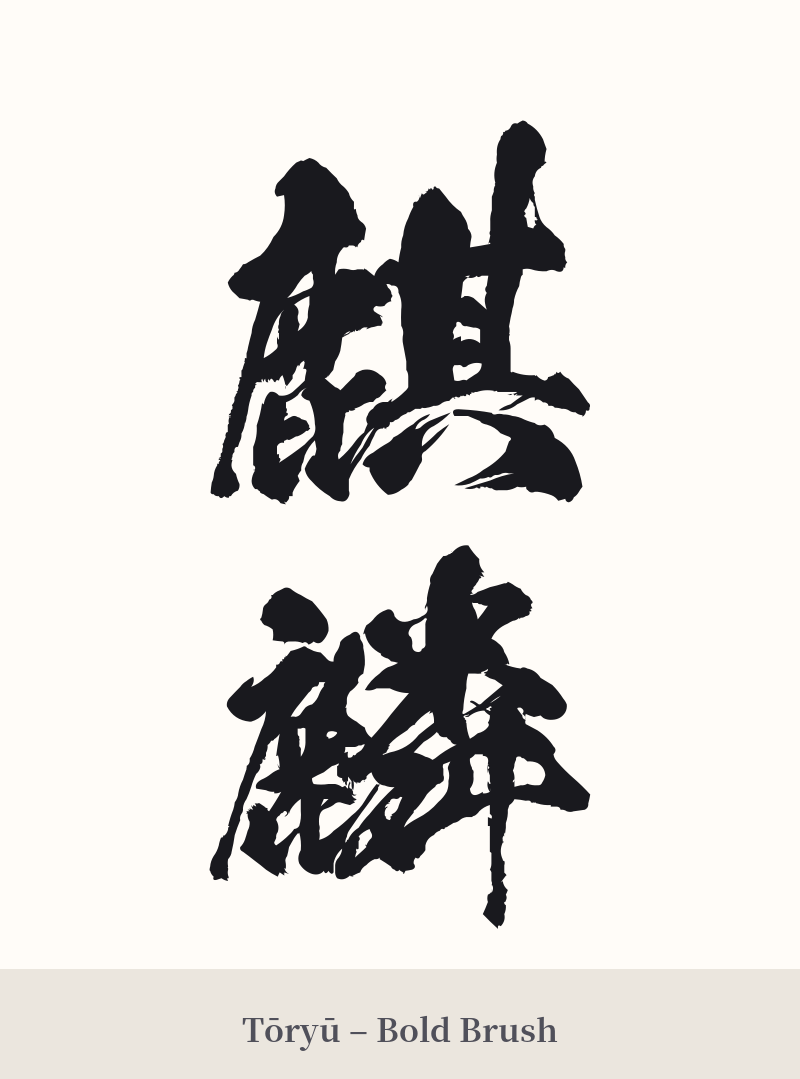
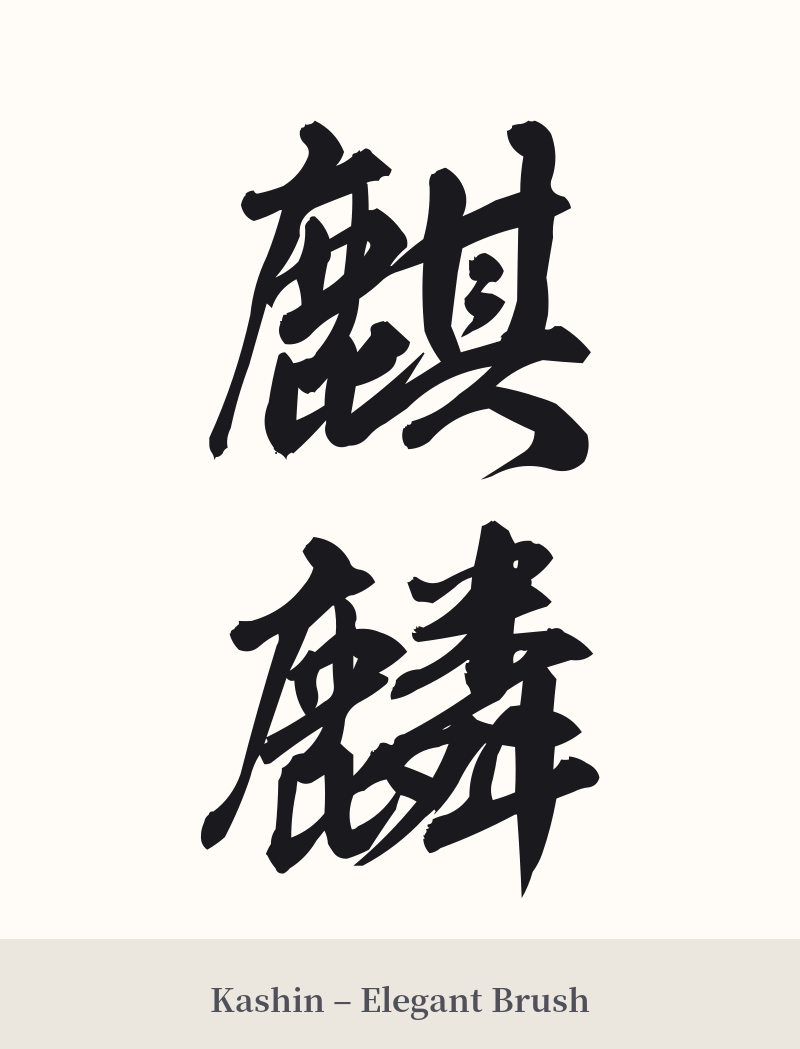
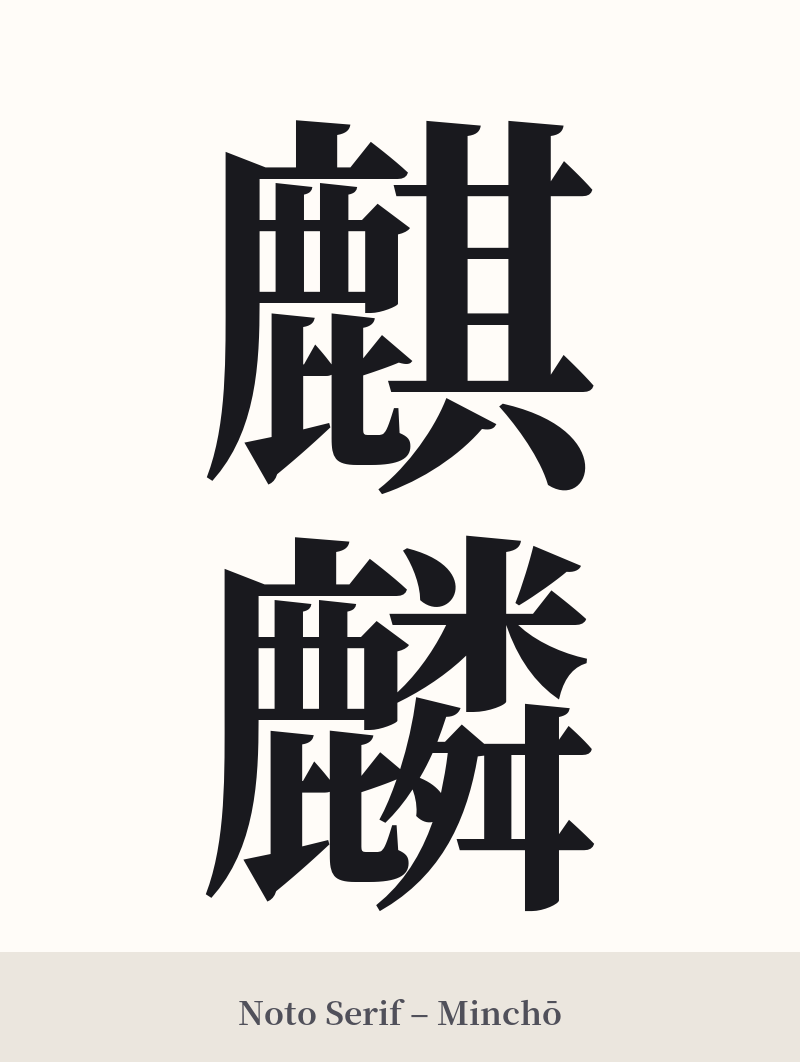
🖌️ Font Styles for 麒麟
The same kanji can look dramatically different depending on the calligraphy style. Choose a font that matches the mood you want for your tattoo or design.
🎨 Tattoo Suitability
📐 Tattoo Design Guide
The kanji for Kirin, 麒麟, is visually stunning but exceptionally complex, which heavily influences design choices.
– Placement: Due to the high stroke count of both characters, this tattoo requires space. Large, flat areas like the upper back, chest, or thigh are ideal. This allows the artist to render the intricate strokes clearly, preventing them from blurring into an illegible mass over time.
– Style: A traditional Japanese calligraphy style (shodō) is a perfect match, emphasizing the ancient and mythical nature of the word. A bold, thick brushstroke can convey power, while a more fluid style can highlight its benevolent grace. A minimalist, fine-line approach is extremely risky and not recommended.
– Visual Pairing: Consider pairing the kanji with an artistic depiction of the Kirin creature itself. The kanji could be integrated into the artwork, perhaps flowing from its breath or forming a background element. This clarifies the meaning and creates a more comprehensive and visually dynamic piece.
Comments