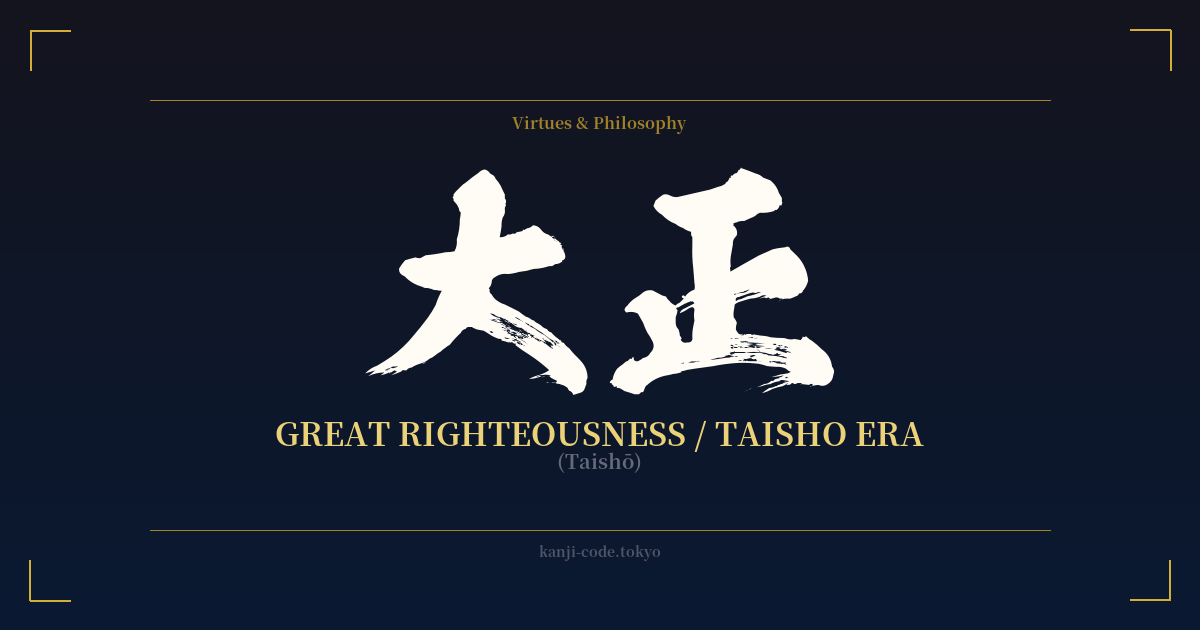
✍️ 大正 (Taishō) — Cultural Context
The word 大正 (Taishō) carries a dual identity that is deeply woven into the fabric of modern Japanese history. On the surface, its characters translate to “Great Righteousness,” a powerful and virtuous concept. However, its most prominent meaning is as the name for the Taisho Era, a relatively short but transformative period in Japan from 1912 to 1926.
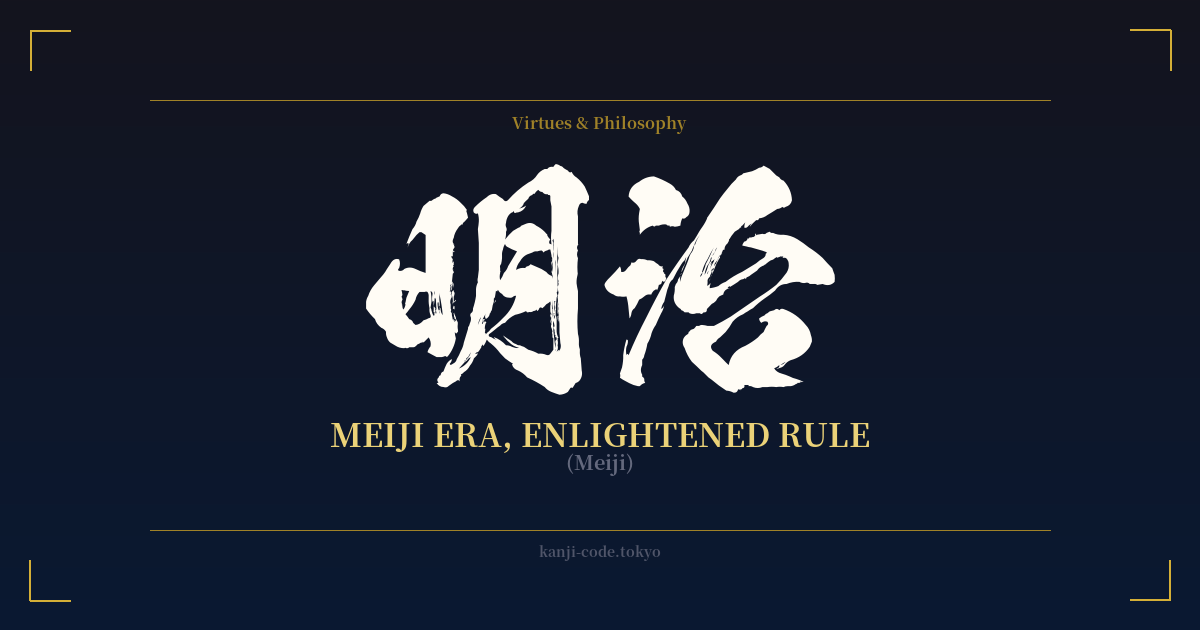
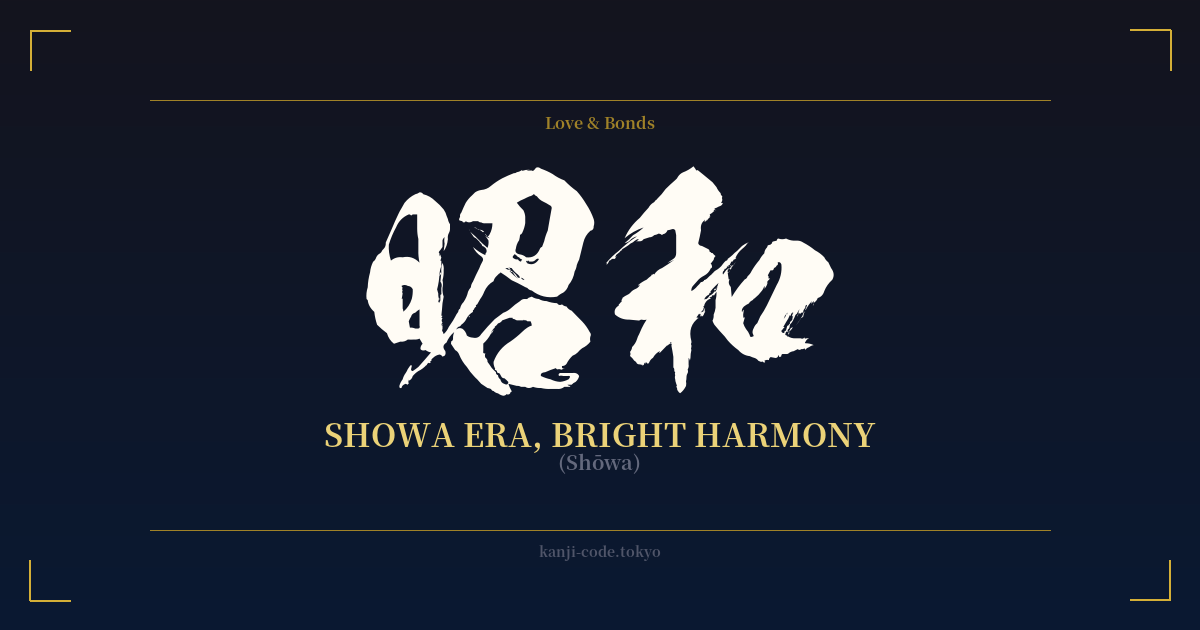
The Taisho Era, under the reign of Emperor Taisho, was a time of immense change and cultural flourishing. Sandwiched between the rapid modernization of the Meiji Era and the rising militarism of the Showa Era, it is often remembered with a sense of nostalgia. This period saw the rise of a liberal political movement known as the “Taisho Democracy,” which advocated for greater public participation in government and individual freedoms.
Culturally, this era is famous for “Taisho Roman” (大正ロマン), or Taisho Romanticism. This aesthetic movement blended Western romantic and art deco influences with traditional Japanese forms. It was the age of the “modern girl” (モダンガール, modan gāru), who sported bobbed hair, Western fashion, and a newfound independence. Cities like Tokyo buzzed with jazz cafes, movie theaters, and department stores, creating a vibrant, cosmopolitan atmosphere.
The name “Taishō” itself was chosen for the era from the ancient Chinese classic, the I Ching (Book of Changes). The phrase it comes from, 「大亨以正,天之道也」, means “Great and prosperous, and correct and firm—this is the Way of Heaven.” The name was intended to symbolize a reign of justice and prosperity, a guiding principle for the new emperor.
Today, 大正 evokes a specific feeling of nostalgia for a bygone era of artistic freedom, democratic ideals, and stylistic flair. It represents a brief, beautiful moment of openness and cultural fusion before the world was plunged into turmoil. For many Japanese, the word doesn't just signify a historical period; it signifies a mood, an aesthetic, and a cherished chapter in the nation's story.
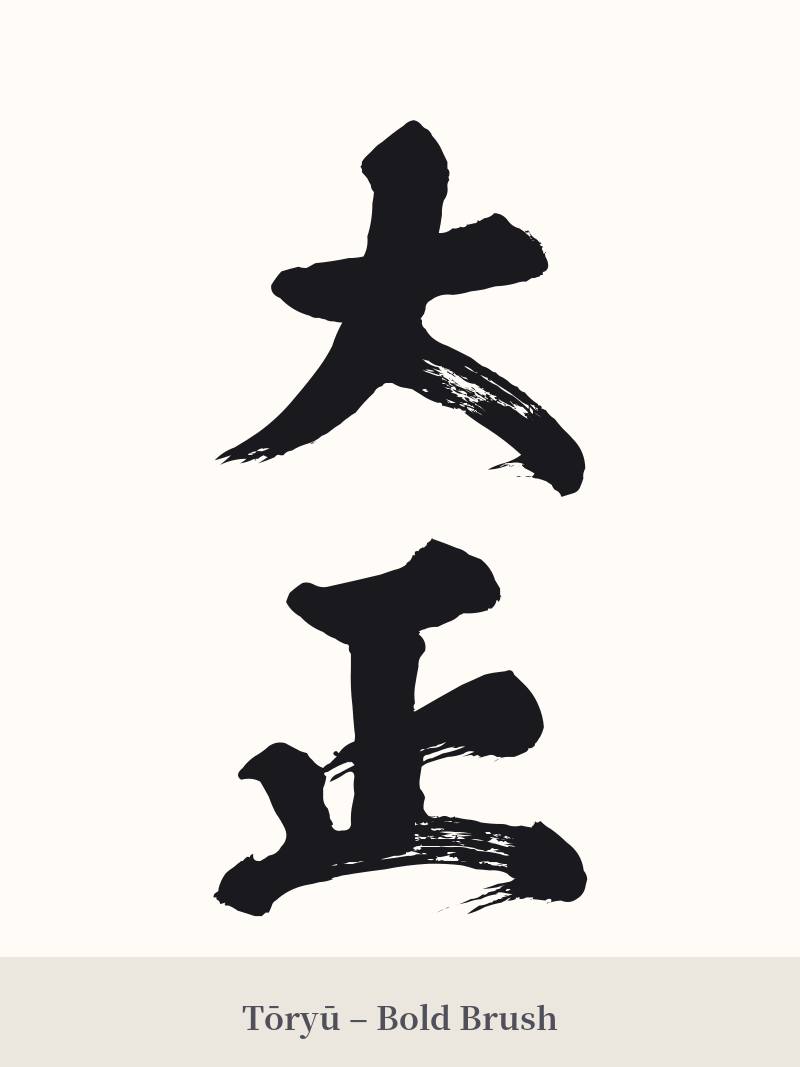
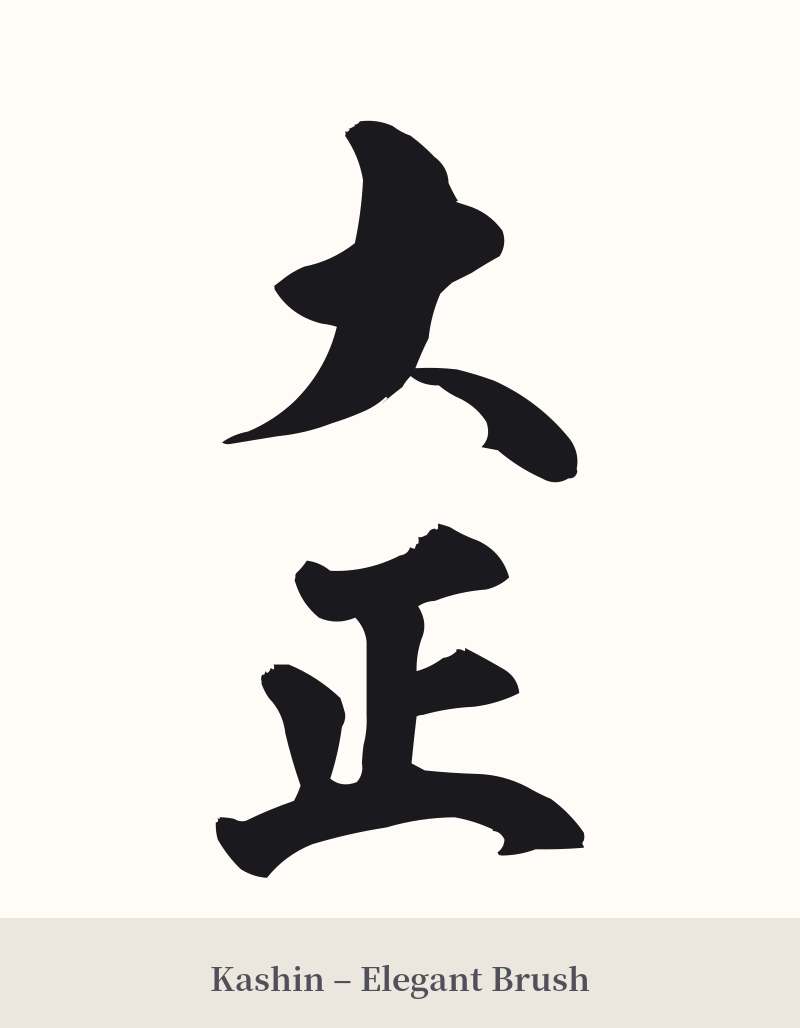
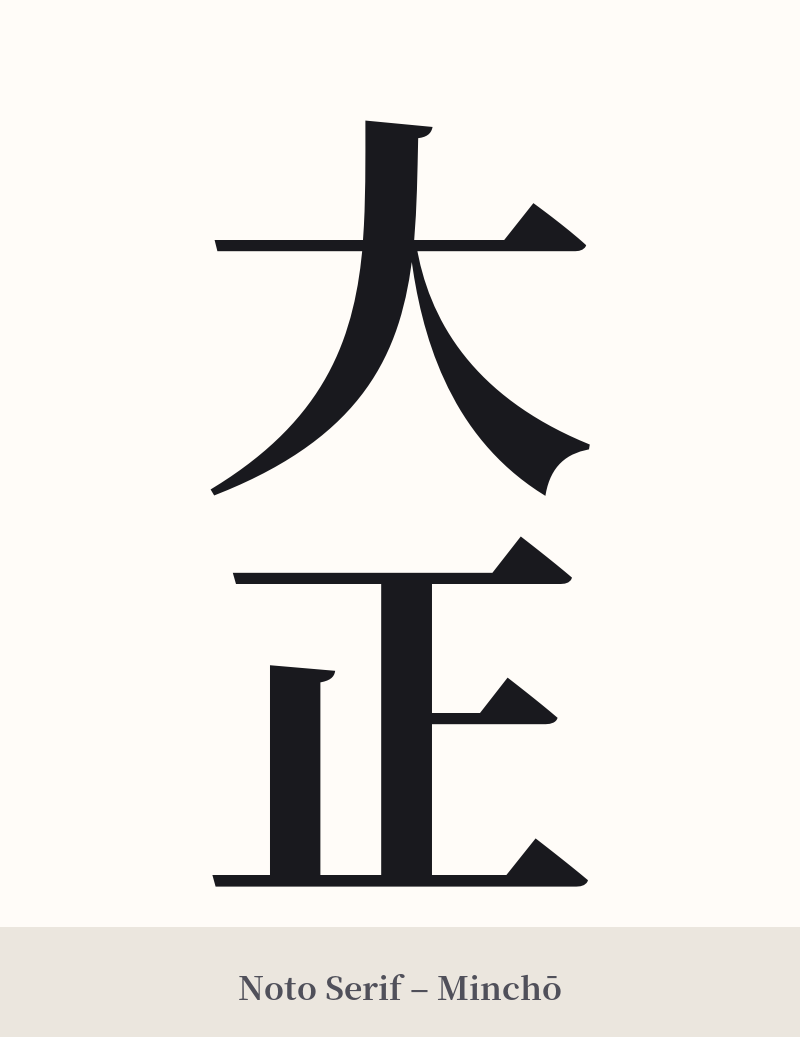
🖌️ Font Styles for 大正
The same kanji can look dramatically different depending on the calligraphy style. Choose a font that matches the mood you want for your tattoo or design.
🎨 Tattoo Suitability
📐 Tattoo Design Guide
For a 大正 tattoo, the design's context is as important as the characters themselves. The simple, balanced nature of the kanji offers great versatility.
– Placement: Vertical alignment is highly recommended to maintain its classic feel. It works well on the forearm, the bicep, the calf, or along the spine. A smaller, more discreet placement on the wrist or behind the ear can also be effective.
– Font Style: The choice of font can dramatically alter the mood. A traditional calligraphy style like Kaisho (block script) or Gyosho (semi-cursive) will emphasize the historical and artistic roots. For a more modern take that reflects the 'Taisho Roman' aesthetic, a clean Mincho font with art deco flourishes can be stunning.
– Visual Elements: To give the kanji context, consider pairing it with imagery from the Taisho Era. This could include art deco patterns, stylized cherry blossoms, a silhouette of a 'modern girl' with a parasol, or elements from woodblock prints by artists of the period like Takehisa Yumeji.
Comments